Universal design is the design of products and environments to be usable by all people, to the greatest extent possible, without the need for adaptation or specialized design. Some universal design/build ideas just make good sense. Once you bring them into your home, you'll wonder how you ever lived without them.

Can you envision building a house as a young adult that you can live in comfortably while you age no matter what your basic physical needs require? This evolving home will contain wide doorways and hallways that can accommodate both a stroller and a wheelchair or walker. There will be a wide open feeling throughout the house's main living areas in the bathroom, kitchen, and living area that do not restrict moving about. Your universally designed home has the capability to age with you and should not need further modifications to accommodate future life changes for any of it's family members. This universal designed home is barrier free without looking modified and is accessible to everyone no matter of their age, size, or capability of movement. This home will be accessible to everyone from your father to your son. People's personal needs vary with age and the Universal Design of products, services, and environments provide adaptations for aging in place to everyone regardless of their age, ability, or situation. Universal Design becomes invisible when incorporated into a home remodel and is only present when help with accessibility is needed. Furthermore, an appealing universal design project creates a greater resale potential. Aging in place construction drastically provides immediate accessibility while universal design techniques provide for gradual changes for accessibility now and when needed in the future. Both Universal Design and Aging In Place building concepts are not age related but each has to do with the dwelling we choose to live in for as long as possible and the extent of modifications that will be needed to accomplish this life choice.

Universal Design isn’t just for the elderly or the permanently disabled. As Americans age, they’re beginning to realize that their homes need to adapt for future life needs. Consumers are more cognizant today of the benefits of a universally designed home, but they may not realize it can be beautiful as well as functional. Everyone can use universal design! It doesn't matter if you are young or old. You could be short or tall, healthy or ill. You might have a disability or you may be a star athlete. Because of universal design ideas, people who are very different can all enjoy the same home. And that home will be there for all its inhabitants even when their needs evolve. The need for Aging In Place home modifications or remodeling later can be lessened from the time of first moving into the home if living areas are planned using common sense and forethought.
Universal Design does not strictly deal with accessibility and does not implement precise ADA standards but it does offer flexibility to add accessories now and later to those planning ahead or to the end user. It also provides for a wide range of human performance characteristics for the way people use spaces within their homes including well integrated usability features. These adaptations have a broad market appeal to everyone for achieving ease of use, safety, and convenience accommodating a certain reality. That reality is that all people exist along a continuum of human performance as per their personal traits and characteristics regardless of their age. A universal approach to design takes into account that everyone has varying degrees of ability and disability rather than someone is either fully-functional or disabled. A universal design is appealing to all users.

There are seven criteria which must be met to be considered a universal design no matter which area of the home you are referring to. Any design must be equally useful to everyone, have flexibility in it's usefulness, be simple and intuitive, be perceived by everyone, have a tolerance for error, require little physical effort, and it must maintain an adequate area for approach and use. Any complexity or discriminating attribute to a design will doom it in terms of being considered universal in nature.
Let's face it, an accessible home is needed by all of us at some time in our lives. This is true whether it's for ourselves, a family member, or a guest. The need is certainly not driven by age but is a result of life's experience. Any family living with a disability among any of the generations within it's group can always benefit from additional accessibility. This will in turn increase safety and independence for all involved as they go through life.
Aging in place home modifications are available through T-Square Company in Austin. Each universal design/build situation will be customized to fit your personal needs. Call 512-444-0097 today to begin to prepare for the accessible second chapter of your life while remaining safe and secure in your existing home.

CAPS 1636580
Tags:
aging in place specialist in Austin,
aging in place design in Austin,
senior aging in place services,
age in place home design,
home modifications for disabled children,
home modifications for children with disabilities,
why is aging in place important,
what does it mean to age in place,
universal design building for a lifetime,
universal designbuilding for the future,
what is universal design,
universal design remodeling techniques,
universal design building contractor,
why is universal design important,
universal design principles,
7 principles of universal design,
universal principles of design,
principles of universal design,
applying principles of universal design in Austin
Problems encountered while accessing your home when you are wheelchair bound generally begin before or at the front door. If you can reach the front porch approach without obstruction then you have a great start since the stairs leading onto the front porch can be another matter all together. A correctly designed ramp having a 1:12 slope can adequately solve this problem. The use of grab bars and any railings will be dictated by the ramp's design and the regulations and physical limitations involved. Once your safely upon the porch, your home's front door width can become an issue. Any entry door less than three feet in width will cause a problem in maintaining a required 32 inch clear entry way which starts the new accessible route within your home. Rolling over any vertical threshold height greater than 1/2" is also difficult to maneuver. Once inside the structure a new set of problems concerning your accessibility will be discovered.
A traditional home builder has never truly considered the special needs of the disabled or aging within any home design. Unfortunately the design emphasis is always put on aesthetics and takes for granted everyone's mobility. There certainly are no guarantees or clauses within any home's sales contract that will prevent our future personal life experiences from introducing us to at least a temporary disability. Accidents will always happen and you could find yourself having to utilize a wheelchair or walker to facilitate your independence for mobility. Limitations in our mobility or constantly changing needs experienced by both the disabled and the elderly have sprung a new dimension in construction known as ADA remodeling to accomplish increased accessibility. Our homes have always been exempt from any and all of the accessibility regulations that have been put in place since 1968 when our Viet Nam veterans were returning home. The new evolving concept known as Universal Design for home remodeling is catching on nation wide and has been for several years as a sign of the times. Universal design techniques used in building makes a home more accessible to all regardless of their mobility or adaptive abilities. An evolution of new products used for disability home modifications is making those homes more accessible and has finally come about in the remodeling industry. These new advances in accessible home remodeling in Austin not only keep the living environments safer but will not compromise the home's aesthetics.

An accessible bathroom for the user's convenience and safety becomes the first issue for anyone using a wheelchair or walker for either a short time while recovering or for the rest of their life. The disability access bathroom will be located within the home's accessible route. Any architectural barriers encountered while approaching the bathroom entrance will need to be removed. The minimum clear widths have to be observed. This will include the bathroom door itself. Twenty four to twenty eight inch wide doors are commonly used during the construction of American homes for accessing the bathroom. However, anything below three feet does not meet the 32 inch required clear width needed for clearance of a wheelchair. This work may involve framing alterations and moving light switches. The electrical changes should be done by a licensed electrician assuring your safety.
A completely serviceable special needs bathroom must contain at least one ADA vanity and the accessible route must be defined. The vanity must be one with a clear underneath scald protected area having an unobstructed roll under capability for wheelchairs. These new residential vanities do not need to look institutional. They can be designed like any other piece of fine furniture. A five foot turning radius allowing the wheelchair to maneuver into any approach must also be associated with the ADA vanity. A 36x48" clear approach area to the vanity must be observed and this can overlap the five foot turning radius. The area of travel will then be enhanced by an unobstructed clear accessible barrier free route dedicated to reaching the vanity.
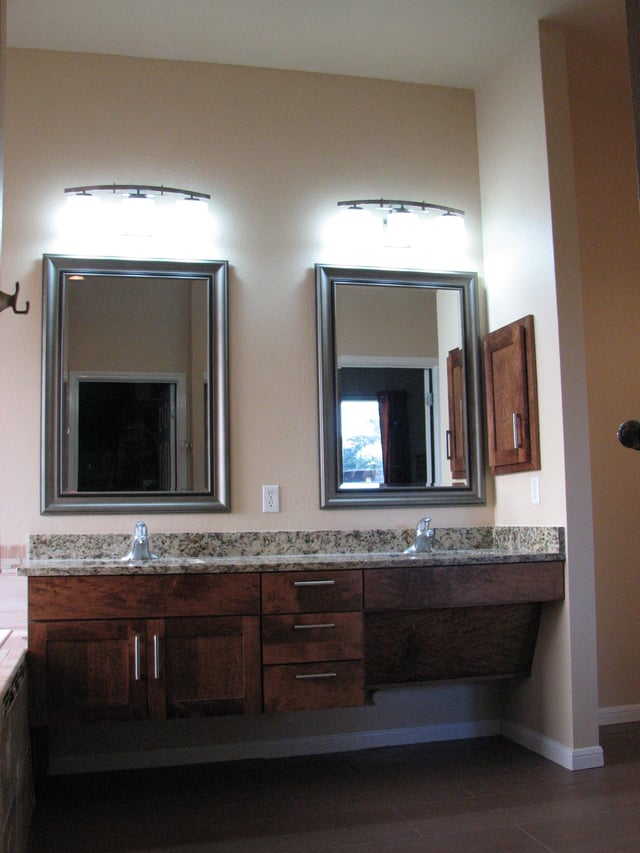
Bathroom cabinets in Austin vary by style and usability. There are basically two styles of ADA bathroom vanities that comply with an unobstructed 27" tall roll under area below the sink. ADA sinks with a rear drain location provide for better plumbing drain hook ups. This modification has everything to do with both the water supply lines and the waste line connecting the sink. There must be provisions made to protect the user from being scalded when coming into contact with any one of the plumbing pipes serving the sink. These connecting pipes may become heated merely by the water passing through them creating the problem. The open type model should always receive both waste and supply insulating jackets applied directly to the pipes providing protection for the wheelchair user. The closed model concealing the pipes will be equipped with a removable face or face board covering the pipes. This pipe concealing panel must be installed at the correct wheelchair user clearance angle. This allows for the needed unobstructed legroom required for the user. The vanity can extend beyond the sink but the area containing the sink is required to have this roll under capability. This section of the vanity top must not be any taller than 34 inches above the finished floor with sufficient lower leg clearance. Clear unobstructed reach distances around the counter top area must be observed. Any motion controlled sensors integrated into the various dispensing devices and/or plumbing fixtures throughout the restroom present a true hands free benefit to all the restroom users. If these aren't in the budget then at least wrist handles used for controlling the faucet can be incorporated into the design of the vanity. Furthermore, automatic flush valves should be used on all toilets and urinals that provide for hands free use.


Finding a contractor familiar with the guidelines of Elder construction and accessibility can be quite difficult. Be sure to check out the credentials of any potential bidders you contact. Be sure they understand that the alterations you are seeking are for wheel chair accessible home remodeling and modifications. Furthermore be sure this person knows and practices both the federal and most importantly your state's requirements before entering into any contract.
Aging in place home modifications are available through T-Square Company. We are a certified aging in place (CAPS) specialist. Each design/build situation will be customized to fit your personal needs. Call 512-444-0097 today to begin the accessible second chapter of your life while remaining safe and secure in your existing home. CAPS #1636580
Let's face it, accessible homes are needed by all of us at some time in our lives. This is true whether it's for ourselves, a family member, or a guest. The need is certainly not driven by age but is a result of life's experience. Any family living with disability among any of the generations within it's group can always benefit from additional accessibility. This will in turn increase safety and independence for all involved as they go through life.
Tags:
ADA accessible,
ADA bathroom cabinets accessible routes,
barrier free access,
aging in place home modifications,
ADA remodeling,
CAPS certified remodeling in Austin,
ADA bathroom cabinets,
ADA compliance,
disability bathroom remodels,
handicap accessible bathrooms,
aging in place designs,
CAPS professional in Austin,
accessible home remodeling,
Universal Design,,
Austin bath remodeling,
Austin bath remodel,,
Austin bathroom remodel,
disability home remodeling in Austin,
aging in place specialist,
aging in place services,
aging in place design,,
elder construction,
Austin elder construction,
handicap accessibility,
disability home modifications,
accessibility remodelers in Austin,
ADA remodeling Austin, Texas
Universal design refers to broad-spectrum ideas meant to produce buildings, products and environments that are inherently accessible to older people, people without disabilities and people with disabilities. Universal Design adaptations have a broad market appeal to everyone for achieving ease of use, safety, and convenience accommodating a certain reality. The reality is that all people exist along a continuum of human performance as per their personal traits and characteristics regardless of their age. A universal approach to design takes into account that everyone has varying degrees of ability and disability rather than someone is either fully-functional or disabled. A universal design approach is appealing to all users no matter their age, size, or physical well being. Universal Design is important because our current design standards for housing do not address the design needs of more than one third of our population. Too often the designers of homes allow the built environment to define the capabilities of the resident. Universal Design allows for our antiquated architecture to be defined by both our changing human needs and abilities.

There are seven criteria or principles which must be met to be considered a universal design no matter which area of the home you are referring to. Any design must be equally useful to everyone, have flexibility in it's usefulness, be simple and intuitive, be perceived by everyone, have a tolerance for error, require little physical effort, and it must maintain an adequate area for approach and use. Any complexity or discriminating attribute to a design will doom it in terms of being considered universal in nature. However what better way can you improve on a home's total visitability by everyone? Universal Design is the design of products and environments to be usable by all people, to the greatest extent possible, without the need for adaptation or specialized design.
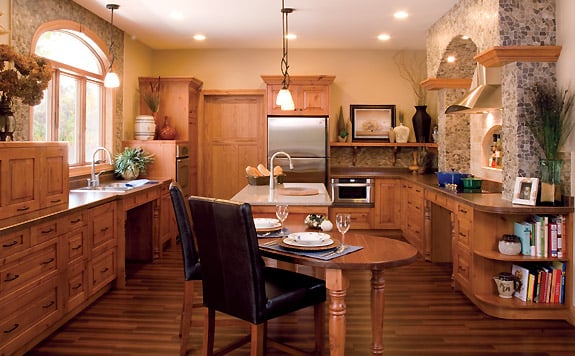
Whether you refer to this revolution in housing today as accessible design, inclusive design, or universal design it is all about making a home safe, attractive, and easy to use for all of the inhabitants. It has nothing to do with the age, agility, or status of life for anyone living within the home. The main intent of this way of thinking is to be sure the inhabitants are able to enjoy their home throughout their entire lifetime utilizing the universal design principles which have been designed into their home when it was built. This way aging in place can be accomplished without the expense and hassle of having to make periodic changes to the home to meet a person's ever changing physical needs. You can plan for all stages of your life cycle with some fore thought which, once discovered, you find is just common sense. Even if you are in perfect health you can be disrupted by a minor mishap. A more serious injury can change things forever when you no longer have all your abilities.
Universal Design principles do not equate to accessibility design even though they both are concerned with ergonomics and human function issues. The ADA guidelines for accessibility were created as a means to help those people with extreme disabilities within our society who are a narrow and specific cross section of the masses. A UD approach broadly takes into account moderate impairments or disabilities, temporary health conditions, and the varying abilities of anyone within a home regardless of their age or size. In other words, an ADA accessible home would be designed for the one person with the disability whereas a UD home is designed for everyone and should be used with any custom tub shower conversion.
Accessibility should be a concern no matter what your age. If your concerns are not for you, barring any life changing accident, they could concern the accessibility and safety of another generation's independence. As we age, our society is beginning to realize that our homes need to accommodate future life changes. The aging in place phenomena deals with home modifications to existing homes while a universal design home would hardly ever need to address these abrupt issues even though we cannot solve all the future issues for everyone. Everyone ages differently and has their own list of specific needs.
A sensible checklist for a home concerning Universal Design would include but is not limited to:
1. Limiting stairs while avoiding sunken rooms or multi-story floor plans with raised entrances
2. Automating lighting while controlling groups of lighting throughout the home
3. Including natural lighting through doors, windows, and skylights
4. Using multiple shower heads in the shower with rain, conventional and hand held units
5. Incorporate curbless showers into the design of your bathroom for ease of entering no matter if a wheelchair is ever involved
6. When deciding on your faucets, door handles, or cabinet pulls always pass the closed fist test for operation
7. Use nonslip flooring especially in wet areas using cork or smaller floor tiles which in turn increase the grout lines
8. Create a correct kitchen work area with the shortest distance between the stove, sink, and refrigerator as possible
9. Provide accessible lower storage in base cabinets storing the most used items on pull out shelving or in drawers
10. Lower your upper cabinets to 15" above your 34" universal cabinet top
11. Leave at least 42" between your cabinets when 48" is much better
12. Have multiple height cabinet tops to double as work surfaces for those who are seated or other little helpers in the kitchen
Universal design ideas do not strictly deal with accessibility or aging in place design and does not implement precise ADA standards but it does offer flexibility to add accessories now and later to those planning ahead or to the end user. It also provides for a wide range of human performance characteristics for the way people use spaces within their homes including well integrated usability features. These adaptations have a broad market appeal to everyone for achieving ease of use, safety, and convenience accommodating a certain reality. That reality is that all people exist along a continuum of human performance as per their personal traits and characteristics regardless of their age. A universal approach to design takes into account that everyone has varying degrees of ability and disability rather than someone is either fully-functional or disabled. A universal design build project is appealing to all users.
Aging in place home modifications are available through T-Square Company in Austin. Each universal design/build situation will be customized to fit your personal needs. Call 512-444-0097 today to begin to prepare for the accessible second chapter of your life while remaining safe and secure in your existing home.
CAPS 1636580
Tags:
residential construction contractor,
aging in place home modifications,
wheelchair accessible baths and kitchens,
handicap home modifications,
CAPS certified remodeling in Austin,
aging in place remodels,
handicap accessible bathrooms,
accessible home remodeling,
Austin bathroom remodel,
kitchen remodeling ideas,
aging in place specialist,
aging in place services,
certified aging in place specialist,
independent living in Austin Texas,
disability home modifications in Austin,
Austin elder construction,
bathroom remodeling contractor Austin Texas,
bathroom remodeling Austin Texas,
handicap home modifications for disabled,
handicap remodeling contractors,
bathroom modifications for disabled,
renovation contractor in Austin, texas,
home modifications Austin, Texas,
residential remodeling contractor in Austin,
bathroom accessibility remodels in Austin,
accessibility remodelers in Austin,
residential remodeling company in Austin, Texas,
accessibility designs Austin Texas,
house remodeling Austin, Texas,
home modifications for independent living Austin,
universal design/build,
universal design ideas,
universal design/build ideas,
Austin senior living solutions,
Austin accessible home remodeling,
certified aging in place consultant in Austin,
aging in place specialist in Austin,
age in place home design,
why is aging in place important,
universal designbuilding for the future,
what is universal design,
home remodeling contractor near Austin, Texas,
residential general contractor Austin, Texas,
remodeling companies in Austin TX,
home accessibility help in Austin,
home remodeling for disabled in Austin Texas,
wheelchair accessible home remodeling in Austin,
bathroom remodel Austin,
kitchen remodeling company in Austin Texas,
universal design kitchen ideas,
universal design remodeling techniques,
universal design remodeling contractor,
universal design building contractor,
why is universal design important,
universal design principles,
principles of universal design
T-Square Company has been successfully remodeling kitchens and bathrooms in Austin for over 30 years. So just what is involved with kitchen upgrades and bathroom remodeling in Austin, Texas while Austin homeowners are constantly looking for ways to bring their existing older home's kitchens and bathrooms up to date? Bathroom remodels for any smaller baths can incorporate a number of items to fit any budget. Larger kitchens and bathrooms lend themselves to more extravagant designs. Using beautiful stone or ceramic tiles in an interesting design, installing new plumbing fixtures, upgrading the cabinet tops and the use of neutral colors can create a kitchen or bathroom with a "wow" factor. It is quite possible to produce a small but charmingly remodeled kitchen or bath on a budget. A project that is affordable plus the fact that it will add resale value to your home cannot be denied. Check out all the options before committing to a plan and then stick to it. The replacement of for instance the tub with a new walk in shower can create a bold look but will run you around $10,000 in the bath. An Austin kitchen remodel for two hundred square feet will begin at around $50,000. There are no spending limits for bathroom upgrades. You can plan on spending around $12,000 to $15,000 for a hall bath remodel. The price tag can approach or exceed $35,000 for a complete master suite remodel. The type of fixtures and building components chosen along with the labor will compose the overall cost of the remodeling project. Always hire a local and professional builder. Remember that producing change orders because "no one thought of that" become expensive. Create the style for your Austin kitchen or bathroom remodel that best gives you a feeling of pride!

Accessible bathrooms incorporating aging in place design today contain stylish vanities set at a universal height of 34 inches with clear knee spaces. The sink faucets are easily controlled by either wrist handles or levers. Toilets are available in comfort heights eliminating the deep knee bend needed for seating. Toilet seats are available with a heat feature and some have the ability to self close or have a night light. Curbless roll in showers are advised for everyone undergoing a bathroom accessibility remodel. The shower should contain at least a shower wand on a sliding bar for varying heights of use along with a regular shower head and control if desired. Folding seats are useful if caretakers are ever involved. Grab bars around the bath and especially in the shower should be used while non slip floor covering should always be considered.
If you have been considering a fine bathroom makeover or bathroom transformation in Austin there are a few things you should take into consideration. Bathroom upgrades in Austin, Texas can take on many looks and facets. The scope of work you choose to accomplish this task should effectively solve your problems and most importantly, your needs as the home owner-- for now and for the future. The identification of these specific needs belongs to you the home owner. The way your home is structurally altered to accomplish these needs is the job of the professional remodeling contractor. Aging in place and accessibility should be a concern no matter what your age. If your concerns are not for you, barring any life changing accident, they could concern the accessibility of another generation's independence is using the bathroom. A CAPS professional in the remodeling industry can help with solutions in solving these issues while performing design/build home modifications. T-Square Company is a nationally registered CAPS remodeling contractor.
When you are replacing your old cabinets during a kitchen remodel with some new fine cabinetry or perhaps you are just needing an updated work surface there are a few choices that need to be considered before making your final decision. Plastic laminates, solid surface material, granite, quartz, stainless steel, wood, and concrete are the most popular choices today when considering new or replacement counter tops for a fine kitchen upgrade. Each surface has it's own set of pros and cons to take under advisement before a conclusion is reached making sure your selection blends with your lifestyle. Remember that any samples of materials you see are only small representations of any larger piece when choosing products. Furthermore trivets and cutting boards should always be used no matter which top you choose. Kitchen remodeling in Austin, Texas is no different than anywhere else in the country. Kitchen upgrades and bathroom remodels return the most money at resale on the initial investment of the remodeling project. National averages show that kitchen remodels recoup around 70% of the costs of the upgrade at the time of resale. However, your kitchen remodeling costs should never exceed 15% of the total value of your home. Here is where you need to get your thinking cap on and plan for an affordable budget that is within your means. Your material choices are very important and if you need to stay mid-level to fit the budget then do so. The labor involved for the project will be around 1.6 times the cost of the materials used. The total budget should allow $100 per square foot for your kitchen upgrade project.
Finding help to remodel a home can be time consuming and should be undertaken only by those builders possessing a wide array of remodeling experience. All builders certainly are not remodeling contractors. The finale of new construction is by far more foreseen because of the known and predictable path the work schedule will follow. During remodeling, first there is the demolition work and the costs involved to dismantle a certain existing area in your home prior to beginning the construction of a new project. Knowing the best way to accomplish this aspect is why you need to hire a remodeling contractor. This type of building professional will base his results on his capability of blending any new work done within the home with the existing design and elevations. The expenses of this new construction represent the second set of costs involved for any residential remodeling project.
Along with Aging in Place, Universal Design is becoming more of a household term when it comes to a kitchen or bathroom remodel. Essentially, it’s about building or modifying places and spaces—both public and private—to accommodate people of all ages and abilities. More than just an architectural concept, universal design is a win-win for sandwich generation boomers caring for aging parents and their children at home, for grandparents raising grandchildren and great-grandchildren, and for all who are facing the challenges of caring for a loved one with Alzheimer’s or other chronic diseases.
Whether your family needs the support now or down the road, universal design features are a good long-term investment for the home itself.
Whatever your situation please remember to rely on the experiences of a local building professional. Check out their credentials and references and don't limit yourself to only price checks against other bidders. Don't make the mistake of letting a cabinet making subcontractor or tile installer play the part of a general contractor. Their knowledge will be limited to that of the cabinets or tile and not much else. More importance needs to be given to the reputable contractor's personality and knowledge and how well you two communicate. You are making your choice for a professional to lead the way enabling your dream to be realized. You get what you pay for with proper planning when using an experienced and qualified local contractor. T-Square Company can be reached at 512-444-0097 in Austin, Texas. Find out how a design/build remodeling contractor can save you money during your next project.

A New Walk In Shower During A Bathroom Remodel
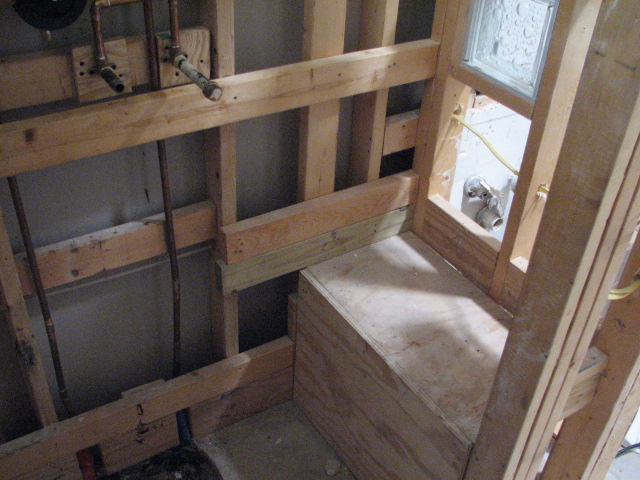
.jpg?width=640&name=IMG_1029%20(2).jpg "Fine Bathrooms In Austin, Texas")

This New Island Replaced A Box Canyon Peninsula Adding Storage and Traffic Flow
.jpg?width=640&name=Biber%20Remodel%20(52).jpg "Fine Kitchen Upgrades In Austin, Texas")


Tags:
Austin,
kitchen remodeling,
fine cabinetry,
aging in place remodeling,
aging in place home modifications,
bathroom remodeling,
bathroom remodels,
bathroom makeovers,
building professional,
Austin bath remodeling,
Austin bath remodel,,
Austin bathroom remodeling,
Austin bathroom remodel,
Austin kitchen remodeling,
Austin kitchen remodel,
aging in place specialist,
aging in place services,
aging in place design,,
bathroom remodeling contractor Austin Texas,
kitchen cabinets Austin Texas,
kitchen remodeling costs,
remodled kitchens,
bathroom modifications for disabled,
kitchen remodels austin,
remodeling kitchens,
kitchen cabinet remodel Austin, Texas,
Austin, texas kitchen cabinets,,
bathroom cabinetry Austin, Texas,
house remodeling Austin, Texas,
home remodels Austin,
universal design ideas,
bathroom modifications for disabled in Austin, TX,
aging in place specialist in Austin,
age in place home design,
why is aging in place important,
home remodeling contractor near Austin, Texas,
remodeling companies in Austin TX,
bathroom remodel Austin,
kitchen remodeling company in Austin Texas,
universal design kitchen ideas,
universal design remodeling contractor,
why is universal design important,
universal principles of design,
kitchen and bath remodeling companies
The changing makeup of the family has led to the growth of a new architectural science: Universal design. Simply defined, it is human-centered design that seeks to create environments and products that offer safety and comfort for all people with no need for adaptation or functional changes. The evolution toward Universal Design began in the 1950s with a new attention to design for people with disabilities. Barrier-free design was developed to remove obstacles in the built environment for people with physical disabilities.
In this country, multi-generational households are more common today than they were even 10 years ago, due in part to the recent recession. Planning ahead for the possibility of such a reality, if you are building or remodeling, is worth a bit of time and effort. Homes that incorporate universal design principles are not only perfectly suited for the needs of an aging population, but are also appropriate for families with young children.
Universal Design (UD) does not equate to accessibility design even though they both are concerned with ergonomics and human function issues. The ADA guidelines for accessibility were created as a means to help those people with extreme disabilities within our society who are a narrow and specific cross section of the masses. A UD approach broadly takes into account moderate impairments or disabilities, temporary health conditions, and the varying abilities of anyone within a home regardless of their age or size. In other words, an ADA accessible home would be designed for the one person with the disability whereas a UD home is designed for everyone. Features like single-story design, bedrooms and bathrooms on the ground floor, natural day lighting through larger windows and skylights, and wider doors and hallways appeal to users of all ages. With baby boomers eyeing a future where they'll age in place and younger people renovating older homes, the Harvard Joint Center for Housing Studies is anticipating healthy growth for the U.S. home improvement market through 2025.
The new evolving concept known as Universal Design for home building and remodeling is catching on nationwide and has been for several years as a sign of the times. Universal design techniques used in building makes a home more accessible to all regardless of their mobility or adaptive abilities. An evolution of new products used for disability home modifications is making those homes more accessible and has finally come about in the remodeling industry. These new advances in accessible home remodeling not only keep the living environments safer but will not compromise the home's aesthetics. This new way of thinking offers flexibility to add accessories now and later to those planning ahead or to the end user. It also provides for a wide range of human performance characteristics for the way people use spaces within their homes including well integrated usability features. These adaptations have a broad market appeal to everyone for achieving ease of use, safety, and convenience accommodating a certain reality. That reality is that all people exist along a continuum of human performance as per their personal traits and characteristics regardless of their age. A universal approach to design takes into account that everyone has varying degrees of ability and disability rather than someone is either fully-functional or disabled. A universal design is appealing to all users.
The seven criteria which must be met to be considered a universal design no matter which area of the home you are referring to are: Any design must be equally useful to everyone, have flexibility in usefulness, be simple and intuitive, be perceived by everyone, have a tolerance for error, require little physical effort, and it must maintain an adequate area for approach and use. Any complexity or discriminating attribute to a design will doom it in terms of being considered universal in nature.
While each individual will have different needs and wants, there are many ways to make homes more user friendly or accessible. Having the ability to enter the home from the outdoors is one of the first steps to enjoying a home. Once inside, the overall layout of the home can make a significant impact on the convenience and usability of the home. Universal design principles recommend a bedroom, kitchen, entertainment area and a full bathroom on the main floor. Finding a professional with the expertise to design, build or remodel a home to be handicap accessible might seem overwhelming. One place to start is by looking through the selection of Certified Aging-In-Place Specialists. This designation program, offered through the National Association of Home Builders, incorporates components of assessment, technical knowledge and management skills related to home modifications that will allow people to stay in their own homes safely and independently for a longer amount of time.
The National Association of Home Builders, in partnership with the AARP and Home Innovation Research Labs, created the CAPS program, which includes training and education on the technical, business management and customer service skills essential to compete in the fastest growing segment of the residential remodeling industry--home modifications for aging in place. David L. Traut, CAPS owner of T-Square Company in Austin, Texas is one of the select group of professionals nationwide to earn the Certified Aging-In-Place Specialist (CAPS) designation, identifying him as a home remodeler and builder with the skills and knowledge necessary to remodel or modify a home to meet the unique needs of the older population, disabled owners, or their visitors. We offer and incorporate universal design in all our remodeling projects to limit the expense and hassle of periodically adapting your home to your ever changing needs.
For additional information about the CAPS program, visit nahb.org/CAPS. For more information about T-Square Company, visit www.tsquareco.com or call 512-444-0097.
Tags:
certified aging in place consultant in Austin,
bathroom modifications for disabled in Austin, TX,
aging in place specialist in Austin,
senior aging in place services,
home modifications for disabled children,
why is aging in place important,
what does it mean to age in place,
universal design building for a lifetime,
universal designbuilding for the future,
what is universal design,
universal design kitchen ideas,
universal design remodeling techniques,
universal design remodeling contractor,
universal design building contractor,
why is universal design important,
universal design principles,
7 principles of universal design,
universal principles of design,
Universal Principles of design revised and updated
Universal Design does not strictly deal with accessibility and does not implement precise ADA standards but it does offer flexibility to add accessories now and later to those planning ahead or to the end user. Universal Design principles are about building and remodeling living environments that conform and adapt with the needs and abilities of the occupants throughout their lives. It also provides for a wide range of human performance characteristics for the way people use spaces within their homes including well integrated usability features. These adaptations have a broad market appeal to everyone for achieving ease of use, safety, and convenience accommodating a certain reality. The reality is that all people exist along a continuum of human performance as per their personal traits and characteristics regardless of their age. A universal approach to design takes into account that everyone has varying degrees of ability and disability rather than someone is either fully-functional or disabled. A universal design approach is appealing to all users no matter their age, size, or physical well being. Universal Design is important because our current design standards for housing do not address the design needs of more than one third of our population. Too often the designers of homes allow the built environment to define the capabilities of the resident. Universal Design allows for our antiquated architecture to be defined by both our changing human needs and abilities. Universal design refers to broad-spectrum ideas meant to produce buildings, products and environments that are inherently accessible to older people, people without disabilities and people with disabilities.
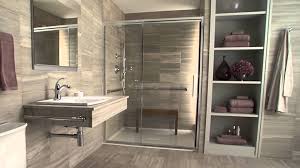
There are seven criteria which must be met to be considered a universal design no matter which area of the home you are referring to. Any design must be equally useful to everyone, have flexibility in usefulness, be simple and intuitive, be perceived by everyone, have a tolerance for error, require little physical effort, and it must maintain an adequate area for approach and use. Any complexity or discriminating attribute to a design will doom it in terms of being considered universal in nature.
The changing makeup of the family has led to the growth of a new architectural science: Universal Design. Simply defined, it is human-centered design that seeks to create environments and products that offer safety and comfort for all people with no need for adaptation or functional changes. The evolution toward Universal Design began in the 1950s with a new attention to design for people with disabilities. Barrier-free design was developed to remove obstacles in the built environment for people with physical disabilities.
In this country, multi-generational households are more common today than they were even 10 years ago, due in part to the recent recession. Planning ahead for the possibility of such a reality, if you are building or remodeling, is worth a bit of time and effort. Homes that incorporate universal design principles are not only perfectly suited for the needs of an aging population, but are also appropriate for families with young children.
While each individual will have different needs and wants, there are many ways to make homes more user-friendly or accessible. Having the ability to enter the home from the outdoors is one of the first steps to enjoying a home. Once inside, the overall layout of the home can make a significant impact on the convenience and usability of the home. Universal design principles recommend a bedroom, kitchen, entertainment area and a full bathroom on the main floor. Finding a professional with the expertise to design, build or remodel a home to be handicap accessible might seem overwhelming. One place to start is by looking through the selection of Certified Aging-In-Place Specialists. This designation program, offered through the National Association of Home Builders, incorporates components of assessment, technical knowledge and management skills related to home modifications that will allow people to stay in their own homes safely and independently for a longer amount of time.
The National Association of Home Builders, in partnership with the AARP and Home Innovation Research Labs, created the CAPS program, which includes training and education on the technical, business management and customer service skills essential to compete in the fastest growing segment of the residential remodeling industry--home modifications for aging in place. David L. Traut, CAPS owner of T-Square Company in Austin, Texas is one of the select group of professionals nationwide to earn the Certified Aging-In-Place Specialist (CAPS) designation, identifying him as a home remodeler and builder with the skills and knowledge necessary to remodel or modify a home to meet the unique needs of the older population, disabled owners or their visitors.
For additional information about the CAPS program, visit nahb.org/CAPS. For more information about T-Square Company, visit www.tsquareco.com or call 512-444-0097.
Tags:
disability remodeling in Austin,
universal design/build,
universal design ideas,
universal design/build ideas,
aging in place specialist in Austin,
senior aging in place services,
universal design building for a lifetime,
universal designbuilding for the future,
what is universal design,
home remodeling contractor near Austin, Texas,
aging in place home remodeling,
universal design kitchen ideas,
universal design remodeling techniques,
universal design remodeling contractor,
universal design building contractor,
why is universal design important,
universal design principles,
7 principles of universal design,
universal principles of design
Accessibility should be a concern no matter what your age. If your concerns are not for you, barring any life changing accident, they could concern the accessibility and safety of another generation's independence. As we age, our society is beginning to realize that our homes need to accommodate future life changes. The aging in place phenomena deals with home modifications to existing homes while a universal design home would hardly ever need to address these abrupt issues even though we cannot solve all the future issues for everyone. Everyone ages differently and has their own list of specific needs.
There are seven criteria which must be met to be considered a universal design no matter which area of the home you are referring to. Any design must be equally useful to everyone, have flexibility in it's usefulness, be simple and intuitive, be perceived by everyone, have a tolerance for error, require little physical effort, and it must maintain an adequate area for approach and use. Any complexity or discriminating attribute to a design will doom it in terms of being considered universal in nature. However what better way can you improve on a home's total visitability? Universal Design principles involve the design of products and environments to be usable by all people, to the greatest extent possible, without the need for adaptation or specialized design.
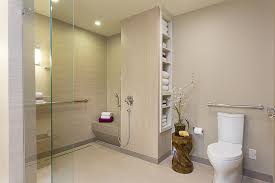
Can you envision building a house as a young adult that you can live in comfortably while you age no matter what your basic physical needs require? This evolving home will contain wide doorways and hallways that can accommodate both a stroller and a wheelchair or walker. There will be a wide open feeling throughout the house's main living areas in the bathroom, kitchen, and living area that do not restrict moving about. There will be blocking behind the finished walls to accommodate secure grab bar installations or the towel racks in the kitchen can double as grab bars as you become unsteady from lack of balance. All the entryways from the front door to the shower entrance are smooth to prevent tripping from high thresholds. All doors and faucets will be controlled by lever hardware. This universal designed home is barrier free without looking modified and is accessible to everyone no matter of their age, size, or capability of movement. This home will be accessible to everyone from your father to your son.
Universal design ideas do not strictly deal with accessibility or aging in place design and does not implement precise ADA standards but it does offer flexibility to add accessories now and later to those planning ahead or to the end user. It also provides for a wide range of human performance characteristics for the way people use spaces within their homes including well integrated usability features. These adaptations have a broad market appeal to everyone for achieving ease of use, safety, and convenience accommodating a certain reality. That reality is that all people exist along a continuum of human performance as per their personal traits and characteristics regardless of their age. A universal approach to design takes into account that everyone has varying degrees of ability and disability rather than someone is either fully-functional or disabled. A universal design build project is appealing to all users.
No matter how old you are you should periodically evaluate your residence to determine whether it suits you not just for the present but the future. Your home assessments will be rethought every time your living situation changes. Whether childproofing for a newborn, making a home more accessible following a sickness or unfortunate accident to someone in the family, or making a toilet area safer for an aging residing parent, there will be an immediate evolution to your primary domicile. These same life span design features are even more important if you believe you're past the age of wanting to move and are relishing the thought of aging in your own home, no matter what physical limitations you might later develop. Incorporating smart aging design concepts through universal design build ideas throughout a home will attract a larger group of buyers when you decide to finally sell your home. Everyone has special needs and there is no one size fits all solutions using universal design. A twenty five year old homeowner with a bad back is really not similar in needs to his or her aging eighty year old grandmother, although they both need added accessibility only in different but similar ways.
The National Association of Home Builders, in partnership with the AARP and Home Innovation Research Labs, created the CAPS program, which includes training and education on the technical, business management and customer service skills essential to compete in the fastest growing segment of the residential remodeling industry--home modifications for aging in place. David L. Traut, CAPS owner of T-Square Company in Austin, Texas is one of the select group of professionals nationwide to earn the Certified Aging-In-Place Specialist (CAPS) designation, identifying him as a home remodeler and builder with the skills and knowledge necessary to remodel or modify a home to meet the unique needs of the older population, disabled owners, or their visitors. We offer and incorporate universal design in all our remodeling projects to limit the expense and hassle of periodically adapting your home to your ever changing needs.
For additional information about the CAPS program, visit nahb.org/CAPS. For more information about T-Square Company, visit www.tsquareco.com or call 512-444-0097.
Tags:
outdoor kitchen Austin,
Austin outdoor kitchen designs,
certified aging in place consultant in Austin,
bathroom modifications for disabled in Austin, TX,
aging in place specialist in Austin,
home modifications for children with disabilities,
why is aging in place important,
what does it mean to age in place,
universal design building for a lifetime,
universal designbuilding for the future,
what is universal design,
home remodeling contractor near Austin, Texas,
home remodeling for disabled in Austin Texas,
wheelchair accessible home remodeling in Austin,
bathroom remodel Austin,
bathroom remodels Austin,
universal design kitchen ideas,
universal design remodeling techniques,
universal design remodeling contractor,
universal design building contractor,
why is universal design important,
universal design principles,
7 principles of universal design
There are seven criteria which must be met to be considered a universal design no matter which area of the home you are referring to. Any design must be equally useful to everyone, have flexibility in it's usefulness, be simple and intuitive, be perceived by everyone, have a tolerance for error, require little physical effort, and it must maintain an adequate area for approach and use. Any complexity or discriminating attribute to a design will doom it in terms of being considered universal in nature. However what better way can you improve on a home's total visitability? Universal Design is the design of products and environments to be usable by all people, to the greatest extent possible, without the need for adaptation or specialized design.
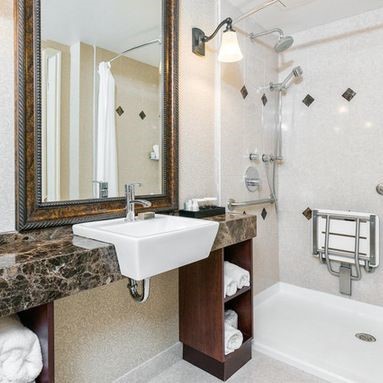
Whether you refer to this revolution in housing today as accessible design, inclusive design, or universal design it is all about making a home safe, attractive, and easy to use for all of the inhabitants. It has nothing to do with the age, agility, or status of life for anyone living within the home. The main intent of this way of thinking is to be sure the inhabitants are able to enjoy their home throughout their entire lifetime utilizing the universal design principles which have been designed into their home when it was built. This way aging in place can be accomplished without the expense and hassle of having to make periodic changes to the home to meet a person's ever changing physical needs. You can plan for all stages of your life cycle with some fore thought which, once discovered, you find is just common sense. Even if you are in perfect health you can be disrupted by a minor mishap. A more serious injury can change things forever when you no longer have all your abilities.
Universal Design principles do not equate to accessibility design even though they both are concerned with ergonomics and human function issues. The ADA guidelines for accessibility were created as a means to help those people with extreme disabilities within our society who are a narrow and specific cross section of the masses. A UD approach broadly takes into account moderate impairments or disabilities, temporary health conditions, and the varying abilities of anyone within a home regardless of their age or size. In other words, an ADA accessible home would be designed for the one person with the disability whereas a UD home is designed for everyone and should be used with any custom tub shower conversion.
Accessibility should be a concern no matter what your age. If your concerns are not for you, barring any life changing accident, they could concern the accessibility and safety of another generation's independence. As we age, our society is beginning to realize that our homes need to accommodate future life changes. The aging in place phenomena deals with home modifications to existing homes while a universal design home would hardly ever need to address these abrupt issues even though we cannot solve all the future issues for everyone. Everyone ages differently and has their own list of specific needs.
A sensible checklist for a home concerning Universal Design would include but is not limited to:
1. Limiting stairs while avoiding sunken rooms or multi-story floor plans with raised entrances
2. Automating lighting while controlling groups of lighting throughout the home
3. Including natural lighting through doors, windows, and skylights
4. Using multiple shower heads in the shower with rain, conventional and hand held units
5. Incorporate curbless showers into the design of your bathroom for ease of entering no matter if a wheelchair is ever involved
6. When deciding on your faucets, door handles, or cabinet pulls always pass the closed fist test for operation
7. Use nonslip flooring especially in wet areas using cork or smaller floor tiles which in turn increase the grout lines
8. Create a correct kitchen work area with the shortest distance between the stove, sink, and refrigerator as possible
9. Provide accessible lower storage in base cabinets storing the most used items on pull out shelving or in drawers
10. Lower your upper cabinets to 15" above your 34" universal cabinet top
11. Leave at least 42" between your cabinets when 48" is much better
12. Have multiple height cabinet tops to double as work surfaces for those who are seated or other little helpers in the kitchen
Universal design ideas do not strictly deal with accessibility or aging in place design and does not implement precise ADA standards but it does offer flexibility to add accessories now and later to those planning ahead or to the end user. It also provides for a wide range of human performance characteristics for the way people use spaces within their homes including well integrated usability features. These adaptations have a broad market appeal to everyone for achieving ease of use, safety, and convenience accommodating a certain reality. That reality is that all people exist along a continuum of human performance as per their personal traits and characteristics regardless of their age. A universal approach to design takes into account that everyone has varying degrees of ability and disability rather than someone is either fully-functional or disabled. A universal design build project is appealing to all users.
Aging in place home modifications are available through T-Square Company in Austin. Each universal design/build situation will be customized to fit your personal needs. Call 512-444-0097 today to begin to prepare for the accessible second chapter of your life while remaining safe and secure in your existing home.
CAPS 1636580
Tags:
residential construction contractor,
aging in place home modifications,
wheelchair accessible baths and kitchens,
handicap home modifications,
CAPS certified remodeling in Austin,
aging in place remodels,
handicap accessible bathrooms,
accessible home remodeling,
Austin bathroom remodel,
kitchen remodeling ideas,
aging in place specialist,
aging in place services,
certified aging in place specialist,
independent living in Austin Texas,
disability home modifications in Austin,
Austin elder construction,
bathroom remodeling contractor Austin Texas,
bathroom remodeling Austin Texas,
handicap home modifications for disabled,
handicap remodeling contractors,
bathroom modifications for disabled,
renovation contractor in Austin, texas,
home modifications Austin, Texas,
residential remodeling contractor in Austin,
bathroom accessibility remodels in Austin,
accessibility remodelers in Austin,
residential remodeling company in Austin, Texas,
accessibility designs Austin Texas,
house remodeling Austin, Texas,
home modifications for independent living Austin,
universal design/build,
universal design ideas,
universal design/build ideas,
Austin senior living solutions,
Austin accessible home remodeling,
certified aging in place consultant in Austin,
aging in place specialist in Austin,
age in place home design,
why is aging in place important,
universal designbuilding for the future,
what is universal design,
home remodeling contractor near Austin, Texas,
residential general contractor Austin, Texas,
remodeling companies in Austin TX,
home accessibility help in Austin,
home remodeling for disabled in Austin Texas,
wheelchair accessible home remodeling in Austin,
bathroom remodel Austin,
kitchen remodeling company in Austin Texas,
universal design kitchen ideas,
universal design remodeling techniques,
universal design remodeling contractor,
universal design building contractor,
why is universal design important,
universal design principles
Universal Design does not equate to accessibility design even though they both are concerned with ergonomics and human function issues. The ADA guidelines for accessibility were created as a means to help those people with extreme disabilities within our society who are a narrow and specific cross section of the masses. A UD approach broadly takes into account moderate impairments or disabilities, temporary health conditions, and the varying abilities of anyone within a home regardless of their age or size. In other words, an ADA accessible home would be designed specifically for the one person with the disability whereas a UD home is designed for everyone.
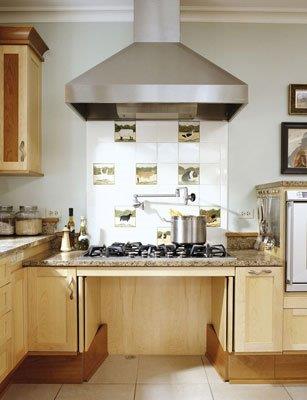
No matter how old you are you should periodically evaluate your residence to determine whether it suits you not just for the present but the future. Your home assessments will be rethought every time your living situation changes. Whether childproofing for a newborn, making a home more accessible following a sickness or unfortunate accident to someone in the family, or making a toilet area safer for an aging residing parent, there will be an immediate evolution to your primary domicile. These same life span design features are even more important if you believe you're past the age of wanting to move and are relishing the thought of aging in your own home, no matter what physical limitations you might later develop. Incorporating smart aging design concepts through universal design build ideas throughout a home will attract a larger group of buyers when you decide to finally sell your home. Everyone has special needs and there is no one size fits all solutions using universal design. A twenty five year old homeowner with a bad back is really not similar in needs to his or her aging eighty year old grandmother, although they both need added accessibility only in different but similar ways.
Kitchens have evolved because fewer cabinets are needed within the more open designs using Universal Design techniques. Fewer wall cabinets are needed because of personal reach limitations. For those that are used, they can be installed at 14" above the base cabinet work top instead of the standard 18" spacing. Dishes can be stored in specialized pull out shelves. Pull down upper shelving is available but can be very costly. The cabinet top is now lowered by two inches and installed at a universal 34" height. This makes a net 6 inch lower installation height for the bottom of the wall cabinet from the floor. All types of cabinet inserts like pull out shelves, lazy Susans, and specialized drawers are now available for installation in both base and wall cabinets to increase accessibility. These devices will certainly help solve the reach problem. Base cabinet kick spaces can be raised to 9" and deepened to 6" instead of the standard 4" to accommodate future wheelchair access. Recessed knee spaces can be incorporated into the design for roll under access at the sink, prep area, and cook top. A shallow cabinet with doors can be creatively installed in these areas disguising their intended future use.
The lack of bending motion and ever decreasing reach distances is changing the way we purchase and install appliances at comfortable heights. Placing dishwashers higher by a few inches to limit bending has become a reachable fad and the new height is changing the old look of our kitchens. Refrigerator or freezer drawers, dishwasher drawers, and double ovens that are no longer stacked represent just a few changes within the present day appliance marketplace. The ovens can be installed at the height the homeowner finds most comfortable. Cooking ranges and cook tops with the controls located on the front represent another metamorphosis helping with reach problems. Microwaves can be installed onto the now lowered 34" height counter top or preferably within the upper area of the lowered base cabinet according to the consumers need for adequate reach. The refrigerator should be a cabinet depth french door model giving access to the lower freezer and maybe an additional refrigerated drawer. Raising the dishwasher up at least 6" can be very helpful for access if you choose to use a conventional model.
Fewer doors represents a change in the cabinet market. The new open look lets homeowners access what is stored within the cabinet without an open door blocking their clear path for approach. No matter in what manner the doors are hung they always interfere with accessibility if they swing. They will become architectural barriers within the home at some time. Sliding doors are an option but can become a problem if dexterity and coordination ever become an issue. The open cabinet look is seen in both the bath and kitchen as the open shelves make it easier to find the items you need. If a more structural look is needed then glass fronts can be installed. The glass doors maintain the feeling of openness but with order.
The space between cabinets in a "C" or "U" configuration should be between 42-48" for wheelchair access. A 60" turning radius should be observed for a wheelchair turn if entirely possible within a larger kitchen floor plan. Cabinet hardware should be considered for the future. Small knobs can be a problem for people with arthritis. Graspable "D" handles are a better option. The larger the pulls the easier it is for everyone to use.
Cabinet tops at varying heights should be installed using universal design. A lower island top can become a work surface for someone seated or a six year old helper. This area can be sectioned off using a higher 42" top used for bar stools. Cabinet top materials must have eased edges at the angles to prevent injury. The choice of materials you use for your cabinet top must be both durable and easy to maintain.
Finding a contractor familiar with the guidelines of accessibility can be quite difficult. Be sure to check out the credentials of any potential bidders you contact. Be sure they understand that the alterations you are seeking are for wheel chair accessible home remodeling and modifications. Furthermore be sure this person knows and practices both the federal and most importantly your state's requirements before entering into any contract.
Aging in place services are available through T-Square Company. We are a certified aging in place specialist. Each design/build situation will be customized to fit your personal needs. Call 512-444-0097 today to begin the accessible second chapter of your life while remaining safe and secure in your existing home. CAPS #1636580
Tags:
fine kitchen upgrades,
kitchen remodeling,
residential construction contractor,
kitchen makeovers,
kitchen cabinetry,
barrier free access,
aging in place remodeling,
aging in place home modifications,
aging in place home improvements in Austin,
residential remodeling,
wheelchair accessible baths and kitchens,
home remodeling,
aging in place construction,
aging in place designs,
CAPS professional in Austin,
CAPS certification holder in Austin,
accessible home remodeling,
Universal Design,,
Austin kitchen remodeling,
kitchen remodeling ideas,
kitchen remodel ideas,
Remodel kitchen,
Austin kitchen remodels,
Austin kitchen remodel,
certified aging in place specialist,
universal design building for a lifetime,
universal designbuilding for the future,
what is universal design,
aging in place home remodeling,
residential general contractor Austin, Texas,
home accessibility help in Austin,
kitchen remodel near me,
kitchen remodeling company in Austin Texas,
universal design kitchen ideas,
universal design remodeling techniques,
universal design remodeling contractor
Disability is a complex phenomenon representing an interaction between one's physical impairments, the activities they need to perform, and the architectural barriers within the space in which this situation occurs. The terminology and jargon used for disabilities evolves regularly whereas, "handicapped" is no longer acceptable. It is no longer merely a description of intellectual or physical impairments. Each individual with similar impairments describes his or her limitations differently. The blind don't experience their world the same as a person with deafness and so on.
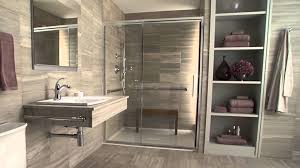
The new evolving concept known as Universal Design and specialized handicap remodeling contractors for home remodeling is catching on nation wide and has been for several years as a sign of the times. By 2019, all the 76 million baby boomers will be age 55 or older at a time when many people are planning for retirement. Universal design techniques used in building makes a home more accessible to all regardless of their mobility or adaptive abilities. An evolution of new products used for disability home modifications is making those homes more accessible and has finally come about in the remodeling industry. These new advances in accessible home remodeling in Austin not only keep the living environments safer but will not compromise the home's aesthetics. Bathrooms can be both functional and attractive when planned with elements like cabinetry that allow someone to sit at a sink. In fact, there are many benefits to using universal design techniques, including potential use by aging family members, added resale value appealing to multiple generations, and the fact that you'll be creating a space that can be used by anyone who visits your home, regardless of their range of abilities. Simple universal design updates for aging in place home modifications and handicap bathroom accessibility can include adding grab bars or handrails throughout the home, custom tub to shower conversions, adding a seat within the roll in shower, lowering upper cabinets and counter tops, adding non-slip flooring, widening hallways or installing stair lifts, and widening doors. You might also consider lowering light switches and thermostats and installing easier to use door knobs. Many considerations should be taken into account to provide safety and independence. You should try to provide a clear barrier free path or accessible route to the most visited areas of your home as recommended by the ADA. The three areas needing improvement for a person wanting to age in place is the bathroom, the kitchen, and the family area.

Curbless roll in showers are advised for everyone on a universal level and not just for the users of wheelchairs or walkers. At the very least, observe a low profile shower base of 2" or less in height at the curb to keep people from stepping over into a walk in shower. The wheelchair accessible or universal designed shower should contain at least a shower wand mounted on a sliding bar to be available for varying heights of use coupled with a regular height fixed shower head. A diverting valve should be used for controlling each head. Remember you are burying the valves within the walls of the shower so choose high performance brands of fixtures when making your choices. Folding seats and benches can make your shower more enjoyable and safe. They are also useful if caretakers are involved or temporary assistance is needed. Secure grab bars withstanding 250 pounds of force located around the shower perimeter will increase the safety factor and prevent falls. Grab bars should be installed at 34-36" height above the floor. Shower niches 48" above the floor will help prevent clutter aiding in fall prevention and safety. All of the bathroom floor surface must be nonskid to prevent slipping on a guaranteed wet floor. A true ADA compatible shower should be 60x60" for the total floor area when possible. If a tub shower conversion will be executed then the depth of the new shower should be no less than 30" clear.
A glass enclosure will provide a revived look for your new shower. The more expensive frameless models will bring your bathroom completely up to date. A single splash panel or wall can be installed toward the shower head wall. Any shower entrance should be no less than 32" in width but remember wider is better when it comes to accessibility. Glass is available in many finishes and textures but clear is the most popular choice.
Lighting in the shower is also very important. An LED recessed shower can light should be installed in the shower ceiling. Additionally, concealed colored LED lighting can be used in the shower for mood. There can never be enough lighting when performing tasks while showering or during clean up. Light strips or single wall fixtures can be designed around the new framed beveled mirror that you have chosen. The choice of bulbs utilized is yours for now at least. Try using dimmers to control your new lighting.
Ventilation is so important when planning a bathroom upgrade because of the humidity involved. Too many times a single exhaust fan is installed above the toilet, or what is much worse, in the center of the room. Heat and humidity naturally rise and will overtake the entire room if given a chance. Today's quiet bathroom exhaust fans should be sized according to the room's air volume. They should be located above any bathing or showering facility and above the toilet. Conditioned air along with adequately sized duct work supplied by your central unit will further accentuate a pleasant feeling within the bath.
Who do you choose to help you with your dream? It is true that a professional remodeling contractor with years of experience will cost you more than a handyman illegally playing among the trades at your peril but then again there are those professional guarantees to consider. The professional verses the handyman is more likely to seek your overall satisfaction that will follow him into his next job. A true building professional can also orchestrate the job's smooth flow limiting the down time of a most useful room. Subcontractors will not be covered up and each skilled trade is brought onto the sight as needed in an orderly fashion. Professional builders normally have insurance to cover on the job accidents to protect the homeowners from having legal action brought against them personally. Be sure you ask for a certificate of insurance from your chosen professional contractor so that you aren't held personally liable for medical experiences covering a worker's accident while on your property.
I tell my customers all the time that one of their main ways of choosing a reputable contractor with a good track record and BBB experience rating is the ability for them to do work with the particular residential building contractor they are interviewing. Can they communicate easily relying on the contractor's experience and reputation and can they get along throughout the sometimes long and detailed construction process? Are they compatible as human beings because the only energy that should be spent during the project should be directed toward it's completion.
The National Association of Home Builders, in partnership with the AARP and Home Innovation Research Labs, created the CAPS program, which includes training and education on the technical, business management and customer service skills essential to compete in the fastest growing segment of the residential remodeling industry--home modifications for aging in place. David L. Traut, CAPS the owner of T-Square Company in Austin, Texas is one of the select group of professionals nationwide to earn the Certified Aging-In-Place Specialist (CAPS) designation, identifying him as a home remodeler and builder with the skills and knowledge necessary to remodel or modify a home to meet the unique needs of the older population, disabled owners or their visitors.

Tags:
wheelchair accessible remodeling,
wheelchair accessible baths and kitchens,
handicap home modifications,
bathroom remodels,
CAPS certified remodeling in Austin,
disability bathroom remodels,
handicap accessible bathrooms,
wheelchair accessible baths,
CAPS professional in Austin,
disability home remodeling in Austin,
disability bathroom remodeling in Austin,
certified aging in place specialist,
disability home modifications in Austin,
remodel bathroom for handicap Austin Texas,
handicap home modifications for disabled,
handicap accessibility,
handicap remodeling contractors,
bathroom modifications for disabled,
disability home modifications,
renovation contractor in Austin, texas,
home modifications Austin, Texas,
bathroom accessibility remodels in Austin,
home remodeling Austin, Texas,
wheelchair accessible showers in Austin,,
roll in showers,
accessibility designs Austin Texas,
handicap bathrooms,
roll in showers in Austin,
custom walk in shower Austin,
home modifications for independent living Austin,
certified aging in place consultant in Austin,
bathroom modifications for disabled in Austin, TX,
aging in place specialist in Austin,
senior aging in place services,
universal design building for a lifetime,
home remodeling contractor near Austin, Texas,
aging in place home remodeling,
residential general contractor Austin, Texas,
home accessibility help in Austin,
home remodeling for disabled in Austin Texas,
wheelchair accessible home remodeling in Austin,
bathroom remodel Austin,
custom walk in shower in Austin,
bathroom remodels Austin,
austin texas wheelchair accessible showers