Each individual with similar impairments describes his or her limitations differently. The blind don't experience their world the same as a person with deafness. Some of our societal statistics that weigh into aging in place situations include reports stating that 19% of the population between the ages of 16 and 64 and 42% of those of us 65 and over have a physical disability affecting the activities of their daily lives. For a progressive condition, aging in place home remodeling in Austin definitely comes into play. Elder construction and remodeling is the only way to insure both the safety and mobility for the homeowner or family member requiring the home modifications. The two main groups driving this aging in place market are those people who are 65 and over and the baby boomers. The first group is projected to reach 55 million in 2020. The baby boomer generation born between 1946 and 1965 today make up 28% of the U.S. population and are made up of some 77 million people. Bathroom modifications for the disabled in existing homes is important because people of age 50 and older want to remain in their current home for as long as possible thus solving elder living solutions. Aging in place design in Austin should only be done by a CAPS certified remodeling company providing aging in place services. This is the only way that you can be assured that the home modifications are the right choices to satisfy your needs. There is no need to waste money only to find out that the wrong alterations were done by an inexperienced and unqualified remodeling company. Always check their credentials to verify that the remodeler holds a CAPS certification. All registered CAPS program graduates and their remodeling company will be listed in a national registry in Washington. The information can be found by simply visiting nahb.org/CAPS.

Handicap Accessible Showers

Let's face it, accessible homes are needed by all of us at some time in our lives. This is true whether it's for ourselves, a family member, or a guest. The need is certainly not driven by age but is a result of life's experience. Any family living with disability among any of it's generations within it's group can always benefit from additional accessibility. This will in turn increase safety and independence for all involved as they go through life.
Physical limitations affect many more people than the daily users of walkers and wheelchairs. Many members of our life experienced or elder society have significant problems in dealing with their home environment. Today's conventional building standards conflict with most people's accessibility when you consider our created architectural barriers concerning cabinetry and door opening widths, individual strength, range of motion, movement, manual dexterity, balance, and coordination. Once the demands of our built environment exceed their capacities we become excluded from a room or even the entire home. The building world must work in unison to be sure the entire living environment meets basic needs in addition to affordability and structural integrity for the consumer and home owner. This includes both the home and the components within the home being accessible to all inhabitants. Privacy, sense of belonging, sense of control, and the sense of safety and security make up the quality of life for any home and should be considered for any design.

The aging in place market in the US today is constantly being influenced by the increasing size of the aging population, the market desire to remain in one's home, a constantly increasing cultural diversity, and our aging housing stock associated with it's reduced affordability. Our aging population is really made up of two prominent age groups formed by the age 65 and over population and the baby boomers who were born between 1946 and 1965. Together these two groups own over 48% of all the US home inventory today. The desire to remain in one's home is driven by social attachments via a network of neighbors, friends, and family. Our cultural diversity assures that the same aging in place solutions cannot work across the board for all individuals just as an individual's ability to live independently varies from person to person. With constantly aging housing, costs can be a major barrier in home modification for many residents. A catch 22 situation can arise when you consider the reduced affordability of another home versus the one that is presently occupied. In this case the homeowner must use the equity that has accrued in their home's value in order to make the modifications required. You will find out in the long run that it's cheaper to remodel your existing home using your accrued assets than it is to buy a new home in today's market and move.

There are really three categories of aging in place customers. Those who are simply and wisely planning ahead for their futures to remain in their present homes. The second category concerns those people who know they have a chronic medical disorder and need to prepare in advance for accessibility issues which will come as a result of their disease. People with diseases that are constantly causing increased physical or mental changes to their being are a good representative of this second group. The third group involves those people who either have had a chronic problem that has progressed severely altering their mobility or those who have sustained a life altering tragedy such as being involved in an accident. All of these groups will drive the future metamorphosis of existing inaccessible dwellings.

Some people confuse aging in place with universal design. Both are a method to increase accessibility within the home but aging in place strictly deals with an existing home. Aging in place also implies modifying any home for it's older occupants to insure that the inhabitants can safely remain there as long as they possibly can. This time will expire once they need assisting medically trained help for safeguarding their personal safety in a nursing home or an assisted living environment. Universal design is just that; offering choices to all of a home's residents no matter their age or physical capabilities. It begins with a design and then the construction begins. Bathroom modifications for the elderly must take everything about a persons personal behavior into consideration during a bathroom transformation. The number one safety hazard for elderly people is negotiating level changes within the home--steps at the entry, stairs between floors, and curbs to step over when entering the bath or custom walk in shower. Eliminating level changes is very difficult in existing homes and almost impossible to do aesthetically and without major compromises, unless there is a major renovation. Custom tub to shower conversions are a great way to make the home safer and more accessible. The result is that most homeowners decide to sell the house rather than make the modifications. When universal design is incorporated into their design, homes can accommodate the needs of their owners as those needs evolve over time.
The National Association of Home Builders, in partnership with the AARP and Home Innovation Research Labs, created the CAPS program, which includes training and education on the technical, business management and customer service skills essential to compete in the fastest growing segment of the residential remodeling industry--home modifications for aging in place. David L. Traut, CAPS owner of T-Square Company in Austin, Texas is one of the select group of professionals nationwide to earn the Certified Aging-In-Place Specialist (CAPS) designation, identifying him as a home remodeler and builder with the skills and knowledge necessary to remodel or modify a home to meet the unique needs of the older population, disabled owners or their visitors.
For additional information about the CAPS program, visit nahb.org/CAPS. For more information about T-Square Company, visit www.tsquareco.com or call 512-444-0097.

Tags:
aging in place home modifications,
handicap home modifications,
aging in place construction,
aging in place designs,
CAPS remodeling techniques,
Universal Design,,
aging in place specialist,
aging in place services,
elder construction,
independent living in Austin Texas,
Austin elder construction,
handicap accessibility,
bathroom modifications for disabled,
accessibility remodelers in Austin,
roll in showers,
handicap bathrooms,
home modifications for independent living Austin,
universal design ideas,
Austin Accessibility Design,
Austin senior living solutions
Each individual with similar impairments describes his or her limitations differently. The blind don't experience their world the same as a person with deafness. Some of our societal statistics that weigh into aging in place situations and elder living solutions include reports stating that 19% of the population between the ages of 16 and 64 and 42% of those of us 65 and over have a physical disability affecting the activities of their daily lives. For a progressive condition, aging in place home remodeling in Austin definitely comes into play. This is the only way to insure both the safety and mobility for the homeowner or family member requiring home modifications for elder construction. The two main groups driving this aging in place market are those people who are 65 and over and the baby boomers. The first group is projected to reach 55 million in 2020. The baby boomer generation born between 1946 and 1965 today make up 28% of the U.S. population and are made up of some 77 million people. Modifications of existing homes is important because people of age 50 and older want to remain in their current home for as long as possible. Aging in place design in Austin should only be done by a CAPS certified remodeling company providing aging in place services. This is the only way that you can be assured that the home modifications are the right choices to satisfy your needs. There is no need to waste money only to find out that the wrong alterations were done by an inexperienced and unqualified remodeling company. Always check their credentials to verify that the remodeler holds a CAPS certification. All registered CAPS program graduates and their remodeling company will be listed in a national registry in Washington. The information can be found by simply visiting nahb.org/CAPS.
Let's face it, accessible homes are needed by all of us at some time in our lives. This is true whether it's for ourselves, a family member, or a guest. The need is certainly not driven by age but is a result of life's experience. Any family living with disability among any of it's generations within it's group can always benefit from additional accessibility and bathroom modifications for the disabled. This will in turn increase safety and independence for all involved as they go through life.
Physical limitations affect many more people than the daily users of walkers and wheelchairs and many times a custom walk in shower design is the answer. Many members of our life experienced or elder society have significant problems in dealing with their home environment. Today's conventional building standards conflict with most people's accessibility when you consider our created architectural barriers concerning cabinetry and door opening widths, individual strength, range of motion, movement, manual dexterity, balance, and coordination. Once the demands of our built environment exceed their capacities we become excluded from a room or even the entire home. The building world must work in unison to be sure the entire living environment meets basic needs in addition to affordability and structural integrity for the consumer and home owner. This includes both the home and the components within the home being accessible to all inhabitants. Privacy, sense of belonging, sense of control, and the sense of safety and security make up the quality of life for any home and should be considered for any design.

The aging in place market in the US today is constantly being influenced by the increasing size of the aging population, the market desire to remain in one's home, a constantly increasing cultural diversity, and our aging housing stock associated with it's reduced affordability. Our aging population is really made up of two prominent age groups formed by the age 65 and over population and the baby boomers who were born between 1946 and 1965. Together these two groups own over 48% of all the US home inventory today. The desire to remain in one's home is driven by social attachments via a network of neighbors, friends, and family. Our cultural diversity assures that the same aging in place solutions cannot work across the board for all individuals just as an individual's ability to live independently varies from person to person. With constantly aging housing, costs can be a major barrier in home modification for many residents. A catch 22 situation can arise when you consider the reduced affordability of another home versus the one that is presently occupied. In this case the homeowner must use the equity that has accrued in their home's value in order to make the modifications required. You will find out in the long run that it's cheaper to remodel your existing home using your accrued assets than it is to buy a new home in today's market and move.
There are really three categories of aging in place customers. Those who are simply and wisely planning ahead for their futures to remain in their present homes. The second category concerns those people who know they have a chronic medical disorder and need to prepare in advance for accessibility issues which will come as a result of their disease. People with diseases that are constantly causing increased physical or mental changes to their being are a good representative of this second group. The third group involves those people who either have had a chronic problem that has progressed severely altering their mobility or those who have sustained a life altering tragedy such as being involved in an accident. All of these groups will drive the future metamorphosis of existing inaccessible dwellings.
Some people confuse aging in place with universal design. Both are a method to increase accessibility within the home but aging in place strictly deals with an existing home. Aging in place also implies modifying any home for it's older occupants to insure that the inhabitants can safely remain there as long as they possibly can. This time will expire once they need assisting medically trained help for safeguarding their personal safety in a nursing home or an assisted living environment. Universal design is just that; offering choices to all of a home's residents no matter their age or physical capabilities. It begins with a design and then the construction begins. The number one safety hazard for elderly people is negotiating level changes within the home--steps at the entry, stairs between floors, and curbs to step over when entering the bath or shower. Eliminating level changes is very difficult in existing homes and almost impossible to do aesthetically and without major compromises, unless there is a major renovation. The result is that most homeowners decide to sell the house rather than make the modifications. When universal design is incorporated into their design, homes can accommodate the needs of their owners as those needs evolve over time.
The National Association of Home Builders, in partnership with the AARP and Home Innovation Research Labs, created the CAPS program, which includes training and education on the technical, business management and customer service skills essential to compete in the fastest growing segment of the residential remodeling industry--home modifications for aging in place. David L. Traut, CAPS owner of T-Square Company in Austin, Texas is one of the select group of professionals nationwide to earn the Certified Aging-In-Place Specialist (CAPS) designation, identifying him as a home remodeler and builder with the skills and knowledge necessary to remodel or modify a home to meet the unique needs of the older population, disabled owners or their visitors.
For additional information about the CAPS program, visit nahb.org/CAPS. For more information about T-Square Company, visit www.tsquareco.com or call 512-444-0097.
Tags:
aging in place home modifications,
handicap home modifications,
aging in place construction,
aging in place designs,
CAPS remodeling techniques,
Universal Design,,
aging in place specialist,
aging in place services,
elder construction,
independent living in Austin Texas,
Austin elder construction,
handicap accessibility,
bathroom modifications for disabled,
accessibility remodelers in Austin,
roll in showers,
handicap bathrooms,
home modifications for independent living Austin,
universal design ideas,
Austin Accessibility Design,
Austin senior living solutions
Look at the different types of housing represented throughout Austin and the surrounding areas. Smaller homes, cottages, sprawling historical townhomes surrounded by architecturally pleasing fences, rustic ranch homes, "Macmansions", and sleek high rise condominiums are just a few examples of the structures that define Austin's diverse housing landscape. Economic situations alongwith personal preference formulates where we choose to live in a town with such diversity. Most people remember how the old style bathtub/shower combination was a standard part of any bathroom design. Some residential showering areas were enclosed using the multicolored vinyl shower curtain option while others had bypassing or sliding shower doors on tracks. The doors were framed with either chrome or gold colored aluminum matching the sliding tracks. Modern bathroom designs have become much more sophisticated because the many available bathroom products are easier to be discovered by the homeowner. There are millions of pictures representing fine bathroom upgrades or bathroom remodeling all across the internet.

.jpg?width=320&name=Biber%20Remodel%20(117).jpg "bathroom remodel Austin")

When you go about rearranging your current bathroom, keep in mind that moving plumbing, especially drains, is one of the more expensive aspects of a fine bathroom makeover involving floor demolition. If you can limit and control the costs involved with this issue you will have more money to spend on the things that show off your endeavors. Changing water supply line locations not relying on gravity is easier than moving drains especially when they go into the main drainage system that resides underneath the finished floor.
If you're current situation is cramped but you already have a double vanity, you might gain space for a new shower expansion by either shortening the vanity while keeping the two sinks or by going with one single sink located in the middle of a shorter vanity. This can be accomplished by capping off one sink drain completely and/or deleting the water supply stops. If your toilet is located between the vanity and tub then shortening the vanity is all for naught. You can move the toilet over but this means breaking out the floor to change the toilet plumbing floor flange plus the water supply. Be careful as this alteration can be costly and should only be done to allow certain specific situations to evolve.
In general, bathroom sizes are usually dictated in some respect by the length of the tub which in most cases is five to six feet long. This is evidenced by a tub that has been installed opposite the entry wall to the bath producing a wall to wall tub situation. In this configuration the toilet and vanity are generally placed on one of the walls that are perpendicular to the length of the tub. Here is a great starting point to gain space for a larger custom walk in shower to replace the tub you never use. But if you are fortunate to have both wall lengths exceed the five or six feet norm then space is not an issue and you can proceed with ease. Just choose your finishes wisely and keep all choices within your budget.
Certainly there are many upgrades available when planning a bathroom transformation. The replacement of the tub with a new walk in shower can create a bold look but will run you around $12,000. There are no spending limits for bathroom remodels. You can plan on spending around $12,000 to $15,000 for a hall bath remodel. The price tag can approach or exceed $35,000 for a complete master suite remodel. The type of fixtures and building components chosen along with the labor will compose the overall cost of the remodeling project.
Fine cabinetry is a must for any bathroom makeover. As for the vanity, an upgraded cabinet top like quartz installed at the correct height for you is a personal must for function. Do you require a single or double sink configuration? Under mount or drop in sinks? The vanity should have adequately accessible storage satisfying your needs. Incorporating easy operating and properly sized drawers and pull out shelves within the design can be very beneficial. Linen, medicine, and "over the potty" wall cabinets need to be well thought out. The correct species of wood used for the construction of your fine cabinetry and the style of you cabinet doors are two very important factors to consider. Remember, you do have a choice and you are going to be looking at these new cabinets for a while.
Bathroom plumbing fixture choices are numerous to say the least. Always select reputable companies offering the best warranties especially when considering finishes for the faucets or fixtures installed in the project. Larger walk in shower designs should have seamless fiberglass liners or state of the art shower bases to avoid leaks if the house ever shifts. Toilets today come in array of choices. Don't just consider the shape of the new toilet but the height which is also important for universal design. Soft closing or night lit toilet seats are also an option.
Colors for bathrooms today are natural and earthy creating a calming effect. Accents of color reflected from the tiles, paint, fixtures, and woodwork are used to make things a little more interesting compared to a room's overall vanilla tones within your design. Help is just a phone call away but be sure the one who answers has the qualified experience you need for completing your new bathroom transformation. If you're uncertain about how to proceed with any bathroom remodeling project always rely on a local and trusted building professional. Sometimes spending a little more money for experienced help with design and construction techniques can save you a lot during the construction process.
The National Association of Home Builders, in partnership with the AARP and Home Innovation Research Labs, created the CAPS program, which includes training and education on the technical, business management and customer service skills essential to compete in the fastest growing segment of the residential remodeling industry--home modifications for aging in place. David L. Traut, CAPS the owner of T-Square Company in Austin, Texas is one of the select group of professionals nationwide to earn the Certified Aging-In-Place Specialist (CAPS) designation, identifying him as a home remodeler and builder with the skills and knowledge necessary to remodel or modify a home to meet the unique needs of the older population, disabled owners or their visitors. Call us at 512-444-0097 to see how we can help you design your bath for the future using Universal Design techniques. We specialize in any handicap accessible bathroom remodel.
Young Austin homeowners are always looking for ways to bring their existing older home's bathrooms up to date. Bathroom remodels for these smaller baths can incorporate a number of the items listed above in moderation to fit any budget. Using beautiful ceramic tiles in an interesting design, updating plumbing fixtures, and the use of neutral colors can create a small bathroom with a "wow" factor. It is quite possible to produce a small but charmingly remodled bath on a budget. A project that is affordable plus the fact that it will add resale value to your home cannot be denied. Check out all the options before committing to a plan and then stick to it. Always hire a local and professional builder. Remember that producing change orders because no one thought of "that" can be expensive. Create the style for your Austin bathroom remodel that best gives you a feeling of pride!
Tags:
bathroom remodeling,
fine bathroom upgrades-bathroom cabinetry,
fine bathroom upgrades-bathroom cabinetry-how-to-c,
bathroom remodels,
bathroom makeovers,
bathroom remodelshow-to,
Universal Design,,
Austin bath remodeling,
Austin bath remodel,,
Austin bathroom remodeling,
Austin bathroom remodel,
kitchen remodeling ideas,
aging in place services,
aging in place design,,
bathroom upgrades Austin,
bathroom cabinets Austin Texas
No matter how old you are you should periodically evaluate your residence to determine whether it suits you not just for the present but the future. Your home assessments will be rethought every time your living situation changes. Whether childproofing for a newborn, making a home more accessible following a sickness or unfortunate accident to someone in the family, or making a toilet area safer for an aging residing parent, there will be an immediate evolution to your primary domicile. These same life span design features are even more important if you believe you're past the age of wanting to move and are relishing the thought of aging in your own home, no matter what physical limitations you might later develop. Incorporating smart aging design concepts into a home will attract a larger group of buyers when you decide to finally sell your home.
Universal Design does not equate to accessibility design even though they both are concerned with ergonomics and human function issues. The ADA guidelines for accessibility were created as a means to help those people with extreme disabilities within our society who are a narrow and specific cross section of the masses. A UD approach broadly takes into account moderate impairments or disabilities, temporary health conditions, and the varying abilities of anyone within a home regardless of their age or size. In other words, an ADA accessible home would be designed for the one person with the disability whereas a Universal Design home is designed for everyone for better home access.
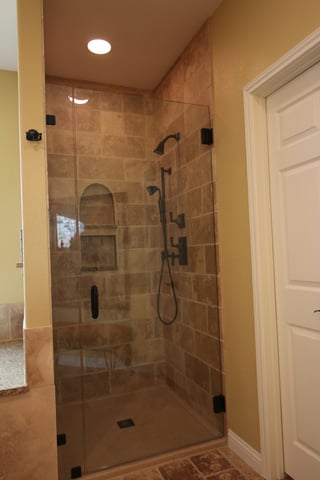
This adequately sized universal design shower above has wood blocking in the walls for a future folding seat and grab bars to be installed at the appropriate time. The low threshold shower entrance accommodates all users. The shower controls are within a 48 inch height off the finished floors and graspable by all. The dual shower heads are definitely user specific. The shower entrance door has a 32 inch clearance when fully open. There is adequate spacial lighting for showering. The floors both in the shower and connecting bath floor have an adequate nonskid surface rating.
There are seven criteria which must be met to be considered a universal design no matter which area of the home you are referring to. Any design must be equally useful to everyone, have flexibility in it's usefulness, be simple and intuitive, be perceived by everyone, have a tolerance for error, require little physical effort, and it must maintain an adequate area for approach and use. Any complexity or discriminating attribute to a design will doom it in terms of being considered universal in nature.
Disability is a complex phenomenon representing an interaction between one's physical impairments, the activities they need to perform, and the architectural barriers within the space in which this situation occurs. The terminology and jargon used for disabilities evolves regularly whereas, "handicapped" is no longer acceptable. It is no longer merely a description of intellectual or physical impairments. Each individual with similar impairments describes his or her limitations differently. The blind don't experience their world the same as a person with deafness and so on. Physically challenged has become the more socially accepted description of a person with an impairment.
Elder construction takes into account both visual and cognitive disabilities present a whole new set of problems concerning safety. Visual impairment can be aided by creating an environment with many contrasts. Something so simple as applying a contrasting color on the baseboards or varying the type of floor covering throughout the home can aid in room recognition. Cognitive limitations really deal with safety and limiting a person from being exposed to hurting themselves.
Accessibility designs addressing specific physical conditions will lessen the impact of say arthritis, restricted mobility, or loss of vision by using combinations of products, concepts, and techniques available today. Working as a team, a trained CAPS specialist along with any family caretakers or therapists is able to identify the day to day problems weighing on those with health limitations. If you are considering an aging in place remodel for your home don't just contact any local remodeler in your area and expect a satisfactory accessible home modification. A professional design/build accessibility project can only be created for your specific needs by a qualified home remodeler having a nationally accepted CAPS (Certified Aging In Place Specialist) certification. This credential is backed by the NAHB. Only a CAPS home remodeler possesses the specific knowledge that will insure a successful outcome for your accessibility or aging in place project and what's more, keep you in your home longer.
Aging in place design, construction, and remodeling has become synonymous with handicap accessible home design and modification during our lifetime. Home modifications can be used to accommodate anyone from people with mobility impairments to those with vision loss, hearing loss, or even cognitive or developmental disabilities. Accessibility home modifications or wheelchair accessible kitchen and bathroom remodeling in Austin will allow anyone with limited mobility within your home to feel more empowered and independent. The extent of a customized accessibility design is dependent upon the activity level of the person requiring the modifications.
The National Association of Home Builders, in partnership with the AARP and Home Innovation Research Labs, created the CAPS program, which includes training and education on the technical, business management and customer service skills essential to compete in the fastest growing segment of the residential remodeling industry--home modifications for aging in place. David L. Traut, CAPS owner of T-Square Company in Austin, Texas is one of the select group of professionals nationwide to earn the Certified Aging-In-Place Specialist (CAPS) designation, identifying him as a home remodeler and builder with the skills, training, and knowledge necessary to design and remodel or modify a home to meet the unique needs of the older population, disabled owners, or their visitors.
The three main rooms involved in aging in place home modifications are the bathroom, the kitchen, and the family room in that order. These areas make up the most occupied spaces of any home and will be connected by a designated accessible route. Here we will need access through wider doorways, non slip floor surfaces, and adequate cabinet and plumbing fixture accessibility. What is more important is that we must observe safety for everyone as the baby boomers choose to age in place within their homes. Just remember one thing and dispel any myth that aging in place construction and remodeling must appear institutional or out of the ordinary. When the work is done with style and taste it will only compliment the home.
Tags:
ADA compliant kitchen cabinets,
ADA accessible,
ADA bathroom cabinets accessible routes,
bathroom remodeling,
wheelchair accessible remodeling,
handicap home modifications,
aging in place remodels,
accessibility home remodeling in Austin,
aging in place specialist,
certified aging in place specialist,
Austin elder construction,
bathroom remodeling Austin Texas,
Austin Handicap Remodeling,
universal design ideas,
Austin Accessibility Design
Finding a contractor familiar with the guidelines of accessibility and an accomplished handicap remodeling contractor can be quite difficult. Check out the credentials of any potential bidders you contact. Be sure they understand that the alterations you are seeking are for present or future wheelchair accessible home remodeling and modifications. Furthermore be sure this person knows and practices both the federal and most importantly your state's requirements before entering into any contract.
The National Association of Home Builders, in partnership with the AARP and Home Innovation Research Labs, created the CAPS program, which includes training and education on the technical, business management and customer service skills essential to compete in the fastest growing segment of the residential remodeling industry--home modifications for aging in place. David L. Traut, CAPS the owner of T-Square Company in Austin, Texas is one of the select group of professionals nationwide to earn the Certified Aging-In-Place Specialist (CAPS) designation, identifying him as a home remodeler and builder with the skills and knowledge necessary to remodel or modify a home to meet the unique needs of the older population, disabled owners or their visitors.
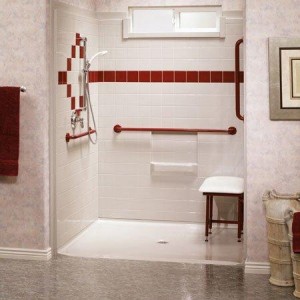
There are three categories of aging in place customers. Those who are simply and wisely planning ahead for their futures to remain in their present homes. The second category concerns those people who know they have a chronic medical disorder and need to prepare in advance for accessibility issues which will come as a result of their disease. People with diseases that are constantly causing increased physical or mental changes to their being are a good representative of this second group. The third group involves those people who either have had a chronic problem that has progressed severely altering their mobility or those who have sustained a life altering tragedy such as being involved in an accident. All of these groups will drive the future metamorphosis of existing inaccessible dwellings. The goal of an accessible bathroom design in Austin is to make the bathroom a safe space for everyone who uses the facilities. Aging in place services use design techniques to accommodate wheelchair use and can make the bathroom more comfortable for all generations with or without specific needs. It is important to carefully outline the scope of work during the remodeling of an accessible bathroom by first taking inventory of the users capabilities, needs, and preferences. All disability home remodeling or disability bath remodels in Austin must be done considering all the data provided by the client, his or her family, and any caretakers involved. Aging in place design and construction must be carried out by an aging in place specialist.
No matter how old you are you should periodically evaluate your residence to determine whether it suits you not just for the present but the future. Your home assessments will be rethought every time your living situation changes. Whether childproofing for a newborn, making a home more accessible following a sickness or unfortunate accident to someone in the family, or making a toilet area safer for an aging residing parent, there will be an immediate evolution to your primary domicile. These same life span design features are even more important if you believe you're past the age of wanting to move and are relishing the thought of aging in your own home, no matter what physical limitations you might later develop. Incorporating smart aging design concepts into a home will attract a larger group of buyers when you decide to finally sell your home.
The three main rooms involved in aging in place home modifications are the bathroom, the kitchen, and the family room in that order. These areas make up the most occupied spaces of any home and will be connected by a designated accessible route. Here we will need access through wider doorways, non slip floor surfaces, and adequate cabinet and plumbing fixture accessibility. What is more important is that we must observe safety for everyone as the baby boomers choose to age in place within their homes. Just remember one thing and dispel any myth that aging in place construction and remodeling must appear institutional or out of the ordinary. When the work is done with style and taste the job will only compliment the home. Call us at 512-444-0097 today to see how we can help you design your home for the future utilizing universal design techniques.
Aging in place home remodeling in Austin will be completely driven by the homeowner's desire to remain in their home for as long as it is physically possible. When disability strikes, that same home you have endeared for at least part of your lifetime can become a prison that presents barriers, frustrations, and perils at every turn. The lack of any preparation or access upgrades possibly is driven by our youth oriented culture that wants to believe we are all young, bullet proof, and fit and will continue to be so. Perhaps we believe as a society that accessible upgrades will decrease our home's property values. The contrary is the reality. Just try looking for a barrier free accessible home. Actually, don't even bother. There are none. Oh yes, there are retirement communities for the older "active" seniors but the key word here is active having nothing to do with accessibility and a lot to do with the money required to live there.

Tags:
residential construction contractor,
ADA accessible,
handicap home modifications,
CAPS certified remodeling in Austin,
disability bathroom remodels,
handicap accessible bathrooms,
accessibility home remodeling in Austin,
accessible home remodeling,
disability home remodeling in Austin,
certified aging in place specialist,
bathroom remodeling Austin Texas,
handicap remodeling contractors,
bathroom modifications for disabled,
wheelchair accessible showers in Austin,,
handicap bathrooms,
disability remodeling in Austin,
Austin Handicap Remodeling,
universal design ideas
All new construction or any bathroom remodel should include an accessible shower with head combinations in multiple locations to fit anyone's needs. Incorporating universal design principles into your home's custom walk in shower design can facilitate aging-in-place goals, while comfortably addressing the diverse needs of all ages and mobility levels using your home. Rain heads coming out of the ceiling, body heads coming out of the walls in many locations, or hand held units attached to the shower walls can make things very interesting and relaxing. These combinations of heads and locations can be used to create rain effects, provide relief for muscle aches through body massages, or simply provide pin point convenience with hand held variable heads. The possibilities are endless as you dial in your bathing environment. Steam generators are also being considered as an investment in today's fine bathroom designs. The steam heads can make the difference after a tough day when you're looking for that more therapeutic spa experience. This has certainly led the way to the thermostatic shower valve with plumbed-in hand held shower that is being used specifically in homes today where owners are planning to retire or needing handicap bathrooms.
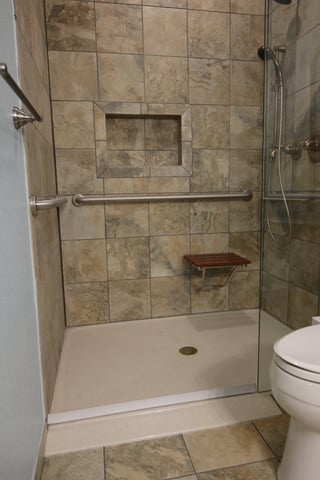
Many people find themselves needing accessible homes for themselves or family members. There are approximately 30 million Americans using wheelchairs and the number of people who need accessible homes will continue to increase as disabled and aging people are finding more ways to remain living in their homes. One important way to increase independent living is making a home accessible to an individuals personal needs which brought on the idea of wheelchair remodeling. Home modifications can increase safety, accessibility, and independence for people who want to live independently.
Universal design and aging in place services in Austin have finally taken hold in the residential remodeling industry. The current housing inventory doesn't offer the features needed for safety and accessibility in the numbers needed to accommodate the growing demand. It is ultimately up to the homeowners and their families to plan for future housing needs. Our existing architecture does not lend itself well to accomplishing any easy aging in place home remodels in Austin. In fact, there are more inaccessible homes in all of the US than there are accessible homes and 45% of these existing homes are owned by the baby boomers representing the oldest group of homeowners. Generally speaking in most residential US properties there are no easy ways to enter into bathrooms or utilize kitchens without coming into contact with one architectural barrier or another-especially if a wheelchair or walker is being used to help with mobility issues. Everything requires the proper clearance and distance for a new customized accessible route in your home to function properly. Please consider this aspect in your design if an elderly parent will be coming to visit or you yourself suffer an unfortunate accident or develop a debilitating disease.
Roll in showers without curbs are advised for everyone on a universal level for an accessible bath. The threshold is the most dangerous component in any shower. Not only is it impossible to overcome in a wheelchair but it isn't safe for those who are vision impaired or those with mobility issues. Low threshold shower bases with add on ramps can solve the shower entry problem when the floor cannot be lowered to form a true contoured roll in slope. ADA compatible curbless roll in showers are at a minimum 5 feet wide by 3 feet deep while a 5'x5' floor is optimum. Using a 32-36" clear entrance in a shower partition with an out-swinging door is advised for everyone. Remember wider is better. Upon exiting the shower a clear floor space having a five feet turning radius is desired. The shower should contain a shower wand on a sliding bar mounted at 48" above the floor to be available for varying heights of use accompanied by a regular height fixed shower head above both of which are regulated with a diverting controller valve. Always use a shower valve that is thermostatically controlled and pressure-balanced to prevent scalds. If you desire a full body wash, you can include a regular shower head as well. Installing fixtures with a scald guard or lowering the temperature at the water heater is a must to prevent burns. Fold down seats are useful if caretakers are involved. Secure grab bars on wood grounds around the entire shower perimeter at 34-36" above the finished shower floor increasing the safety factor and helping to prevent falls. A shower can light fixture needs to be installed above the shower area for proper lighting. All of the bathroom floor surface must be nonskid type to prevent slipping on a guaranteed wet floor.

Designing around specific physical conditions for handicap accessibility will lessen the impact of say arthritis, restricted mobility, or loss of vision by using combinations of products, concepts, and techniques available today. Working as a team, a trained CAPS specialist along with any family caretakers or therapists is able to identify the day to day problems weighing on those with health limitations. If you are considering an aging in place remodel for your home don't just contact any local remodeler in your area and expect a satisfactory accessible home modification. A professional design/build accessibility project can only be created for your specific needs by a qualified home remodeler having a nationally accepted CAPS (Certified Aging In Place Specialist) certification. This credential is backed by the NAHB. Only a CAPS home remodeler possesses the specific knowledge that will insure a successful outcome for your accessibility or aging in place project and what's more, keep you in your home longer.
The National Association of Home Builders, in partnership with the AARP and Home Innovation Research Labs, created the CAPS program, which includes training and education on the technical, business management and customer service skills essential to compete in the fastest growing segment of the residential remodeling industry--home modifications for aging in place. David L. Traut, CAPS the owner of T-Square Company in Austin, Texas is one of the select group of professionals nationwide to earn the Certified Aging-In-Place Specialist (CAPS) designation, identifying him as a home remodeler and builder with the skills and knowledge necessary to remodel or modify a home to meet the unique needs of the older population, disabled owners or their visitors. Call us at 512-444-0097 to see how we can help you design your bath for the future.
Tags:
ADA accessible,
aging in place remodeling,
wheelchair accessible remodeling,
wheelchair accessible baths and kitchens,
wheelchair accessible baths,
aging in place specialist,
certified aging in place specialist,
Austin elder construction,
handicap home modifications for disabled,
handicap accessibility,
handicap remodeling contractors,
roll in showers in Austin,
home modifications for independent living Austin,
disability access bathrooms Austin,
disability remodeling in Austin,
Austin Handicap Remodeling,
universal design ideas
Finding a contractor familiar with the guidelines of accessibility concerning elder living solutions or bathroom modifications for the disabled can be quite difficult. Be sure to check out the credentials of any potential bidders you contact. Be sure they understand that the alterations you are seeking are for wheelchair accessible home remodeling and modifications. Furthermore be sure this person knows and practices both the federal and most importantly your state's requirements before entering into any contract.
Designing for specific physical conditions will lessen the impact of say arthritis, restricted mobility, or loss of vision by using combinations of products, concepts, and techniques available today. Working as a team, a trained CAPS specialist along with any family caretakers or therapists is able to identify the day to day problems weighing on those with health limitations. If you are considering an aging in place remodel for your home don't just contact any local remodeler in your area and expect a satisfactory accessible home modification. A professional design/build accessibility project can only be created for your specific needs by a qualified home remodeler having a nationally accepted CAPS (Certified Aging In Place Specialist) certification. This credential is backed by the NAHB. Only a CAPS home remodeler possesses the specific knowledge that will insure a successful outcome for your accessibility or aging in place project and what's more, keep you in your home longer.
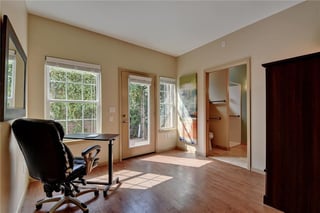
Many people find themselves needing accessible homes for themselves or family members. There are approximately 30 million Americans using wheelchairs and the number of people who need accessible homes will continue to increase as disabled and aging people are finding more ways to remain living in their homes. One important way to increase independent living is making a home accessible to an individuals personal needs. Home modifications can increase safety, accessibility, and independence for people who want to live independently.
What really defines the accessible homes of Austin? Barrier free architectural design and accessibility for all who enter the structure while approaching the main living areas of the home in question is a fair definition. Universal design and aging in place trends have taken hold in the residential remodeling industry. The current housing inventory doesn't offer the features needed for safety and accessibility in the numbers needed to accomodate the ever growing demand. It is ultimately up to the individual homeowners and their families to plan for future housing needs. Once it is discovered that modifications to an existing home are not possible to accomplish total accessibility then it is time to consider a newer or custom built accessible home. What are the main design issues regarding aging in place home modifications or elder construction in Austin?
- Low maintenance with little need for landscaping or exterior upkeep which could translate into newer rather than older homes that are the accessible homes of Austin.
- An accessible level entry either achieved with ramps or the rare flat lot in Austin. Consumers are looking for the free maneuverability that more open floorplans offer having greater clear unobstructed floor space. Wider doorways and unobstructed accessible routes are truly a concern. These structures will provide flat floors without transitions requiring steps or stairs to move around.
- An accessible master suite and kitchen located on the same floor is preferable. If two story homes are mandated by the community then the guests will inhabit the second floor. If the master suite needs to be located on the second floor then closets can be stacked to house a future elevator installation.
- Evolving kitchens have sprung up due to the more open floorplans. Fewer wall cabinets, lowered cabinet tops, pullout shelves or specialized drawers, and a reduced number of mobility obstructing doors represent the evolution of todays cabinetry. Kneespaces can be incorporated into a kitchen design for roll under access to the sink, prep area, and cooktop. Higher toe kicks can facilitate greater wheelchair access.
- Appliances are being installed at more comfortable heights due to decreased reach distances and bending motion. Raised dishwashers, refrigerator drawers, dishwashing drawers, and nonstacked double ovens are just a few changes within the appliance world. Microwaves can be installed below the cabinet top and cooktops with controls located on the front represent another appliajnce metamorphosis helping with reach problems.
- The lack of cabinet doors creating a new accessible open look for cabinrtry is taking hold on the market. This is becoming more popular in both the bath and kitchen of accessible homes.
- Bathroom accessibility remodels require vanities with universal height cabinet tops and open knee spaces which are taking over the marketplace. These new residential vanities do not need to look institutional. They can be designed like any other piece of fine furniture. Comfort height toilets covered with any one of a multitude of available seats to fit every need prevent deep knee bends required for seating. Curbless roll in showers are advised for everyone on a universal level. The shower should contain at least a shower wand on a sliding bar to be available for varying heights of use alongwith a regular height shower head with diverter control if desired. Folding seats are useful if caretakers are involved and secure grab bars around the shower perimeter will increase the safety factor and prevent falls. All of the bathroom floor surface must be nonskid to prevent slipping on a guaranteed wet floor.
The National Association of Home Builders, in partnership with the AARP and Home Innovation Research Labs, created the CAPS program, which includes training and education on the technical, business management and customer service skills essential to compete in the fastest growing segment of the residential remodeling industry--home modifications for aging in place. David L. Traut CAPS owner of T-Square Company in Austin, Texas is one of the select group of professionals nationwide to earn the Certified Aging-In-Place Specialist (CAPS) designation, identifying him as a home remodeler and builder with the skills and knowledge necessary to remodel or modify a home to meet the unique needs of the older population, disabled owners or their visitors.
For additional information about the CAPS program, visit nahb.org/CAPS. For more information about T-Square Company, visit www.tsquareco.com or call 512-444-0097.
Tags:
handicap accessibility,
handicap remodeling contractors,
bathroom modifications for disabled,
home modifications Austin, Texas,
bathroom accessibility remodels in Austin,
wheelchair accessible showers in Austin,,
roll in showers,
handicap bathrooms,
roll in showers in Austin,
house remodeling Austin, Texas,
home modifications for independent living Austin,
disability access bathrooms Austin,
disability remodeling in Austin,
Austin Handicap Remodeling,
universal design/build,
universal design ideas,
universal design/build ideas
Incorporating universal design principles into your home can facilitate aging-in-place goals, while comfortably addressing the diverse needs of all ages and mobility levels using your home. There are seven criteria which must be met to be considered a universal design no matter which area of the home you are referring to. Any design for an Austin bathroom remodel must be equally useful to everyone, have flexibility in it's usefulness, be simple and intuitive, be perceived by everyone, have a tolerance for error, require little physical effort, and it must maintain an adequate area for approach and use. Any complexity or discriminating attribute to a design will doom it in terms of being considered universal in nature.
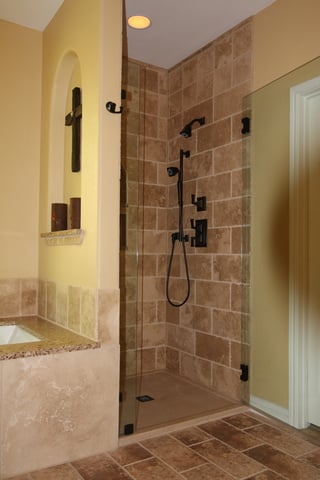
Universal Design (UD) does not equate to accessibility design even though they both are concerned with ergonomics and human function issues. The ADA guidelines for accessibility were created as a means to help those people with extreme disabilities within our society who are a narrow and specific cross section of the masses. A UD approach broadly takes into account moderate impairments or disabilities, temporary health conditions, and the varying abilities of anyone within a home regardless of their age or size. In other words, an ADA accessible home would be designed for the one person with the disability whereas a UD home is designed for everyone. Features like single-story design, bedrooms and bathrooms on the ground floor, day lighting through larger windows and skylights, and wider doors and hallways appeal to users of all ages. With baby boomers eyeing a future where they'll age in place and younger people renovating older homes, the Harvard Joint Center for Housing Studies is anticipating healthy growth for the U.S. home improvement market through 2025.
However, if you're considering aging-in-place upgrades, making improvements in the bathroom can deliver the greatest return on your investment. Upgrades to improve a bathroom's usability and safety can help people remain in their homes longer. Universal design home improvements can benefit all ages within your home. Making these upgrades at a younger age can prepare your home to meet your needs in your golden years, while allowing you to enjoy the comforts early on. Designing for specific physical conditions will lessen the impact of say arthritis, restricted mobility, or loss of vision by using combinations of products, concepts, and techniques available today. Working as a team, a trained CAPS specialist along with any family caretakers or therapists is able to identify the day to day problems weighing on those with health limitations. If you are considering an aging in place remodel for your home don't just contact any local remodeler in your area and expect a satisfactory accessible home modification.
The bathroom has the reputation of being the most dangerous room within your home because of water usage. Any improvements helping to prevent a future accident or creating a space which makes it easier to use all the facilities within the room are obviously a plus for any homeowner. Modifications to accommodate chair height toilets, pedestal sinks, easy to use faucets, walk in tubs, non-skid flooring, and custom walk in shower seating can be of great use to any homeowner.
Young Austin homeowners are always looking for ways to bring their existing older home's bathrooms up to date. Bathroom remodels for these smaller baths can incorporate a number of the items listed above in moderation to fit any budget. Using beautiful ceramic tiles in an interesting design, updating plumbing fixtures, and the use of neutral colors can create a small bathroom with a "wow" factor. It is quite possible to produce a small but charmingly remodled bath on a budget. A project that is affordable plus the fact that it will add resale value to your home cannot be denied. Check out all the options before committing to a plan and then stick to it. Consider the ease of use for anyone within the bath. Plan for the future. Always hire a local and professional builder. Remember that producing change orders because no one thought of "that" can be expensive. Create the style for your Austin bathroom remodel that best gives you a feeling of pride!
If you are fortunate in having a larger space to deal with there will be increased costs due to the larger area to finish -as in more tiles for a bigger area and the labor to install them. Your costs may go down per square foot but you are certainly dealing with more coverage and increased costs. You need to consider that plumbers, electricians, tile setters, framers, drywall workers, carpenters, and insulation installers, just to name a few trades, will be involved in your bathroom remodel. Now how about the demolition that will be involved before the actual construction begins? Sometimes the preparations behind the scenes take longer than building the new bathroom remodel itself. Perhaps there isn't enough water volume to supply your chosen bathroom fixtures requiring a pipe to be upgraded or there just isn't sufficient fall for a gravity drain to work naturally that necessitates a lift pump system be installed. What are the new electrical requirements and layout and do these require dedicated or GFI circuits and will the existing electrical panel handle the new circuit breakers?
Considering a new walk in shower design? You can design the space so it doesn't require a door for splash protection or you can take the route of a clean looking frameless glass shower enclosure. This will surely set you back at least $900. Maintain a wider door opening. The end result will be a sophisticated clean look of beauty enclosing your new shower. Whether the door sits upon a curb or you have a specific need for a curbless situation you will be satisfied with your choice. The curbless choice means you're thinking ahead for a hopefully temporary physical need. Installing wood blocking within the shower walls can facilitate installing future grab bars or a folding seat. Are the shower controls and heads accessible to everyone?
Let's face it, an accessible home is needed by all of us at some time in our lives. This is true whether it's for ourselves, a family member, or a guest. The need is certainly not driven by age but is a result of life's experience. Any family living with a disability among any of the generations within it's group can always benefit from additional accessibility. This will in turn increase safety and independence for all involved as they go through life.
Aging in place home modifications are available through T-Square Company in Austin. Each universal design/build situation will be customized to fit your personal needs. Call 512-444-0097 today to begin to prepare for the accessible second chapter of your life while remaining safe and secure in your existing home.
CAPS 1636580
Tags:
aging in place specialist,
bathroom remodeling contractor Austin Texas,
bathroom upgrades Austin,
handicap accessibility,
accessibility remodelers in Austin,
ADA remodeling Austin, Texas,
handicap bathrooms,
roll in showers in Austin,
walk in shower designs Austin,
disability remodeling in Austin,
Austin Handicap Remodeling,
universal design/build,
universal design ideas,
universal design/build ideas
Kitchen remodeling in Austin, Texas like most other cities include many of the same aspects. So what should you consider? Have you decided you need more room? More storage? Are you looking for a complete kitchen makeover? Will you add on to your home? How will you determine what's needed without some soul searching and research? All are great questions when considering such a costly investment in your home. At least we know that remodeling of both the kitchen and bath reap the most benefits and ROI when it comes time to sell your home. Try and fill in the answers to the questions below for your home using the following steps which will aid you in defining your new kitchen remodel.
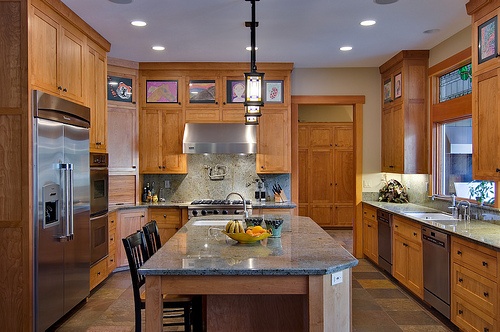

Determine what is needed by first identifying your priorities. Kitchen remodeling ideas are endless. Consider how you use your kitchen as it pertains to your personal family lifestyle. Consult with everyone you know who has endured a kitchen remodel and pick up on the pointers they recognized in hind sight. Collect a series of favorite photographs and ideas from any and all media collections to construct a scrapbook of sorts. Your collection will need to be narrowed in scope to fit your situation before the final design is agreed upon for your Austin kitchen remodel.
Start deciding on your budget and determine what the scope of work will be for your kitchen remodel. These variables can only be solved with accurate planning. It is far easier and least costly to perform this step on paper rather than with change orders issued throughout the construction phase. Determine what you would like to see in your new kitchen but most importantly what you can reasonably afford.
Know that a kitchen remodel is not a DIY situation and that you will need to consult with a residential remodeling professional at some point. Be sure to choose a local qualified kitchen remodeling contractor whose personality and qualifications are agreeable with you personally. Check out the reviews on the company to find out how clients have responded to their experiences. You are about to undertake a very important short term relationship in your life with someone you may know by reputation only. The relationship needs to be comfortable and free flowing thus enabling the contractor's creativity level to be at it's highest during your remodeling project. Look at it as a partnership between your needs and the remodeling contractor's abilities. The use of many finishes must be accommodated for. His professional remodeling experience will include the capacity to identify many construction limitations and hazards. These variables underlie the major pitfalls that can be possibly avoided while enabling a remodeling design to come to reality. Don't forget that you get what you pay for and it certainly isn't about the lowest bid but the remodeling company's integrity and knowledge. Some CAPS certified remodeling companies have the experience and education to assist you in accomplishing remodeling upgrades that include accessibility or disability issues. It is important that the job flows between the various trades involved to produce a better final outcome. This too is a reflection on his remodeling experience for which there is no substitute.
Concentrate on the kitchen's layout and space planning rather than the way everything will look at the end. Use any means you can think of to mimic the new layout on the floor so you can be sure of the new footprint. Decide on which appliances and fixtures you want to use then figure out where they will be installed. Address any special storage needs that are needed. Designers and architects can be very helpful at this phase of the design if you cannot visualize the end result. Working with an experienced contractor might also save you on soft costs for the project and enable you to put your money toward the hard construction costs of the project while relying on his experience.
It's time to determine your finishes and what will stand out most at the end of the project. Make a decision on the type and style of cabinetry you desire and the materials you want for your counter top work surface along with the adjoining back splash material. Settle on a specific sink and fixture that accomplishes your work habits. Don't forget about the island and the function of it's sink. Decide on any specific lighting along with it's location and the appliances you've made a decision on through your research. Pick out your flooring and any special hardware you desire.
Execute the construction documents needed for obtaining a city construction permit. These will include floor plans, engineering drawings if required, any electrical, mechanical, or plumbing changes, and all research concerning your home's listing with the city.
Be on board with your professional remodeling company of choice at this time and determine the costs of any subcontractor aspects to finalize the expenditures for your project. Be sure everything is within or below your budget. Remember that kitchen remodeling in Austin, Texas isn't new construction progressing fairly seamlessly from A to Z and there will more than likely be additional charges you hadn't planned for in the beginning.
Once the construction is ready to begin, finalize all contracts and logistical considerations. If you are going to try and live in the home during construction then you need to plan for everything to be disrupted. Clean out your cabinets and discard the things you haven't used in years. Decide what needs to be put in storage. What is the concern for dust protection or a family member's allergies? Setting up a temporary kitchen somewhere else in the home will help during your usual daily grind and don't forget to relocate the refrigerator and coffee pot. If you are fortunate enough to move out then do so to cause less strain on your family and the workers. If you're moving out is there adequate daily access to your home for the workers? What about security?
As the construction comes to an end begin compiling a punch list for the contractor to address once the project is significantly finished. Things will happen like scratches and scrapes but everything is fixable at the right time. Do not interrupt the daily work schedule for everyone trying to finish your project unless the matter is critical to the project. Weekly meetings with your residential remodeling contractor should avoid any such problems keeping you up to speed with your project. Everyone involved in your project is a professional working for the remodeling company you chose and can very well take care of any minor touch ups after the main scope of work is complete.

.jpg?width=320&name=Biber%20Remodel%20(44).jpg "Kitchen Remodel Austin")
.jpg?width=320&name=Biber%20Remodel%20(71).jpg "Kitchen Remodeling Austin")

Whatever your situation please rely on the experiences of a local building professional. Check out their credentials and references over merely price checks against other bidders. Don't make the mistake of letting a cabinet making subcontractor play the part of a general contractor because his knowledge will be limited to that of the cabinets and not much else. You get what you pay for with proper planning. Call T-Square Company today at 512-444-0097 today for a complete design/build experience for the new kitchen you've longed for.
Tags:
fine kitchen upgrades,
kitchen remodeling,
kitchen makeovers,
how-to,
fine cabinetry,
kitchen cabinetry,
Austin kitchen remodeling,
kitchen remodeling ideas,
kitchen remodel ideas,
Austin kitchen remodels,
Austin kitchen remodel,
kitchen remodeling in Austin Texas,
kitchen cabinets Austin,
Austin Texas kitchen remodel,
remodled kitchens,
home remodeling Austin, Texas,
artistic kitchen upgrades Austin, Texas,
fine cabinetry in Austin,,
fine cabinetry Austin,
Austin, texas kitchen cabinets,,
Austin kitchen cabinets
With our population living longer, our society is experiencing an age related housing problem. Aging in place issues have become the norm given our aging baby boomer population. Aging in place specialists holding a CAPS certificate, their services, and aging in place design is taking over the remodeling industry day by day. A revolution in building design standards is long overdue. Our current building design standards do not address the needs of more than one third of our existing population. Many more people can greatly benefit from accessible design versus conventional design. Our rapidly aging population is experiencing the limitations of our personal living environments. Any evolution in building practically always begins in the common areas of the commercial building sector. The American Disabilities Act of 1990 increased the attention needed for those people having the right to equally access their work place and any recreational or leisure facilities. These rules at least offer minimal solutions for those needing the most help with any building access. In Austin, we now must provide access to one bathroom on the first floor in new homes as deemed by our newly adopted building regulations. This basic right to an accessible bathroom is finally being enforced by the city's building officials. What a tremendously needed and basic design improvement to our homes!
This adequately sized universal design shower above has wood blocking in the walls for a future folding seat and grab bars to be installed at the appropriate time. The low threshold shower entrance accommodates all users. The shower controls are within a 48 inch height off the finished floors and graspable by all. The dual shower heads are definitely user specific. The shower entrance door has a 32 inch clearance when fully open. There is adequate spacial lighting for showering. The floors both in the shower and connecting bath floor have an adequate nonskid surface rating.
The Universal Design (UD) concept is also age driven like the aging in place design issue but addresses the design of all homes both new and existing. Universal design/build addresses not only the problems all of today's homeowners face but the professional skills involved in design, building, remodeling, and all social and health services. This new evolving concept in home remodeling is catching on nation wide and has been for several years as a sign of the times. Universal design techniques used in building makes a home more accessible to all regardless of their mobility or adaptive abilities and plans for future elder living solutions. The multi-generational appeal of UD is appealing to any homeowner, their children, or their parents. An evolution of new products used for disability home modifications is making those homes more accessible and has finally come about in the remodeling industry. These new advances in accessible home remodeling in Austin not only keep the living environments safer but will not compromise the home's aesthetics.
Universal design ideas do not strictly deal with accessibility or aging in place design and does not implement precise ADA standards but it does offer flexibility to add accessories now and later to those planning ahead or to the end user. It also provides for a wide range of human performance characteristics for the way people use spaces within their homes including well integrated usability features. These adaptations have a broad market appeal to everyone for achieving ease of use, safety, and convenience accommodating a certain reality. That reality is that all people exist along a continuum of human performance as per their personal traits and characteristics regardless of their age. A universal approach to design takes into account that everyone has varying degrees of ability and disability rather than someone is either fully-functional or disabled. A universal design is appealing to all users.
There are seven criteria which must be met to be considered a universal design no matter which area of the home you are referring to. Any design must be equally useful to everyone, have flexibility in it's usefulness, be simple and intuitive, be perceived by everyone, have a tolerance for error, require little physical effort, and it must maintain an adequate area for approach and use. Any complexity or discriminating attribute to a design will doom it in terms of being considered universal in nature.
Universal Design does not equate to accessibility design even though they both are concerned with ergonomics and human function issues. The ADA guidelines for accessibility were created as a means to help those people with extreme disabilities within our society who are a narrow and specific cross section of the masses. A UD approach broadly takes into account moderate impairments or disabilities, temporary health conditions, and the varying abilities of anyone within a home regardless of their age or size. In other words, an ADA accessible home would be designed for the one person with the disability whereas a UD home is designed for everyone and should be used with any custom tub shower conversion.
Let's face it, an accessible home is needed by all of us at some time in our lives. This is true whether it's for ourselves, a family member, or a guest. The need is certainly not driven by age but is a result of life's experience. Any family living with a disability among any of the generations within it's group can always benefit from additional accessibility. This will in turn increase safety and independence for all involved as they go through life.
Aging in place home modifications are available through T-Square Company in Austin. Each universal design/build situation will be customized to fit your personal needs. Call 512-444-0097 today to begin to prepare for the accessible second chapter of your life while remaining safe and secure in your existing home.
CAPS 1636580
Tags:
aging in place remodeling,
bathroom remodeling,
bathroom remodels,
bathroom makeovers,
CAPS certified remodeling in Austin,
accessible home remodeling,
Universal Design,,
Austin bath remodeling,
Austin bath remodel,,
Austin bathroom remodeling,
Austin bathroom remodel,
aging in place specialist,
aging in place services,
aging in place design,,
bathroom remodeling contractor Austin Texas,
bathroom remodeling Austin Texas,
bathroom upgrades Austin,
accessibility remodelers in Austin,
universal design/build,
universal design ideas,
universal design/build ideas