David L. Traut, CAPS
In 1974 while obtaining a graduate degree from the University of Texas at Austin an innate talent was acknowledged and T-Square Company was formed as a means to remodel both friends and Professors homes. This began a quest for constructive footprints leading to a lifetime of challenge. My researching practices evolved into the art of building the most efficient structures possible utilizing the ever changing technologies benefiting construction.
With over three decades of experience in both residential and commercial construction techniques a hybrid type of building became available to our clients insuring a successful completion of their projects. We incorporate our in house craftsmen with a qualified group of licensed subcontractors to get your project done professionally, in budget, and on time.
The concept of the accessible home has evolved beyond the basic grab bars and ramps to one in which accessibility is built into the basic design. Universal design makes living in a home easier for people of all ages and abilities. Accessible can be both beautiful and functional and never needs to have any institutional appearance. As our aging baby boomer population ages, the need for accessibility in the home is becoming ever more important. Our new way of viewing the basic home in our society and our antiquated architecture is giving way to a revolution in home design. Ordinary homeowners with extraordinary challenges can partner up with CAPS design professionals, architects, and their own families to create homes to restore capabilities, independence, and grace to daily living. Bathroom accessibility remodels with roll in showers in Austin, Texas are possible with the right people involved.


Human problems must be solved using correct designs when remodeling which have been customized to match the abilities of the occupant. People who have become seriously injured, people living with a debilitating disease, people with sensory limitations or intellectual limitations, and last but not least the people who are planning to stay in their homes for as long as possible all need accessible homes. The need for dealing with disabilities empowers us all to ensure that we create environments wherein people can function effectively.

But you say to yourself that your needed aging in place home modifications basically require general home remodeling in Austin, Texas or in any other town for that matter. That is true but a specialized handicap remodeling contractor holding a national CAPS certificate is who you need as a partner to insure that the accessibility issues of your home are solved correctly. With over 30 years of remodeling experience I obtained my registered CAPS certificate. By offering a design/build firm to my aging in place customers, I get personal satisfaction from giving my clients their independence back while the remain in their existing home. Without the training required to earn the CAPS certificate on top of my decades of building knowledge I could not offer my customers such a thorough and complete solution for solving their accessibility issues. Only an experienced qualified remodeler holding a CAPS certificate has the qualifications to design an accessible route and perform the construction required to make it safe and functional for the AIP customer. Accessible bathrooms with custom walk in showers and kitchens are available using the right education and experience. There is nothing more rewarding than seeing a person with mobility impairments be able to independently roll into his or her shower in their disability access bath and witness that accomplishment.
The National Association of Home Builders, in partnership with the AARP and Home Innovation Research Labs, created the CAPS program, which includes training and education on the technical, business management and customer service skills essential to compete in the fastest growing segment of the residential remodeling industry--home modifications for aging in place. David L. Traut CAPS owner of T-Square Company in Austin, Texas is one of the select group of professionals nationwide to earn the Certified Aging-In-Place Specialist (CAPS) designation, identifying him as a home remodeler and builder with the skills and knowledge necessary to remodel or modify a home to meet the unique needs of the older population, disabled owners or their visitors.

Tags:
aging in place remodeling,
ADA bathroom cabinets,
CAPS professional in Austin,
accessible home remodeling
Disability home remodeling in Austin, Texas deals with everyone in our society and not just the aging baby boomer population. Bathroom accessibility remodeling in Austin, Texas is being driven by the forward thinking homeowners without urgent needs, the people who have progressive debilitating diseases, and those of us who have undergone a life changing traumatic experience. The current architecture in the United States is very antiquated in our aging housing market with small bathroom entries leading into tight quarters along with the narrow hallways toward the most useful common areas in the home. A new type of specialized remodeling has come about to fill the need for accessibility within the older home inventory. Home design targeted to people of varying ages and abilities is a current and growing market trend while providing a need for handicap remodeling.
Wheelchair accessible baths and kitchens are becoming the norm to take care of all the population of homeowners needing increased accessibility. Universal design techniques are giving everyone a chance to be independent. These very basic techniques provide adaptations or specialized designs regardless of age, ability, or situation. No longer are handicap home modifications viewed as a resale market diminishing factor. They are becoming a resale enhancer when you look at all the people in the nation simply needing accessibility in the bathroom to uphold their dignity and safety. Between the ages of 16 and 64, 19% of the population is disabled whereas those above the age of 65 exhibit a 42% disability rate. Nearly 62% of the homeowners in America report that someone in their family has mobility issues and disability needs.
A desire for a more marketable home that is more inviting and accessible to all in the home buyer market will drive the use of universal design criteria. Making a home feel more comfortable using some key elements like incorporating a zero step entrance into the home, providing interior doors along the accessible route with a minimum of 32 inch wide clearances, having a minimum 36 inch wide level route on the ground floor, exhibiting ground floor bathroom walls reinforced to accept grab bars for the toilet, tub, and shower, and a presence of light switches, outlet, thermostats, and other controls being installed at accessible heights at or below 48" are only a few modifications needed for increasing accessibility.
We rely on the published ADA rules for accessible bathroom fixtures and the clear floor space leading to them. Comfort height toilets at or around 18" in height, roll under vanities with 27" vertical clearance, and roll in showers with a minimum 42"x42" size (but bigger is better) will take care of the needs of most. Every circumstance must be considered when designing for those with special needs during bathroom modifications for the disabled. There is no "one shoe fits all" approach and much thought must be given to progressive conditions where care givers will be involved. Working with a physical or occupational therapist and the client often helps to identify effective solutions.
When faced with a home that can no longer meet one's needs, one must weigh the costs of moving against improving the home. In any move there are costs that sellers must incur to market their homes as well as relocating to another one. Rather than incurring an outright expense during a move, improvements add real value and enhance their home's appeal to more broader markets. Such homes enhance quality of life and enable occupants to enjoy the full use of their home while maintaining their personal independence. These modifications provide benefits to enable the residents to also remain in their communities with or without in home care and out of more expensive settings such as nursing homes.
Aging in place home modifications are available through T-Square Company in the Austin area. We have an A plus rating with the local BBB and have over 30 years of remodeling experience. We are additionally a certified aging in place specialist offering complete aging in place services. Each design/build situation will be customized to fit your personal needs increasing your accessibility. Call 512-444-0097 today to begin the accessible second chapter of your life while remaining safe and secure in your existing home. CAPS #1636580

Tags:
accessible routes,
aging in place home modifications,
bathroom remodeling,
wheelchair accessible remodeling,
wheelchair accessible baths and kitchens,
ADA remodeling,
CAPS certified remodeling in Austin,
ADA bathroom cabinets,
aging in place remodels,
wheelchair accessible baths,
accessibility home remodeling in Austin
Our existing architecture does not lend itself well to accomplishing any easy aging in place home remodels in Austin. In fact, there are more inaccessible homes in all of the US than there are accessible homes and 45% of these existing homes are owned by the baby boomers representing the oldest group of homeowners. Generally speaking in most residential US properties there are no easy ways to enter into bathrooms or utilize kitchens without coming into contact with one architectural barrier or another-especially if a wheelchair or walker is being used to help with mobility issues. Everything requires the proper clearance and distance for a new customized accessible route in your home to function properly provided by wheelchair remodeling.
But you say to yourself that your needed aging in place home modifications basically require general home remodeling in Austin, Texas or in any other town for that matter. Aging in place services provided by a specialized remodeling contractor holding a national CAPS certificate is who you need as a partner to insure that the accessibility issues of your home are solved correctly. With over 30 years of remodeling experience I obtained my registered CAPS certificate. By offering a design/build firm to my aging in place customers, I get personal satisfaction from giving my clients their independence back while the remain in their existing home. Without the training required to earn the CAPS certificate on top of my decades of building knowledge I could not offer my customers such a thorough and complete solution for solving their accessibility issues. Only an experienced qualified remodeler holding a CAPS certificate has the qualifications to design an accessible route and perform the construction required to make it safe and functional for the Aging In Place customer. There is nothing more rewarding than seeing a person with mobility impairments be able to independently roll into his or her shower and be a part of that accomplishment.

Let's compare the alternative costs associated with aging in place verses when you already own your home. The more institutional alternative of assisted living accompanied by more medical expertise and staff training plus the access to emergency medical facilities is available as opposed to renting an apartment. These are two of the main alternative choices for seniors who decide not to remain in their own homes. According to a national study done in 2014, the average cost for assisted living ranged from $3,000 to $3,500 per month. However, if you decide to age in place in a high quality one bedroom apartment, the rent will run around $1,300 per month. Living in your own home or with loved ones represents a preference by most seniors and property taxes must be taken in account.
An average Aging in Place bathroom home modification providing total accessibility given there is a large space to remodel at onset will come in around $30,000. This can vary in many aspects if there is not enough room to change the existing floor plan. Smaller bathrooms can cost $15-20,000 but will not have the barrier free accessibility as the larger modified bathroom. Fully accessible kitchens will run on the average of $50,000 depending on the size of the existing kitchen. These are both one time costs for sustainability of a given lifestyle and location providing future independence and safety for the homeowner who participates in accessible home remodeling.
The best way to prepare for aging in place is to have a definite plan considering all possible outcomes and needs for those involved. Aging in place isn't for everyone like those with major health issues. For others with more independence, it can be a practical decision providing quality of life and safety for many years. Everyone's needs are different as we age and one must allow for flexibility and change for all future decisions.
Construction and design professionals are taking advantage of the CAPS training across the nation. This designation is taught through the National Association of Home Builders in collaboration with AARP. CAPS connects responsible professionals with home owners who need these services on an ever increasing basis. CAPS is a nationwide initiative and all active CAPS professionals can be found at nahb.org/CAPSdirectory. David L. Traut, CAPS the owner of T-Square Company in Austin, Texas is one of the select group of professionals nationwide to earn the Certified Aging-In-Place Specialist (CAPS) designation, identifying him as a home remodeler and builder with the skills and knowledge necessary to remodel or modify a home to meet the unique needs of the older population, disabled owners, or their visitors.
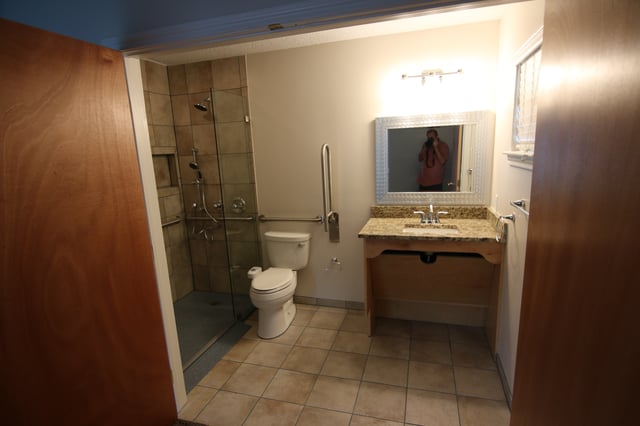
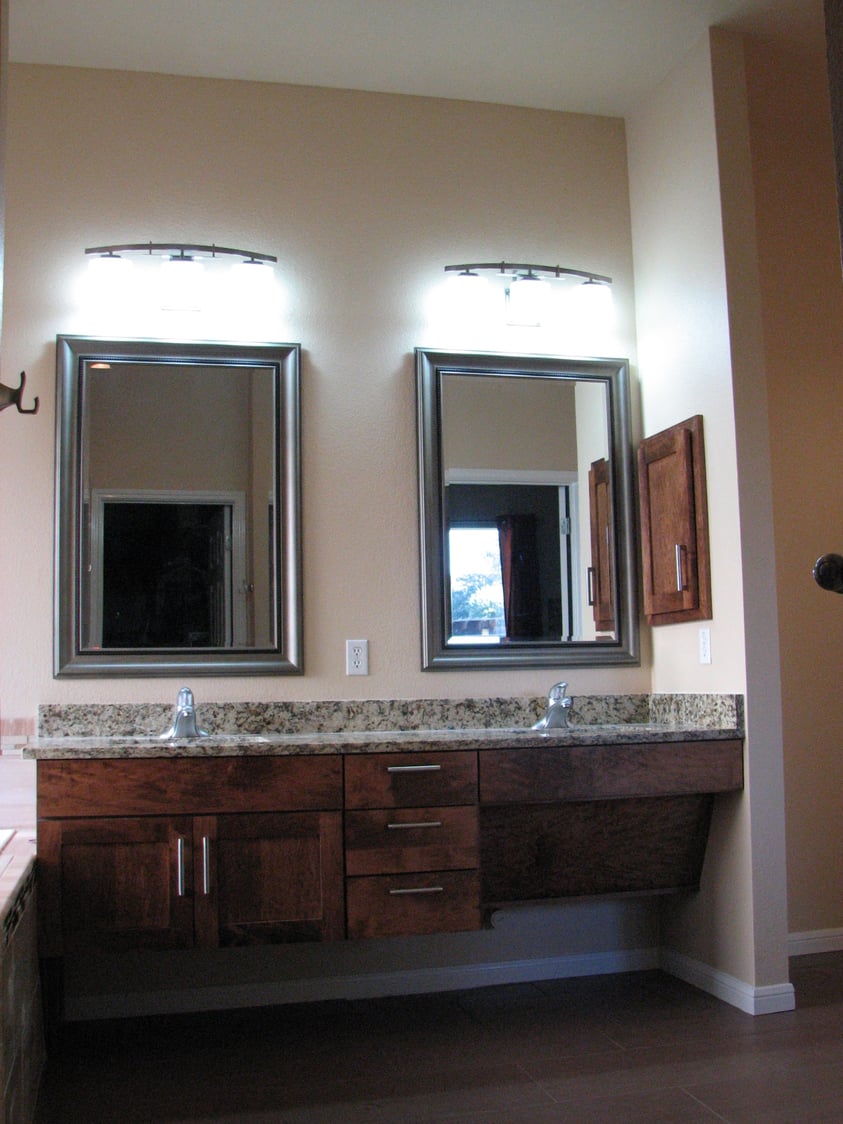
A TYPICAL ACCESSIBLE BATHROOM WITH WHEELCHAIR ACCESS

Tags:
kitchen remodeling,
kitchen makeovers,
ADA accessible,
accessible routes,
aging in place,
bathroom remodels,
bathroom makeovers,
CAPS certification,
ADA remodeling,
aging in place remodels
Our existing architecture does not lend itself well to accomplishing any easy aging in place home remodels or handicap retrofits in Austin. In fact, there are more inaccessible homes in all of the US than there are accessible homes and 45% of these existing homes are owned by the baby boomers representing the oldest group of homeowners. Generally speaking in most residential US properties there are no easy ways to enter into bathrooms or utilize kitchens without coming into contact with one architectural barrier or another-especially if a wheelchair or walker is being used to help with mobility issues. Everything requires the proper clearance and distance for a new customized accessible route in your home to function properly.
But you say to yourself that your needed aging in place home modifications or bathroom accessibility basically require general home remodeling in Austin, Texas or in any other town for that matter. That is true but a specialized remodeling contractor holding a national CAPS certificate is who you need as a partner to insure that the accessibility issues of your home are solved correctly. With over 30 years of remodeling experience I obtained my registered CAPS certificate. By offering a design/build firm to my aging in place customers, I get personal satisfaction from giving my clients their independence back while the remain in their existing home. I provide home modification for independent living to all my customers of any age. Without the training required to earn the CAPS certificate on top of my decades of building knowledge I could not offer my customers such a thorough and complete solution for solving their accessibility issues. Only an experienced qualified remodeler holding a CAPS certificate has the qualifications to design an accessible route and perform the construction required to make it safe and functional for the AIP customer. There is nothing more rewarding than seeing a person with mobility impairments be able to independently roll into his or her shower and be a part of that accomplishment.
Let's compare the alternative costs associated with aging in place verses when you already own your home. The more institutional alternative of assisted living accompanied by more medical expertise and staff training plus the access to emergency medical facilities is available as opposed to renting an apartment. These are two of the main alternative choices for seniors who decide not to remain in their own homes. According to a national study done in 2014, the average cost for assisted living ranged from $3,000 to $3,500 per month. However, if you decide to age in place in a high quality one bedroom apartment, the rent will run around $1,300 per month. Living in your own home or with loved ones represents a preference by most seniors and property taxes must be taken in account.
An average Aging in Place bathroom home modification providing total accessibility given there is a large space to remodel at onset will come in around $30,000. This can vary in many aspects if there is not enough room to change the existing floor plan. Smaller bathrooms can cost $15-20,000 but will not have the barrier free accessibility as the larger modified bathroom. Fully accessible kitchens will run on the average of $50,000 depending on the size of the existing kitchen. These are both one time costs for sustainability of a given lifestyle and location providing future independence and safety for the homeowner.
The best way to prepare for aging in place is to have a definite plan considering all possible outcomes and needs for those involved. Aging in place isn't for everyone like those with major health issues. For others with more independence, it can be a practical decision providing quality of life and safety for many years. Everyone's needs are different as we age and one must allow for flexibility and change for all future decisions.
Tags:
kitchen remodeling,
kitchen makeovers,
ADA compliant kitchen cabinets,
ADA accessible,
accessible routes,
aging in place home modifications,
aging in place,
aging in place home improvements in Austin,
wheelchair accessible remodeling,
wheelchair accessible baths and kitchens,
bathroom remodels,
bathroom makeovers,
CAPS certification,
ADA remodeling,
aging in place remodels,
disability bathroom remodels,
accessibility home remodeling in Austin,
Austin bath remodeling,
Austin bathroom remodeling,
Austin bathroom remodel
Just what are accessible homes of Austin? Accessible homes of Austin provide homeowners with a means to stay healthy, independent, and safe. Architectural barriers have either been removed during elder construction or were never a part of the design for increasing accessibility. The accessible home stands as the defined course to the universal designed home.
The accessible home represents a wonderful place where people with disabilities can live comfortably and safely.

Everyone ages differently and has different needs and wants. The factors that constitute the aging in place market for all individuals are based on a persons genetic makeup, their lifestyle including the choices they have made while living their life, and their environment. These factors have brought about the need for universal design. This is the design of products, services, and environments that are usable by as many people as possible regardless of age, ability, or situation without the need for adaptation or specialized alterations. It provides for the greatest safety and access for any home guests or occupants and is undetectable when done well. Since so very few homes share the accessibility offered by universal design, to satisfy the needs of a particular household member brought about by an accident, an illness, or simply the aging process there will always be a need for customized accessibility features. This will be accomplished by a CAPS accredited remodeling professional producing a truly functional design. This same competent design/build home remodeling company who understands and practices aging in place home modifications in Austin should carry out the work to fit the design and insure your safety and accessibility. A certified aging in place specialist will be listed in Washington on the NAHB CAPS listing.
There are three segments that are served within the aging in place marketplace. The first segment includes those clients without urgent needs. They have no immediate health issues and simply have a preference for universal design techniques. The second segment focuses on a group of homeowners with progressive health condition needs. These people have a chronic or progressive conditions like MS requiring special modifications to their home allowing them to age in place. This group of people will face a time of urgency at some point in their lives as their mobility needs evolve. The third sector involves those people who have undergone traumatic health changes that necessitates immediate modifications to their home in order to age in place. Only aging in place home remodeling in Austin can accomplish the home modifications for all three sector's needs mentioned above. As our society evolves away from institutionalized care, making a home more comfortable for both older adults and their visitors can have an immediate benefit on the comfort and lifestyle of the adult child.
The concept of the accessible home has evolved beyond the basic grab bars and ramps to one in which accessibility is built into the basic design. Universal design makes living in a home easier for people of all ages and abilities.
Accessible design can be both beautiful and functional and never needs to have any institutional appearance. As our aging baby boomer population ages, the need for accessibility in the home is becoming ever more important. Our new way of viewing the basic home in our society and our antiquated architecture is giving way to a revolution in home design. Ordinary homeowners with extraordinary challenges can partner up with
CAPS design professionals, architects, and their own families to create homes to restore capabilities, independence, and grace to daily living.
Tweet this! The reality is that accessible homes will be needed at sometime in all our lives whether for ourselves, our family members, or our guests. This in itself defines the Aging in Place concept and it's associated CAPS accreditation, which is a nationally registered credential offered through the NAHB. It's function is not only to keep people in their homes longer but to provide safety and independence to all homeowners.
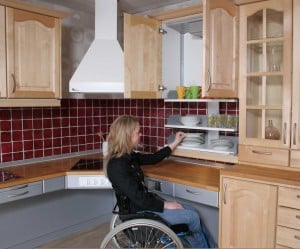
As in the kitchen in the above photograph, the
accessible kitchen is comfortably sized for a clear turning radius and to avoid backing up for an approach. It must be tailored to the homeowner's abilities and interests. Pull out shelves expand work spaces at activity centers, while roll under access is given underneath the work areas for the stove, prep, and service areas. A higher and deeper base cabinet kick space area provides better forward wheel clearance for the wheelchair to enable the user to get closer to the cabinet work space for increased reach distances. Raised dishwashers offer easier access to dishes and lowered microwaves and other appliances solve other reach distance problems making it easier to live with a disability. Open storage areas without doors to interfere with access is definitely a better solution. A successfully designed kitchen isn't about cabinet style or the composition of the counter top and is more about the ways the design can support the user's personal needs.
Human problems must be solved using correct designs. People who have become seriously injured, people living with a debilitating disease, people with sensory limitations or intellectual limitations, and last but not least the people who are planning to stay in their homes for as long as possible all need accessible homes. The need for dealing with disabilities during
elder construction empowers us all to ensure that we create environments wherein people can function effectively. How are you planning for your future when it concerns your home?
Aging in place home modifications are available through T-Square Company in the Austin area. We have an A plus rating with the local BBB and have over 30 years of remodeling experience. We are additionally a certified aging in place specialist offering complete
aging in place services. Each design/build situation will be customized to fit your personal needs increasing your accessibility. Call 512-444-0097 today to begin the accessible second chapter of your life while remaining safe and secure in your existing home. CAPS #1636580
David L. Traut, CAPS
Tags:
Austin,
Texas,
how-to,
ADA compliant kitchen cabinets,
ADA bathroom cabinets accessible routes,
CAPS,
aging in place home modifications,
aging in place home improvements in Austin,
wheelchair accessible baths and kitchens,
handicap home modifications,
ADA bathroom cabinets,
disability bathroom remodels,
handicap accessible bathrooms,
aging in place construction,
accessibility home remodeling in Austin,
Austin bathroom remodel,
Austin kitchen remodeling,
Austin kitchen remodel
What really defines the accessible homes of Austin? Barrier free architectural design for all who enter the structure while approaching the main living areas of the home in question is a fair definition. Universal design and aging in place trends have taken hold in the residential remodeling industry. The current housing inventory doesn't offer the features needed for safety and accessibility in the numbers needed to accommodate the ever growing demand. It is ultimately up to the individual homeowners and their families to plan for future housing needs. Once it is discovered that modifications to an existing home are not possible to accomplish total accessibility then it is time to consider a newer or custom built accessible home. What are the main design issues regarding aging in place home modifications in Austin?
- Low maintenance with little need for landscaping or exterior upkeep which could translate into newer rather than older homes that are the accessible homes of Austin.
- An accessible level entry either achieved with ramps or the rare flat lot in Austin. Consumers are looking for the free maneuverability that more open floorplans offer having greater clear unobstructed floor space. Wider doorways and unobstructed accessible routes are truly a concern. These structures will provide flat floors without transitions requiring steps or stairs to move around.
- An accessible master suite and kitchen located on the same floor is preferable. If two story homes are mandated by the community then the guests will inhabit the second floor. If the master suite needs to be located on the second floor then closets can be stacked to house a future elevator installation.
- Evolving kitchens have sprung up due to the more open floorplans. Fewer wall cabinets, lowered cabinet tops, pullout shelves or specialized drawers, and a reduced number of mobility obstructing doors represent the evolution of todays cabinetry. Kneespaces can be incorporated into a kitchen design for roll under access to the sink, prep area, and cooktop. Higher toe kicks can facilitate greater wheelchair access.
- Appliances are being installed at more comfortable heights due to decreased reach distances and bending motion. Raised dishwashers, refrigerator drawers, dishwashing drawers, and non-stacked double ovens are just a few changes within the appliance world. Microwaves can be installed below the cabinet top and cooktops with controls located on the front represent another appliance metamorphosis helping with reach problems.
- The lack of cabinet doors creating a new accessible open look for cabinetry is taking hold on the market. This is becoming more popular in both the bath and kitchen of accessible homes.
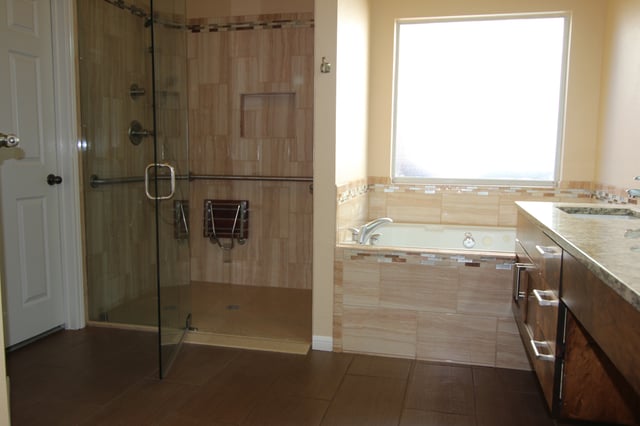
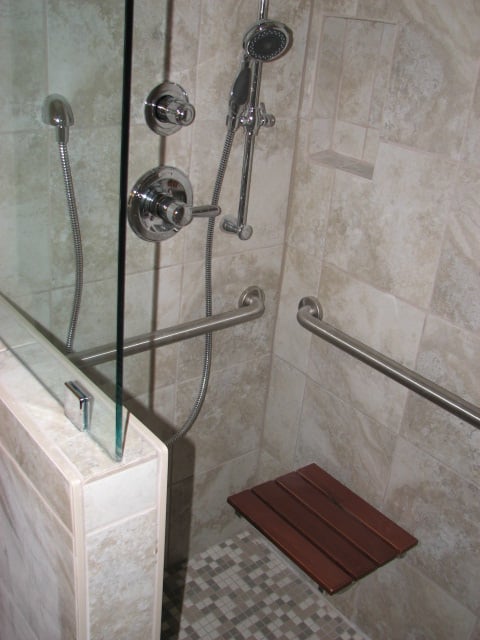
- Concerning bathroom accessibility remodels, bathroom vanities with universal height cabinet tops and open knee spaces are taking over the marketplace. These new residential vanities do not need to look institutional. They can be designed like any other piece of fine furniture. Comfort height toilets covered with any one of a multitude of available seats to fit every need prevent deep knee bends required for seating. Curbless roll in showers are advised for everyone on a universal level. The shower should contain at least a shower wand on a sliding bar to be available for varying heights of use along with a regular height shower head with diverter control if desired. Folding seats are useful if caretakers are involved and secure grab bars around the shower perimeter will increase the safety factor and prevent falls. All of the bathroom floor surface must be nonskid to prevent slipping on a guaranteed wet floor.
The above factors have brought about the need for universal design ideas. This is the design of products, services, and environments that are usable by as many people as possible regardless of age, ability, or situation without the need for adaptation or specialized alterations. It provides for the greatest safety and access for any home guests or occupants and is undetectable when done well.
Construction and design professionals are taking advantage of the CAPS training across the nation. This designation is taught through the National Association of Home Builders in collaboration with AARP. CAPS connects responsible professionals with home owners who need these services on an ever increasing basis. CAPS is a nationwide initiative and all active CAPS professionals can be found at nahb.org/CAPSdirectory. David L. Traut, CAPS the owner of T-Square Company in Austin, Texas is one of the select group of professionals nationwide to earn the Certified Aging-In-Place Specialist (CAPS) designation, identifying him as a home remodeler and builder with the skills and knowledge necessary to remodel or modify a home to meet the unique needs of the older population, disabled owners, or their visitors.

A Custom Roll In Shower Design

.
Tags:
residential construction contractor,
ADA accessible,
accessible routes,
barrier free access,
wheelchair accessible baths and kitchens,
handicap home modifications,
ADA remodeling,
ADA bathroom cabinets,
ADA compliance,
ADA kitchen cabinets,
handicap accessible bathrooms,
aging in place construction,
wheelchair accessible baths,
CAPS professional in Austin,
accessible home remodeling,
Universal Design,,
aging in place services,
aging in place design,,
elder construction,
certified aging in place specialist
According to the Joint Center for Housing Studies (JCHS) at Harvard University, the nation's housing inventory is in no shape to accommodate the 70% increase in the number of Americans aged 50 and over that will occur between 2000 and 2030. Over the next two decades, more than 27.7 million people will join the 50 and over age group. Most of this increase will be among the population aged 65 and over which is projected to surge 65% by 2030.
Universal design and aging in place design and services in Austin have finally taken hold in the residential remodeling industry. The current housing inventory doesn't offer the features needed for safety and accessibility in the numbers needed to accommodate the growing demand. It is ultimately up to the homeowners and their families to plan for future housing needs. Just what are the most important design issues regarding aging in place home modifications in Austin?
To begin with, the JCHS data showed that one of the top priorities with aging in place consumers is low maintenance. They want their houses to look great and require as little maintenance as possible. There is a minimal need for landscaping and outdoor upkeep, exteriors that require periodic painting, and a preference for newer houses rather than older ones where things don't break down as easily. These are the main reasons why the aging population considers moving. However, the kitchen and bath in existing homes are the two main areas most referenced when considering CAPS certified remodeling improvements.
People who are interested in aging in place home improvements and elder living solutions are now looking for a level entry into their home alongwith the maneuverability that a more open floor plan having greater clear unobstructed floor space presents. They desire flat floors without transitions requiring steps or stairs to move around. Ramps having a correct 1:12 slope can be used to get them up to the level floor space at the exterior entries or the garage access.
Most aging baby boomers prefer one story homes in which to age in place and this has become a primary reason to relocate versus a remodel. They are looking for an accessible master suit and kitchen located on the same floor. However, some developments mandate building two story homes. The above requirement can be easily met by placing the guest bedrooms and accompanying bath upstairs. If the master suite for any reason needs to be upstairs, closets can be stacked between floors to house a future elevator installation.
Kitchens have evolved because fewer cabinets are needed within the more open designs. Fewer wall cabinets are needed because of personal reach limitations. For those that are used, they can be installed at 14" above the base cabinet work top instead of the standard 18" spacing. The cabinet top is now lowered by two inches and installed at a universal 34" height. This makes a net 6 inch lower installation height for the bottom of the wall cabinet. All types of cabinet inserts like pull out shelves and specialized drawers are now available for installation in both base and wall cabinets. These devices will certainly help solve the reach problem. Base cabinet kick spaces can be raised to 9" and deepened instead of the standard 4" to accommodate wheelchair access. Kneespaces can be incorporated into the design for roll under access at the sink, prep area, and cooktop.
The lack of bending motion and decreasing reach distances is changing the way we purchase and install appliances at comfortable heights. Placing dishwashers higher by a few inches to limit bending has become a reachable fad and the new height is changing the old look of our kitchens. Refridgerator drawers, dishwashing drawers, and double ovens that are no longer stacked are just a few changes within the present day appliance marketplace. Cooking ranges with the controls located on the front represents another metamorphosis helping with reach problems. Microwaves can be installed on the now lowered countertop or within the lowered base cabinet according to the consumers need for adequate reach.
The lack of doors represents a change in the cabinet market. The new open look lets homeowners access what is stored within the cabinet without an open door blocking their clear path for approach. No matter in what manner the doors are hung they always interfere with accessibility. The open cabinet look is seen in both the bath and kitchen.
Accessible bathrooms today contain stylish vanities set at a universal height of 34 inches with clear kneespaces. The sink faucets are easily controlled by either wrist handles or levers. Toilets are available in comfort heights eliminating the deep knee bend needed for seating. Toilet seats are available with a heat feature and some have the ability to self close or have a night light. Curbless roll in showers are advised for everyone. The shower should contain at least a shower wand on a sliding bar for varying heights of use alongwith a regular shower head and control if desired. Folding seats are useful if caretakers are ever involved. Grab bars around the bath and especially in the shower should be used while non slip floor covering should always be considered.
The National Association of Home Builders, in partnership with the AARP and Home Innovation Research Labs, created the CAPS program, which includes training and education on the technical, business management and customer service skills essential to compete in the fastest growing segment of the residential remodeling industry--home modifications for aging in place. David L. Traut CAPS owner of T-Square Company in Austin, Texas is one of the select group of professionals nationwide to earn the Certified Aging-In-Place Specialist (CAPS) designation, identifying him as a home remodeler and builder with the skills and knowledge necessary to remodel or modify a home to meet the unique needs of the older population, disabled owners or their visitors.
For additional information about the CAPS program, visit nahb.org/CAPS. For more information about T-Square Company, visit www.tsquareco.com or call 512-444-0097.
Tags:
ADA bathroom cabinets accessible routes,
aging in place home modifications,
wheelchair accessible remodeling,
wheelchair accessible baths and kitchens,
handicap home modifications,
CAPS certified remodeling in Austin,
accessibility home remodeling in Austin,
CAPS professional in Austin,
Universal Design,,
Austin bath remodel,,
Austin bathroom remodeling,
Austin bathroom remodel,
aging in place services,
aging in place design,,
elder construction,
certified aging in place specialist
Everyone ages differently and has different needs and wants. The factors that constitute the aging in place market for all individuals are based on a persons genetic makeup, their lifestyle including the choices they have made while living their life, and their environment. These factors have brought about the need for universal design. This is the design of products, services, and environments that are usable by as many people as possible regardless of age, ability, or situation without the need for adaptation or specialized alterations. It provides for the greatest safety and access for any home guests or occupants and is undetectable when done well. Since so very few homes share the accessibility offered by universal design, to satisfy the needs of a particular household member brought about by an accident, an illness, or simply the aging process there will always be a need for customized accessibility features. This will be accomplished by a CAPS accredited remodeling professional producing a truly functional design. This same competent home remodeling company who understands and practices aging in place home modifications in Austin should carry out the work to fit the design and insure your safety and accessibility.
Physical limitations affect many more people than the daily users of walkers and wheelchairs. Many members of our life experienced or elder society have significant problems in dealing with their home environment. Today's conventional building standards conflict with most people's accessibility when you consider our created architectural barriers concerning cabinetry and door opening widths, individual strength, range of motion, movement, manual dexterity, balance, and coordination . Once the demands of our built environment exceed their capacities we become excluded from a room or even the entire home. The building world must work in unison to be sure the entire living environment meets basic needs in addition to affordability and structural integrity for the consumer and home owner. This includes both the home and the components within the home being accessible to all inhabitants. Privacy, sense of belonging, sense of control, and the sense of safety and security make up the quality of life for any home and should be considered for any design.
There are really three categories of aging in place customers. Those who are simply and wisely planning ahead for their futures to remain in their present homes. The second category concerns those people who know they have a chronic medical disorder and need to prepare in advance for accessibility issues which will come as a result of their disease. People with diseases that are constantly causing increased physical or mental changes to their being are a good representative of this second group. The third group involves those people who either have had a chronic problem that has progressed severely altering their mobility or those who have sustained a life altering tragedy such as being involved in an accident. All of these groups will drive the future metamorphosis of existing inaccessible dwellings.
Disability is a complex phenomenon representing an interaction between one's physical impairments, the activities they need to perform, and the architectural barriers within the space in which this situation occurs. The terminology and jargon used for disabilities evolves regularly whereas, "handicapped" is no longer acceptable. It is no longer merely a description of intellectual or physical impairments. Each individual with similar impairments describes his or her limitations differently. The blind don't experience their world the same as a person with deafness. Some of our societal statistics that weigh into aging in place situations include reports stating that 19% of the population between the ages of 16 and 64 and 42% of those of us 65 and over have a physical disability affecting the activities of their daily lives. For a progressive condition, aging in place home remodeling in Austin definitely comes into play. This is the only way to insure both the safety and mobility for the homeowner or family member requiring the home modifications. The two main groups driving this aging in place market are those people who are 65 and over and the baby boomers. The first group is projected to reach 55 million in 2020. The baby boomer generation born between 1946 and 1965 today make up 28% of the U.S. population and are made up of some 77 million people. Modifications of existing homes is important because people of age 50 and older want to remain in their current home for as long as possible. Aging in place home modifications in Austin should only be done by a CAPS certified remodeling company. This is the only way that you can be assured that the home modifications are the right choices to satisfy your needs. There is no need to waste money only to find out that the wrong alterations were done by an inexperienced and nonqualified remodeling company. Always check their creditials to verify that the remodeler holds a CAPS certification. All registered CAPS program graduates and their remodeling company will be listed in a national registry in Washington. The information can be found by simply visiting nahb.org/CAPS.
If you have been considering an aging in place design for a fine bathroom makeover or remodeling project in Austin there are a few things you should take into consideration. Accessible home remodels and bathroom upgrades in Austin, Texas can take on many looks and facets. The scope of work you choose to accomplish should effectively solve your problems and most importantly, your needs as the home owner. The identification of these specific needs belongs to you the home owner. The way your home is structurally altered to accomplish these needs is the job of the professional remodeling contractor. Accessibility should be a concern no matter what your age. If your concerns are not for you, barring any life changing accident, they could concern the accessibility of another generation's independence is using the restroom. Aging in place services performed by CAPS professionals in the remodeling industry can help with solutions in solving these issues.
Whether you desire a roll in shower, accessible sink , or merely a clear and unobstructed access to your existing bath, a CAPS professional can help you increase your accessibility. The CAPS certification holder can not only help you with the design of what you desire but is competent and professionally qualified to carry out any construction needed. Certainly there are many upgrades available when planning an accessible bathroom transformation. The replacement of the tub with a new walk in shower can create a bold look but will run you around $10,000 while a roll in shower will run around $14,000. There are no spending limits for bathroom remodels. You can plan on spending around $12,000 to $15,000 for a hall bath remodel. The price tag can approach or exceed $35,000 for a complete master bath remodel. The type of fixtures and building components chosen alongwith the labor will compose the overall cost of the remodeling project. These prices are based on long lasting home modifications requiring time to install using proper construction techniques and are not to be confused with pop in kits offered by others they claim will be accomplished in a couple of days.
Who do you choose to help you with your dream? It is true that a professional remodeling contractor with years of experience will cost you more than a handyman illegally playing among the trades at your peril but then again there are those professional guarantees to consider. The professional verses the handyman is more likely to seek your overall satisfaction that will follow him into his next job. A true building professional can also orchestrate the job's smooth flow limiting the down time of a most useful room. Subcontractors will not be covered up and each skilled trade is brought onto the sight as needed in an orderly fashion. Professionals normally have insurance to cover on the job accidents to protect the homeowners from having legal action brought against them personally. Be sure you ask for a certificate of insurance from your chosen professional contractor so that you aren't held personally liable for medical expences covering a worker's accident while on your property. Don't forget that only a certified aging in place (CAPS) professional can help you solve your accessibility issues.used specifically in homes today where the owner is planning to retire.
The National Association of Home Builders, in partnership with the AARP and Home Innovation Research Labs, created the CAPS program, which includes training and education on the technical, business management and customer service skills essential to compete in the fastest growing segment of the residential remodeling industry--home modifications for aging in place. David L. Traut CAPS owner of T-Square Company in Austin, Texas is one of the select group of professionals nationwide to earn the Certified Aging-In-Place Specialist (CAPS) designation, identifying him as a home remodeler and builder with the skills and knowledge necessary to remodel or modify a home to meet the unique needs of the older population, disabled owners or their visitors.
For additional information about the CAPS program, visit nahb.org/CAPS. For more information about T-Square Company, visit www.tsquareco.com or call 512-444-0097.

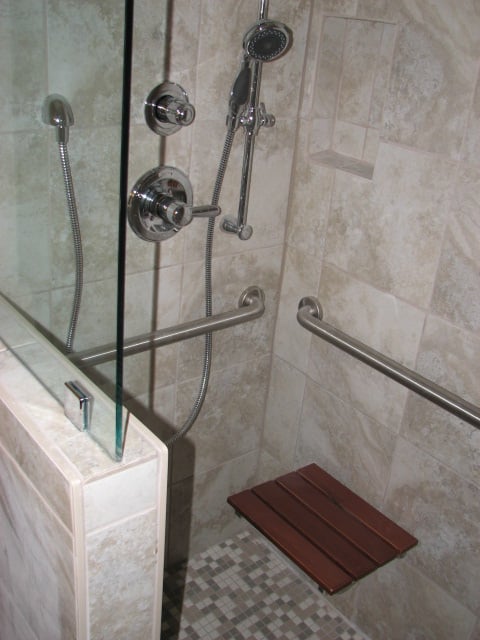
A Custom Roll In Shower Conversion in Austin, Texas
Tags:
Austin,
Texas,
ADA accessible,
aging in place remodeling,
aging in place home modifications,
aging in place home improvements in Austin,
wheelchair accessible remodeling,
wheelchair accessible baths and kitchens,
aging in place remodels,
aging in place construction,
aging in place designs,
wheelchair accessible baths,
accessibility home remodeling in Austin,
CAPS professional in Austin,
CAPS certification holder in Austin,
accessible home remodeling,
CAPS remodeling techniques,
Universal Design,,
Austin bath remodeling,
Austin bath remodel,,
Austin bathroom remodel,
aging in place services,
aging in place design,
If you have been considering a fine bathroom makeover or remodeling project in Austin there are a few things you should take into consideration. Bathroom makeovers in Austin, Texas can take on many looks and facets. The scope of work you choose to accomplish should effectively solve your problems and most importantly, your needs as the home owner. The identification of these specific needs belongs to you the home owner. The way your home is structurally altered to accomplish these needs is the job of the professional remodeling contractor. Bathroom accessibility should be a concern no matter what your age. If your concerns are not for you, barring any life changing accident, they could concern the accessibility of another generation's independence is using the restroom. CAPS professionals in the remodeling industry can help with solutions in solving these issues.
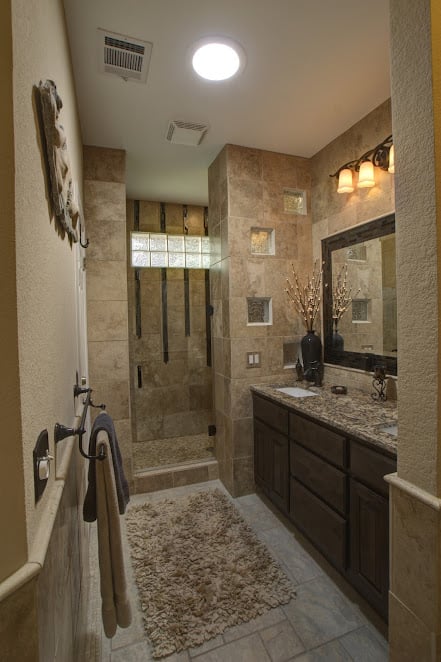
How about your tub? If it is no longer used or you have another tub in your other bathroom it can be transformed into a shower within the same footprint. You'll need to decide if you want a door and bring in the sides for the correct opening with either glass blocks or custom tile work on stick frame type construction. A custom walk in or roll in shower without a door requires a large enough area to enter so that the shower head is off to the side. Today's showers can get pretty fancy with body and rain heads but remember these require a larger size supply line than is normally standard. Liners beneath the floor tile can be composed of either a custom fiberglass application or the proper vinyl material. Waterproofing is the most important aspect of shower building and all precautions must be taken.
Certainly there are many upgrades available when planning a bathroom transformation. A custom tub shower conversion for the replacement of the tub with a new walk in or roll in shower can create a bold look but will run you around $13,000. There are no spending limits for bathroom remodels. You can plan on spending around $12,000 to $15,000 for a hall bath remodel. The price tag can approach or exceed $35,000 for a complete master suite remodel. The type of fixtures and building components chosen along with the labor will compose the overall cost of the remodeling project.
Keep in mind that moving plumbing, especially drains, is one of the more expensive aspects of a fine bathroom makeover involving floor demolition. If you can limit and control the costs involved with this issue you will have more money to spend on the things that show off your endeavors. Changing water supply line locations is not as difficult as moving drains especially when they go into the main drainage system that resides underneath the finished floor.

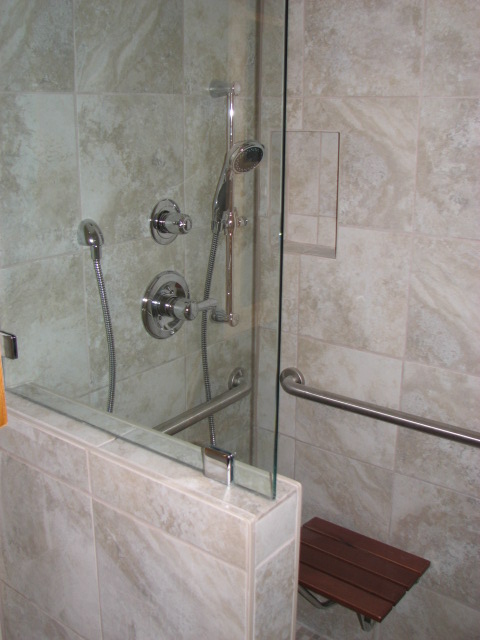
Bathroom plumbing fixture choices are numerous to say the least. Select reputable companies offering the best warranties especially when considering finishes used on control valve trims and the fixtures installed in the project. Larger walk in shower designs should have seamless fiberglass liners to avoid leaks if the house ever shifts. Using natural stone or glass tiles while additionally designing in glass blocks will certainly be an upgrade. As for the new walk in shower design, you can design the space to not need a door for splash protection or you can take the route of a clean looking frameless glass shower enclosure. This will surely set you back at least $900. The end result will be a sophisticated clean look of beauty enclosing your new shower. Whether the door sits upon a curb or you have a specific need for a curbless situation you will be satisfied with your choice.
All new construction or any Austin bathroom remodel should involve multiple shower head combinations in multiple locations to fit anyone's desires. Rain heads coming out of the ceiling, body heads coming out of the walls in many locations, or hand held units attached to the shower walls can make things very interesting. These combinations of heads and locations can be used to create rain effects, provide relief for muscle aches through body massages, or simply provide pin point convenience with hand held variable heads. The possibilities are endless as you dial in your bathing environment. Steam generators are also being considered as an investment in today's fine bathroom designs. The steam heads can make the difference after a tough day when you're looking for that more therapeutic spa experience. This has certainly led the way to the thermostatic shower valve with plumbed-in hand held shower that is being
Who do you choose to help you with your dream? It is true that a professional remodeling contractor with years of experience will cost you more than a handyman illegally playing amongst the trades at your peril but then again there are those professional guarantees to consider. The professional verses the handyman is more likely to seek your overall satisfaction that will follow him into his next job. A true building professional can also orchestrate the job's smooth flow limiting the down time of a most useful room. Subcontractors will not be covered up and each skilled trade is brought onto the sight as needed in an orderly fashion. Professionals normally have insurance to cover on the job accidents to protect the homeowners from having legal action brought against them personally. Be sure you ask for a certificate of insurance from your chosen professional contractor so that you aren't held personally liable for medical experiences covering a worker's accident while on your property. Don't forget that only a certified aging in place (CAPS) professional can help you solve your accessibility issues.used specifically in homes today where the owner is planning to retire.
One Of Our Many Custom Tub To Shower Conversion In Austin, Texas

Tags:
Austin,
Texas,
residential remodeling,
bathroom remodeling,
handicap home modifications,
bathroom remodels,
CAPS certification,
custom tub to shower conversions
Everyone ages differently and has different needs and wants. The factors that constitute the aging in place market for all individuals concerning elder living solutions are based on a persons genetic makeup, their lifestyle including the choices they have made while living their life, and their environment. These factors have brought about the need for universal design. This is the design of products, services, and environments that are usable by as many people as possible regardless of age, ability, or situation without the need for adaptation or specialized alterations. It provides for the greatest safety and access for any home guests or occupants and is undetectable when done well. Since so very few homes share the accessibility offered by universal design, to satisfy the needs of a particular household member brought about by an accident, an illness, or simply the aging process there will always be a need for customized accessibility features. This will be accomplished by a CAPS accredited remodeling professional producing a truly fuctional design. This same competent home remodeling company who understands and practices aging in place home modifications in Austin should carry out the work to fit the design and insure your safety and accessibility.
The Center for Disease Control defines aging in place as the ability to live in one’s own home and community safely, independently, and comfortably regardless of age, income, or ability level. Aging in place construction and remodeling has become synonymous with handicap accessible home design and modification during our lifetime. Home modifications can be used to accomodate anyone from people with mobility impairments to those with vision loss, hearing loss, or even cognitive or developmental disabilities. Accessibility home modifications or wheelchair accessible kitchen and bathroom remodeling in Austin will allow anyone with limited mobility within your home to feel more empowered and independent. The extent of a customized accessibility design is dependent upon the activity level of the person requiring the modifications. Whether someone needs a cane, walker, or wheelchair to help with mobility it is definitely a game changer for accessibility within the home. Aging in place home modifications help people maintain their living environment for as long as it works for them before they might need assisted living care or a nursing home.
Some people confuse aging in place with universal design. Both are a method to increase accessibility within the home but aging in place strictly deals with an existing home. Aging in place also implies modifying any home for it's older occupants to insure that the inhabitants can safely remain there as long as they possibly can. This time will expire once they need assisting medically trained help for safeguarding their personal safety in a nursing home or an assisted living environment. Universal design is just that; offering choices to all of a home's residents no matter their age or physical capabilities. It begins with a design and then the construction begins. The number one safety hazard for elderly people is negotiating level changes within the home--steps at the entry, stairs between floors, and curbs to step over when entering the bath or shower. Eliminating level changes is very difficult in existing homes and almost impossible to do aesthetically and without major compromises, unless there is a major renovation. The result is that most homeowners decide to sell the house rather than make the modifications. When universal design is incorporated into their design, homes can accommodate the needs of their owners as those needs evolve over time.
Physical limitations affect many more people than the daily users of walkers and wheelchairs. Many members of our life experienced or elder society have significant problems in dealing with their home environment. Todays conventional building standards conflict with most people's accessibility when you consider our created architectural barriers concerning cabinetry and door opening widths, individual strength, range of motion, movement, manual dexterity, balance, and coordination . Once the demands of our built environment exceed their capacities we become excluded from a room or even the entire home. The building world must work in unison to be sure the entire living environment meets basic needs in addition to affordability and structural integrity for the consumer and home owner. This includes both the home and the components within the home being accessible to all inhabitants. Privacy, sense of belonging, sense of control, and the sense of safety and security make up the quality of life for any home and should be considered for any design.
Accessible home remodeling in Austin, Texas has become synonymous with handicap accessible home design and modification during our lifetime. Home modifications can be used to accommodate anyone from people with mobility impairments to those with vision loss, hearing loss, or even cognitive or developmental disabilities. Accessibility home modifications or wheelchair accessible kitchen and bathroom remodeling in Austin will allow anyone with limited mobility within your home to feel more empowered and independent. The extent of a customized accessibility design is dependent upon the activity level of the person requiring the modifications.
We now need a new vision of a home that works for everyone and this attitude is becoming the new reality stemming from a revolution. This new building revolution is known as universal design. New accessible homes are being created along with ways to make the older homes more accessible. This new way of thinking is enabling aging in place to become a reality for new homes and as a means to increase the accessibility in our existing homes.
If you hire an experienced CAPS certified building professional with infinite knowledge of accessibility home modifications they will be able to help you make the right ADA remodeling choices. These will include the improvements offering the most service to the individual with mobility issues. Talk to your contractor about the disability and the activitity level of the person needing the modifications. Together you can arrive at a custom solution for your accessible home design.our new older majority of homeowners, a group where disability is a fact of life.
Tags:
residential construction contractor,
accessible routes,
barrier free access,
aging in place remodeling,
aging in place home modifications,
residential remodeling,
wheelchair accessible remodeling,
wheelchair accessible baths and kitchens,
handicap home modifications,
CAPS certification,
CAPS certified remodeling in Austin,
handicap accessible bathrooms,
aging in place construction,
aging in place designs,
accessibility home remodeling in Austin,
accessible home remodeling,
Universal Design,,
aging in place services,
elder construction,
certified aging in place specialist