A wheelchair ramp is basically an inclined plane installed in addition to or instead of stairs. Ramps provide wheelchair users or users of other mobility aids as well as people pushing strollers,carts, or other wheeled objects, better access to any building. When designing a wheelchair ramp, you need to consider the users physical limitations. The ramp should be wide enough to be safe and maneuverable and sturdy enough to carry the weight of an electric wheelchair and it's cargo (this can approach 6-700 pounds in many instances) and have a slope that is gradual enough for a manual wheelchair user to navigate. Safety is a paramount concern for the user.
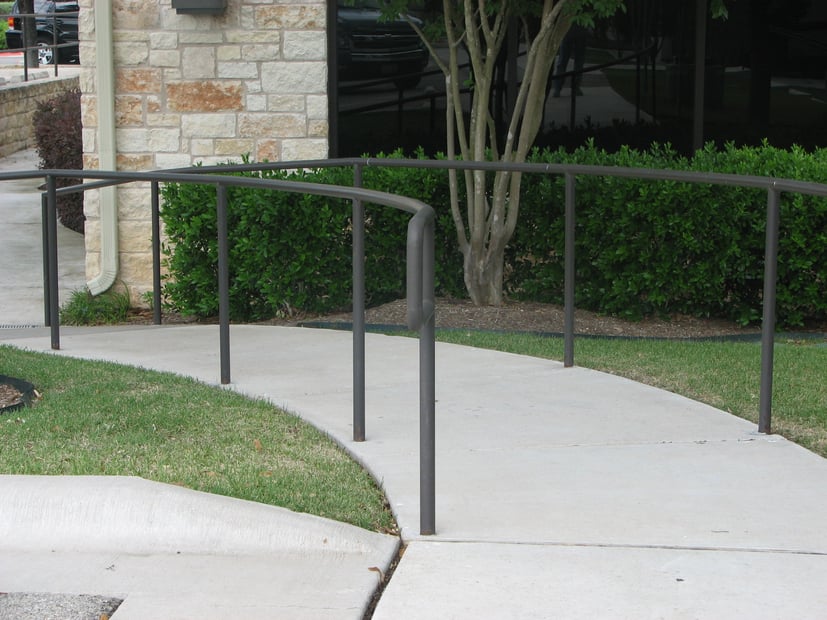
The ADA guidelines recommend a slope ratio of 1:16 to 1:20. The Americans with Disabilities Guidelines dictate how ramps are designed for all public places. A noted 1:12 ratio is too steep for some people to navigate using a manual wheelchair. This translates into an 8% slope or grade. These ratios must be followed in all public places; however, there are no rules for residential construction. On a residential basis, the ramps can be customized for the user without having to rely on the ADA averages. The ADA rules become simply guidelines. The publication assists private homeowners to create ramps that are usable, safe and sturdy. Homeowners aren't required to follow these slope guidelines but if you have the available area then less slope is always better.

ADA wheelchair ramp guidelines are as follows:
- The minimum ramp width must be 36 inches minimum but 48 inches is preferable.
- Ramps must have edge protection to keep anyone from slipping off their surface in the form of a raised outer curb or railing.
- All wheelchair ramps must have level or flat unobstructed landings at the top and bottom of the rise being overcome that are 60 inches by 60 inches to provide a proper five foot wheelchair turning radius. The landing areas cannot have more than a 30 feet long ramp separating them. If the rise distance requires longer than a 30 foot run to overcome it then a series of landings can be used creating a switchback design.
- Thirty six inch handrails are required on both sides of all ramps that rise steeper than 6 inches from the ground below.
- All surfaces must be slip resistant and stable.
DETERMINING SLOPE RATIO
To determine the slope of your ramp and how much horizontal space it will require, use the following calculation per the ADA guidelines: Multiply the inches your ramp will rise by the slope ratio you desire, and then divide the sum by 12 (to convert the horizontal space you'll need to feet). For example: 31-inch rise x 20 slope ratio = 620. That divided by 12 gives you a 51-foot horizontal projection.
A wheelchair ramp can be permanent, semi-permanent or portable. Permanent ramps are designed to be bolted or otherwise attached in place. Semi-permanent ramps rest on top of the ground or concrete pad and are commonly used for the short term. Permanent and semi-permanent ramps are usually of aluminum, concrete or wood. Portable ramps are usually aluminum and typically fold for ease of transport. Portable ramps are primarily intended for home and building use but can also be used with vans to load an unoccupied mobility device or to load an occupied mobility device when both the device and the passenger are easy to handle. Ramps can be constructed from a variety of different materials, though some are better than others and friction is always your friend.

Many people find themselves needing accessible homes for themselves or family members. There are approximately 30 million Americans using wheelchairs and the number of people who need accessible homes will continue to increase as disabled and aging people are finding more ways to remain living in their homes. One important way to increase independent living is making a home accessible to an individuals personal needs. Home modifications can increase safety, accessibility, and independence for people who want to live independently.
Whether your family needs the support now or down the road, universal design features are a good long-term investment for the home itself. Whatever your situation please remember to rely on the experiences of a local building professional. Check out their credentials and references and don't limit yourself to only price checks against other bidders. Don't make the mistake of letting a cabinet making subcontractor or tile installer play the part of a general contractor. Their knowledge will be limited to that of the cabinets or tile and not much else. More importance needs to be given to the reputable contractor's personality and knowledge and how well you two communicate. You are making your choice for a professional to lead the way enabling your dream to be realized. You get what you pay for with proper planning when using an experienced and qualified local contractor. T-Square Company is CAPS certified and can be reached at 512-444-0097 in Austin, Texas. Find out how a design/build remodeling contractor can save you money during your next project.

Tags:
aging in place designs,
accessibility home remodeling in Austin,
CAPS professional in Austin,
CAPS certification holder in Austin,
CAPS remodeling techniques,
disability home remodeling in Austin,
aging in place specialist,
aging in place services,
aging in place design,,
elder construction,
certified aging in place specialist,
handicap home modifications for disabled,
handicap accessibility,
handicap remodeling contractors,
disability home modifications,
renovation contractor in Austin, texas,
home modifications Austin, Texas,
home improvements Austin,,
residential remodeling contractor in Austin,
accessibility remodelers in Austin,
house remodeling Austin,
home remodeling Austin, Texas,
residential remodeling company in Austin, Texas,
ADA remodeling Austin, Texas,
accessibility designs Austin Texas,
home modifications for independent living Austin,
universal design/build,
universal design/build ideas,
Austin accessible home remodeling,
certified aging in place consultant in Austin,
aging in place design in Austin,
age in place home design,
home modifications for disabled children,
what does it mean to age in place,
universal design building for a lifetime,
what is universal design,
home remodeling contractor near Austin, Texas,
residential general contractor Austin, Texas,
remodeling companies in Austin TX,
home accessibility help in Austin,
home remodeling for disabled in Austin Texas,
wheelchair accessible home remodeling in Austin,
universal design remodeling techniques,
why is universal design important,
Universal Principles of design revised and updated,
principles of universal design,
home remodeling for seniors Austin,
remodeling for elders in Austin,
disability contractor in Austin,
disability and special needs contractor Austin,
home modifications for elderly in Austin,
Austin disability contractors for special needs,
handicap accessible remodeling,
barrier free remodeling,
handicap remodeling,
handicap accessible home renovations,
handicap accessible home modifications,
disability remodeling,
Austin aging in place specialist,
disability access contractor,
accessible home remodeling for disabilities,
home modifications for Austin veterans,
professional remodeling contractor,
professional remodeler,
home remodeling professional,
home remodeling contractors residential,
accessible bathroom remodel,
specialty construction in Austin,
what is ada compliant,
home access,
accessible homes,
wheelchair ramp slope,
wheelchair ramp specifications
The concept of the accessible home has evolved beyond the basic grab bars and ramps to one in which accessibility is built into the basic design. Universal design makes living in a home easier for people of all ages and abilities. Accessible can be both beautiful and functional and never needs to have any institutional appearance. As our aging baby boomer population ages, the need for accessibility in the home is becoming ever more important. Our new way of viewing the basic home in our society and our antiquated architecture is giving way to a revolution in home design. Ordinary homeowners with extraordinary challenges can partner up with CAPS design professionals, architects, and their own families to create homes to restore capabilities, independence, and grace to daily living.

Everyone ages differently and has different needs and wants. The factors that constitute the aging in place market for all individuals are based on a persons genetic makeup, their lifestyle including the choices they have made while living their life, and their environment. These factors have brought about the need for universal design. This is the design of products, services, and environments that are usable by as many people as possible regardless of age, ability, or situation without the need for adaptation or specialized alterations. It provides for the greatest safety and access for any home guests or occupants and is undetectable when done well. Since so very few homes share the accessibility offered by universal design, to satisfy the needs of a particular household member brought about by an accident, an illness, or simply the aging process there will always be a need for customized accessibility features. This will be accomplished by a CAPS accredited remodeling professional producing a truly functional design when considering accessible home designs in Austin, Texas. T-Square Company is a competent home remodeling company who understands and practices aging in place home modifications and Elder construction in Austin. We are CAPS certified and will perform the work needed to fit the in house design insuring your safety and accessibility. T-Square Company specializes in accessible bathrooms in Austin, Texas.
Physical limitations affect many more people than the daily users of walkers and wheelchairs. Many members of our life experienced or elder society have significant problems in dealing with their home environment bring about the need for remodeling for disabilities. Today's conventional building standards conflict with most people's accessibility when you consider our created architectural barriers concerning cabinetry and door opening widths, individual strength, range of motion, movement, manual dexterity, balance, and coordination. Once the demands of our built environment exceed their capacities we become excluded from a room or even the entire home. The building world must work in unison to be sure the entire living environment meets basic needs in addition to affordability and structural integrity for the consumer and home owner. This includes both the home and the components within the home being accessible to all inhabitants. Privacy, sense of belonging, sense of control, and the sense of safety and security make up the quality of life for any home and should be considered for any design.
There are really three categories of aging in place customers. Those who are simply and wisely planning ahead for their futures to remain in their present homes. The second category concerns those people who know they have a chronic medical disorder and need to prepare in advance for accessibility issues which will come as a result of their disease. People with diseases that are constantly causing increased physical or mental changes to their being are a good representative of this second group. The third group involves those people who either have had a chronic problem that has progressed severely altering their mobility or those who have sustained a life altering tragedy such as being involved in an accident. All of these groups will drive the future metamorphosis of existing inaccessible dwellings.

Disability is a complex phenomenon representing an interaction between one's physical impairments, the activities they need to perform, and the architectural barriers within the space in which this situation occurs. The terminology and jargon used for disabilities evolves regularly whereas, "handicapped" is no longer acceptable. It is no longer merely a description of intellectual or physical impairments. Each individual with similar impairments describes his or her limitations differently. The blind don't experience their world the same as a person with deafness. Some of our societal statistics that weigh into aging in place situations include reports stating that 19% of the population between the ages of 16 and 64 and 42% of those of us 65 and over have a physical disability affecting the activities of their daily lives. For a progressive condition, aging in place home remodeling in Austin definitely comes into play. This is the only way to insure both the safety and mobility for the homeowner or family member requiring the home modifications. The two main groups driving this aging in place market are those people who are 65 and over and the baby boomers. The first group is projected to reach 55 million in 2020. The baby boomer generation born between 1946 and 1965 today make up 28% of the U.S. population and are made up of some 77 million people. Modifications of existing homes is important because people of age 50 and older want to remain in their current home for as long as possible. Aging in place home modifications in Austin should only be done by a CAPS certified remodeling company. This is the only way that you can be assured that the home modifications are the right choices to satisfy your needs. There is no need to waste money only to find out that the wrong alterations were done by an inexperienced and unqualified remodeling company. Always check their credentials to verify that the remodeler holds a CAPS certification. All registered CAPS program graduates and their remodeling company will be listed in a national registry in Washington. The information can be found by simply visiting nahb.org/CAPS.
Accessible wheelchair designs in Austin are available through T-Square Company. Each design/build situation will be customized to fit your personal needs. Call 512-444-0097 today to begin your accessible second chapter in your life while remaining safe and secure in your existing home. CAPS 1636580 We are a certified contractor with the VA for our veterans. We understand the process for securing a VA grant and conforming to the SAH program guidelines.
Tags:
wheelchair accessible remodeling,
wheelchair accessible baths and kitchens,
handicap home modifications,
CAPS professional in Austin,
accessible home remodeling,
disability home remodeling in Austin,
home modifications for independent living,
disability bathroom remodeling in Austin,
bathroom modifications for elderly,
elder construction,
certified aging in place specialist,
handicap remodeling contractors in Austin,
bathroom remodeling contractor Austin Texas,
handicap home modifications for disabled,
home modifications Austin, Texas,
bathroom accessibility remodels in Austin,
wheelchair accessible showers in Austin,,
accessibility designs Austin Texas,
handicap bathrooms,
roll in showers in Austin,
home modifications for independent living Austin,
disability access bathrooms Austin,
disability remodeling in Austin,
Austin Handicap Remodeling,
Austin Accessibility Design,
Austin accessible home remodeling,
certified aging in place consultant in Austin,
bathroom modifications for disabled in Austin, TX,
aging in place specialist in Austin,
aging in place design in Austin,
senior aging in place services,
age in place home design,
home modifications for disabled children,
home modifications for children with disabilities,
why is aging in place important,
what does it mean to age in place,
universal design building for a lifetime,
universal designbuilding for the future,
home remodeling for disabled in Austin Texas,
applying principles of universal design in Austin,
home remodeling for seniors Austin,
home remodeling for the elderly,
senior home modifications in Austin,
Austin handicap bathroom contractor,
handicap accessible bathroom remodeling,
disability remodeling,
handicap accessible bathroom remodel,
handicap accessible bathroom shower,
roll in shower design for wheelchair access,
disability access contractor,
accessible home remodeling for disabilities,
home modifications for Austin veterans,
veterans home remodeling in Austin, Texas
Falls and slips are among the most common causes of injury to senior and elderly people requiring disability access remodeling. Smooth surfaces in combination with wet areas make the bathroom one of the most dangerous areas within the home. It is of paramount importance that the bathroom be updated providing safety for any person with limited mobility or the elderly. If you are on a tight budget and can only afford a few modifications, the bathroom is the first place to begin an accessibility remodel. The most basic improvements like adding grab bars to enhance safety issues are fairly inexpensive.
All new construction or any bathroom remodel should include an accessible shower with head combinations in multiple locations to fit anyone's desires. Incorporating universal design principles into your home's custom walk in shower design or one which is wheelchair accessible can facilitate aging-in-place goals, while comfortably addressing the diverse needs of all ages and mobility levels using your home. Rain heads coming out of the ceiling, body heads coming out of the walls in many locations, or hand held units attached to the shower walls can make things very interesting and relaxing. These combinations of heads and locations can be used to create rain effects, provide relief for muscle aches through body massages, or simply provide pin point convenience with hand held variable heads. The possibilities are endless as you dial in your bathing environment. Steam generators are also being considered as an investment in today's fine bathroom designs. The steam heads can make the difference after a tough day when you're looking for that more therapeutic spa experience. This has certainly led the way to the thermostatic shower valve with plumbed-in hand held shower that is being used specifically in homes today where the owner is planning to retire.
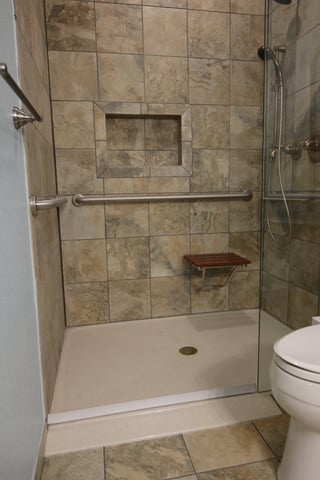
Many people find themselves needing accessible homes especially in the bathroom or kitchen for themselves or family members. There are approximately 30 million Americans using wheelchairs and the number of people who need accessible homes will continue to increase as disabled and aging people are finding more ways to remain living in their homes. One important way to increase independent living is making a home accessible to an individuals personal needs which brought on the idea of wheelchair remodeling. Home modifications can increase safety, accessibility, and independence for people who want to live independently.
Universal design and aging in place services in Austin have finally taken hold in the residential remodeling industry. The current housing inventory doesn't offer the features needed for safety and accessibility in the numbers needed to accommodate the growing demand. It is ultimately up to the homeowners and their families to plan for future housing needs. Our existing architecture does not lend itself well to accomplishing any easy aging in place home remodels in Austin. In fact, there are more inaccessible homes in all of the US than there are accessible homes and 45% of these existing homes are owned by the baby boomers representing the oldest group of homeowners. Generally speaking in most residential US properties there are no easy ways to enter into bathrooms or utilize kitchens without coming into contact with one architectural barrier or another-especially if a wheelchair or walker is being used to help with mobility issues. Everything requires the proper clearance and distance for a new customized accessible route in your home to function properly. Please consider this aspect in your design if an elderly parent will be coming to visit or you yourself suffer an unfortunate accident or develop a debilitating disease.

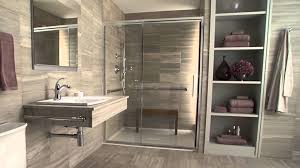
Curbless roll in showers are advised for everyone involved in disability access bath modifications. The threshold is the most dangerous component for any ADA compatible shower. Not only is it impossible to overcome in a wheelchair but it isn't safe for those who are vision impaired or those with mobility issues. Curbless roll in showers that are 5 feet wide and 3 feet deep having a 36" clear entrance are recommended for everyone. Special low threshold shower bases with add on ramps can solve the shower entry problem when the floor cannot be lowered to form a true contoured roll in slope. The accessible shower should contain at least a shower wand on a sliding bar for varying heights of use along with a regular shower head and control valve if desired. Installing fixtures with a scald guard or lowering the temperature at the water heater is a must to prevent burns. Folding seats are useful if caretakers are ever involved. A low profile or roll in shower base will provide wheelchair or walker access. Grab bars around the bath and especially in the shower should be used while non slip floor covering should always be considered. There are currently at least 30 million Americans using wheelchairs and those numbers continue to increase as a large population of people with age related challenges look for ways to live independently in their homes. Remember, the bathroom can be one of the most dangerous places in your home because water is always involved. The bathroom can present many access challenges to people who use a wheelchair or need accommodations. Bathroom safety is one of the number one concerns in making a home accessible because more than 2/3 of emergency room visits are due to bathroom falls.
Roll in showers without curbs are advised for everyone on a universal level for an accessible bath. A 5'x5' clear floor space is an optimum size when a caretaker is involved. Using a 32-36" wide barrier free entrance in a shower partition with an out-swinging door is advised for everyone. Remember wider is better in all respects. Upon exiting the shower a clear floor space of 30"x48" for approach to the shower should be present and this area intersects with a five feet turning radius within the room. The wheelchair accessible shower should contain a shower wand on a sliding bar mounted at 48" above the floor to be available for varying heights of use accompanied by a regular height fixed shower head above. These diverse shower heads are both regulated using a diverting controller valve. Always use a shower valve that is thermostatically controlled and pressure-balanced to prevent scalds. If you desire a full body wash, you can include a regular shower head as well. Installing fixtures with a scald guard or lowering the temperature at the water heater is a must to prevent burns. Fold down seats attached to the shower wall are useful if caretakers are involved. Recessed shampoo niches are helpful to eliminate clutter on the shower floor. Secure grab bars installed on wood grounds buried within the wall around the entire shower perimeter at 34-36" above the finished shower floor increases the safety factor and helps to prevent falls. A recessed can light fixture should be installed above the shower area for proper lighting. All of the bathroom floor surface must be nonskid type to prevent slipping on a guaranteed wet floor. The ultimate goal in accessible design is to make the bathroom space safe for everyone who uses the bathroom. Universal design can better accommodate wheelchair users and can make the bathroom more comfortable for all users and many times can be done without sacrificing style. It is important to carefully plan the building or remodeling for a wheelchair accessible bathroom by taking inventory of the users capabilities and preferences.

Designing around specific physical conditions for handicap accessibility will lessen the impact of say arthritis, restricted mobility, or loss of vision by using combinations of products, concepts, and techniques available today. Working as a team, a trained CAPS specialist along with any family caretakers or therapists is able to identify the day to day problems weighing on those with health limitations. If you are considering an aging in place remodel for your home don't just contact any local remodeler in your area and expect a satisfactory accessible home modification. A professional design/build accessibility project can only be created for your specific needs by a qualified home remodeler having a nationally accepted CAPS (Certified Aging In Place Specialist) certification. This credential is backed by the NAHB. Only a CAPS home remodeler possesses the specific knowledge that will insure a successful outcome for your accessibility or aging in place project and what's more, keep you in your home longer.
The National Association of Home Builders, in partnership with the AARP and Home Innovation Research Labs, created the CAPS program, which includes training and education on the technical, business management and customer service skills essential to compete in the fastest growing segment of the residential remodeling industry--home modifications for aging in place. David L. Traut, CAPS the owner of T-Square Company in Austin, Texas is one of the select group of professionals nationwide to earn the Certified Aging-In-Place Specialist (CAPS) designation, identifying him as a home remodeler and builder with the skills and knowledge necessary to remodel or modify a home to meet the unique needs of the older population, disabled owners or their visitors. Call us at 512-444-0097 to see how we can help you design your bath for the future.

Tags:
ADA accessible,
barrier free access,
aging in place remodeling,
aging in place home modifications,
wheelchair accessible remodeling,
wheelchair accessible baths and kitchens,
disability bathroom remodels,
wheelchair accessible baths,
accessible home remodeling,
disability home remodeling in Austin,
home modifications for independent living,
disability bathroom remodeling in Austin,
aging in place specialist,
certified aging in place specialist,
handicap remodeling contractors in Austin,
disability home modifications in Austin,
Austin elder construction,
remodel bathroom for handicap Austin Texas,
handicap home modifications for disabled,
handicap accessibility,
handicap remodeling contractors,
bathroom modifications for disabled,
disability home modifications,
bathroom accessibility remodels in Austin,
accessibility remodelers in Austin,
ADA remodeling Austin, Texas,
ADA bathroom Austin, Texas,
wheelchair accessible showers in Austin,,
roll in showers,
accessibility designs Austin Texas,
handicap bathrooms,
roll in showers in Austin,
home modifications for independent living Austin,
disability access bathrooms Austin,
disability remodeling in Austin,
Austin Handicap Remodeling,
universal design ideas,
universal design/build ideas,
Austin accessible home remodeling,
bathroom modifications for disabled in Austin, TX,
home modifications for disabled children,
home modifications for children with disabilities,
home remodeling for disabled,
home accessibility help in Austin,
home remodeling for disabled in Austin Texas,
wheelchair accessible home remodeling in Austin,
disability contractor in Austin,
disability and special needs contractor Austin,
handicap accessible home modifications,
handicap access bathroom remodel,
handicap accessible bathroom shower,
ADA compliant wheelchair accessible showers,
roll in shower design for wheelchair access,
disability access contractor
The concept of the accessible home has evolved beyond the basic grab bars and ramps to one in which accessibility is built into the basic design. Universal design makes living in a home easier for people of all ages and abilities. Accessible can be both beautiful and functional and never needs to have any institutional appearance. As our aging baby boomer population ages, the need for accessibility in the home is becoming ever more important. Our new way of viewing the basic home in our society and our antiquated architecture is giving way to a revolution in home design. Ordinary homeowners with extraordinary challenges can partner up with CAPS design professionals, architects, and their own families to create homes to restore capabilities, independence, and grace to daily living. Bathroom accessibility remodels with roll in showers in Austin, Texas are possible with the right people involved.
Most residential housing is geared toward young healthy adults. Builders do not take into account age-related conditions such as reduced mobility or limited range of reach. Hence, dwellings do not support the physical and sensory changes that older adults encounter as they age. What appear to be insignificant home features can have significant effect: for a person with even minor aging issues.
Human problems must be solved using correct designs when remodeling which have been customized to match the abilities of the occupant. People who have become seriously injured, people living with a debilitating disease, people with sensory limitations or intellectual limitations, and last but not least the people who are planning to stay in their homes for as long as possible all need accessible homes. The need for dealing with disabilities empowers us all to ensure that we create environments wherein people can function effectively. Quite often it is the home that presents the greatest difficulties through limited mobility or other physical impairments to seniors as they age in their existing living surroundings. Designing for specific physical conditions will lessen the impact of say arthritis, restricted mobility, or loss of vision by using combinations of products, concepts, and techniques available today. These aging in place changes can actually increase the value of your home as you are able to appeal to multiple generations of home buyers. In some cases, those who are doing only consultations are not the ones actually implementing those suggestions or doing the home modifications, which is left up to contractors. However, a CAPS certified remodeler or contractor providing a one stop shop is even more valuable to anyone wanting to age in place. Their construction knowledge enables any aging in place design to come to fruition via practicality and best practices. Complete aging in place services and the knowledge of how to carry them out are available to the homeowner through CAPS certified remodeling. On the other hand, any knowledgeable advice from a CAPS certified individual is still valuable. It’s up to these consultants to make sure they charge for their assessment and advise for modifying the home. They will be additionally compensated for their design and once again for a detailed drawing. CAPS professionals are generally paid by the hour or receive a flat fee per visit or project. Typically an assessment takes approximately 60-90 minutes. It’s best if you or a family member can accompany the professional during the home safety assessment, as you or they can ask questions about specific safety items as they come up. A comprehensive Home Safety Assessment can pay for itself by avoiding the high cost of injury or assisted living.
But you say to yourself that your needed aging in place home modifications basically require general home remodeling in Austin, Texas or in any other town for that matter. That is true but a specialized handicap remodeling contractor holding a national CAPS certificate is who you need as a partner to insure that the accessibility issues of your home are solved correctly. With over 30 years of remodeling experience I obtained my registered CAPS certificate. By offering a design/build firm to my aging in place customers, I get personal satisfaction from giving my clients their independence back while the remain in their existing home. Without the training required to earn the CAPS certificate on top of my decades of building knowledge I could not offer my customers such a thorough and complete solution for solving their accessibility issues. Only an experienced qualified remodeler holding a CAPS certificate has the qualifications to design an accessible route and perform the construction required to make it safe and functional for the AIP customer. Accessible bathrooms with custom walk in showers and kitchens are available using the right education and experience. There is nothing more rewarding than seeing a person with mobility impairments be able to independently roll into his or her shower in their disability access bath and witness that accomplishment.
There are really three categories of aging in place customers. Those who are simply and wisely planning ahead for their futures to remain in their present homes. The second category concerns those people who know they have a chronic medical disorder and need to prepare in advance for accessibility issues which will come as a result of their disease. People with diseases that are constantly causing increased physical or mental changes to their being are a good representative of this second group. The third group involves those people who either have had a chronic problem that has progressed severely altering their mobility or those who have sustained a life altering tragedy such as being involved in an accident. All of these groups will drive the future metamorphosis of existing inaccessible dwellings. The goal of an accessible bathroom design in Austin is to make the bathroom a safe space for everyone who uses the facilities. Aging in place services use universal design to accommodate wheelchair use and can make the bathroom more comfortable for all generations with or without specific needs. It is important to carefully outline the scope of work during the remodeling of an accessible bathroom by first taking inventory of the users capabilities, needs, and preferences. All disability home remodeling or disability bath remodels in Austin must be done considering all the data provided by the client, his or her family, and any caretakers involved. Aging in place design must be carried out by an aging in place specialist who is also a reputable residential remodeling professional.
Mobility limitations vary dramatically but, depending on the personality of the individual, any diminished capacity creates feelings of dependence or depression. When considering an accessible home remodeling project, anticipate that any conditions you are experiencing will only progress for the worst with age. Simple changes to help with hand grip strength or coordination within the home can include large rocker type wall switches, touch controlled lamp switches, and converting round door knobs to lever sets. Mobility aids like walkers, canes, and wheelchairs need to be available at any time. People utilizing these mobility aids may use them all but at different times during the day or hopefully not at all. Accessible home remodeling must take this into account and be designed to accommodate them all as needed by the user.
Interior modifications can include adding grab bars or handrails throughout the home, lowering upper cabinets and counter tops to universal design heights, adding non-slip flooring, widening hallways or installing stair lifts, and widening doors to a clear 32" width. You might also consider lowering light switches and thermostats and installing easier to use door knobs. You should try to provide a clear barrier free path or accessible route to the most visited areas of your home like a disability access bath.
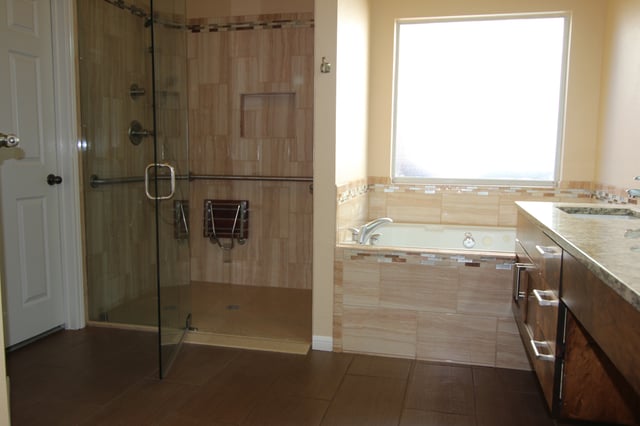
Modifying your bathroom for ADA compliance following practiced wheelchair accessibility guidelines is a great place to start any universal remodel during a handicap accessible bathroom remodel. This will provide access to both wheelchairs and walkers. Furthermore, you can help avoid many future injuries. Any wet area like the bath is the most dangerous of all your home's surrounding living space and is the most common area for falls and slips. Simply getting in or out of the tub or shower, using the toilet and sink, or just maneuvering over wet surfaces can be hazardous to your health. Installing properly positioned grab bars to increase safety is a great place to spend your money on a limited budget around the shower, toilet, and tub. A walk in bath tub containing a water tight door can provide an easy alternative for people with mobility issues who cannot navigate over bathtub walls. The main complaint for these very expensive tubs is that the user must sit there soaking wet and getting cold for a couple of minutes while the tub drains before they can open the door. Another alternative to consider is a walk in shower design which has the option of having a door. The shower door is not needed if the shower is designed properly protecting the adjacent bath floor areas from becoming drenched and hazardous. Any door is just another barrier to negotiate along a designated route for a person with mobility issues. If a wheelchair is needed for mobility, a roll in or transfer shower should be of consideration. A roll in shower is perfect for the person who wants to have a shower but doesn't have the strength to stand in the shower. On the other hand, a transfer shower enables a wheelchair user to move from the wheelchair or walker onto a sturdily mounted seat contained within the shower area. Again this will be determined by the shower user's mobility limitations. A curbless or non-threshold shower entrance is a superior design for gaining access to the walk in shower but it must be correctly designed for drainage. A curbless shower does not mean a shower door cannot be incorporated into the design.
The National Association of Home Builders, in partnership with the AARP and Home Innovation Research Labs, created the CAPS program, which includes training and education on the technical, business management and customer service skills essential to compete in the fastest growing segment of the residential remodeling industry--home modifications for aging in place. David L. Traut CAPS owner of T-Square Company in Austin, Texas is one of the select group of professionals nationwide to earn the Certified Aging-In-Place Specialist (CAPS) designation, identifying him as a home remodeler and builder with the skills and knowledge necessary to remodel or modify a home to meet the unique needs of the older population, disabled owners or their visitors.
Handicap Accessible Bathroom Shower

Tags:
aging in place remodeling,
handicap home modifications,
ADA bathroom cabinets,
handicap accessible bathrooms,
wheelchair accessible baths,
CAPS professional in Austin,
accessible home remodeling,
disability home remodeling in Austin,
bathroom modifications for elderly,
disability home modifications in Austin,
handicap home modifications for disabled,
handicap accessibility,
handicap remodeling contractors,
disability home modifications,
accessibility remodelers in Austin,
wheelchair accessible showers in Austin,,
accessibility designs Austin Texas,
roll in showers in Austin,
house remodeling Austin, Texas,
Austin Handicap Remodeling,
bathroom modifications for disabled in Austin, TX,
home modifications for disabled children,
home remodeling contractor near Austin, Texas,
home remodeling for disabled in Austin Texas,
universal design remodeling contractor,
universal design building contractor,
home remodeling for seniors Austin,
home remodeling for the elderly,
disability and special needs contractor Austin,
bathrooms with disability access in Austin, Texas,
Austin disability contractors for special needs,
Austin handicap bathroom contractor,
barrier free remodeling,
handicap remodeling,
handicap accessible bathroom remodeling,
handicap accessible home modifications,
disability remodeling,
handicap accessible bathroom remodel,
Austin aging in place specialist,
handicap access bathroom remodel
In designing for specific physical conditions, we realize that aging doesn't always bring on disease while the body declines making certain physical limitations inevitable. Arthritis is the most common chronic condition to appear as it restricts ordinary daily activities. The lack of hand strength and stiff knees are indicative of this illness. This most reported arthritic condition affecting people over the age of 65 is followed by heart disease and vision loss in that order. Smart aging design and concepts can compensate for the introduction of frailty, lack of mobility, and blindness in aging in place families. We are constantly coming up with new methods for home modifications and household products to increase the comfort of our residential environments.
Mobility limitations vary dramatically but, depending on the personality of the individual, any diminished capacity creates feelings of dependence or depression. When considering an accessible home remodeling project, anticipate that any conditions you are experiencing will only progress for the worst with age. Simple changes to help with hand grip strength or coordination within the home can include large rocker type wall switches, touch controlled lamp switches, and converting round door knobs to lever sets. Mobility aids like walkers, canes, and wheelchairs need to be available at any time. People utilizing these mobility aids may use them all but at different times during the day or hopefully not at all. Accessible home remodeling must take this into account and be designed to accommodate them all as needed by the user.
Custom Walk In Showers
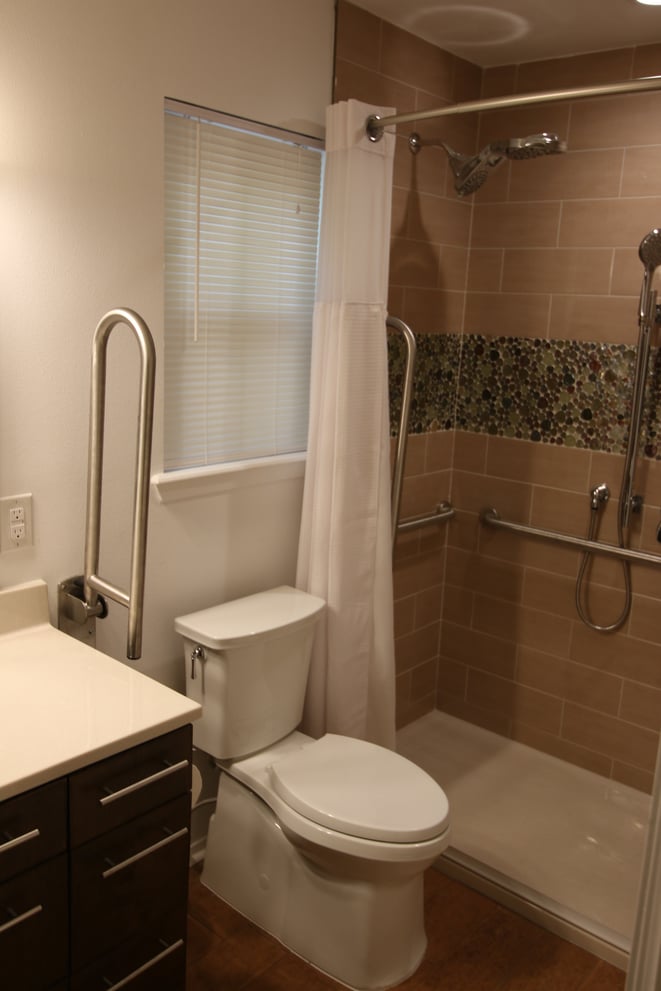
Most residential housing is geared to young healthy adults. Builders do not take into account age-related conditions such as reduced mobility or limited range of reach. Hence, dwellings do not support the physical and sensory changes that older adults encounter as they age. What appear to be insignificant home features can have significant effect: for a person with even minor aging issues.
Some permanent disabilities require constant wheelchair use. The home modifications must accommodate a person who is always seated. A five foot turning radius should be observed in the bathroom, kitchen, and living area so as not to restrict the movement of the wheelchair. An unobstructed barrier free accessible route will be determined during the assessment for wheelchair accessible remodeling. Clear wider hallways of at least 42" in width and doorways of at least a 32" clear width must be the standard. Light switches and cabinetry must be lowered where 48" is the reaching limit of a person sitting.
Impaired memory and think presents a different set of problems to the aging in place specialist's design. Every effort must be made to limit the confusion of those utilizing the remodeled space. As with all progressive diseases , a patient's needs will change over time, any modifications or solutions may be effective only for short periods of time. Restricting the entrances to rooms that present the greatest hazards like the kitchen and bathroom must be taken into account during the assessment.
Concerning visual challenges, good lighting that is not glaring, appropriate color choices, and contrasting elements within the room design are paramount as considerations for a design. Hearing limitations require LED lighting to indicate appliances being on. Doorbells, stove tops, and life safety devices need to be visual as well as audible.
Accessible homes look much like other homes but they still help with handicap accessibility. These homes often have a sunny open feeling since there are fewer walls between common areas. Level floors create a comfortable flow between living areas and make rooms easier to keep clean. The kitchen is more efficient having compact storage and the bathrooms are a little more spacious than in a traditional home. The house is safe designed to reduce the potential for falls. Adequate glare-free lighting is well positioned to prevent dark spots. The accessible home is the home of the future representing the way we want to live right now. Well-planned accessible homes lift the spirits and enhance dignity. They have the ability to transform our relationships with our bodies and our homes.
Knowledgeable construction and design professionals are utilizing their CAPS training across the nation. CAPS stands for Certified Aging In Place Specialist. This designation is taught through the National Association of Home Builders in collaboration with AARP. CAPS connects responsible professionals with home owners who need these services on an ever-increasing basis. CAPS is a nationwide initiative and all active CAPS members can be found at nahb.org/CAPSdirectory.
What really defines accessible home modifications and elder construction in Austin? Barrier free architectural design and accessibility for all who enter the structure while approaching the main living areas of the home in question is a fair definition. Universal design and aging in place trends have taken hold in the residential remodeling industry. The current housing inventory doesn't offer the features needed for safety and accessibility in the numbers needed to accommodate the ever growing demand. It is ultimately up to the individual homeowners and their families to plan for future housing needs. Once it is discovered that modifications to an existing home are not possible to accomplish total accessibility then it is time to consider a newer or custom built accessible home.
Along with aging in place, the use of universal design in handicap accessible home renovations is becoming more of a household term. Essentially, it’s about building or modifying places and spaces—both public and private—to accommodate people of all ages and abilities. More than just an architectural concept, universal design is a win-win for sandwich generation boomers caring for aging parents and their children at home, for grandparents raising grandchildren and great-grandchildren, and for all who are facing the challenges of caring for a loved one with Alzheimer’s or other chronic diseases.

Aging in place home modifications are available through T-Square Company in the Austin area. We have an A plus rating with the local BBB and have over 30 years of remodeling experience. We are additionally a certified aging in place specialist offering complete aging in place services. Each design/build situation will be customized to fit your personal needs to increase your accessibility. Call 512-444-0097 today to begin the accessible second chapter of your life while remaining safe and secure in your existing home. CAPS #1636580
Tags:
wheelchair accessible baths and kitchens,
ADA remodeling,
disability bathroom remodels,
handicap accessible bathrooms,
aging in place designs,
accessibility home remodeling in Austin,
CAPS professional in Austin,
accessible home remodeling,
CAPS remodeling techniques,
Universal Design,,
home modifications for independent living,
aging in place services,
elder construction,
certified aging in place specialist,
handicap remodeling contractors in Austin,
Austin Accessibility Design,
Austin accessible home remodeling,
home modifications for disabled children,
aging in place home remodeling,
wheelchair accessible home remodeling in Austin,
Universal Principles of design revised and updated,
home remodeling for seniors Austin,
home remodeling for the elderly,
special needs contractor in Austin,
senior home modifications in Austin,
bathrooms with disability access in Austin, Texas,
handicap accessible remodeling,
barrier free remodeling,
handicap remodeling,
handicap accessible bathroom remodeling,
handicap accessible home renovations,
handicap accessible home modifications,
disability remodeling
Universal design is the design of products and environments to be usable by all people, to the greatest extent possible, without the need for adaptation or specialized design. Some universal design/build ideas just make good sense. Once you bring them into your home, you'll wonder how you ever lived without them.

Can you envision building a house as a young adult that you can live in comfortably while you age no matter what your basic physical needs require? This evolving home will contain wide doorways and hallways that can accommodate both a stroller and a wheelchair or walker. There will be a wide open feeling throughout the house's main living areas in the bathroom, kitchen, and living area that do not restrict moving about. Your universally designed home has the capability to age with you and should not need further modifications to accommodate future life changes for any of it's family members. This universal designed home is barrier free without looking modified and is accessible to everyone no matter of their age, size, or capability of movement. This home will be accessible to everyone from your father to your son. People's personal needs vary with age and the Universal Design of products, services, and environments provide adaptations for aging in place to everyone regardless of their age, ability, or situation. Universal Design becomes invisible when incorporated into a home remodel and is only present when help with accessibility is needed. Furthermore, an appealing universal design project creates a greater resale potential. Aging in place construction drastically provides immediate accessibility while universal design techniques provide for gradual changes for accessibility now and when needed in the future. Both Universal Design and Aging In Place building concepts are not age related but each has to do with the dwelling we choose to live in for as long as possible and the extent of modifications that will be needed to accomplish this life choice.

Universal Design isn’t just for the elderly or the permanently disabled. As Americans age, they’re beginning to realize that their homes need to adapt for future life needs. Consumers are more cognizant today of the benefits of a universally designed home, but they may not realize it can be beautiful as well as functional. Everyone can use universal design! It doesn't matter if you are young or old. You could be short or tall, healthy or ill. You might have a disability or you may be a star athlete. Because of universal design ideas, people who are very different can all enjoy the same home. And that home will be there for all its inhabitants even when their needs evolve. The need for Aging In Place home modifications or remodeling later can be lessened from the time of first moving into the home if living areas are planned using common sense and forethought.
Universal Design does not strictly deal with accessibility and does not implement precise ADA standards but it does offer flexibility to add accessories now and later to those planning ahead or to the end user. It also provides for a wide range of human performance characteristics for the way people use spaces within their homes including well integrated usability features. These adaptations have a broad market appeal to everyone for achieving ease of use, safety, and convenience accommodating a certain reality. That reality is that all people exist along a continuum of human performance as per their personal traits and characteristics regardless of their age. A universal approach to design takes into account that everyone has varying degrees of ability and disability rather than someone is either fully-functional or disabled. A universal design is appealing to all users.
There are seven criteria which must be met to be considered a universal design no matter which area of the home you are referring to. Any design must be equally useful to everyone, have flexibility in it's usefulness, be simple and intuitive, be perceived by everyone, have a tolerance for error, require little physical effort, and it must maintain an adequate area for approach and use. Any complexity or discriminating attribute to a design will doom it in terms of being considered universal in nature.
Let's face it, an accessible home is needed by all of us at some time in our lives. This is true whether it's for ourselves, a family member, or a guest. The need is certainly not driven by age but is a result of life's experience. Any family living with a disability among any of the generations within it's group can always benefit from additional accessibility. This will in turn increase safety and independence for all involved as they go through life.
Aging in place home modifications are available through T-Square Company in Austin. Each universal design/build situation will be customized to fit your personal needs. Call 512-444-0097 today to begin to prepare for the accessible second chapter of your life while remaining safe and secure in your existing home.
CAPS 1636580
Tags:
aging in place specialist in Austin,
aging in place design in Austin,
senior aging in place services,
age in place home design,
home modifications for disabled children,
home modifications for children with disabilities,
why is aging in place important,
what does it mean to age in place,
universal design building for a lifetime,
universal designbuilding for the future,
what is universal design,
universal design remodeling techniques,
universal design building contractor,
why is universal design important,
universal design principles,
7 principles of universal design,
universal principles of design,
principles of universal design,
applying principles of universal design in Austin
The changing makeup of the family has led to the growth of a new architectural science: Universal design. Simply defined, it is human-centered design that seeks to create environments and products that offer safety and comfort for all people with no need for adaptation or functional changes. The evolution toward Universal Design began in the 1950s with a new attention to design for people with disabilities. Barrier-free design was developed to remove obstacles in the built environment for people with physical disabilities.
In this country, multi-generational households are more common today than they were even 10 years ago, due in part to the recent recession. Planning ahead for the possibility of such a reality, if you are building or remodeling, is worth a bit of time and effort. Homes that incorporate universal design principles are not only perfectly suited for the needs of an aging population, but are also appropriate for families with young children.
Universal Design (UD) does not equate to accessibility design even though they both are concerned with ergonomics and human function issues. The ADA guidelines for accessibility were created as a means to help those people with extreme disabilities within our society who are a narrow and specific cross section of the masses. A UD approach broadly takes into account moderate impairments or disabilities, temporary health conditions, and the varying abilities of anyone within a home regardless of their age or size. In other words, an ADA accessible home would be designed for the one person with the disability whereas a UD home is designed for everyone. Features like single-story design, bedrooms and bathrooms on the ground floor, natural day lighting through larger windows and skylights, and wider doors and hallways appeal to users of all ages. With baby boomers eyeing a future where they'll age in place and younger people renovating older homes, the Harvard Joint Center for Housing Studies is anticipating healthy growth for the U.S. home improvement market through 2025.
The new evolving concept known as Universal Design for home building and remodeling is catching on nationwide and has been for several years as a sign of the times. Universal design techniques used in building makes a home more accessible to all regardless of their mobility or adaptive abilities. An evolution of new products used for disability home modifications is making those homes more accessible and has finally come about in the remodeling industry. These new advances in accessible home remodeling not only keep the living environments safer but will not compromise the home's aesthetics. This new way of thinking offers flexibility to add accessories now and later to those planning ahead or to the end user. It also provides for a wide range of human performance characteristics for the way people use spaces within their homes including well integrated usability features. These adaptations have a broad market appeal to everyone for achieving ease of use, safety, and convenience accommodating a certain reality. That reality is that all people exist along a continuum of human performance as per their personal traits and characteristics regardless of their age. A universal approach to design takes into account that everyone has varying degrees of ability and disability rather than someone is either fully-functional or disabled. A universal design is appealing to all users.
The seven criteria which must be met to be considered a universal design no matter which area of the home you are referring to are: Any design must be equally useful to everyone, have flexibility in usefulness, be simple and intuitive, be perceived by everyone, have a tolerance for error, require little physical effort, and it must maintain an adequate area for approach and use. Any complexity or discriminating attribute to a design will doom it in terms of being considered universal in nature.
While each individual will have different needs and wants, there are many ways to make homes more user friendly or accessible. Having the ability to enter the home from the outdoors is one of the first steps to enjoying a home. Once inside, the overall layout of the home can make a significant impact on the convenience and usability of the home. Universal design principles recommend a bedroom, kitchen, entertainment area and a full bathroom on the main floor. Finding a professional with the expertise to design, build or remodel a home to be handicap accessible might seem overwhelming. One place to start is by looking through the selection of Certified Aging-In-Place Specialists. This designation program, offered through the National Association of Home Builders, incorporates components of assessment, technical knowledge and management skills related to home modifications that will allow people to stay in their own homes safely and independently for a longer amount of time.
The National Association of Home Builders, in partnership with the AARP and Home Innovation Research Labs, created the CAPS program, which includes training and education on the technical, business management and customer service skills essential to compete in the fastest growing segment of the residential remodeling industry--home modifications for aging in place. David L. Traut, CAPS owner of T-Square Company in Austin, Texas is one of the select group of professionals nationwide to earn the Certified Aging-In-Place Specialist (CAPS) designation, identifying him as a home remodeler and builder with the skills and knowledge necessary to remodel or modify a home to meet the unique needs of the older population, disabled owners, or their visitors. We offer and incorporate universal design in all our remodeling projects to limit the expense and hassle of periodically adapting your home to your ever changing needs.
For additional information about the CAPS program, visit nahb.org/CAPS. For more information about T-Square Company, visit www.tsquareco.com or call 512-444-0097.
Tags:
certified aging in place consultant in Austin,
bathroom modifications for disabled in Austin, TX,
aging in place specialist in Austin,
senior aging in place services,
home modifications for disabled children,
why is aging in place important,
what does it mean to age in place,
universal design building for a lifetime,
universal designbuilding for the future,
what is universal design,
universal design kitchen ideas,
universal design remodeling techniques,
universal design remodeling contractor,
universal design building contractor,
why is universal design important,
universal design principles,
7 principles of universal design,
universal principles of design,
Universal Principles of design revised and updated
Many people find themselves needing accessible homes for themselves or family members. There are approximately 30 million Americans using wheelchairs and the number of people who need accessible homes in Austin will continue to increase as disabled and aging people are finding more ways to remain living in their homes. One important way to increase independent living is making a home accessible to an individuals personal needs. Home modifications making homes wheelchair accessible can increase safety, accessibility, and independence for people who want to live independently.
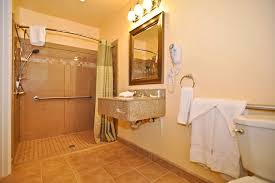
More and more people are finding themselves needing disability bathroom remodels in Austin to modify the existing architecture of their homes due to the use of a wheelchair or walker while preparing to remain in their homes as they age in place. There are currently over 30 million Americans using wheelchairs and those numbers continue to increase as a large population of people with age related challenges look for ways to live independently in their homes. Physical limitations affect many more people than the daily users of walkers and wheelchairs. Many members of our life experienced or elder society have significant problems in dealing with their home environment. Today's conventional building standards conflict with most people's accessibility when you consider our created architectural barriers concerning cabinetry and door opening widths, individual strength, range of motion, movement, manual dexterity, balance, and coordination. Once the demands of our built environment exceed their capacities we become excluded from a room or even the entire home. The building world must work in unison to be sure the entire living environment meets basic needs in addition to affordability and structural integrity for the consumer and home owner. This includes both the home and the components within the home being accessible to all inhabitants. Privacy, sense of belonging, sense of control, and the sense of safety and security make up the quality of life for any home and should be considered for any design.
T-Square Company offers accessible wheelchair design in Austin
The Top Five Items To Include In An Accessible Bathroom Design
1. Vanity Sink Accessibility
Accessible bathrooms today contain stylish vanities set at a universal height of 34 inches with clear knee spaces. The sink faucets must be easily controlled by either wrist handles or levers. Bathroom vanities with universal height cabinet tops and open knee spaces are taking over the marketplace. These new residential ADA vanities do not need to look institutional. They can be designed like any other piece of fine furniture. Scalding must be guarded against by using either insulating pipe wrap or a removable panel for the plumbing.
2. Toilet Accessibility
Toilets are available in comfort heights eliminating the deep knee bend needed for seating. Grab bars should be installed on at least both sides of the toilet. Creating a toilet within an open area and not a closet is much more accessible. Toilet seats are available with a heat feature and some have the ability to self close or have a night light.
3. Bathing Facilities
Curbless roll in showers with a 36" clear entrance are advised for everyone. The shower should contain at least a shower wand on a sliding bar for varying heights of use along with a regular shower head and control if desired. Installing fixtures with a scald guard or lowering the temperature at the water heater is a must to prevent burns. Folding seats in the shower are useful if caretakers are ever involved. Grab bars around the bath and especially in the shower should be used while non slip floor covering should always be considered. Walk in tubs are also a consideration but some people get chilled while the tub is draining.
4. Safety and Accessibility
Always choose fixtures and fittings that are easy to control with a single hand motion or a closed fist. Motion controlled sensor fixtures are also a possibility when specifying finishes. Provide easily accessible storage compartments with pull out shelving eliminating architectural barriers by not using doors on the cabinetry. Always consider the individual needs of the occupant and find the best placement of any reachable items within their reach distance of 24". Fully consider where the best access is for all accessories such as robe hooks, towel bars, paper dispensers, soap dishes, toothbrush holders, shower shelves. The distances and clearances required will be dictated by the user and not by an accepted general outline. With falls in the wet area of the bathroom being such a great concern, a non slip tile floor should be installed without placing loose rugs in the general area.
5. Lighting
Natural lighting is always better for anyone using the bath. Adequate task lighting in the shower, dressing area, and vanity vicinity should be installed. Lowered switches at around 48" above the floor in reaching distance should control all the lighting. Outlets that are ground protected should be installed at 18" above the floor.
There are really three categories of aging in place customers. Those who are simply and wisely planning ahead for their futures to remain in their present homes. The second category concerns those people who know they have a chronic medical disorder and need to prepare in advance for accessibility issues which will come as a result of their disease. People with diseases that are constantly causing increased physical or mental changes to their being are a good representative of this second group. The third group involves those people who either have had a chronic problem that has progressed severely altering their mobility or those who have sustained a life altering tragedy such as being involved in an accident. All of these groups will drive the future metamorphosis of existing inaccessible dwellings.
Accessible wheelchair designs in Austin are available through T-Square Company. Each design/build situation will be customized to fit your personal needs. Call 512-444-0097 today to begin your accessible second chapter in your life while remaining safe and secure in your existing home. CAPS 1636580
Tags:
wheelchair accessible baths,
accessibility home remodeling in Austin,
accessible home remodeling,
CAPS remodeling techniques,
disability home remodeling in Austin,
bathroom modifications for elderly,
aging in place services,
Austin elder construction,
bathroom remodeling contractor Austin Texas,
remodel bathroom for handicap Austin Texas,
handicap home modifications for disabled,
handicap remodeling contractors,
bathroom modifications for disabled,
ADA vanities,
home modifications Austin, Texas,
ADA remodeling Austin, Texas,
ADA bathroom Austin, Texas,
roll in showers,
handicap bathrooms,
disability access bathrooms Austin,
disability remodeling in Austin,
Austin Handicap Remodeling,
Austin senior living solutions,
Austin ADA vanity,
certified aging in place consultant in Austin,
bathroom modifications for disabled in Austin, TX,
aging in place specialist in Austin,
aging in place design in Austin,
age in place home design,
home modifications for disabled children,
home modifications for children with disabilities,
why is aging in place important,
what does it mean to age in place,
universal designbuilding for the future,
home remodeling contractor near Austin, Texas,
Austin remodeling,
aging in place home remodeling,
home remodeling for disabled,
remodeling companies in Austin TX,
home accessibility help in Austin,
home remodeling for disabled in Austin Texas,
wheelchair accessible home remodeling in Austin
The concept of the accessible home has evolved beyond the basic grab bars and ramps to one in which accessibility is built into the basic design. Universal design makes living in a home easier for people of all ages and abilities. Accessible can be both beautiful and functional and never needs to have any institutional appearance. As our aging baby boomer population ages, the need for accessibility in the home is becoming ever more important. Our new way of viewing the basic home in our society and our antiquated architecture is giving way to a revolution in home design. Ordinary homeowners with extraordinary challenges can partner up with CAPS design professionals, architects, and their own families to create homes to restore capabilities, independence, and grace to daily living.
Everyone ages differently and has different needs and wants. The factors that constitute the aging in place market for all individuals are based on a persons genetic makeup, their lifestyle including the choices they have made while living their life, and their environment. These factors have brought about the need for universal design. This is the design of products, services, and environments that are usable by as many people as possible regardless of age, ability, or situation without the need for adaptation or specialized alterations. It provides for the greatest safety and access for any home guests or occupants and is undetectable when done well. Since so very few homes share the accessibility offered by universal design, to satisfy the needs of a particular household member brought about by an accident, an illness, or simply the aging process there will always be a need for customized accessibility features. This will be accomplished by a CAPS accredited remodeling professional producing a truly functional design when considering accessible home designs in Austin, Texas. T-Square Company is a competent home remodeling company who understands and practices aging in place home modifications and Elder construction in Austin. They are CAPS certified and will perform the work needed to fit their in house design insuring your safety and accessibility. T-Square Company specializes in accessible bathrooms in Austin, Texas.
Physical limitations affect many more people than the daily users of walkers and wheelchairs. Many members of our life experienced or elder society have significant problems in dealing with their home environment bring about the need for remodeling for disabilities. Today's conventional building standards conflict with most people's accessibility when you consider our created architectural barriers concerning cabinetry and door opening widths, individual strength, range of motion, movement, manual dexterity, balance, and coordination. Once the demands of our built environment exceed their capacities we become excluded from a room or even the entire home. The building world must work in unison to be sure the entire living environment meets basic needs in addition to affordability and structural integrity for the consumer and home owner. This includes both the home and the components within the home being accessible to all inhabitants. Privacy, sense of belonging, sense of control, and the sense of safety and security make up the quality of life for any home and should be considered for any design.
There are really three categories of aging in place customers. Those who are simply and wisely planning ahead for their futures to remain in their present homes. The second category concerns those people who know they have a chronic medical disorder and need to prepare in advance for accessibility issues which will come as a result of their disease. People with diseases that are constantly causing increased physical or mental changes to their being are a good representative of this second group. The third group involves those people who either have had a chronic problem that has progressed severely altering their mobility or those who have sustained a life altering tragedy such as being involved in an accident. All of these groups will drive the future metamorphosis of existing inaccessible dwellings.
Disability is a complex phenomenon representing an interaction between one's physical impairments, the activities they need to perform, and the architectural barriers within the space in which this situation occurs. The terminology and jargon used for disabilities evolves regularly whereas, "handicapped" is no longer acceptable. It is no longer merely a description of intellectual or physical impairments. Each individual with similar impairments describes his or her limitations differently. The blind don't experience their world the same as a person with deafness. Some of our societal statistics that weigh into aging in place situations include reports stating that 19% of the population between the ages of 16 and 64 and 42% of those of us 65 and over have a physical disability affecting the activities of their daily lives. For a progressive condition, aging in place home remodeling in Austin definitely comes into play. This is the only way to insure both the safety and mobility for the homeowner or family member requiring the home modifications. The two main groups driving this aging in place market are those people who are 65 and over and the baby boomers. The first group is projected to reach 55 million in 2020. The baby boomer generation born between 1946 and 1965 today make up 28% of the U.S. population and are made up of some 77 million people. Modifications of existing homes is important because people of age 50 and older want to remain in their current home for as long as possible. Aging in place home modifications in Austin should only be done by a CAPS certified remodeling company. This is the only way that you can be assured that the home modifications are the right choices to satisfy your needs. There is no need to waste money only to find out that the wrong alterations were done by an inexperienced and unqualified remodeling company. Always check their credentials to verify that the remodeler holds a CAPS certification. All registered CAPS program graduates and their remodeling company will be listed in a national registry in Washington. The information can be found by simply visiting nahb.org/CAPS.
Accessible wheelchair designs in Austin are available through T-Square Company. Each design/build situation will be customized to fit your personal needs. Call 512-444-0097 today to begin your accessible second chapter in your life while remaining safe and secure in your existing home. CAPS 1636580
Tags:
wheelchair accessible remodeling,
wheelchair accessible baths and kitchens,
handicap home modifications,
CAPS professional in Austin,
accessible home remodeling,
disability home remodeling in Austin,
home modifications for independent living,
disability bathroom remodeling in Austin,
bathroom modifications for elderly,
elder construction,
certified aging in place specialist,
handicap remodeling contractors in Austin,
bathroom remodeling contractor Austin Texas,
handicap home modifications for disabled,
home modifications Austin, Texas,
bathroom accessibility remodels in Austin,
wheelchair accessible showers in Austin,,
accessibility designs Austin Texas,
handicap bathrooms,
roll in showers in Austin,
home modifications for independent living Austin,
disability access bathrooms Austin,
disability remodeling in Austin,
Austin Handicap Remodeling,
Austin Accessibility Design,
Austin accessible home remodeling,
certified aging in place consultant in Austin,
bathroom modifications for disabled in Austin, TX,
aging in place specialist in Austin,
aging in place design in Austin,
senior aging in place services,
age in place home design,
home modifications for disabled children,
home modifications for children with disabilities,
why is aging in place important,
what does it mean to age in place,
universal design building for a lifetime,
universal designbuilding for the future,
home remodeling for disabled in Austin Texas
Making your home accessible for a child with special needs will also give your entire family a feeling of security and freedom. Your child with the disability will become more comfortable and be able to maneuver through and use the home more safely. He or she will be able to develop the life skills they need in their daily environment rather than just focusing on treatment. Sometimes the living environment must be changed to make a significant impact on the child's life. Fortunately, whatever is needed in the way of home modifications to create a safe and comfortable environment for your child is available through the registered and certified CAPS program. CAPS stands for Certified Aging In Place Specialist. This designation is taught through the National Association of Home Builders in collaboration with AARP. CAPS connects responsible professionals with home owners who need these services on an ever increasing basis. CAPS is a nationwide initiative and all active CAPS members can be found at nahb.org/CAPSdirectory.
The Universal Design (UD) concept is also age driven like the aging in place issue but addresses the design of all homes both new and existing. Universal design/build addresses not only the problems all of today's homeowners face but the professional skills involved in design, building, remodeling, and all social and health services. This new evolving concept in home remodeling is catching on nation wide and has been for several years as a sign of the times. Universal design techniques used in building makes a home more accessible to all regardless of their mobility, age, or adaptive abilities. The multi-generational appeal of UD is appealing to any homeowner, their children, or their parents. An evolution of new products used for disability home modifications is making those homes more accessible and has finally come about in the remodeling industry. These new advances in accessible home remodeling in Austin not only keep the living environments safer but will not compromise the home's aesthetics.
UD does not strictly deal with accessibility and does not implement precise ADA standards but it does offer flexibility to add accessories now and later to those planning ahead or to the end user. It also provides for a wide range of human performance characteristics for the way people use spaces within their homes including well integrated usability features. These adaptations have a broad market appeal to everyone for achieving ease of use, safety, and convenience accommodating a certain reality. That reality is that all people exist along a continuum of human performance as per their personal traits and characteristics regardless of their age. A universal approach to design takes into account that everyone has varying degrees of ability and disability rather than someone is either fully-functional or disabled. A universal design is appealing to all users.
There are seven criteria which must be met to be considered a universal design no matter which area of the home you are referring to. Any design must be equally useful to everyone, have flexibility in it's usefulness, be simple and intuitive, be perceived by everyone, have a tolerance for error, require little physical effort, and it must maintain an adequate area for approach and use. Any complexity or discriminating attribute to a design will doom it in terms of being considered universal in nature.
Universal Design does not equate to aging in place and accessibility design even though they both are concerned with ergonomics and human function issues. The ADA guidelines for accessibility were created as a means to help those people with extreme disabilities within our society who are a narrow and specific cross section of the masses. A UD approach broadly takes into account moderate impairments or disabilities, temporary health conditions, and the varying abilities of anyone within a home regardless of their age or size. In other words, an ADA accessible home would be designed for the one person with the disability whereas a UD home is designed for everyone.
David L. Traut, CAPS owner of T-Square Company in Austin, Texas as a handicap remodeling contractor is one of the select group of professionals nationwide to earn the Certified Aging-In-Place Specialist (CAPS) designation, identifying him as a home remodeler and builder with the skills, training, and knowledge necessary to design and remodel or modify a home to meet the unique needs of the older population, disabled owners or children, or their visitors. For more information about T-Square Company, visit www.tsquareco.com or call 512-444-0097.
Wheelchair accessible remodeling is available through T-Square Company.
We offer complete Aging In Place Services and designs are just a phone call away!
Tags:
aging in place construction,
custom tub to shower conversions,
accessibility home remodeling in Austin,
disability home remodeling in Austin,
certified aging in place specialist,
disability home modifications in Austin,
remodel bathroom for handicap Austin Texas,
handicap home modifications for disabled,
handicap accessibility,
handicap remodeling contractors,
bathroom modifications for disabled,
disability home modifications,
home modifications Austin, Texas,
bathroom accessibility remodels in Austin,
wheelchair accessible showers in Austin,,
accessibility designs Austin Texas,
handicap bathrooms,
home modifications for independent living Austin,
disability access bathrooms Austin,
disability remodeling in Austin,
Austin Handicap Remodeling,
universal design/build,
universal design ideas,
universal design/build ideas,
Austin accessible home remodeling,
certified aging in place consultant in Austin,
bathroom modifications for disabled in Austin, TX,
aging in place specialist in Austin,
aging in place design in Austin,
home modifications for disabled children,
home modifications for children with disabilities