Check out my building blog to learn more about construction for your home or office in Austin! David L. Traut, President, CAPS Certified (512)444-0097

Aging in Place FAQ: Top Questions About Home Safety and Modifications

Posted byDavid L. Traut, CAPS on Tue, May 05, 2026 @ 16:05 PM

Aging in place is about more than staying in your home — it’s about staying safe, independent, and comfortable for the long term

Aging in Place Is About Planning, Not Reacting

Aging safely at home isn’t about a single product or a single renovation.

It’s about:
✔ smart design
✔ proactive upgrades
✔ room-by-room planning
✔ long-term comfort

The earlier you start, the easier — and more affordable — it becomes.
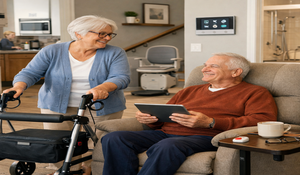
 

aging in place living room design

Below are the most common questions people ask when planning for aging in place, along with expert guidance to help you make smart, proactive decisions.

1.   How can I make my home safe so I can stay here as long as possible?

Home safety is the foundation of successful aging in place. Preventable hazards cause most injuries that force older adults out of their homes — especially falls.

The biggest risks come from:

  • Falls (especially in bathrooms or kitchens due to their association with water and wet floors, and on stairs)

  • Poor lighting (when inadequate lighting doesn't produce enough definition to improve safety) 

  • Narrow walkways (cluttered, cramped,  or walkways narrower than 36 inches in width are problematic and dangerous)

  • Slippery flooring (slippery wood and tile floors are a hazard)

  • Hard-to-reach storage (the most used stored items should be no higher than 48-52 inches above the floor)

High-impact safety upgrades include:

  • Improved lighting throughout the home (layered task lighting is the best compliment to natural light to overcome dark areas)

  • Non-slip flooring (cork, linoleum, vinyl, and porcelain with the correct safe slip coefficient)

  • Grab bars in bathrooms (around all sides of the shower or tub, and around the toilet, mounted on adequate wood blocking)

  • Zero-step entries (anything greater than 1/2 inch height is unacceptable)

  • Wider doorways and hallways (clutter-free hallways that are 36-48 inches in width)

 These changes dramatically reduce injuries at home while increasing comfort and independence.


2. Is my current home realistic for aging in place, or should I consider moving?

Many people worry about:

  • two-story layouts (these are not a problem when installing a stair lift)
  • small bathrooms (walls may need to push outward into adjacent areas)

  • narrow halls and passages (hallways should be 36-48 inches wide)

  • difficult entrances (all entrances should be 36 inches wide and no threshold higher than 1/2 inch tall)

The truth: most homes can be adapted successfully — often for less than the cost of moving.

A professional accessibility assessment from a CAPS professional helps determine:


✔ what can be modified (seek guidance from a CAPS professional)


✔ what should be prioritized (the most problematic areas of the home)


✔ long-term feasibility (plan for the future)


3. Will aging-in-place upgrades make my home feel like a hospital?

Not when done correctly.

Modern accessibility design focuses on:

  • beauty

  • comfort

  • dignity

  • seamless integration

Today’s universal design looks like high-end remodeling — just safer and smarter.


4. How do I plan for mobility issues I don’t have yet?

Smart universal design prepares the home without making it feel clinical.

Future-ready features include:

  • wider pathways

  • step-free showers

  • reachable switches and outlets

  • reinforced walls using adequate wooden blocking

  • minimal thresholds

This allows easy adaptation if mobility needs change.


5. Will aging-in-place upgrades make my home feel like a hospital?

Not when done correctly.

Modern accessibility design focuses on:

  • beauty

  • comfort

  • dignity

  • seamless integration

Today’s universal design looks like high-end remodeling — just safer and smarter.


6. Where do I start — and who can I trust?

This is one of the most important questions.

Look for professionals who:

  • specialize in aging in place and are CAPS certified (Certified Aging in Place Specialists)

  • understand accessibility modifications and the disability standards with experience

  • uses universal design principles in all its remodeling work

  • offer structured and professional safety assessments

A clear plan prevents unnecessary spending and missed safety risks.

At T-Square Company, a CAPS-Certified Builder, we help homeowners evaluate risks and implement smart, practical safety solutions tailored to their homes and lifestyles.

Accessible Remodeling • Universal Design • Aging-in-Place

Let’s make your forever home work beautifully for you—now and for years to come.

David L. Traut, owner of T-Square Company, has written an award-winning Aging in Place Guide
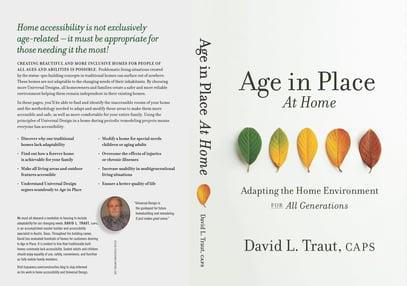
David is also certified in Universal Design in both the United States and Australia. Drawing on decades of expertise, he published Age in Place at Home: Adapting the Home Environment for All Generations, a comprehensive guide that explores the role of Universal Design in creating safe, accessible homes.

📘 Age in Place at Home takes readers room by room, explaining practical modifications that enhance safety, accessibility, and independence. The book is available on Amazon.

Home Accessibility Help


Tags: aging in place remodeling, aging in place, universal design/build, senior home modifications in Austin, home accessibility modifications, accessible home design, home safety for seniors, independent living at home, aging in place questions, senior fall prevention, aging in place planning, safe home design for seniors, home adaptations for aging

Accessible Homes: Why Everyone Needs One Eventually

Posted byDavid L. Traut, CAPS on Thu, Oct 23, 2025 @ 17:10 PM

Let’s face it — accessible homes are something everyone will need at some point in life. Whether for ourselves, a family member, or a guest, accessibility enhances safety, comfort, and independence for all.

The need for home modifications isn’t driven by age—it’s shaped by life’s experiences. Any household living with a disability among its members can benefit from additional accessibility features that make everyday living smoother and safer.

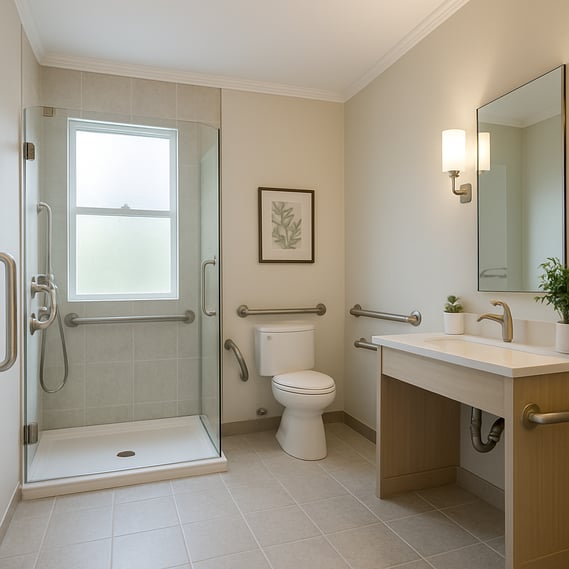
The image showcases a modern accessible bathroom designed for aging in place The room features a spacious layout with a barrierfree shower equipped wi-1


Starting with ADA Guidelines

Except in extreme situations, complete ADA compliance isn’t required for private home remodeling. Still, the Americans with Disabilities Act (ADA) provides a great foundation for accessible design.

The ADA’s measurements for clearances, ramp slopes, and grab bar placement create safe benchmarks to follow, even if you don’t need to meet every technical requirement. Remember, ADA standards are designed for public spaces and may not perfectly fit individual needs or body sizes.

When working on a private residence, you have the flexibility to adapt the best of ADA guidance while customizing it to your household’s specific mobility and lifestyle needs.


A Short History of the ADA

In the 1960s, disability advocates began to push for equal rights, paving the way for the Americans with Disabilities Act, officially signed into law in 1990.

This groundbreaking legislation ensured equal access for people with disabilities across workplaces, transportation, and public accommodations. Over time, accessibility concerns expanded from physical barriers to include digital access — a vital step in today’s connected world.

The ADA continues to evolve, ensuring inclusion for people of all abilities in both physical and digital environments.


Disability and Design: The Human Connection

Disability isn’t defined only by physical impairments — it’s the interaction between a person’s abilities, their daily activities, and the design of their surroundings.

Language and understanding have evolved, too. Outdated terms like “handicapped” have been replaced with “physically challenged” or “person with a disability.” Each individual experiences limitations differently, which is why universal design—creating homes that work for everyone—is essential.

No matter your age, it’s important to regularly evaluate your home to ensure it meets your current and future needs. Life events such as childbirth, illness, injury, or caring for an aging parent can all prompt accessibility updates that keep your home safe and functional.

These same design principles form the foundation of Aging in Place, the practice of staying in your own home comfortably and independently for as long as possible.


Why Work with a CAPS Professional?

When accessibility challenges arise, homeowners often don’t know where to begin. That’s where Certified Aging in Place Specialists (CAPS) come in.

Developed by the National Association of Home Builders (NAHB) and AARP, the CAPS program trains professionals to design and remodel homes that meet the needs of people of all ages and abilities. CAPS-certified experts understand both the technical construction requirements and the personal considerations of adapting a home for safety and independence.

You can find qualified CAPS professionals across the country at nahb.org/CAPS.


Meet Austin’s Local CAPS Expert

David L. Traut, CAPS, owner of T-Square Company in Austin, Texas, is one of this elite group of specialists. With more than 30 years of experience, David helps homeowners remodel and design homes that support independent living for every stage of life.

T-Square Company provides complete home assessments with designs and full-service Aging in Place remodeling, including:

  • Custom bathroom and kitchen modifications

  • Barrier-free showers and grab bar installations

  • Accessible entryways and widened doorways

  • Whole-home alterations for increasing comfort, accessibility, independence, and safety

Call T-Square Company at 512-444-0097 to begin your next chapter of safe, accessible living — without leaving the comfort of your home.
CAPS #1636580

Certified Aging In Place Specialist


Learn More: “Age in Place at Home”

As an extension of his work, David has authored Age in Place at Home: Adapting the Home Environment for All Generations, now available on Amazon.

This comprehensive guide draws on over 30 years of experience and explains how to use Universal Design principles to make every room more livable. Whether you’re planning ahead or adapting for current needs, this book offers insights, ideas, and practical steps for keeping your home accessible for life--your forever home.

👉 Find Age in Place at Home on Amazon

Tags: aging in place home improvements in Austin, CAPS certified remodeling in Austin, CAPS professional in Austin, accessible home remodeling, bathroom modifications for disabled, ADA remodeling Austin, Texas, ADA Contractor/Austin, Texas, universal design forever homes, Austin accessibility remodel, accessible home design, home accessibility remodeling