Check out my building blog to learn more about construction for your home or office in Austin! David L. Traut, President, CAPS Certified (512)444-0097

Austin Home Accessibility Improvements | T-Square Company

Posted byDavid L. Traut, CAPS on Tue, Aug 04, 2026 @ 14:08 PM

What is Your Home Accessibility Plan?

Accessibility improvements in Austin range from basic fall-prevention measures, such as installing grab bars and stair railings, to extensive modifications, such as widening doorways, installing wheelchair ramps, and creating curbless showers. Every thoughtful improvement, whether it's a grab bar, better lighting, an accessible kitchen, or a barrier-free bathroom, is an investment in your future independence. 

For homeowners who are 55+ or their adult children, I recommend organizing home modifications by minor, moderate, and major improvements.  Aging in Place doesn't require a complete remodel all at once.  Creating a phased accessibility plan, recommended by T-Square Company in Austin,  is a far better choice. 
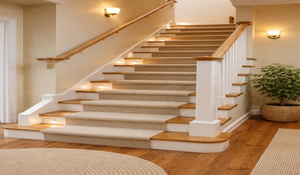
Safe stairs ready for Aging in Place.

When Should You Begin?

The ideal time to begin is before accessibility becomes necessary.

Most homeowners benefit from following this timeline:

  • Ages 50–60: Focus on preventive upgrades such as lighting, lever handles, handrails, and bathroom safety.
  • Ages 60–75: Add improvements that support changing mobility, including curbless showers, wider doorways, and improved kitchen accessibility.
  • Ages 75 and beyond: Consider larger projects such as elevators, first-floor suites, ramps, or whole-home accessibility renovations.

Planning early provides more choices, lower costs, and better outcomes.

Minor Home Accessibility Improvements

($100–$5,000)

These affordable modifications significantly improve safety and are ideal for homeowners beginning to plan. The estimated completion time can range from an afternoon to several days. 

Exterior Improvements

These modest modifications include adding motion-sensor lighting, installing video doorbells, changing your locksets to lever-style, making sure handrails accompany all entry steps, and improving landscape lighting.  Make sure your walkways are slip-resistant and install threshold ramps where needed.

Interior Improvements

On your home's interior, replace ball door handles with levers, upgrade existing toggle-type light switches using rockers or use smart light switches, apply offset door hinges where needed, improve all lighting to a layered look, consider motion-activated nightlights where needed, remove throw rugs, and ensure handrails exist on both sides of all stairs.

Bathroom

Grab bars should be installed in wood blocking at the shower, tub, and toilet, include a handheld showerhead for convenience, replace the toilet with a comfort-height model, install non-slip flooring; use anti-scald valves, and upgrade your vanity lighting.

Bedroom

Remove clutter from inside the room, and all travel paths are clear. Lower hanging rods, use closet organizers, and create better bedside lighting.

Kitchen

Use pull-out shelves where possible, replace hard-to-grasp knobs with D-shaped cabinet pulls, consider a lever-type kitchen faucet, incorporate under-cabinet lighting, retrofit Lazy Susans in blind corners, and replace existing drawer mounting hardware using full-extension guides.

Moderate Home Accessibility Improvements

($5,000–$30,000)

These projects improve mobility while preserving the home's appearance. The estimated completion time ranges from several days to three weeks.

Bathroom

Begin by verifying the bathroom entrance door is 36 inches wide, consider upgrading the flooring with slip-resistant tile, create a curbless shower with a fold-up bench, and incorporate a comfort-height vanity around 34 inches tall.

Kitchen

Lower the countertop work area to 34 inches, include pull-out shelving where possible, ensure an accessible appliance layout with adequate approaches, consider improved task lighting at work areas, and create an accessible sink design.


Living Areas

Widen all interior doors to 36 inches, use pocket doors when possible, evaluate all flooring as continuous with no more than 1/2 inch height difference between floor type changes, improve all traffic circulation spaces, and improve stairs by upgrading new stair rail systems as required.


Laundry

Use a front-loading washer and dryer on manufacturer's platforms, provide a pull-out work surface, and make room for accessible storage.


Entry

Install ramps where needed with a 1:12-1:20 slope, consider a covered entry, and install a zero-threshold (ADA) entry at all doors.

Major Home Accessibility Improvements 

($30,000+)

These are long-term investments that allow homeowners to remain in their homes safely for decades. The estimated time for completion is from three weeks to several months. These types of improvements add tremendous value to your home.

Bathroom Remodel

Complete a Universal Design remodel, create a barrier-free shower, maintain a five-foot wheelchair turning radius with adequate 30x48-inch approaches to all fixtures, and upgrade your custom cabinetry with a roll-under sink and comfort-height fixtures.


Accessible Kitchen

Complete a Universal Design kitchen remodel,  create multi-height working surfaces, consider roll-under capability at all sinks and prep areas, create an accessible pantry, include a touchless faucet and induction cooktop, and include a side-opening oven.


Home Layout

Determine whether there is a first-floor primary bedroom suite or an accessible guest suite will be used; determine whether a bedroom addition is needed; consider an open floor plan and wider hallways; and determine what structural modifications will be needed.


Vertical Access

Determine if a vertical platform lift, residential elevator, or stair lift is appropriate for your needs.


Exterior

Determine that all entrances incorporate zero-step or ADA thresholds, retrofit a dedicated entrance, whether in the garage or a covered accessible porch, and determine if an expanded driveway access is needed. 


Whole-Home Accessibility

Install smart home automation, create voice-activated lighting where needed, automate window shades, and ensure HVAC thermostats are accessible, plus verify security and emergency response systems are adequate.

Austin Considerations

Because many homes in the Austin area were built between the 1970s and early 2000s, they often include features that become barriers as homeowners age, such as sunken living rooms, narrow bathroom doorways, standard-height tubs, raised entry thresholds, split-level floor plans, poor lighting, steep front entries and driveways, and limited blocking in bathroom walls for future grab bars.

These homes can usually be adapted successfully with thoughtful planning and phased remodeling. Consult with a certified Aging in Place Specialist.

Case in Point

One Austin homeowner contacted T-Square Company after recovering from knee replacement surgery. What began as a request for grab bars quickly became a long-term accessibility plan. Rather than remodeling the entire home immediately, we completed improvements over several years. Today, the home remains safe, beautiful, and fully functional while allowing the homeowner to live independently with confidence. 

Closing Message

One of the biggest misconceptions is that aging in place requires a complete home renovation. In reality, the most successful projects begin with small, proactive improvements that reduce fall risks and make daily living easier. As needs change over time, additional modifications can be added in phases, allowing homeowners to spread costs over several years while preserving the comfort, beauty, and familiarity of the home they love.

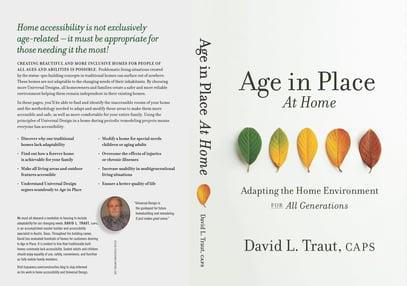
David Traut, the award-winning author of Age in Place at Home: Adapting the Home Environment for all Generations, provides guidance for homeowners and families desiring to Age in Place, discussing different living situations. He takes you room by room inside a home, offering his thoughtful insights and solutions. 

As a Certified Aging in Place Specialist (CAPS) with more than 30 years of design-build experience in the Austin area, David L. Traut and T-Square Company help homeowners develop personalized accessibility plans that evolve with changing needs. The goal isn't simply to modify a house—it's to create a forever home that supports independence, safety, dignity, and peace of mind for years to come.

With years of experience designing accessible homes throughout Central Texas, David L. Traut, CAPS, and T-Square Company help homeowners create personalized accessibility plans that evolve with changing needs. The objective isn't simply to remodel a house—it's to build a forever home where safety, dignity, independence, and peace of mind can flourish for years to come. 

Certified Aging In Place Specialist


Tags: aging in place, Universal Design,, Austin remodeling, home accessibility, home modifications, senior home safety, accessible bathrooms, fall prevention, accessible remodeling, accessible kitchens

Practical Solutions Concerning Home Accessibility Modifications

Posted byDavid L. Traut, CAPS on Thu, Mar 12, 2026 @ 13:03 PM


A T-Square Company Resource | Aging in Place Made Simple

As we age, the home we love can quietly become filled with hazards — slippery floors, poor lighting, narrow pathways, and hard-to-reach spaces. The good news? With thoughtful design and targeted modifications, nearly every home can be transformed into a safer, more comfortable environment that supports independence for years to come.  For homeowners wanting to age in place—or for families supporting aging or disabled loved ones—small changes can make a huge impact on safety, mobility, and independence. Below are practical, effective accessibility solutions for home accessibility modifications that improve everyday living without requiring a full remodel.

Use these ideas to educate your readers, convert visitors, and reinforce T-Square Company’s role as Austin’s trusted Certified Aging-in-Place Specialist (CAPS).

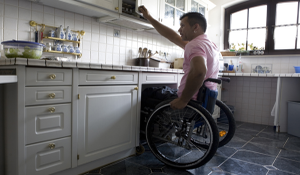
wheelchair accessible kitchen


1. Improve Safety Using Simple, Low-Cost Upgrades

These updates and practical solutions require minimal construction but dramatically increase safety:

✔ Install Grab Bars

Place them near toilets, showers, and tubs to prevent falls.
Tip: Opt for reinforced walls and ADA-rated supports, which include adequate blocking to withstand a sheer force of 250-300 pounds.

✔ Add Non-Slip Flooring

Non-slip tile, vinyl, or textured surfaces help reduce bathroom and kitchen hazards.

✔ Replace Doorknobs with Lever Handles

Easier to use for anyone with arthritis, grip weakness, or limited hand function.

✔ Increase Household Lighting

Use LED bulbs, nightlights, and motion-sensor lighting to improve visibility and reduce fall risks.

✔ Add Handrails in Hallways

Support balance throughout the home—especially in long hallways or stair areas.


2. Make Everyday Mobility Easier

These modifications help homeowners move freely and safely.

✔ Widen Doorways

Allow walkers, wheelchairs, or mobility devices to pass through comfortably (ideally 36").

✔ Install Ramps or Zero-Step Entries

Eliminate trip hazards at the front door, garage, or patio.

✔ Smooth Out Flooring Transitions

Remove thresholds or add bevels so mobility devices glide smoothly between rooms.

✔ Rearrange Furniture for Clear Paths

Create accessible “travel lines” from room to room.


3. Bathroom Accessibility Solutions

The bathroom is the #1 area where falls occur—so improvements here have the greatest impact.

✔ Walk-In or Curbless Showers

Easy entry and exit without stepping over a tub or curb.

✔ Shower Seats or Fold-Down Benches

Provide safe seating for bathing.

✔ Handheld Adjustable Showerheads

Increase comfort, safety, and independence.

✔ Comfort-Height Toilets

Raise the toilet height for easier sitting and standing.

✔ Slip-Resistant Tile

Prevent bathroom falls even when surfaces are wet.


4. Kitchen Accessibility Solutions

Accessibility meets convenience in a well-designed kitchen.

✔ Pull-Out Shelves & Drawers

Reduce bending, reaching, or straining.

✔ D-Shaped Drawer Handles

Easier to grasp than traditional knobs.

✔ Side-Opening Wall Ovens & Induction Cooktops

Safer and more ergonomic for older adults.

✔ Lowered or Adjustable Countertops

Ideal for seated use or limited reach.

✔ Better Task Lighting

Under-cabinet lighting helps prevent accidents.


5. Bedroom Safety & Accessibility Solutions

Enhance comfort, mobility, and nighttime safety.

✔ Install Motion-Activated Lighting

Pathway lights illuminate automatically when someone gets out of bed.

✔ Adjust Bed Height

Make standing and sitting easier and safer.

✔ Add a Bedside Grab Pole

Useful for balance, transfers, or assistance.

✔ Keep Flooring Low-Pile or Smooth

Reduce tripping hazards and improve mobility device performance.


6. Whole-Home Smart Technology Enhancements

Technology can be a powerful partner in safe aging.

✔ Smart Thermostats

Keep temperatures steady and easy to control.

✔ Voice-Activated Lighting

Great for low mobility or limited dexterity.

✔ Smart Locks & Video Doorbells

Enhance security and reduce risky trips to the door.

✔ Fall-Detection Devices & Emergency Alerts

Support safety for independent living.


7. Exterior & Entryway Accessibility Fixes

Ensure safety from the moment you arrive home.

✔ Ramps, Railings & Handrails

Support balance and safe entry.

✔ Exterior Lighting Upgrades

Motion sensors and pathway lights reduce fall risks at night.

✔ No-Step Thresholds

Eliminate tripping hazards at doorways.

✔ Widening Gate or Entry Access

Accommodate mobility devices or walkers.


Why These Modifications Matter

Practical home modifications:

  • Reduce fall risks

  • Support mobility limitations

  • Increase comfort and confidence

  • Avoid costly long-term care facilities

  • Help seniors remain in the home they love

With the right guidance, these changes can be made safely, efficiently, and affordably.


Work With Austin’s Trusted Accessibility Experts

As a Certified Aging-in-Place Specialist (CAPS) with over 30 years in residential design and remodeling, I’ve helped countless families turn everyday houses into accessible, future-ready homes.  T-Square Company is a Certified Aging-in-Place Specialist (CAPS) with over 35 years of accessibility remodeling expertise. We help homeowners design safer, more functional living environments through:

  • Professional home assessments

  • Customized accessibility plans

  • Bathroom & kitchen remodels

  • Universal Design solutions

  • Aging-in-place guidance for families and caregivers

T-Square Company — Austin, TX

David L. Traut, CAPS #1636580, owner/president, Member National Aging in Place Council (NAIPC)

512-444-0097

Accessible Remodeling • Universal Design • Aging-in-Place

Let’s make your forever home work beautifully for you—now and for years to come.

Age in Place at Home Book

David is also certified in Universal Design in both the United States and Australia. Drawing on decades of expertise, he recently published Age in Place at Home: Adapting the Home Environment for All Generations, a comprehensive guide that explores the role of Universal Design in creating safe, accessible homes.

📘 Age in Place at Home takes readers room by room, explaining practical modifications that enhance safety, accessibility, and independence. The book is available now on Amazon.

Certified Aging In Place Specialist


Tags: senior aging in place services, home modifications for children with disabilities, home modifications for elderly in Austin, universal design/build contractor, universal design vs. aging in place, what is aging in place, the basics of aging in place, Barrier-free designs, home accessibility modifications, how to age in place, senior home remodeling, David L. Traut, CAPS, accessible bathrooms, fall prevention, mobility solutions, CAPS certified professional, independent living at home

Home Accessibility Modifications in Austin: A Practical Solutions Guide

Posted byDavid L. Traut, CAPS on Thu, Feb 26, 2026 @ 12:02 PM


As we age, unexpected life changes—like health diagnoses or sudden falls—can make staying in our homes feel uncertain. This guide empowers challenged homeowners, families of aging or disabled loved ones, and the professionals who support them with targeted, time-saving modifications and innovations that keep people comfortable and independent at home. With practical solutions for every scenario, you'll turn your living space into a safe, accessible home-quickly and confidently.

A home that fits you—today and tomorrow—your forever home, doesn’t happen by accident. As Austin’s pace of life hums along and families plan for multigenerational living, small design choices can make a big difference in safety, comfort, and independence. At T-Square Company in Austin, we specialize in Universal Design and Aging-in-Place remodeling that blends beautiful finishes with smart, barrier-free functionality. We understand the meaning of aging in place.

Based on David Traut's background, the owner/president of T-Square Company, and as a certified aging in place specialist and designer who recognizes how the home can be reimagined as a place we grow out of, but as one that grows with us, he is providing this roadmap for clients desiring to Age in Place. 

Below is a clear roadmap to help you understand the “what,” “why,” and “how” of making your Central Texas home more accessible—without making it look like a clinic.


What "Home Accessibility Modifications in Austin” Means in a Forever-home 

  • Universal Design home upgrades create spaces that work for everyone—kids, guests, aging parents, and you on your most tired day.
  • Aging-in-Place focuses on keeping you safely in the home you love as needs change.
  • ADA ≠ residential code. ADA is for public/commercial spaces. In homes, we use the principles—clearances, reach ranges, slip resistance—adapting them to residential scale and style.

Objections:

  • Customers fear home accessibility modifications in Austin might look “institutional” or decrease home value
  • Customers are worried about being scammed or sold unnecessary renovations
  • Clients doubt they’ll have time to manage a big project with their busy schedule
  • Consumers are unsure if changes can be made within their limited budget

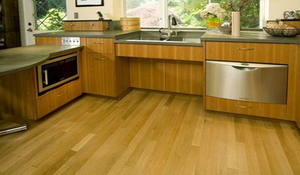
accessible kitchen upgrade


Transformation Promise:


Empower homeowners and families to age safely and comfortably at home, using proven, practical modifications that fit any home, any budget—and give them lasting confidence and peace of mind.


Timelines & Process (How We Work)

  1. Consultation & Accessibility Audit – walk-through, measurements, priorities
  2. Concept & Budget – align scope with investment; value-engineer options
  3. Detailed Design – drawings, selections, fixtures, smart-home plan
  4. Build & Protect – dust control, daily site tidiness, clear communication
  5. Training & Handover – we show you how to use every new feature confidently

Note: Structural changes (widening openings, removing walls) may require engineering review. We handle the coordination.


Austin-Specific Considerations

  • Pier-and-beam vs. slab: Many older Central Austin homes sit on pier-and-beam—great for adding drains and adapting plumbing for curbless showers. Slab homes require careful planning and often a linear drain with surface slope.

  • Heat & glare: Add shading, low-gloss finishes, and daylight-balanced bulbs for visibility without harsh reflections.

  • Storm swings: Choose exterior thresholds and drainage that handle sudden downpours without creating door-dam hazards.


Start Here: The Austin Home Accessibility Audit

When we visit your home, we walk through every space you use daily and assess:

Approach & Entry

  • One no-step entry, stable surfaces, good drainage (key in our Hill Country rains).
  • Door lighting and house numbers are visible from the street.

  1. Circulation & Doorways

    • Wider clear openings (target 34–36”), low or no thresholds.
    • Lever handles instead of knobs.
     
  2. Bathroom Safety

    • Zero-threshold shower, non-slip tile, and blocking in walls for future grab bars.
    • Shower controls at the entry, bench, or fold-down seat, handheld wand.

  3. Kitchen Function

    • Work zones with knee space, pull-outs, drawers over doors, and reachable storage.
    • Induction cooking, front-edge lighting, contrasting edges for visibility.
     
  4. Bedroom & Closet

    • Bed transfer space, rocker switches at entries, and adjustable rods/shelves.
     
  5. Lighting & Controls

    • Bright, even lighting; motion sensors in halls; smart switches within easy reach.
     
    • Continuous, low-gloss flooring; minimal height changes between rooms.

    • Floors & Transitions

You’ll get a prioritized plan: fast fixes, mid-range upgrades, and structural changes if needed.


Budgeting Wisely

  • Bundle accessibility goals with an upcoming remodel to save on labor and finishes.

  • Phase the work: start with bathrooms and entries, then kitchen and bedrooms.

  • Think resale: Universal Design often broadens your future buyer pool in Austin’s competitive market


Ready for an Accessibility Walk-Through?

Whether you’re planning or solving an immediate safety concern, T-Square Company can help you create a home that supports independence gracefully.

Book a Home Accessibility Audit (Austin and surrounding area):

  • Prioritized punch list with “Good • Better • Best” options

  • Rough budgeting guidance

  • Recommendations you can implement immediately

T-Square Company — Austin, TX

David L. Traut, CAPS #1636580, owner/president

512-444-0097

CAPS Certified Accessible Home Remodeling • Universal Design • Aging-in-Place Remodeling

Let’s make your forever home work beautifully for you—now and for years to come.

Age in Place at Home Book


David is part of a select group of professionals nationwide who have earned the Certified Aging in Place Specialist (CAPS) designation to professionally increase senior home safety improvements, including wheelchair accessible home features.

This certification, offered through the National Association of Home Builders (NAHB) in collaboration with AARP, recognizes remodelers and builders trained to meet the unique needs of older adults and individuals with disabilities. David is also an active member of the National Aging in Place Council (NAIPC).

David is also certified in Universal Design in both the United States and Australia. Drawing on decades of expertise, he recently published Age in Place at Home: Adapting the Home Environment for All Generations, a comprehensive guide that explores the role of Universal Design in creating safe, accessible homes.

📘 Age in Place at Home takes readers room by room, explaining practical modifications that enhance safety, accessibility, and independence. The book is available now on Amazon.

Certified Aging In Place Specialist

Tags: CAPS certified remodeling in Austin, aging in place services, aging in place specialist in Austin, age in place home design, accessible homes in austin, aging parents caregiver guide, home accessibility help, Universal Design Building Professional in Austin, senior home remodeling, fall prevention for seniors, home accessibility modifications in austin, T-Square Company, mobility-friendly homes, Austin home remodeling, accessible bathrooms