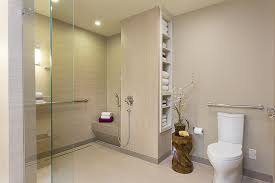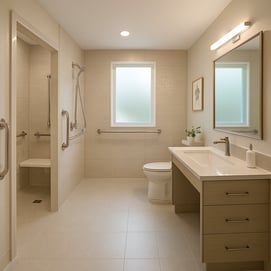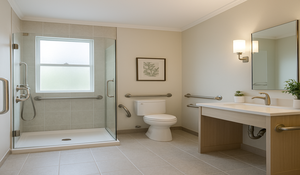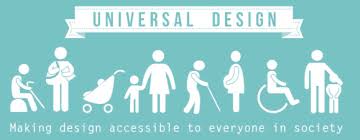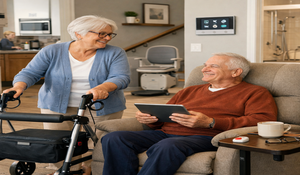
These aging-in-place conversations are often the difference between proactive planning and crisis decisions about loved ones.
Planning to age in place successfully requires more than home modifications. It requires open conversations about safety, independence, finances, and future care needs.
Too often, these discussions happen after a fall, illness, or emergency. Having them early allows families to make thoughtful decisions that preserve independence and reduce stress later.

T-Square Company — Austin, TX
David L. Traut, CAPS #1636580, owner/president, Member National Aging in Place Council (NAIPC)
Here are the most important Aging in Place conversations to have ASAP
1. Talking About Staying At Home Long-Term
This is the foundational question.
Some people strongly want to remain in their current home, while others are open to moving if necessary. Understanding this preference guides every other decision.
Important discussion points include:
- emotional attachment to the home
- neighborhood support and proximity to services
- practicality of modifying the house
- long-term comfort and safety
Many families discover that aging in place is possible with the right modifications and planning.
2. Discussing Home Safety and Accessibility
This conversation focuses on identifying potential risks before they become problems.
Areas to evaluate include:
- bathroom safety
- stairs and handrails
- entry access
- lighting throughout the home
- flooring and fall hazards
A professional home safety assessment can help prioritize improvements and reduce risk.
3. Preparing For Future Home Changes
Instead of reacting to mobility issues later, proactive or universal design prepares the home in advance of need.
Common aging-in-place improvements include:
- walk-in or curbless showers
- grab bars and reinforced bathroom walls
- wider doorways and hallways
- improved lighting
- zero-step entries
These changes allow people to stay comfortable and independent longer.
4. Preparing For Future Health Changes
Mobility and health needs can change gradually or suddenly.
Important considerations include:
- use of walkers or wheelchairs
- bathroom accessibility
- bedroom location
- access to medical care
Planning for possible changes ensures the home can adapt over time.
5. Creating A Support Network
Aging in place works best when there is a reliable support network.
This may include:
- nearby family members
- trusted neighbors
- community services
- home health providers
- transportation options
Understanding these resources helps families plan realistically.
6. Financial Planning For Aging In Place
Financial planning is an essential part of aging in place.
Families should discuss:
- remodeling budgets
- long-term financial priorities
- insurance or benefit programs
- home equity considerations
Planning early prevents difficult decisions later.
7. Preparing For Changing Living Needs
Even with planning, circumstances can change.
It’s important to talk about:
- When additional help might be needed
- What signs indicate safety concerns
- Backup living options if necessary
Having a plan reduces anxiety and uncertainty for everyone involved.
8. Getting Help For Decision Making
Legal and decision-making planning is critical.
This includes:
- medical decision authority
- financial management
- emergency contacts
- long-term care planning
These conversations protect independence while ensuring support is available.
Why These Conversations Matter
Aging in place works best when families plan early rather than react to emergencies.
The goal is not simply staying in a home — it is creating a home that supports:
✔ safety
✔ independence
✔ comfort
✔ dignity
With the right planning, many people can remain in their homes for decades longer than expected.
Final Thought
Aging in place is ultimately about thoughtful preparation and open communication. When families talk about these topics early, they create a roadmap that allows loved ones to live safely and confidently at home.
512-444-0097
Accessible Remodeling • Universal Design • Aging-in-Place
Let’s make your forever home work beautifully for you—now and for years to come.
David L. Traut, owner of T-Square Company, has written an award-winning Aging in Place Guide

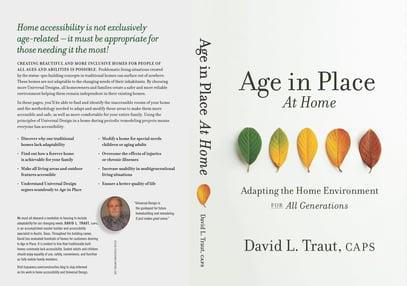
David is also certified in Universal Design in both the United States and Australia. Drawing on decades of expertise, he published Age in Place at Home: Adapting the Home Environment for All Generations, a comprehensive guide that explores the role of Universal Design in creating safe, accessible homes.
📘 Age in Place at Home takes readers room by room, explaining practical modifications that enhance safety, accessibility, and independence. The book is available on Amazon.

Tags:
aging in place remodeling,
aging in place,
Universal Design,,
home accessibility,
home safety for seniors,
senior living at home,
fall prevention,
aging in place planning,
aging in place conversations
What if your home could grow with you—supporting your independence, safety, and comfort at every stage of life?
For more than 30 years, David Traut has been helping families do exactly that. As a Certified Aging-in-Place Specialist (CAPS) and President of T-Square Company in Austin, he designs and remodels homes to remove barriers and create spaces that are both accessible and beautiful.
David’s work is rooted in a simple but powerful idea: everyone deserves to live safely and independently in the home they love. From thoughtful design to practical solutions, he helps make that possible.
He’s also the award-winning author of Age in Place at Home, where he shares guidance to help families plan with confidence.
Through his work with NAIPC, David is passionate about educating and supporting our community so more people can age in place with dignity.
For more information about David, check out his website at: https://www.tsquareco.com/home-remodeling-austin-austin-home-remodeling-bathroom-kitchen-remodels-in-austin-tx

Let me assess your living situation to determine solutions for better home accessibility. We can accomplish this virtually or in person. Schedule an appointment today@ (512) 444-0097. We offer complete Aging in Place design/builds, consultations, and services.
Tags:
aging in place,
Universal Design,,
certified aging in place specialist,
home accessibility,
home modifications,
CAPS certified,
T-Square Company,
accessible remodeling,
National Aging in Place Council,
NAIPC
Aging in place is about more than staying in your home — it’s about staying safe, independent, and comfortable for the long term.
Aging in Place Is About Planning, Not Reacting
Aging safely at home isn’t about a single product or a single renovation.
It’s about:
✔ smart design
✔ proactive upgrades
✔ room-by-room planning
✔ long-term comfort
The earlier you start, the easier — and more affordable — it becomes.

Below are the most common questions people ask when planning for aging in place, along with expert guidance to help you make smart, proactive decisions.
1. How can I make my home safe so I can stay here as long as possible?
Home safety is the foundation of successful aging in place. Preventable hazards cause most injuries that force older adults out of their homes — especially falls.
The biggest risks come from:
- Falls (especially in bathrooms or kitchens due to their association with water and wet floors, and on stairs)
- Poor lighting (when inadequate lighting doesn't produce enough definition to improve safety)
- Narrow walkways (cluttered, cramped, or walkways narrower than 36 inches in width are problematic and dangerous)
- Slippery flooring (slippery wood and tile floors are a hazard)
- Hard-to-reach storage (the most used stored items should be no higher than 48-52 inches above the floor)
High-impact safety upgrades include:
- Improved lighting throughout the home (layered task lighting is the best compliment to natural light to overcome dark areas)
- Non-slip flooring (cork, linoleum, vinyl, and porcelain with the correct safe slip coefficient)
- Grab bars in bathrooms (around all sides of the shower or tub, and around the toilet, mounted on adequate wood blocking)
- Zero-step entries (anything greater than 1/2 inch height is unacceptable)
- Wider doorways and hallways (clutter-free hallways that are 36-48 inches in width)
These changes dramatically reduce injuries at home while increasing comfort and independence.
2. Is my current home realistic for aging in place, or should I consider moving?
Many people worry about:
The truth: most homes can be adapted successfully — often for less than the cost of moving.
A professional accessibility assessment from a CAPS professional helps determine:
✔ what can be modified (seek guidance from a CAPS professional)
✔ what should be prioritized (the most problematic areas of the home)
✔ long-term feasibility (plan for the future)
3. Will aging-in-place upgrades make my home feel like a hospital?
Not when done correctly.
Modern accessibility design focuses on:
-
beauty
- comfort
- dignity
- seamless integration
Today’s universal design looks like high-end remodeling — just safer and smarter.
4. How do I plan for mobility issues I don’t have yet?
Smart universal design prepares the home without making it feel clinical.
Future-ready features include:
- wider pathways
- step-free showers
- reachable switches and outlets
- reinforced walls using adequate wooden blocking
- minimal thresholds
This allows easy adaptation if mobility needs change.
5. Will aging-in-place upgrades make my home feel like a hospital?
Not when done correctly.
Modern accessibility design focuses on:
- beauty
- comfort
- dignity
- seamless integration
Today’s universal design looks like high-end remodeling — just safer and smarter.
6. Where do I start — and who can I trust?
This is one of the most important questions.
Look for professionals who:
- specialize in aging in place and are CAPS certified (Certified Aging in Place Specialists)
- understand accessibility modifications and the disability standards with experience
- uses universal design principles in all its remodeling work
- offer structured and professional safety assessments
A clear plan prevents unnecessary spending and missed safety risks.
At T-Square Company, a CAPS-Certified Builder, we help homeowners evaluate risks and implement smart, practical safety solutions tailored to their homes and lifestyles.
Accessible Remodeling • Universal Design • Aging-in-Place
Let’s make your forever home work beautifully for you—now and for years to come.
David L. Traut, owner of T-Square Company, has written an award-winning Aging in Place Guide

David is also certified in Universal Design in both the United States and Australia. Drawing on decades of expertise, he published Age in Place at Home: Adapting the Home Environment for All Generations, a comprehensive guide that explores the role of Universal Design in creating safe, accessible homes.
📘 Age in Place at Home takes readers room by room, explaining practical modifications that enhance safety, accessibility, and independence. The book is available on Amazon.

Tags:
aging in place remodeling,
aging in place,
universal design/build,
senior home modifications in Austin,
home accessibility modifications,
accessible home design,
home safety for seniors,
independent living at home,
aging in place questions,
senior fall prevention,
aging in place planning,
safe home design for seniors,
home adaptations for aging
By David L. Traut – Certified Aging-in-Place Specialist (CAPS) and author of Age in Place at Home. A member of The National Aging in Place Council (NAIPC)
Designing a safe bathroom for seniors is one of the most critical steps in aging in place. As a certified Aging in Place Specialist (CAPS) with over 30 years of design/build experience, I very often identify the same recurring problems for my clients during a professional home assessment. Bathrooms are small, hard-surfaced, often slippery, and account for a large percentage of falls and injuries among older adults. The usual presence of water intensifies the danger. T-Square Company in Austin, Texas, offers complete aging in place services to allow its clients to increase their independence and accessibility. Below is a comprehensive, professional breakdown of safe bathroom design features for seniors and those with mobility limitations.

Safe Bathroom Design for Seniors: Key Elements
1. Zero-Threshold Walk-In Shower
-
Eliminate tubs or high shower curbs
-
No step-up entry for wheelchairs, walkers, or balance issues
-
Ensure a slip-resistant floor surface inside and outside the shower
-
Include a fold-down shower bench or space for a shower chair
-
Install a handheld showerhead on an adjustable slide bar
2. Grab Bars and Support Rails
-
Install secure grab bars in the following locations:
-
Choose ADA-compliant bars, ideally 1.25–1.5 inches in diameter
-
Ensure proper anchoring into wall studs or with appropriate mounts
3. Raised or Comfort-Height Toilet
-
A toilet height of 17–19 inches reduces strain when sitting or standing
-
Consider a toilet safety frame or grab bars nearby
-
Bidet attachments can also increase hygiene with less movement
4. Non-Slip Flooring
-
Use textured porcelain tile, rubber flooring, or vinyl with non-slip finish
-
Avoid small mosaic tile (too many grout lines) or polished stone
-
Use anti-slip mats or decals in and around wet areas
5. Widened Doorways and Open Layout
-
Minimum 32–36 inches wide to accommodate walkers or wheelchairs
-
Use lever-style handles on all doors and cabinetry (easier for arthritis)
-
Consider a pocket door or barn door to save space if needed
6. Smart Lighting and Visibility
-
Motion-activated night lights for nighttime navigation
-
Bright, even lighting with minimal shadows
-
Task lighting at sink/mirror for grooming
-
Rocker light switches or smart voice-controlled lights for accessibility
7. Sink and Vanity Adjustments
-
Wall-mounted or roll-under sink for seated use or wheelchair access
-
Rounded corners on counters to reduce injury from falls
-
Anti-scald valves or temperature-limiting faucets to prevent burns
-
Single-lever faucets for easier control
8. Ventilation and Temperature Control
-
Proper exhaust fan to reduce moisture and prevent mold
-
Heated flooring or radiant heat to reduce slipping and increase comfort
-
Consider thermostatic controls to prevent water temperature spikes
9. Emergency Access and Communication
-
Ensure doors open outward or use a removable hinge pin (in case of a fall)
-
Install a call button or voice assistant (e.g., Alexa) for emergencies
-
Place a phone or communication device within reach if needed

For a more detailed roadmap to aging in place, including comprehensive home modification checklists and design tips, please take a look at Age in Place at Home: Adapting the Home Environment for All Generations. In my book, I delve deeper into making your home safe and comfortable for every stage of life, blending professional recommendations with practical advice. Aging in place is about preserving the comfort, dignity, and familiarity of your home — with the right preparations, you really can stay in the place you love as long as possible.
Tags:
aging in place,
certified aging in place specialist,
senior home modifications in Austin,
ADA compliant roll in showers,
ADA Compliant Bathroom Vanity,
Age in Place at Home,
safe bathroom design for seniors,
David L. Traut, CAPS,
age in place at home (book tag),
fall prevention for seniors,
home remodeling for seniors,
bathroom safety for seniors,
senior friendly bathroom features,
home safety for older adults,
accessible bathroom design,
bathroom remodeling for aging in place,
T-Square Company Austin,
National Aging in Place Council NAIPC,
Universal Design for seniors
David L. Traut, the owner of T-Square Company located in Austin, Texas, is a Certified Aging-in-Place Specialist (CAPS) and author of the award-winning book Age in Place at Home: Adapting the Home Environment for All Generations(2022). David is also a standing member of The National Aging in Place Council and the NAHB.
As a CAPS-certified home remodeler with over 30 years of experience adapting houses for safer senior living, I often hear the same question from older adults and their families: “How can I make my home safe so I can stay here as long as possible?” In fact, this is the most frequently asked question among those planning to age in place. It appears in many forms, but no matter how it’s phrased, the heart of the concern is the same – ensuring the home is safe and accessible for the long term.
Why Home Safety Is the Top Concern for Aging in Place
Home safety is the foundation of successful aging in place. Falls are the leading cause of serious injury for older Americans, so it’s no surprise that safety modifications are a top priority. Unsafe layouts, cluttered pathways, poor lighting, and inaccessible bathrooms can quickly turn a beloved home into a hazardous place. In fact, common home hazards like clutter, dim lighting, and lack of supports (e.g., grab bars) greatly increase the risk of falls. Since falls can lead to broken bones or hospitalizations, eliminating these dangers is critical for independent living. Simply put, if your home isn’t safe, it won’t matter how much you want to stay there – safety is non-negotiable for aging in place. It’s no surprise that questions about preventing falls and modifying the home for safety are the most common starting point.
Introduction
Aging in place – choosing to live in your own home safely and independently as you get older – comes with many questions. As a CAPS-certified professional, I often hear one question more than any other from older adults and their families: “How can I make my home safe so I can stay here as long as possible?” This broad concern appears in many forms, such as:
-
“What home modifications do I need to live in my home safely?”
-
“How can I prevent falls?”
-
“What changes should I make in my house to stay independent?”
These all boil down to making the home environment as safe and accessible as possible for the long term, while defining the home most people want and desire.

Other Frequently Asked Questions about Aging in Place
Beyond general home safety, people have many other questions when deciding whether they can age in place. Here are some of the most common questions I’m asked, along with brief answers:
-
How do I know if aging in place is realistic for me? – Start by taking an honest look at your personal situation. Assess your current health, mobility, finances, and support network. Do you have any chronic conditions or mobility issues that might worsen over time? Can your budget cover home modifications or in-home care if needed? Do you have family, friends, or community services nearby to help if you need assistance? Answering these questions will help determine if living at home long-term is a safe and practical option.
-
What home modifications are essential, and how much will they cost? – Certain modifications are considered “must-haves” for safety. These typically include installing grab bars in bathrooms, converting tubs to walk-in showers, adding wheelchair ramps or zero-step entries, improving lighting (especially in hallways and stairways), and possibly incorporating smart-home technology (like voice-activated assistants or automated sensors). The cost can vary widely depending on your home’s existing layout and condition. Small changes like grab bars and lighting are relatively inexpensive, whereas major renovations (like a bathroom remodel for accessibility) will cost more. It’s wise to get an assessment from a CAPS professional who can give you specific cost estimates for your situation.
-
What services are available to help me stay at home? – Aging in place doesn’t mean doing everything on your own. There are many services to support seniors living at home. For example, in-home caregiving services can assist with daily activities or personal care. Meal delivery programs or grocery delivery can ensure you’re eating well without needing to shop and cook every day. Transportation services or senior shuttles can help you get to appointments if you no longer drive. Telehealth services allow you to consult with doctors remotely. Even medication management apps or services can help you organize your prescriptions. Tap into local community resources, nonprofit organizations, or senior centers – they often have lists of reliable services for everything from home maintenance to companionship.
-
How can I prepare financially to live at home long-term? – Budgeting for aging in place is essential. You’ll need to account for home modification costs, ongoing maintenance, and potential in-home care or medical expenses over time. Review your insurance to see if it covers any home health care or equipment. Look into programs or grants for seniors that help fund home modifications (some communities have grants for installing ramps or safety features). It’s also wise to set aside an emergency fund for unexpected repairs (like an HVAC replacement or a new roof) so that home upkeep doesn’t become overwhelming. Consulting a financial planner who has experience with elder care planning can provide personalized guidance. The key is to plan early, so you aren’t caught off guard by expenses later.
-
What technology can help me stay independent? – Technology is a great ally for aging in place. Medical alert systems (wearable devices or home units that can call for help at the press of a button) provide peace of mind in case of falls or emergencies. Smart sensors can detect things like smoke, carbon monoxide, or even monitor if a fridge has been opened (useful for tracking daily routines). Video doorbells let you see who’s at the door without getting up, enhancing security. Voice-activated assistants (like Alexa or Google Home) can control lights, thermostats, make calls, or even remind you to take medications. Many of these technologies are relatively affordable and user-friendly, and they can significantly boost safety and independence.
-
How do I maintain social connections and avoid isolation? – Loneliness is a common issue for seniors living at home, but there are ways to stay connected. First, make use of community programs – many neighborhoods, senior centers, or faith organizations host regular gatherings, classes, or social events for older adults. Take advantage of transportation services if driving is an issue, so you can attend events or simply meet friends for lunch. Embrace technology for communication: learn to use video calling (Zoom, FaceTime) to regularly chat with family and friends who might not live nearby. Some communities have telephone check-in programs or friendly visitor programs, where volunteers call or visit seniors weekly. The key is to be proactive – schedule social activities on your calendar just as you would medical appointments, so you make socializing a priority. Maintaining those human connections will greatly improve your quality of life as you age in place.
First Steps to Take (Beyond Contacting a Seasoned CAPS Professional)
Once you’ve decided to pursue aging in place, where should you begin? Aside from consulting a Certified Aging-in-Place Specialist for professional guidance, here are eight first steps you can take on your own to get the ball rolling:
-
Self-Assess Your Personal Needs: Consider your daily routines and challenges. Do you struggle to climb stairs or step over the bathtub? Is it getting harder to carry laundry up from the basement? Identify what tasks or home features are becoming difficult – this will guide which modifications are most urgent. Also, list any health conditions or mobility issues you have, as these will influence your needs (e.g., arthritis might make turning doorknobs painful, suggesting a need for lever-style handles).
-
Evaluate Your Home’s Safety: Do a walkthrough of your home with a critical eye (and ideally, a checklist). Look for hazards like loose throw rugs, clutter on the floor, poor lighting in hallways, lack of grab bars in the bathroom, or uneven thresholds that could cause trips. Check if stair railings are sturdy. Imagine navigating your home using a walker or wheelchair – what obstacles would you encounter? This evaluation will highlight what needs to be fixed or changed for better safety.
-
Prioritize Fall Prevention: Falls are a major threat, so prioritize changes that reduce fall risk. This might include installing better lighting (especially night lights for halls and bathrooms), improving flooring (no slick surfaces; consider non-slip coatings or low-pile carpeting), and adding support bars or railings where needed. If you have stairs, think about options like stair lifts or creating a living space on the first floor in the future. Rank your list of fall hazards and tackle the most dangerous ones first.
-
Build a Support Plan: Successful aging in place often “takes a village.” Outline who can help you and in what ways. This support plan might include family members, neighbors, or friends who can check in regularly or assist with errands. It also includes professional services – for example, knowing which home care agency you would call if you needed help with personal care, or which handyman service you trust for home repairs. Having a support network and resources identified in advance will make it easier to get help when you need it.
-
Plan for Long-Term Home Modifications: Some modifications are urgent (like preventing falls), but it’s wise to also plan for the future. Consider what you might need 5, 10, or 15 years down the road. If you’re healthy now but have a progressive condition, anticipate those changes. Long-term plans might include remodeling a bathroom for wheelchair accessibility, widening doorways, or even relocating a bedroom to the ground floor. You don’t have to do these big projects immediately, but start researching costs and options. Having a roadmap will help you budget and avoid crisis renovations later.
-
Review Financial Options: Take a close look at your finances and see how you can fund your aging-in-place plan. If modifications are needed, will you use savings, or are there loans/grants available? Investigate programs like HUD’s home repair grants, VA benefits (for veterans, there are sometimes funds for home accessibility), or local nonprofit grants for seniors. Also consider long-term care insurance or reverse mortgages as tools that some use to finance aging in place (each comes with pros and cons, so possibly consult a financial advisor). The goal is to ensure you can afford the help and changes you’ll require over time.
-
Communicate Your Plan to Family: It’s important to let your close family or loved ones know about your wishes and plans. Sit down with them to discuss that you intend to age in place, what modifications you plan to make, and how they might support you. This conversation is key to managing expectations – for instance, if you ever need assistance, your family will already know your preference is to receive help at home rather than move to a facility. Clear communication now can prevent misunderstandings or conflicts later, and you may find family members are eager to help once they understand your plan.
-
Start with Easy, Affordable Improvements: Don’t wait for a perfect time or huge budget to begin; some changes can start right away. By tackling a few small fixes now, you build momentum and immediately improve safety.
Start with Small, Quick Wins for Safety
To get momentum going, begin with simple, low-cost improvements that make your home safer immediately. These “quick wins” not only reduce hazards right away, but also give you a sense of accomplishment as you kickstart your larger aging-in-place plan. Here are a few easy improvements to consider:
-
Brighten the Lighting: Add LED light bulbs or battery-powered stick-on lights in dim areas. One popular trick is using LED rope lights along hallways, stairs, or for outlining cabinet kick panels along the floor to clearly illuminate pathways at night. Remember, good lighting helps prevent trips and falls. Place night lights in key areas like bedrooms, hallways, entryways, and bathrooms. Motion-activated night lights will automatically illuminate these areas if you get up during the night, so you don’t have to fumble for switches in the dark.
-
Secure or Remove Throw Rugs: Throw rugs can be slip and trip hazards. Remove small area rugs altogether, or if you really want to keep a rug, use double-sided carpet tape or non-slip backing to firmly secure it to the floor. Also, tape down any curled carpet edges. This eliminates one of the most common fall triggers in homes.
-
Install Grab Bars in the Bathroom: Bathrooms are a high-risk area for falls due to wet, slippery surfaces. Install grab bars near the toilet and inside the tub or shower. Don’t wait until you need them – put them in now so you and your guests have extra support. There are many styles available that look nice, but not institutional, and can be installed without a major remodel. If drilling into tile is a concern, there are even some clamp-on bars for tubs (just ensure any product you use is sturdy and well-reviewed for safety).
-
Simplify Showering: Consider adding a handheld showerhead on an adjustable slide bar. This allows you to shower while seated (if you use a shower chair or bench) and adjust the height easily. It’s a cheap upgrade that makes bathing easier and safer. Also, ensure non-slip mats or stick-on traction decals are on the tub/shower floor to prevent slipping.
-
Declutter Pathways: Walk through your home and clear all pathways to be at least 36 inches wide (this width is ideal for walkers or wheelchairs, and also just safer for everyone). Remove any unnecessary furniture or clutter from hallways and high-traffic areas. Remove or rearrange any furniture that blocks pathways. Not only does this help prevent tripping, but it also makes the home feel more open and navigable. The goal is to have clear, wide walking paths from room to room. This will not only reduce fall risk but also make it easier should you ever need to use a mobility aid.
-
Swap Doorknobs for Levers: Lever-style door handles are much easier to operate, especially if you have any grip weakness or arthritis. Unlike round knobs that require twisting, levers you can push down with minimal effort (even with an elbow if your hands are full). Replacing a few key doorknobs (like the front door, bedroom, and bathroom) with lever handles is a quick project that can make daily life easier.
These inexpensive steps offer immediate safety benefits and set the stage for more involved modifications down the line. By making a few quick changes now – better lighting, removing tripping hazards, adding basic supports – you create a safer home while you plan larger projects. Each small victory not only reduces your current risk but also builds confidence that you can adapt your home successfully.
Moving Forward
Aging in place is a journey, and every journey starts with a first step. Aging in place is absolutely achievable with thoughtful planning and proactive changes. By asking the right questions and taking proactive measures like the ones above, you are empowering yourself to live safely and independently in the home you love. Remember that aging in place doesn’t mean doing it alone – use the expertise of professionals (like CAPS remodelers, medical providers, and financial advisors), and lean on community services and loved ones for support. By addressing home safety, leveraging support services and technology, and communicating with your family, you can create a living situation that supports your independence for years to come. Remember that you don’t have to do everything overnight – start small and build on each success. With a solid plan and the right home environment, you truly can “age in place at home".
For a more detailed roadmap to aging in place, including comprehensive home modification checklists and design tips, take a look at Age in Place at Home: Adapting the Home Environment for All Generations. In my book, I delve deeper into making your home safe and comfortable for every stage of life, blending professional recommendations with practical advice. Aging in place is about preserving the comfort, dignity, and familiarity of your home — with the right preparations, you really can stay in the place you love as long as possible.
Tags:
aging in place home modifications,
aging in place,
certified aging in place specialist,
home accessibility,
home safety for seniors,
elder home design,
senior living at home,
senior home remodeling,
stay at home senior planning,
David L. Traut, CAPS,
age in place at home (book tag),
Independent living for seniors,
smart home technology for aging,
aging in place checklist,
fall prevention for seniors
✅ MODIFYING YOUR CURRENT HOME FOR AGING IN PLACE: Should You Stay or Should You Move?
When In Doubt, Always Consult with a Certified Aging in Place Specialist in Your Area.

WHEN DECIDING TO MODIFY YOUR HOME
Financial Pros
-
Often less expensive than moving
Many accessibility upgrades—grab bars, curbless showers, widened doors, ramps, and lighting upgrades—cost far less than the combined cost of selling a home, purchasing another, and moving.
-
Increases home value
Aging-in-place features and Universal Design elements make the home appealing to a growing demographic of older buyers.
-
Eligible for funding programs
Local grants, tax credits, VA programs, and long-term care insurance may cover certain home modifications.
-
Avoids new mortgage or rent costs
Particularly powerful for homeowners with a paid-off home, modifications protect financial stability.
Financial Cons
-
High upfront costs for major renovations
Structural changes—bathroom expansions, foundation adjustments, lifts, or extensive electrical work—can cost tens of thousands.
-
Unexpected issues in older homes
Hidden plumbing, mold, electrical, or foundation problems can add surprise expenses.
-
Limited return on investment if poorly designed
Non-professional or temporary fixes may not add value and can require re-work later.
Emotional Pros
-
Deep emotional connection to the home
People feel grounded in familiar surroundings filled with memories, traditions, and comfort.
-
Reduced stress from maintaining routines
Same neighbors, same grocery store, same church… minimal disruption.
-
A sense of control and independence
Modifying your environment supports dignity and self-reliance.
-
Avoids the trauma of downsizing
Keeping belongings and sentimental items reduces emotional strain.
Emotional Cons
-
Renovation stress
Noise, dust, delays, and disruptions can be overwhelming—especially for older adults.
-
Fear of “living in a construction site.”
Some people experience anxiety about change or giving up control of their home.
-
Emotional resistance to acknowledging decline
Accepting modifications like grab bars can feel like admitting vulnerability.
🏡 MOVING TO A MORE ACCESSIBLE RESIDENCE
Financial Pros
-
Move-in ready accessibility
Certified accessible homes, senior-friendly apartments, or modern new builds can minimize renovation costs.
-
Predictable monthly expenses
Especially in 55+ communities or accessible rentals where maintenance is included.
-
More energy-efficient homes
Lower utility bills, smart-home systems, and modern construction reduce long-term costs.
-
Can unlock equity
Selling a high-value home may free up cash for retirement, caregiving, or medical expenses.
Financial Cons
-
High costs of moving
Realtor fees, packing, movers, new furnishings, deposits, and closing costs add up quickly.
-
Accessible homes can be scarce and expensive
Fully barrier-free homes are not widely available—especially in desirable neighborhoods.
-
Recurring HOA, rent, or community fees
Some 55+ or accessible communities have costly monthly dues.
-
Loss of property tax advantage
Moving may eliminate caps or senior exemptions tied to the original property.
Emotional Pros
-
Fresh start in a safe environment
A new home designed for accessibility can offer peace of mind and renewed confidence.
-
Less maintenance
Especially appealing for older adults tired of repairs, yard work, or upkeep.
-
Opportunities for new social connections
Many communities offer activities, wellness programs, and built-in support.
-
Reduced fear of falling or navigating unsafe spaces
Purpose-built accessibility improves daily comfort.
Emotional Cons
-
Leaving a place filled with memories
For many, it feels like losing a part of their identity.
-
Disruption of routines and community
Friends, neighbors, doctors, and landmarks change all at once.
-
Stress and decision fatigue
Packing, downsizing, and touring homes can be emotionally draining.
-
Sense of “giving up independence.”
Some older adults perceive the move as a loss of autonomy.
🎯 The Bottom Line
Modifying is best when the home has a good layout, strong structural integrity, and emotional attachment is high.
Moving is best when the current home cannot be safely or affordably adapted—or when a fresh start brings more peace than renovation.
“Should You Stay and Modify, or Should You Move? A Quick Decision Checklist.”
Quick Decision Checklist
Use this checklist to help determine whether staying in your current home—or moving to a more accessible one—is the safest, most practical, and most emotionally supportive choice.
✅ 1. Safety & Accessibility
Is your current home safe to navigate today?
-
☐ I can enter and exit the home without difficulty
-
☐ Hallways, bathrooms, and doorways are wide enough
-
☐ I can shower/bathe safely
-
☐ Lighting is adequate and glare-free
-
☐ Stairs, steps, or thresholds are becoming difficult
-
☐ I have had a recent fall or near-fall
If several boxes are unchecked → Consider moving or modifying.
🏗️ 2. Feasibility of Modifications
Can your current home be realistically and affordably adapted?
-
☐ Bathrooms can be expanded or remodeled
-
☐ A curbless shower can be installed
-
☐ Ramps or lifts are possible in the current layout
-
☐ The home has space for a main-level bedroom
-
☐ Structural limitations are minimal
-
☐ Estimated costs are within budget
If modifications are extensive or require major structural changes → Moving may be more practical.
💰 3. Financial Considerations
Which option best supports long-term financial stability?
-
☐ My home is paid off or affordable to maintain
-
☐ Renovation costs are manageable
-
☐ Moving costs (closing, commissions, deposits) are acceptable
-
☐ A new accessible home is within my price range
-
☐ Monthly HOA or rental fees are reasonable
-
☐ My current home has strong resale value
If renovation costs exceed 30–40% of the home’s value → Moving may be the financially smarter choice.
❤️ 4. Emotional Well-Being
How do you feel about staying vs. moving?
-
☐ I feel deeply attached to the home and neighborhood
-
☐ I enjoy my routines, neighbors, and surroundings
-
☐ The idea of moving feels stressful or overwhelming
-
☐ I feel excited at the thought of a fresh, safe, low-maintenance home
-
☐ Downsizing feels manageable
-
☐ Staying brings me comfort and stability
If staying contributes to emotional stability → Modifying may be better.
If staying causes daily stress or fear of falling → Moving may feel freeing.
🧩 5. Support, Care, and Daily Needs
Does your current home support the help you need—now and later?
-
☐ Family or caregivers can access my home easily
-
☐ Medical equipment can be accommodated
-
☐ Kitchen and laundry are easy to reach
-
☐ Transportation, grocery stores, and medical offices are nearby
-
☐ Community support (church, neighbors, friends) is close
-
☐ A new accessible home would improve access to services
If support networks are stronger elsewhere → Moving may be the better long-term solution.
⭐ Summary
-
Stay & Modify your home if safety concerns are easily fixable, costs are reasonable, and emotional attachment is strong.
-
Move if the home cannot be made safe, modifications are too expensive, or another home offers greater independence and peace of mind.

T-Square Company — Austin, TX
David L. Traut, CAPS #1636580, owner/president
512-444-0097
Accessible Remodeling • Universal Design • Aging-in-Place
Let’s make your forever home work beautifully for you—now and for years to come.

David is part of a select group of professionals nationwide who have earned the Certified Aging in Place Specialist (CAPS) designation.
This certification, offered through the National Association of Home Builders (NAHB) in collaboration with AARP, recognizes remodelers and builders trained to meet the unique needs of older adults and individuals with disabilities. David is an Aging in Place specialist and is an active member of The National Aging in Place Council (NAIPC).
David is also certified in Universal Design in both the United States and Australia. Drawing on decades of expertise, he recently published Age in Place at Home: Adapting the Home Environment for All Generations, a comprehensive guide that explores the role of Universal Design in creating safe, accessible homes.
📘 Age in Place at Home takes readers room by room, explaining practical modifications that enhance safety, accessibility, and independence. The book is available now on Amazon.
Tags:
aging in place remodeling,
aging in place,
aging in place designs,
Universal Design,,
aging in place services,
certified aging in place specialist,
age in place home design,
Age in Place at Home,
disability and special needs contractors in Austin,
senior living at home,
senior home safety,
caregiver resources,
forever home planning,
aging in place decisions,
modify or move,
home modifications for seniors
Our homes have always been exempt from any of the federal accessibility regulations put in place in 1990. Unfortunately, no restricted codes or regulations concerning residential bathrooms or disability access baths exist. An evolving concept called Universal Design satisfies most people's personal needs. Universal Design techniques in the building make a home more accessible to all regardless of size, mobility or adaptive abilities. Children and aging adults benefit in the home from its existence. The evolution of new products used for disability home modifications makes those homes more accessible and has finally come about in the remodeling industry. Specialized handicap remodeling contractors for home remodeling incorporating the principles of Universal Design are catching on nationwide and have been a sign of the times for several years. Our present-day obsolete homes, now inhabited by the baby boomer generation, will slowly and increasingly raise their obsolete ugly heads and expose their true lack of accessibility to those inhabiting them.

When mobility becomes an issue for any homeowner, regardless of age, the question arises concerning physically moving to a different home that is more accessible. Universal Design prepares your home for one of those highly likely events involving someone needing room modifications for even a short time while recovering from surgery or the chronically ill. Solving Aging in Place issues will soon become the number one challenge concerning our country's obsolete housing inventory. The situation will only expand with an increasingly aging population due to medical advances. When these homes were previously purchased, they represented a complete castle in the world of their owners in which to prepare for a day, and they also acted as a retreat from life's challenging interactions. They housed our families, our memories, and our stuff. They represented a place where we could be ourselves.
There are many benefits to using Universal Design techniques, including potential use by aging family members or special-needs children, added resale value, and the fact that you'll be creating a space that can be used by anyone who visits your home, regardless of their range of abilities. Simple universal design updates for Aging in Place home modifications and handicap bathroom accessibility can include adding grab bars or handrails throughout the home, adding a seat within the roll in shower, lowering upper cabinets and countertops, adding non-slip flooring, widening hallways, or installing stair lifts, and widening doors. You might also consider lowering light switches and thermostats and installing easier-to-use door levers. Try to provide a clear barrier-free path or accessible route to the most visited areas of your home. These new advances in accessible home remodeling make living environments safer and will not compromise the home's aesthetics.

Many people find themselves needing accessible homes for themselves or family members. There are approximately 30 million Americans using wheelchairs, and the number of people who need accessible homes will continue to increase as disabled and aging people find more ways to remain in their homes. Furthermore, children with special needs make up a significant part of the population. One crucial way to increase independent living is by making a home accessible to an individual's personal needs. Home modifications can increase safety, accessibility, and independence for people who want to live independently.

Universal Design runs parallel with wheelchair access. Many of the published guidelines for wheelchair-accessible remodeling, particularly requirements for corridor and door widths, safety bars, and proper access to different rooms, can go a long way in extending the amount of time an elderly or physically impaired individual can live independently. The absolute truth about the design process is that if it allows access by a seated person, it gives everyone access. More comfort is built into a room while avoiding a cramped and cluttered living environment because there is adequate room to move about freely.


An Aging in Place (CAPS) specialist must design an Aging in Place project. Always consider the end user's preferences and capabilities. For instance, roll-in showers without curbs are advised for everyone on a universal basis for an accessible bath. A 5'x5' clear shower floor turning space is an optimum size when a caretaker is involved. Using a 32-36" wide barrier-free entrance in a shower partition with an out-swinging door is advised for everyone to increase safety. Remember, wider is better in all respects. Upon exiting the shower, a clear floor space of 30"x48" for an approach to the shower should be present. This area can overlap with the designated five feet turning radius area within the room. The shower should contain a hand-held shower wand on a sliding bar or mast mounted 48" above the floor and is available for varying heights of use. The hand shower is complimented by a fixed height shower head located at approximately seven feet above the shower floor. These diverse shower heads are both regulated using a diverting controller valve.You can opt for the fixed shower head if you desire a full body wash or the hand-held is used for rinsing and shower cleaning. This configuration allows adaptability within the design. Hence, the user has a choice. Always use a shower valve that is thermostatically controlled and pressure-balanced to prevent scalds.
Installing fixtures with a scald guard or lowering the temperature at the water heater is a must to prevent burns. Fold-down seats attached to the shower wall are useful if caretakers are involved. Recessed shampoo niches help eliminate clutter on the shower floor. Secure grab bars installed on wood grounds buried within the wall around the entire shower perimeter at 34-36" above the finished shower floor increases the safety factor and helps to prevent falls. A recessed can light fixture should be installed above the shower area for proper lighting. To prevent slipping on a guaranteed wet floor, all bathroom floor surfaces must be the nonskid type. The ultimate goal in accessible design is to make the bathroom space safe for everyone who uses the bathroom. Universal Design better accommodates wheelchair users and makes the bathroom more comfortable for all users. This modification can be done without sacrificing style.

The National Association of Home Builders, in partnership with the AARP and Home Innovation Research Labs, created the CAPS program, which includes training and education on the technical, business management, and customer service skills essential to compete in the fastest-growing segment of the residential remodeling industry--home modifications for Aging in Place using Universal Design. David L. Traut, CAPS, the owner of T-Square Company in SW Austin, Texas, is one of the select group of professionals nationwide to earn the Certified Aging-In-Place Specialist (CAPS) designation, identifying him as a home remodeler and builder with the skills and knowledge necessary to remodel or modify a home to meet the unique needs of the older population, disabled owners, or their visitors.
Tags:
ADA accessible,
accessible routes,
barrier free access,
aging in place remodeling,
aging in place home modifications,
aging in place,
wheelchair accessible remodeling,
wheelchair accessible baths and kitchens,
handicap home modifications,
ADA remodeling,
ADA compliance,
disability bathroom remodels,
handicap accessible bathrooms,
aging in place construction,
aging in place designs,
custom tub to shower conversions,
wheelchair accessible baths,
accessibility home remodeling in Austin,
CAPS professional in Austin,
CAPS certification holder in Austin,
accessible home remodeling,
CAPS remodeling techniques,
Universal Design,,
Austin bathroom remodel,
disability home remodeling in Austin,
home modifications for independent living,
disability bathroom remodeling in Austin,
bathroom modifications for elderly,
aging in place specialist,
aging in place services,
aging in place design,,
elder construction,
certified aging in place specialist,
handicap remodeling contractors in Austin,
disability home modifications in Austin,
Austin elder construction,
remodel bathroom for handicap Austin Texas,
handicap home modifications for disabled,
handicap accessibility,
handicap remodeling contractors,
bathroom modifications for disabled,
bathroom accessibility remodels in Austin,
accessibility remodelers in Austin,
ADA remodeling Austin, Texas,
ADA bathroom Austin, Texas,
wheelchair accessible showers in Austin,,
roll in showers,
accessibility designs Austin Texas,
handicap bathrooms,
ADA compliant wheelchair accessible showers,
roll in shower design for wheelchair access,
disability access contractor,
accessible home remodeling for disabilities,
accessibility home modifications,
Universal Bathroom Design,
Universal Design for Disabilities
Disability is a complex phenomenon representing an interaction between one's physical impairments, the activities one needs to perform, and the architectural barriers within the space in which this situation occurs. Disability is not an age-related condition. The terminology and jargon used for disabilities evolve regularly, whereas "handicapped" is not widely accepted. Disability is no longer merely a description of intellectual or physical impairments. Each individual with similar impairments describes his or her limitations differently. The blind don't experience their world the same as a person with deafness. Some of our societal statistics that weigh into Aging in Place situations include reports stating that 19% of the population between the ages of 16 and 64 and 42% of those of us 65 and over have a physical disability affecting the activities of their daily lives. Aging in Place home remodeling in Dripping Springs for a progressive condition comes into play. This is the only way to ensure safety and mobility for the homeowner or family member requiring the home modifications. The two main groups driving elder construction and the Aging in Place market are those people who are 65 and over and the baby boomers. The first group reached 55 million in 2020. The baby boomer generation born between 1946 and 1965 today makes up 28% of the U.S. population and some 77 million people. The published guidelines for ADA accessibility for buildings and facilities are an excellent resource for ideas on making a home safer and easier to live in. Many of these published guidelines, particularly requirements for corridor and door widths, safety bars, and proper access to different facilities, can go a long way in extending the amount of time an elderly or physically impaired individual can live independently.

The situation holds for a disabled child, only on a smaller but changing scale. It is estimated that 5.4 percent of children five to seven years old are disabled representing a considerably large portion of the population. Sometimes, the living environment must be changed to impact the child's life significantly. Making your home accessible for a special-needs child will give your entire family a feeling of security and freedom. Your child with the disability will become more comfortable and be able to maneuver through and use the home more safely. They will be able to develop the life skills they need in their daily environment rather than just focusing on treatment. Fortunately, whatever is needed in the way of home modifications to create a safe and comfortable environment for your child is available through the registered and certified CAPS program. Accessibility should be a concern no matter what your age. If your concerns are not for you, barring any life-changing accident, they could concern the accessibility of another generation's independence in using the bathroom. Furthermore, today's multigenerational households exhibit accessibility issues affecting three to six generations, all of which must be addressed. CAPS professionals in the remodeling industry can help solve these issues while performing design/build home modifications.

Modifications of existing homes are necessary because people aged 50 and older want to remain in their current homes for as long as possible. This desire is known as Aging in Place. Aging in Place home modifications in Dripping Springs should only be undertaken by a CAPS-certified remodeling company. This is the only way you can be assured that the home modifications are the right choices to satisfy your needs. There is no need to waste money only to discover that an inexperienced and unqualified remodeling company did the wrong alterations. Indeed, a trained CAPS professional and remodeling contractor with years of experience will cost you more than a handyman illegally playing among the trades at your peril. Still, then again, there are those professional guarantees to consider. The professional versus the handyman is more likely to seek your overall satisfaction that will follow him into his next job. An actual building professional can also orchestrate the job's smooth flow limiting the downtime of a most functional room. Always check their credentials to verify that the remodeler holds a CAPS certification. All registered CAPS program graduates and their remodeling companies will be listed in a national registry in Washington. The information can be found by simply visiting nahb.org/CAPS.

Being proactive and preparing for one of those highly likely events involving someone in your home needing room modifications for even a short time while recovering from surgery is undoubtedly an intelligent move. The new evolving concept known as Universal Design for home remodeling is catching on nationwide and has been a sign of the times for several years. These new home remodeling advances keep the living environments safer and will not compromise the home's aesthetics or resale value. Exhibiting Universal Design principles in a building makes a home more accessible to all regardless of their mobility or adaptive abilities and at any age. The evolution of new universal products used in room modifications making homes more accessible has come about in the remodeling industry. Homes can become more accessible to people as they age. Universal Design interior modifications include adding grab bars or handrails throughout the home, lowering upper cabinets and countertops, adding non-slip flooring, widening hallways, or installing stair lifts and wider doors. You might also consider lowering light switches and thermostats and installing easier-to-use door levers. Universally, you should try to provide a clear barrier-free path or accessible route to the most visited areas of your home.

David L. Traut, CAPS (#1636580), the owner and president of T-Square Company in SE Austin, is one of the select group of professionals nationwide to earn the Certified Aging-In-Place Specialist (CAPS) designation, identifying him as a home remodeler and builder with the skills and knowledge necessary to remodel or modify a home to meet the unique needs of the older population, disabled owners, or their visitors. We are a registered contractor with the VA to help our veterans. For more information about T-Square Company, visit www.tsquareco.com or call 512-444-0097.

Tags:
ADA compliant kitchen cabinets,
aging in place remodeling,
CAPS,
aging in place home modifications,
aging in place,
aging in place home improvements in Austin,
wheelchair accessible remodeling,
wheelchair accessible baths and kitchens,
handicap home modifications,
CAPS certification,
custom tub to shower conversions,
wheelchair accessible baths,
CAPS professional in Austin,
CAPS certification holder in Austin,
accessible home remodeling,
CAPS remodeling techniques,
Universal Design,,
disability home remodeling in Austin,
home modifications for independent living,
aging in place specialist,
aging in place services,
aging in place design,,
elder construction,
certified aging in place specialist,
handicap remodeling contractors in Austin,
Austin elder construction,
bathroom remodeling contractor Austin Texas,
remodel bathroom for handicap Austin Texas,
handicap home modifications for disabled,
handicap accessibility,
home modifications Austin, Texas,
accessibility remodelers in Austin,
roll in showers,
roll in showers in Austin,
home modifications for independent living Austin,
certified aging in place consultant in Austin,
home modifications for children with disabilities,
aging in place home remodeling,
home accessibility help in Austin,
home remodeling for seniors Austin,
disability contractor in Austin,
special needs contractor in Austin,
disability and special needs contractor Austin,
veterans home accessibility help in Austin, Texas,
disability renovation services in Austin Texas,
Dripping Springs home accessibility solutions,
Dripping Springs kitchen remodel,
Dripping Springs bathroom remodel,
Dripping Springs TX home modification services,
Dripping Springs home modification services,
Dripping Springs bath remodeling,
Dripping Springs bath remodel,
disability and special needs in dripping springs,
disability home remodeling in dripping springs,
Dripping Springs senior home remodeling,
dripping springs handicap bathroom contractor,
Dripping Springs special needs contractor,
Dripping Springs aging in place specialist,
disability bathroom remodeling in Dripping Springs
While it may not be possible for every older adult to live independently in their existing home forever, there are many modifications that can be made to the home to increase safety and make it more functional for the homeowners to remain in their own homes longer. By gradually implementing home alterations that support aging in place, today’s seniors maintain their independence, and in the long run, may save a substantial amount of money on senior living.

More seniors are opting to age in place than ever before. This trend is driven in part by the rising costs of long-term care, coupled with the rapidly growing senior population as the Baby Boomer generation ages. This particular generation is enjoying a more active, vibrant lifestyle than all other previous generations. Increasing technology and the wider availability of personal services, such as home meal delivery, are making it easier for seniors to remain in their own homes independently. However, aging in place is not for everyone, especially when major disabilities are involved.

As with any successful endeavor, You must establish a reasonable plan of action to age in place. This action will involve the input of all parties associated with the homeowner(s). The participants include caregivers, occupational therapists, physical therapists, extended family members, and any other professional medical personnel. Steps taken to move in a positive direction include:
- Take note of your personal abilities and any difficulties you have moving around your home within specific areas.
- Seek out a professional assessment of your home provided by a CAPS (Certified Aging in Place Specialist)member. This way you know that you are in good hands because sometimes the renovations required to accommodate a senior or any disabled person, regardless of age, are no easy task and instead take a lot of time, knowledge, and effort.
- If you live in a multi-story home, combine the main rooms for activity on the first floor. If this isn't possible, entertain the idea of installing a stair-lift, or better yet, an elevator in your home.
- Widen all doorways to 36-inches, and include pocket doors in certain areas to limit architectural barriers caused by swinging doors. Make sure there is at least one no-step entry into the house. Install lever-style door hardware when possible throughout the home.
- Install a slip-resistant floor throughout your home using wood flooring, cork, rubber, or porcelain tile. Be mindful of the chosen flooring's hardness in case of falls. Carpet offers too much resistance when using any mobility device causing tripping, falls, and instability. Ensure all transitions when changing floor materials are as smooth as possible and below 1/2 inches in height.
- Take note of any lighting issues producing dark areas in any room. Add layered lighting throughout the home to increase safety.
- Reduce the clutter in all rooms and provide a clear five-foot turning radius in every room.
- Reduce the number of doors on cabinets opting for full-extension pull-out shelves or drawers.
- As for the bathroom, provide a walk-in or roll-in shower with grab bars on all sides versus a garden tub. A hand-held and fixed shower head provides options for the user or caretaker. A roll under vanity is great for wheelchair use or applying makeup from a seated position. A comfort height toilet associated with grab bars reduces the discomfort of deep knee bends.
- For the kitchen, make it as adaptable as possible to suit the needs of child helpers or granny in her wheelchair. Offer varying cabinet heights and work surfaces. Plan for the shortest work triangle formed by your main sink, refrigerator, and stove locations. Raise your dishwasher 9-12 inches above the floor making it easier to load and unload for everyone.
- Last, but not least, comes the laundry. Install side-swinging doors of opposite swings for the washer and dryer enabling you to simultaneously access both machines from the middle. Don't forget to set the machines on a pedestal to raise them above the floor, in case you ever find yourself using a wheelchair.

T-Square Company, located in Austin, Texas offers complete design/build Aging in Place Services to its clientele. David L Traut, the President, and owner of T-Square Company is national CAPS certified and has been doing successful accessibility remodels, additions, and construction for over 30 years. Some of our clients include HUD, the VA, and many private homeowners. Contact us today to see how T-Square Company can help you solve issues to streamline your home accessibility to Safely and Comfortably Age in Place in your existing home.
Tags:
aging in place remodeling,
CAPS,
aging in place home modifications,
aging in place,
aging in place remodels,
Universal Design,,
home modifications for independent living,
aging in place specialist,
aging in place services,
aging in place design,,
elder construction,
accessibility remodelers in Austin,
home modifications for independent living Austin,
Austin accessible home remodeling,
certified aging in place consultant in Austin,
universal design building for a lifetime,
aging in place home remodeling,
home remodeling for disabled,
home accessibility help in Austin,
remodeling for elders in Austin,
disability contractor in Austin,
home modifications for elderly in Austin,
handicap accessible remodeling,
barrier free remodeling,
disability remodeling,
home modifications for Austin veterans,
home access,
accessible homes,
universal design/build contractor,
universal design vs. aging in place,
home accessibility,
what is aging in place,
accessible housing,
accessible homes in austin,
modifying your home for a disabled child,
accessible home builder in Austin,
special needs contractor,
home renovations for disability in Austin,
the basics of aging in place,
maneuvering in and around the accessible home,
barrier free kitchens,
universal design home additions,
barrier free design,
barrier free home design,
Age in Place at Home,
disability home remodeling near me,
universal design building consultant,
home modifications for aging in place
Preparing for one of those highly likely events involving someone in your home needing room modifications for even a short time while recovering from surgery is surely a smart move. The new evolving concept known as Universal Design for home remodeling is catching on nationwide and has been for several years as a sign of the times. Universal design techniques used in a building make a home more accessible to all regardless of their mobility or adaptive abilities and at any age. An evolution of new products used in room modifications making homes more accessible has come about in the remodeling industry. These new advances in home remodeling not only keep the living environments safer but will not compromise the home's aesthetics or resale value. Interior modifications can include adding grab bars or handrails throughout the home, lowering upper cabinets and countertops, adding non-slip flooring, widening hallways, installing stairlifts, designing and building accessible bathrooms, and widening doors. You might also consider lowering light switches and thermostats and installing easier-to-use door levers. You should try to provide a clear barrier-free path or accessible route to the most visited areas of your home. The published guidelines for ADA accessibility for buildings and facilities are a great resource for ideas on how to make a home safer and easier to live in. Homes can become more accessible to people as they age. Many of these published ADA guidelines, particularly requirements for corridor and door widths, safety bars, and proper access to different types of facilities can go a long way in extending the amount of time an elderly or physically impaired individual can live independently.
If you have been considering a bathroom renovation with better accessibility or an accessible kitchen remodeling project in Austin there are a few things you should take into consideration. Accessible bathroom upgrades can take on many looks and facets. The scope of work you choose to accomplish this task should effectively solve your physical challenges and most importantly, your needs as the homeowner-- for now and for the future. The identification of these specific needs belongs to you the homeowner. The way your home is structurally altered to help with special needs is the job of the professional remodeling contractor holding a CAPS certification. A thorough assessment by a Certified Aging in Place professional will identify your home's architectural barriers and what is required to remove them. Accessibility should be a concern no matter what your age. If your concerns are not for you, barring any life-changing accident, they could concern the accessibility of another generation's independence in using the restroom. CAPS professionals in the remodeling industry can help with solutions in solving these issues while performing design/build home modifications.
Disability is a complex phenomenon representing an interaction between one's physical impairments, the activities they need to perform, and the architectural barriers within the space in which this situation occurs. The terminology and jargon used for disabilities evolve regularly whereas, "handicapped" is no longer acceptable. It is no longer merely a description of intellectual or physical impairments. Each individual with similar impairments describes his or her limitations differently. The blind don't experience their world the same as a person with deafness. Some of our societal statistics that weigh into aging in place situations include reports stating that 19% of the population between the ages of 16 and 64 and 42% of those of us 65 and over have a physical disability affecting the activities of our daily lives. For a progressive condition, aging in place home remodeling in Austin definitely comes into play. This is the only way to ensure both the safety and mobility for the homeowner or family member requiring the home modifications. The two main groups driving elder construction and the aging in place market are those people who are 65 and over and the baby boomers. The first group is projected to reach 55 million in 2020. The baby boomer generation born between 1946 and 1965 today make up 28% of the U.S. population and are made up of some 77 million people. Modifications of existing homes are important because people age 50 and older want to remain in their current homes for as long as possible. Aging in place home modifications in Austin should only be done by a CAPS-certified remodeling company. This is the only way that you can be assured that the home modifications are the right choices to satisfy your needs. There is no need to waste money only to find out that the wrong alterations were done by an inexperienced and unqualified remodeling company. Always check their credentials to verify that the remodeler holds a CAPS certification. All registered CAPS program graduates and their remodeling companies will be listed in a national registry in Washington. The information can be found by simply visiting nahb.org/CAPS.


The National Association of Home Builders, in partnership with the AARP and Home Innovation Research Labs, created the CAPS program, which includes training and education on the technical, business management, and customer service skills essential to compete in the fastest-growing segment of the residential remodeling industry--home modifications for aging in place. David L. Traut, CAPS the owner of T-Square Company in Austin, Texas is one of the select group of professionals nationwide to earn the Certified Aging-In-Place Specialist (CAPS) designation, identifying him as a home remodeler and builder with the skills and knowledge necessary to remodel or modify a home to meet the unique needs of the older population, disabled owners, or their visitors. T-Square Company offers complete disabled home modifications in Austin using our design/build philosophy. We have over 35 years of accessibility experience in the commercial and private market sectors. We specialize in disability remodeling projects for our special needs clients.

What are some of the costs involved? Whether you desire a roll-in shower, accessible sink, or merely clear and unobstructed access to your existing bath, a CAPS professional can help you increase your accessibility. The professional national CAPS certification holder can not only help you with the design of what you desire but is competent and professionally qualified to carry out any construction needed. Certainly, there are many upgrades available when planning a bathroom transformation. The replacement of the tub with a new walk-in shower can create a bold look but will run around $14,000. There are no spending limits for bathroom remodels. You can plan on spending around $12,000 to $15,000 for a hall bath remodel. The price tag can approach or exceed $35,000 for a complete master bath remodel. The type of fixtures and building components chosen along with the labor will compose the overall cost of the remodeling project. These prices are based on long-lasting home modifications requiring time to install using proper construction techniques. T-Square Company's design/builds are not to be confused with pop-in kits offered by others claiming they will be accomplished in a couple of days.

It is true that a trained CAPS professional and remodeling contractor with years of experience will cost you more than a handyman illegally playing among the trades at your peril but then again there are those professional guarantees to consider. The professional versus the handyman is more likely to seek your overall satisfaction that will follow him into his next job. A true building professional can also orchestrate the job's smooth flow limiting the downtime of a most useful room. Subcontractors will not be covered up and each skilled trade is brought onto the site as needed in an orderly fashion. Professionals normally have insurance to cover on-the-job accidents to protect the homeowners from having legal action brought against them personally. Be sure you ask for a certificate of insurance from your chosen professional contractor so that you aren't held personally liable for medical expenses covering a worker's accident while on your property. Don't forget that only certified aging in place (CAPS) professionals can help you solve your accessibility needs and concerns. The aging-in-place considerations specifically used in homes today where the owner is planning to retire are all a part of training and experience. Call T-Square Company today at 512-444-0097 and discover how precise home modifications will offer you extended comfort, safety, and independence within your existing home.

Tags:
ADA compliant kitchen cabinets,
aging in place remodeling,
CAPS,
aging in place home modifications,
aging in place,
aging in place home improvements in Austin,
wheelchair accessible remodeling,
wheelchair accessible baths and kitchens,
handicap home modifications,
CAPS certification,
custom tub to shower conversions,
wheelchair accessible baths,
CAPS professional in Austin,
CAPS certification holder in Austin,
accessible home remodeling,
CAPS remodeling techniques,
Universal Design,,
disability home remodeling in Austin,
home modifications for independent living,
disability bathroom remodeling in Austin,
aging in place specialist,
aging in place services,
aging in place design,,
elder construction,
certified aging in place specialist,
handicap remodeling contractors in Austin,
Austin elder construction,
bathroom remodeling contractor Austin Texas,
remodel bathroom for handicap Austin Texas,
handicap home modifications for disabled,
handicap accessibility,
home modifications Austin, Texas,
accessibility remodelers in Austin,
roll in showers,
roll in showers in Austin,
home modifications for independent living Austin,
certified aging in place consultant in Austin,
aging in place home remodeling,
home accessibility help in Austin,
disability contractor in Austin,
special needs contractor in Austin,
disability and special needs contractor Austin,
disability renovation services in Austin Texas,
Disability Remodeling Services in Austin, Texas,
ADA Remodeling in Austin