The biggest and most important challenge for any homeowner wanting to increase home accessibility using Universal Design to Age in Place is qualifying a chosen builder or remodeler. Consumers must verify the tradesman or professional has both the experience and knowledge for understanding any requirements used to increase the client’s safety and accessibility within the home. This is the only variable a homeowner controls in the building process. You are about to give a complete stranger your trust in a very serious matter of which you most likely know little about beyond articles read on the internet or hearsay. All professionals selected must be knowledgeable and experienced concerning Universal Design projects. The relevant personnel having job input concerning the client consist of architects, designers, builders, remodelers, and any therapists or extended healthcare workers who are involved with any household occupant requiring home modifications. I have witnessed clients who are completely overwhelmed and frustrated when interviewing several groups of building professionals including subcontractors with overlapping scopes of work. They become confused by the large amount of information gathered. Be advised that too many cooks in the kitchen can spoil a successful job outcome. CAPS certified accessibility specialists are trained to be better capable of helping with both the design and construction phases of the project. Most CAPS members have had coursework in Universal Design. However, you would not choose a recent law graduate over an experienced defense attorney to represent you in a serious matter. Even though both people have law degrees, there is only one path to choose. The remodeling business is no exception. All CAPS certified professionals are not equal. Some come from different professional backgrounds other than construction while others have not used their acquired knowledge long enough to make a difference. Ask about their experience and how long they have practiced Aging in Place remodeling. A well-seasoned contractor has seen what issues frequently come up in making improvements for Aging in Place and knows which methods he or she has used to overcome certain problematic areas of the home.
The aging societal changes and inventory of inaccessible existing houses created the need for a CAPS certification program. This designation program, offered through the National Association of Home Builders, NAHB, in collaboration with The American Association of Retired Persons or AARP, incorporates components of assessment, technical knowledge and management skills related to home modifications used to help people stay at home safely and independently for a longer period of time. The program was developed in 2001. The CAPS program connects responsible professionals with home owners needing specialized accessibility services on an ever increasing basis. Ordinary homeowners with extraordinary challenges partner up with experienced CAPS professionals and their own families. Working as a team, the trained CAPS specialist along with any family caretakers or therapists is able to identify the day to day problems weighing on those with health limitations. Aging in Place services provided by a specialized remodeling contractor ensures all accessibility issues of the home are accomplished correctly. The CAPS credential is a nationwide initiative and many construction and design professionals are taking advantage of the helpful training across the nation. Always check his or her credentials to verify the remodeler holds an active CAPS certification and is familiar with Universal Design. All registered CAPS program graduates and remodeling companies are listed in a national registry in Washington DC. The information is found by calling 1-800-368-5242 or by simply visiting their website at: http:www.nahb.org/en/learn/designations/certified-aging-in-place-specialist.aspx.

Experienced CAPS certified remodelers have the knowledge, expertise and sensitivity to provide modifications for making a home safer, more accessible, and better suited to the client’s required needs. A professional CAPS certified builder or remodeler is able to correctly assess the costs associated with an accessible design and lead the homeowner in the right direction adhering to the available budget costs to accomplish the modifications needed. Home modifications, accessibility products, and barrier free design greatly promote the independence and functional ability of physically challenged and aging individuals. Designing around specific physical conditions for accessibility lessens the impact of arthritis, restricted mobility, or loss of vision by using combinations of products, concepts, and techniques available today. Keep in mind when hiring a Certified Aging in Place Specialist they offer a service rather than a product. Each CAPS member draws from a different knowledge base, and approaches each project in a distinct way.
T-Square Company in Austin, Texas, has been producing successful Aging in Place projects for over a decade. They are a CAPS certified remodeler and offering design/build Aging in Place projects using Universal Design features. Call 512-444-0097 to discuss your project today and learn how you can achieve better accessibility within your existing home.
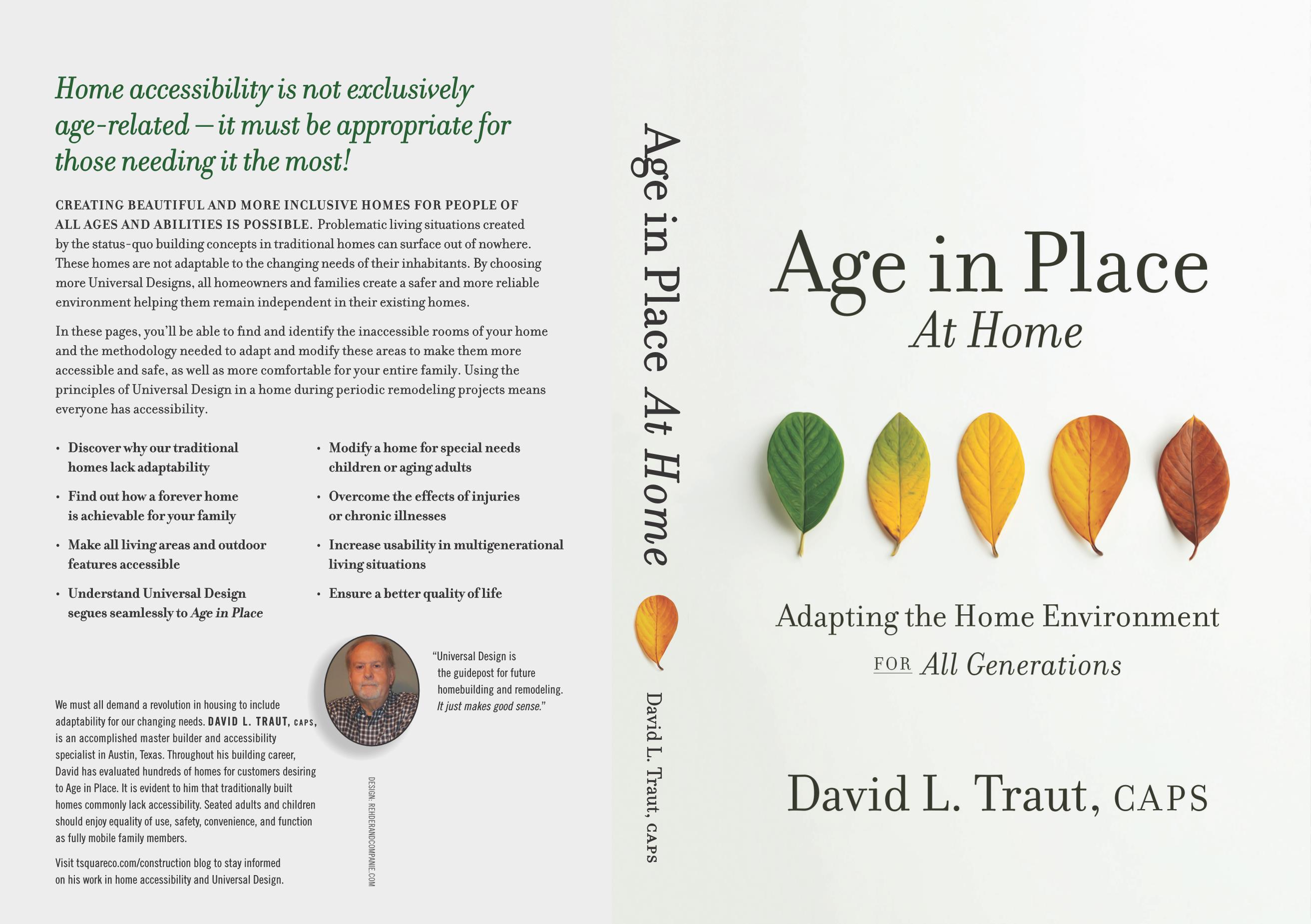
Incidentally, David L. Traut, the President/owner of T-Square Company has recently published a book entitled "Age in Place at Home: Adapting the Home Environment for All Generations". It is available on Amazon and stands as a reference book for increasing home accessibility incorporating essential Universal Design features.

Tags:
aging in place remodeling,
aging in place home modifications,
handicap home modifications,
CAPS certified remodeling in Austin,
ADA compliance,
custom tub to shower conversions,
CAPS remodeling techniques,
Universal Design,,
aging in place services,
certified aging in place specialist,
accessibility designs Austin Texas,
home modifications for independent living Austin,
universal design ideas,
certified aging in place consultant in Austin,
age in place home design,
aging in place home remodeling,
7 principles of universal design,
Austin disability contractors for special needs,
Austin handicap bathroom contractor,
barrier free remodeling,
handicap accessible home modifications,
disability remodeling,
ADA compliant wheelchair accessible showers,
accessible bathroom remodel,
why universal design,
accessible homes in austin,
the basics of aging in place,
Austin home modification services,
Age in Place at Home,
Professional Disability Remodeling Contractor,
CAPS-certified remodeling in Dripping Springs,
Universal Design for Disabilities,
Barrier-free designs,
home accessibility help
After over a year of writing to fulfill my customers' requests, my new book, "Age in Place At Home," is finally available for purchase from Amazon. Go to the link below to order my paperback book, which was released in late November, 2022. It provides a great guideline for using the principles of Universal Design in new home construction and/or remodeling for every room in your home. Get your copy today.
https://www.amazon.com/gp/r.html?C=2Z24ENUUAEWUK&K=13Y7YU7PKKYAC&M=urn:rtn:msg:20221010201802eb9acb7b24004a4785cd2ec1d4f0p0na&R=3R6MK9WDXJPH7&T=C&U=http%3A%2F%2Fwww.amazon.com%2Fdp%2FB0BHTV28RV%3Fref_%3Dpe_3052080_276849420&H=7FWEPMGCH0TT8LN6SKPMUOCVJNYA&ref_=pe_3052080_276849420
A home's adaptability is one of the most desired qualities within a person's home during some point in their life as their or their family's needs change. These specific needs to enhance accessibility can be short term while recovering from an accident or illness at any age, or these home alterations may become permanent. The special needs may concern an adult or a child. Universal design principles don't discriminate between any family members regardless of age, size, or ability. Every family member is included. Learn how to adapt your home environment to satisfy your family's needs in David Traut's new book, Age in Place at Home.
T-Square Company, in Austin, Texas, practices Universal Design accessibility to segue into Aging in Place seamlessly. The essence of my book is to advise people so they understand why our homes are obsolete to us, the homeowners, the minute they are completed. This fact is represented by the methodology used to create the traditional home. They are built to satisfy our immediate lifestyle and physical needs on the day we close on the house, with no regard for the future. The new home lacks adaptability to satisfy our needs once our bodies change beyond the purchase date. If we had incorporated the Universal Design principles into these new homes, those same homes would adapt to our changing family needs including every inhabitant regardless of age, size, or ability. The lack of home adaptability is not the consumers fault, they have always been unaware of how to reference the problem and accepted what the housing market gave them. They were unaware of what to ask for. Hence, the status-quo of building has been perpetuated for over a hundred years.
T-Square Company offers all types of Austin Universal Design home modifications to better prepare you and your family for your unforeseeable home accessibility future on a design/build basis. Existing, traditional homes must be modified to increase their accessibility using correct designs. Become aware and embrace the knowledge that the principles of Universal Design offer greater home accessibility for every one of your home members, from your father to your son. This is why the process is known as inclusive design.
David L. Traut, CAPS, has been involved with accessibility for nearly thirty years for the VA, HUD, and private residences. Contact me at 512-444-0097 for a professional home assessment to guide your future accessibility needs or at www.tsquareco.com. Simply fill out your information on the contact us page.
.
Tags:
aging in place home modifications,
aging in place home improvements in Austin,
wheelchair accessible remodeling,
CAPS certified remodeling in Austin,
aging in place construction,
CAPS professional in Austin,
aging in place services,
accessibility designs Austin Texas,
austin custom walk in shower,
universal design ideas,
Austin Accessibility Design,
aging in place design in Austin,
why is aging in place important,
what does it mean to age in place,
universal designbuilding for the future,
wheelchair accessible home remodeling in Austin,
universal design remodeling contractor,
why is universal design important,
7 principles of universal design,
universal principles of design,
universal design/build contractor,
universal design vs. aging in place,
universal design contractor,
wheelchair accessible housing,
accessible homes in austin,
Austin home remodeling for disabled,
universal home design in Austin,
aging in place versus universal design,
universal design home builder,
universal design home additions,
barrier free design,
Austin home accessibility solutions,
Austin home modification services,
Age in Place at Home,
universal design forever homes
Perhaps you haven't personally experienced a problematic living situation concerning your home yet, but you might know someone who has. It could concern a family member, a friend, or just a person in your neighborhood. These unfortunate scenarios are too common in our society, as everyone is living longer due to modern medicine; but this situation is not age-related. Health problems can appear unexpectedly at any age. Our traditional homes commonly lack accessibility for any residents or their visitors who are even slightly challenged. The truth is, all of our houses are built for unchallenged, healthy people of a "normal" size. The moment any diversity to what each of us knows as near perfect health expresses itself, the realization we need a better and more adaptable "mousetrap" comes to mind in regards to our home. The doors in the house aren't wide enough, the rooms are too small, the hallway is too narrow, the floors aren't level or are slippery, the stairs aren't negotiable, the bathroom facilities aren't useable, and the kitchen is not user- friendly. The list goes on-and-on when you are living in a status-quo home. But now people can become educated and know what to ask for before a life-changing problem arises. Rest assured, you have the ability to proactively prepare your traditional home for future life changes before they happen. Hence, there is no need for you or your family to suddenly become trapped inside it's walls! Let's come to understand a design solution exists which has been stigmatized because of it's decades-long association with disability. Learn to ask for it by name.
Universal Design, also known as barrier-free design and design for all, refers to broad-spectrum ideas meant to produce buildings, products and environments that are inherently accessible to non-challenged people, older people, people of any age who are mentally or physically challenged, and people overcoming an illness or physically-altering accident. In general, it represents a universal need in future housing and pertains to adding safety and accessibility in an existing home for all people regardless of their size or physical well being at any time. The purpose of the design is to provide equal access to anyone into and throughout the home. Universal Design adaptations have a broad market appeal to everyone for achieving ease-of-use and convenience accommodating a certain reality. The reality is that all people exist along a continuum of human performance as per their personal traits and characteristics regardless of their age. A universal approach to design takes into account that everyone has varying degrees of ability and disability; rather than someone is either fully-functional or disabled. Universal Design is neither a design style or trend but is an approach to designing home access for as wide a range of diverse people as possible.
As a solution to our inaccessible housing predicament, applying Universal Design is important because current design standards for housing do not address the design needs of more than one-third of our population. Too often, the designers of homes allow the built environment to define the capabilities of the resident, rather than the opposite being true. That has always been the problem evidenced by the current inaccessible housing inventory. People typically purchase a house according to their needs of the day, never considering their future needs. This way of thinking has perpetuated the problem of inaccessibility within traditional homes. Incorporating Universal Design principles into today's houses allows for our antiquated architecture to be redefined by both our changing human needs and abilities. It has the ability to span all generations of inhabitants. The sooner the principles exist in a home, the longer it can be enjoyed by everyone; because no one is excluded. Home accessibility should be a concern no matter what your age. If your concerns are not for you, barring any life changing accident, they could concern the accessibility and safety for another generation's independence. As we become more life-experienced, our society is beginning to realize our homes should be flexible to accommodate future life changes. This benefit alone will afford adapted housing the ability to conform to our needs. Hence, society will understand the significance of a forever home. The physical life changes involved can be long-term or of short duration while recovering from an accident or disease. Regardless, the home is prepared for what comes next through the use of Universal Design.
The recent Aging in Place phenomena deals with reactive home modifications to existing homes due to health changes of one or more residents. The adaptations allow the inhabitants to remain within their home safely as they age. A planned Universal Design home quietly and proactively addresses abrupt issues without calling attention to anyone. The design simply anticipates the homeowner's changing needs. The modifications can be performed room by room overtime or all at once. Furthermore, Universal Design segues seamlessly into what is required for Aging in Place. However, we cannot conceive or solve all future situations for everyone because we all age differently with our own list of specific needs. In extreme cases, a specialized accessibility design comes into play customized around a single person's needs.
But what about the costs involved in a home using Universal Design? Utilizing Universal Design in a new build home isn't necessarily more expensive than a status-quo traditional inaccessible home. It generally approaches a three-to-four-percent overall increase. The same building techniques are involved in both; but the Universal Design home is designed with more forethought and expertise to improve safety, accessibility, and comfort. Consequently, if you are remodeling an existing home, incorporating the principles of Universal Design, it is more costly on the order of fifteen-to-twenty-percent because you not only have the updated building costs to consider but the demolition costs as well. The same remodeling costs for the preparation of a revised layout are involved with any type renovation prior to the modifications beginning, whether the final appearance is traditional or universal in nature.
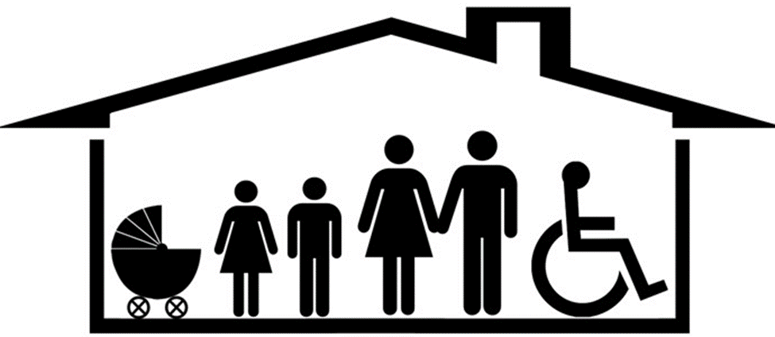
Basically, Universal Design principles involve the design of products and environments to be usable by all people, to the greatest extent possible, without the need for adaptation or specialized design. Using Universal Design, there are seven design criteria which must be met to be considered a Universal Design no matter which area of the home you are referring to. Any design must be (1) equally useful to everyone, (2) have flexibility in it's usefulness, (3) be simple and intuitive, (4) be perceived by everyone, (5) have a tolerance for error, (6) require little physical effort, and (7) it must maintain an adequate area for approach and use. Any complexity or discriminating attribute to a design will doom it in terms of being considered universal in nature. However, what better way can you improve on a home's total visitability? The term visitability pertains to anyone entering freely into a home, having unrestricted maneuverability throughout the home, and having the ability to enter and utilize a bathroom's facilities without assistance.

Whether you refer to this needed housing revolution today as accessible design, inclusive design, or Universal Design, it is all about making a home safe, attractive, and easy to use for all residents. It has nothing to do with the age, agility, or status of life for anyone living within the home. The main intent of this way of thinking is to be sure the inhabitants and their visitors are equally able to enjoy their home throughout their entire lifetime. This way Aging in Place can be accomplished without the expense and hassle of having to make periodic or interfering abrupt changes to the home to meet a person's ever-changing physical needs. With Universal Design, you have the ability to proactively plan for all stages of your life cycle using forethought which, once discovered, you ultimately find is just common sense. Even if you are in perfect health, you can be disrupted by a minor mishap. A more serious injury changes things forever once you no longer have all your abilities. Universal design ideas do not strictly deal with accessibility or Aging in Place design and does not implement precise ADA standards; but it does offer flexibility to add accessories now and later to those planning ahead or to the end-user. It also provides for a wide range of human performance characteristics for the way people use spaces within their homes including well integrated usability features. Hence, a Universal Design/build project is appealing to all users.
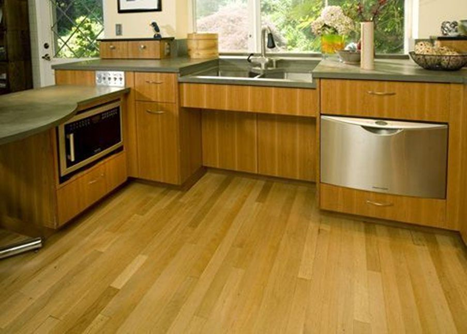
Can you envision building a house as a young adult that you can live in safely and comfortably while you age no matter what your basic physical needs require? In this home, visitors are never problematic if they exhibit limited mobility or other issues. This flexible Universal Design home contains wider doorways of 36-inches or more and adequately lit hallway widths of 42-48-inches to accommodate a stroller, wheelchair or walker. There is a wide-open feeling of comfort throughout the house's main living areas in the bathroom, kitchen, and living area that do not restrict moving about. A five-foot turning radius is observed throughout the home. Wood blocking is installed behind the finished walls in all wet areas to accommodate secure grab bar installations at the proper time. The towel racks in the kitchen are installed so they can double as grab bars once you become unsteady from lack of balance. All the no-step entryways from the front door to the shower entrance are smooth to prevent tripping from high thresholds and all flooring transitions are level. Non-slip flooring is installed, especially in wet areas, using cork or smaller floor tiles which in turn increase friction from the grout lines. All doors and faucets are controlled by lever hardware. Sinks inside the bathroom and kitchen have roll-under capability. Within the sink base cabinets, doors or roll-out shelving are installed until the roll-under design is needed. Full-extension drawers and pull-out shelves are installed in lieu of doors. The cabinet tops and work areas throughout the house are placed at varying heights to promote adaptability. This universal designed home is barrier-free without looking modified and is accessible to everyone no matter their age, size, or capability of movement. Furthermore, this home is usable by everyone from your father to your son.
David L. Traut, CAPS the owner of T-Square Company in Austin, Texas is one of the select group of professionals to earn the Certified Aging In Place Specialist (CAPS) designation, identifying him as a home remodeler and builder with the skills and knowledge necessary to remodel or modify a home to meet the unique needs of the older population, disabled owners, or their visitors. Consequently, David is certified in Universal Design in the US and Australia. T-Square Company is a Universal Design contractor offering a full compliment of Aging in Place services including bathroom modifications for elderly clients with special needs. Each design/build project contains the principles of Universal Design. The modifications will be customized to fit your personal needs while increasing your accessibility. Call 512-444-0097 today to begin the accessible second chapter of your life while remaining safe and secure in your existing home. CAPS #1636580
As an answer to his clients requests over the years, David has recently published a book entitled "Age in Place at Home: Adapting the Home Environment for All Generations". The book reflects on thirty years of accessibility improvements and identifies why our traditional homes specifically lack this very basic need. It is available on Amazon and stands as a reference book for increasing home accessibility using the principles of Universal Design in every room of the home. The book dwells on this inclusive design concept as a solution to our current housing dilemma.
Tags:
CAPS certified remodeling in Austin,
Austin accessible home remodeling,
certified aging in place consultant in Austin,
bathroom modifications for disabled in Austin, TX,
aging in place specialist in Austin,
home modifications for children with disabilities,
why is aging in place important,
what does it mean to age in place,
universal design building for a lifetime,
universal designbuilding for the future,
what is universal design,
home remodeling contractor near Austin, Texas,
home remodeling for disabled in Austin Texas,
wheelchair accessible home remodeling in Austin,
universal design kitchen ideas,
universal design remodeling techniques,
universal design remodeling contractor,
universal design building contractor,
why is universal design important,
universal design principles,
7 principles of universal design,
Austin Senior Home Remodeling,
Austin disability contractors for special needs,
barrier free remodeling,
barrier free design,
barrier free home design,
Austin home modification services,
ADA Contractor/Austin, Texas,
CAPS-certified remodeling in Dripping Springs,
Universal design construction in Austin,
Universal Design for Disabilities,
Barrier-free designs,
forever home,
barrier free bathroom layout
Let's face it, accessible homes are needed by all of us at some time during our lives. This is true whether it's for ourselves, a family member, or a guest. The need for handicap remodeling is certainly not driven by age but is a result of life's experience. Any family living with disability among any of it's generations within the group can always benefit from additional accessibility. This will in turn increase safety and independence for all people involved as they go about life. Except under extreme situations, complete ADA-compliance normally isn't required for a remodel used to increase residential accessibility. The ADA rules are a great place to begin a design when dealing with a lack of home accessibility. However, any and all compliant items are a great help for everyone. The ADA specifications deal with explicit measurements, but these stringent rules do not apply to many people. Diverse body sizes and abilities are overlooked, and everyone is dealt with on average. More so, only if modifications involve government backed housing and funding are the ADA guidelines followed to the letter. In other words, the guidelines aren't a consideration when dealing with a single private family residence. So how did the ADA guidelines come about?
During the 1960's, the Americans with Disabilities Act (ADA) was signed into law, protecting the civil rights of those with disabilities. This law was merely a beginning, acknowledging a part of our population was dealing with disabilities. Although this law did not directly address disabilities per se, it served as a foundational piece of civil rights legislation. Disability advocates applied the language used in the Civil Rights Act for later legislation concerning civil rights for those with disabilities. Later on, the Americans with Disabilities Act, also known as ADA, as we know it today began. First implemented in 1990, it was our government’s first step toward addressing the needs of citizens living with disabilities. Yet as technology and our culture evolved, so did the challenges faced by disabled Americans. Accessibility became a hurdle not only in the physical world but also the vast digital realm of today. The law is constantly evolving while changing with the times; thereby making everyday life easier for individuals with unique needs.
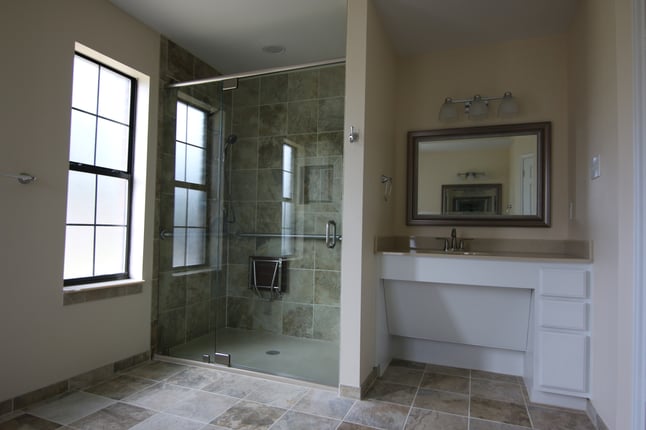
Disability is a complex phenomenon representing an interaction between one's physical impairments, the activities they need to perform, and the architectural barriers within the space in which this situation occurs. The terminology and jargon used for disabilities evolves regularly whereas, "handicapped" is no longer acceptable. It is no longer merely a description of intellectual or physical impairments. Each individual with similar impairments describes his or her limitations differently. The blind don't experience their world the same as a person with deafness and so on. Physically challenged has become the more socially accepted description of a person with an impairment, regardless of age. No matter how old you are, you should periodically evaluate your residence to determine whether it suits you not just for the present but the future. Your personal home assessments will be revised every time your living situation changes. Whether childproofing for a newborn, making a home more accessible following a sickness or unfortunate accident to someone in the family, or making a toilet area safer for an aging residing parent, there will be an immediate evolution to your primary domicile. These same life-span design features become more important if you believe you're past the age of wanting to move and are relishing the thought of aging in your own home, no matter what physical limitations you might later develop. This way of thinking has created a niche residential market known as Aging in Place. Solving Aging in Place issues will soon become the number one challenge concerning the present obsolete housing inventory in our country. Incorporating smart aging design concepts like a roll-in-shower into a home will attract a larger group of buyers when you decide to finally sell your home. Preparing for one of those highly likely events involving someone in your home needing room modifications for even a short time while recovering from surgery is surely a wise move.

In our daily lives, we all know what to do if the front door is no longer secure, if the kitchen sink backs up, or if the air conditioning suddenly goes out on a hot day. However, for those suddenly facing a catastrophic illness, life can suddenly be a scary and confusing place in which our existing homes are no longer a sanctuary but become a prison within the nightmare of limited accessibility. With the onset of a life-altering illness or catastrophic injury, knowing who to call to solve problems faced performing our usual daily tasks suddenly becomes very challenging.
Knowledgeable construction and design professionals are utilizing the CAPS training across the nation. CAPS stands for Certified Aging In Place Specialist. This designation is taught through the National Association of Home Builders in collaboration with AARP. CAPS connects responsible professionals with home owners who need these services on an ever-increasing basis. CAPS is a nationwide initiative and all active CAPS members can be found at nahb.org/CAPS. Look for the CAPS designation as a reliable way to identify professionals to modify your home or build a new forever home that is designed for a lifespan. CAPS graduates receive training about the technical/construction aspects and learn about the unique aspects of working with older Americans. They must take formal business training to maintain their credential through continuing education and subscribe to a Code of Ethics.
David L. Traut, CAPS the owner of T-Square Company in Austin, Texas is one of the select group of professionals to earn the Certified Aging In Place Specialist (CAPS) designation, identifying him as a home remodeler and builder with the skills and knowledge necessary to remodel or modify a home to meet the unique needs of the older population, disabled owners, or their visitors. T-Square Company offers a full compliment of Aging in Place services including bathroom modifications for elderly clients with special needs. Each design/build project will be customized to fit your personal needs increasing your accessibility. Call 512-444-0097 today to begin the accessible second chapter of your life while remaining safe and secure in your existing home. CAPS #1636580
As an answer to his clients requests over the years, David has recently published a book entitled "Age in Place at Home: Adapting the Home Environment for All Generations". The book reflects on thirty years of accessibility improvements and identifies why our traditional homes specifically lack this very basic need. It is available on Amazon and stands as a reference book for increasing home accessibility using the principles of Universal Design in every room of the home.
Tags:
ADA remodeling,
CAPS certified remodeling in Austin,
ADA compliance,
aging in place services,
elder construction,
certified aging in place specialist,
disability home modifications in Austin,
home modifications Austin, Texas,
wheelchair accessible showers in Austin,,
roll in showers in Austin,
home modifications for independent living Austin,
disability access bathrooms Austin,
disability remodeling in Austin,
universal design/build ideas,
Austin Accessibility Design,
Austin senior living solutions,
Austin accessible home remodeling,
Austin disability contractors for special needs,
Austin handicap bathroom contractor,
Austin home remodeling for disabled,
Disability Remodeling Services in Austin, Texas,
ADA Accessibility,
ADA Contractor/Austin, Texas,
Dripping Springs home accessibility solutions,
Dripping Springs special needs contractor,
Dripping Springs aging in place specialist,
Universal design construction in Austin,
Universal Design for Disabilities,
Barrier-free designs
If you have made a decision, along with the support of your family, to remain in your existing home while you Age in Place, you must determine a definite pathway forward to ensure your desires are successfully met. This is a sign of the times as today over 80% of homeowners share your desire to remain in their familiar home, surrounded by familiar surroundings and neighbors. Amongst any caregivers involved in your life, you will also need to obtain help from a trained and seasoned Certified Aging in Place Specialist.
Fortunately, construction and design professionals are taking advantage of the CAPS training across the nation. This designation is taught through the National Association of Home Builders in collaboration with AARP. CAPS connects responsible professionals with home owners who need these services on an ever-increasing basis. CAPS stands for Certified Aging in Place Specialist. It is a construction credential that has builders, architects, remodelers, designers and even occupational therapists buzzing. Aging in Place principles are changes designed to custom fit your existing home to you and your family's needs as time goes by. CAPS design takes your current and future circumstances into consideration and the principles focus on elegant, aesthetically enriching, barrier-free environments. Home modifications do not need to look institutional and this is why many seniors are resisting the very changes that can help them the most. Be aware, the vast majority of uncertified builders and remodelers do not have the knowledge and training to perform home modifications for Aging in Place. Take for instance when you are considering installing a grab bar, which seems like a simple endeavor, understand that a run of the mill contractor or handyman has no idea of the safety regulations involved or the knowledge concerning where and how to install the grab bar. This leaves the consumer in an unsafe predicament. However, if performed correctly, any modifications will actually increase the value of your home because they appeal to multiple generations of home buyers.
David L. Traut, CAPS the owner of T-Square Company in Austin, Texas is one of the select group of professionals to earn the Certified Aging In Place Specialist (CAPS) designation, identifying him as a home remodeler and builder with the skills and knowledge necessary to remodel or modify a home to meet the unique needs of the older population, disabled owners, or their visitors. T-Square Company offers a full compliment of Aging in Place services for their clientele. These services include the initial home assessment, a design followed by a detailed drawing, all city permits and fees, and the construction or remodeling work involved. David has been successfully operating as a CAPS professional for nearly thirty years while performing his design/build projects. His clients include many members of the private sector, the VA, and HUD. David is a CAPS certified remodeler and master builder providing a one-stop-shop which is even more valuable to anyone wanting to Age in Place. As a master craftsman, his construction knowledge enables any Aging in Place design to come to fruition via practicality and best practices.
David always practices what he preaches to his clients. He takes an inductive qualitative research approach with every client, because everyone has diverse physical needs. As an answer to his clients requests over the years, he has recently published a book entitled "Age in Place at Home: Adapting the Home Environment for All Generations". The book reflects on thirty years of accessibility improvements and identifies why our traditional homes specifically lack this very basic need. It is available on Amazon and stands as a reference book for increasing home accessibility using the principles of Universal Design in every room of the home. David is certified in the United States and Australia in the Universal Design process. Universal Design elements can be installed into a home at any time avoiding the need for reactive remodeling following a health crisis. This thoughtful proactive design process segues seamlessly into what is required for Aging in Place. Furthermore, Universal Design prevents the need to perform future modifications except under extreme circumstances. The presence of Universal Design provides access for both wheelchairs and walkers and perhaps avoids future injuries because you have accessibility.
For additional information about the CAPS program, visit nahb.org/CAPS. For more information about T-Square Company, visit www.tsquareco.com or call 512-444-0097 to schedule a home assessment by a local Austin CAPS professional.
So, just exactly what takes place once you schedule a home assessment? During the home assessment for increasing accessibility, the structural changes needed for the client will be noted and documented through sketches, photos, and conversation. CAPS professionals are generally paid by the hour or receive a flat fee per initial visit or project because they are offering a service backed by education and experience. Typically an assessment takes approximately 60-90 minutes. It’s best if you or a family member can accompany the CAPS professional during the home safety assessment, as you or they can ask questions about specific safety items as they come up. The comprehensive Home Safety Assessment determines a direct and safe path forward for you, the client. You will have a better chance of avoiding the high cost and physical disruptions of future injuries leading to assisted living. All the surroundings within your home will be taken into account from the flooring to the layout of a specific room or location as it pertains to the your ease of use. Your physical and emotional needs also come into play because of mobility, sensory, or cognitive concerns. The goal is to modify the home in a custom manner to provide for your maximum health, independence, and safety. Often the input from any caretakers like a physical or occupational therapist during the assessment phase can prove to be invaluable. The three main rooms involved in Aging in Place home modifications are the bathroom, the kitchen, and the family room in that order. The basic needs involve access through wider doorways, level non-slip floor surfaces, and lower cabinets with plumbing fixture accessibility like roll-under sinks with easily operated lever controls.
Aging in Place Bathroom Modifications in Austin
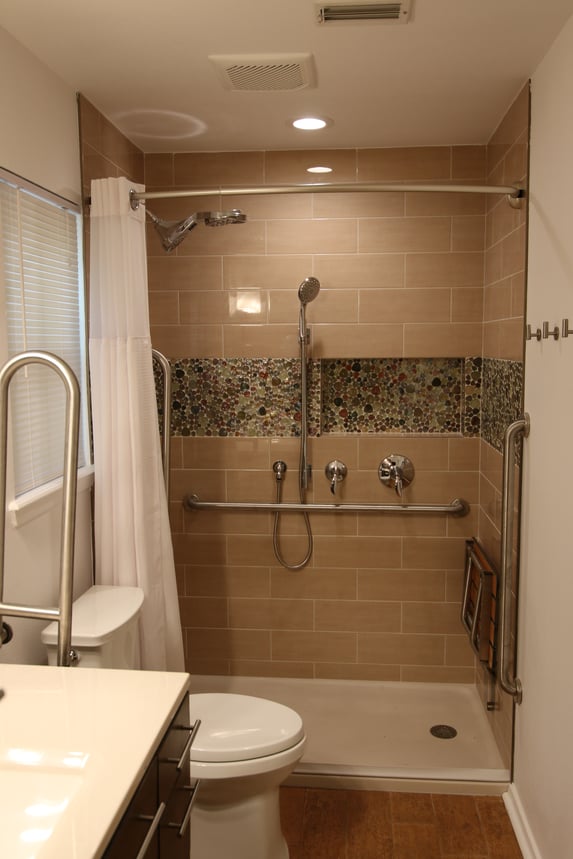
Quite often it is the home that presents the greatest difficulties for homeowners accompanied by limited mobility or other physical impairments as they age in their existing surroundings. Designing for specific physical conditions will lessen the impact of arthritis, restricted mobility, or loss of vision by using combinations of products, concepts, and techniques available today. Keeping safety in mind, interior modifications commonly include adding grab bars or handrails throughout the home, installing ramps or vertical platform lifts, lowering upper cabinets and countertops to Universal Design heights, adding non-slip flooring, widening hallways or installing stairlifts, and widening doors. You might also consider lowering light switches and thermostats and installing easier-to-use door levers or electric door openers. Try to provide a clear barrier-free path or accessible route to the most visited areas of your home like a disability access bath containing a roll-in ADA compatible shower, the kitchen, and the family room.
Tags:
barrier free access,
CAPS certification,
CAPS certified remodeling in Austin,
aging in place construction,
CAPS remodeling techniques,
disability home remodeling in Austin,
aging in place services,
aging in place design,,
elder construction,
certified aging in place specialist,
Austin elder construction,
handicap home modifications for disabled,
handicap remodeling contractors,
roll in showers,
handicap bathrooms,
universal design/build,
Austin Accessibility Design,
Austin senior living solutions,
Austin accessible home remodeling,
certified aging in place consultant in Austin,
bathroom modifications for disabled in Austin, TX,
aging in place specialist in Austin,
senior aging in place services,
home modifications for children with disabilities,
what does it mean to age in place,
aging in place home remodeling,
home remodeling for disabled in Austin Texas,
wheelchair accessible home remodeling in Austin,
austin texas wheelchair accessible showers,
home remodeling for seniors Austin,
Austin Senior Home Remodeling,
remodeling for elders in Austin,
disability and special needs contractor Austin,
bathrooms with disability access in Austin, Texas,
Austin disability contractors for special needs,
Austin handicap bathroom contractor,
handicap accessible remodeling,
barrier free remodeling,
handicap accessible bathroom remodeling,
handicap accessible home renovations,
handicap accessible home modifications,
disability remodeling,
handicap accessible bathroom remodel,
Austin aging in place specialist,
what is aging in place,
Age in Place at Home,
Disability Remodeling Services in Austin, Texas,
disability and special needs contractors in Austin,
universal design and accessibility in Austin,
Barrier-free designs,
forever home,
home accessibility help
I am reposting this invaluable announcement of my book's availability in an effort to help many struggling families who have discovered their home no longer fits their personal physical needs. Sudden or mounting changes among any family members affects how livable and accommodating their present home truly is. Once a major change occurs, modification of your residence must be undertaken or you will face moving to a more accessible home. A home's newly-discovered architectural barriers are represented by problems entering the home, difficulty in using the bathroom or its facilities, or merely maneuvering throughout a familiar residence. My book acts as a guidepost for perplexed homeowners and caretakers trying to determine their family's next immediate direction and imminent future. The first half of the book explains why homes have always been inaccessible, except on the day they were purchased. The second half takes you room by room through the home as I explain how applying the principles of Universal Design for Aging in Place makes the home comfortable and accessible for the largest number of people.
After over a year of writing to fulfill my customers' requests, my new book, "Age in Place At Home: Adapting the Home Environment for All Generations" , is available for purchase from Amazon. Go to the link below to order my paperback book, which was released in late November, 2022. It provides a great guideline for using the principles of Universal Design in new home construction and/or remodeling for every room in your home. Get your copy today.
https://www.amazon.com/gp/r.html?C=2Z24ENUUAEWUK&K=13Y7YU7PKKYAC&M=urn:rtn:msg:20221010201802eb9acb7b24004a4785cd2ec1d4f0p0na&R=3R6MK9WDXJPH7&T=C&U=http%3A%2F%2Fwww.amazon.com%2Fdp%2FB0BHTV28RV%3Fref_%3Dpe_3052080_276849420&H=7FWEPMGCH0TT8LN6SKPMUOCVJNYA&ref_=pe_3052080_276849420
A home's adaptability is one of the most desired qualities within a person's home during some point in their life as their or their family's needs change. These specific needs to enhance accessibility can be short term while recovering from an accident or illness at any age, or these home alterations may become permanent. The special needs may concern an adult or a child. Universal design principles don't discriminate between any family members regardless of age, size, or ability. Every family member is included. Learn how to adapt your home environment to satisfy your family's needs in David Traut's new book, Age in Place at Home.
T-Square Company, in Austin, Texas, practices incorporating Universal Design for accessibility to help their clients segue into Aging in Place seamlessly. The essence of my book is to advise people so they understand why our homes are obsolete to us, the homeowners, the minute they are completed. This fact is represented by the methodology used to create the traditional home. They are built to satisfy our immediate lifestyle and physical needs on the day we close on the house, with no regard for the future. The new home lacks adaptability to satisfy our needs once our bodies change beyond the purchase date. If we had incorporated the Universal Design principles into these new homes, those same homes would adapt to our changing family needs including every inhabitant regardless of age, size, or ability. The lack of home adaptability is not the consumers fault, they have always been unaware of how to reference the problem and accepted what the housing market gave them. Buyers were unaware of what to ask for. Hence, the status-quo of building has been perpetuated for centuries.
T-Square Company offers all types of Austin Universal Design home modifications for Aging in Place and Aging in Place design to better prepare you and your family for your unforeseeable home accessibility future on a design/build basis. Existing, traditional homes must be modified at some unknown point in time to increase their accessibility using correct designs. This collaborative effort is undertaken in order to help the residents who need better accessibility the most. Become aware and embrace the knowledge that the principles of Universal Design offer greater home accessibility for every one of your home members, from your father to your son. This is why the process is known as inclusive design.
David L. Traut, CAPS, is an Aging in Place specialist and has been involved with accessibility for over thirty years for the VA, HUD, various counties, and private residences. Contact David at 512-444-0097 for a professional home assessment to guide your future accessibility needs or at www.tsquareco.com. Simply fill out your information on the contact us page.
.
Tags:
aging in place home modifications,
aging in place home improvements in Austin,
wheelchair accessible remodeling,
CAPS certified remodeling in Austin,
aging in place construction,
CAPS professional in Austin,
aging in place services,
accessibility designs Austin Texas,
austin custom walk in shower,
universal design ideas,
Austin Accessibility Design,
aging in place design in Austin,
why is aging in place important,
what does it mean to age in place,
universal designbuilding for the future,
wheelchair accessible home remodeling in Austin,
universal design remodeling contractor,
why is universal design important,
7 principles of universal design,
universal principles of design,
universal design/build contractor,
universal design vs. aging in place,
universal design contractor,
wheelchair accessible housing,
accessible homes in austin,
Austin home remodeling for disabled,
universal home design in Austin,
aging in place versus universal design,
universal design home builder,
universal design home additions,
barrier free design,
Austin home accessibility solutions,
Austin home modification services,
Age in Place at Home,
universal design forever homes
After over a year of writing to fulfill my customers' requests, my new book, "Age in Place At Home," is finally available for purchase from Amazon. Go to the link below to order my paperback book, which was released in late November, 2022. It provides a great guideline for using the principles of Universal Design in new home construction and/or remodeling for every room in your home. Get your copy today.
https://www.amazon.com/gp/r.html?C=2Z24ENUUAEWUK&K=13Y7YU7PKKYAC&M=urn:rtn:msg:20221010201802eb9acb7b24004a4785cd2ec1d4f0p0na&R=3R6MK9WDXJPH7&T=C&U=http%3A%2F%2Fwww.amazon.com%2Fdp%2FB0BHTV28RV%3Fref_%3Dpe_3052080_276849420&H=7FWEPMGCH0TT8LN6SKPMUOCVJNYA&ref_=pe_3052080_276849420
A home's adaptability is one of the most desired qualities within a person's home during some point in their life as their or their family's needs change. These specific needs to enhance accessibility can be short term while recovering from an accident or illness at any age, or these home alterations may become permanent. The special needs may concern an adult or a child. Universal design principles don't discriminate between any family members regardless of age, size, or ability. Every family member is included. Learn how to adapt your home environment to satisfy your family's needs in David Traut's new book, Age in Place at Home.
T-Square Company, in Austin, Texas, practices Universal Design accessibility to segue into Aging in Place seamlessly. The essence of my book is to advise people so they understand why our homes are obsolete to us, the homeowners, the minute they are completed. This fact is represented by the methodology used to create the traditional home. They are built to satisfy our immediate lifestyle and physical needs on the day we close on the house, with no regard for the future. The new home lacks adaptability to satisfy our needs once our bodies change beyond the purchase date. If we had incorporated the Universal Design principles into these new homes, those same homes would adapt to our changing family needs including every inhabitant regardless of age, size, or ability. The lack of home adaptability is not the consumers fault, they have always been unaware of how to reference the problem and accepted what the housing market gave them. They were unaware of what to ask for. Hence, the status-quo of building has been perpetuated for over a hundred years.
T-Square Company offers all types of Austin Universal Design home modifications to better prepare you and your family for your unforeseeable home accessibility future on a design/build basis. Existing, traditional homes must be modified to increase their accessibility using correct designs. Become aware and embrace the knowledge that the principles of Universal Design offer greater home accessibility for every one of your home members, from your father to your son. This is why the process is known as inclusive design.
David L. Traut, CAPS, has been involved with accessibility for nearly thirty years for the VA, HUD, and private residences. Contact me at 512-444-0097 for a professional home assessment to guide your future accessibility needs or at www.tsquareco.com. Simply fill out your information on the contact us page.
.
Tags:
aging in place home modifications,
aging in place home improvements in Austin,
wheelchair accessible remodeling,
CAPS certified remodeling in Austin,
aging in place construction,
CAPS professional in Austin,
aging in place services,
accessibility designs Austin Texas,
austin custom walk in shower,
universal design ideas,
Austin Accessibility Design,
aging in place design in Austin,
why is aging in place important,
what does it mean to age in place,
universal designbuilding for the future,
wheelchair accessible home remodeling in Austin,
universal design remodeling contractor,
why is universal design important,
7 principles of universal design,
universal principles of design,
universal design/build contractor,
universal design vs. aging in place,
universal design contractor,
wheelchair accessible housing,
accessible homes in austin,
Austin home remodeling for disabled,
universal home design in Austin,
aging in place versus universal design,
universal design home builder,
universal design home additions,
barrier free design,
Austin home accessibility solutions,
Austin home modification services,
Age in Place at Home,
universal design forever homes
Once you have decided to Age in Place in your existing home, the first thing you can do to make your home more age-friendly is to do a self-assessment. Go through your house, identifying known problem areas like potential tripping or slipping hazards and areas that are hard to access and maintain. Who would be better at pointing out problem areas than the person needing the home modifications according to their physical wellbeing? To help with this, several organizations have Aging in Place checklists pointing out potential problems in some regions of the home and suggesting modifications and solutions. Once you have completed your initial Aging in Place checklist, it is time to seek the advice of trained Aging in Place specialist.
Next, contact a builder or remodeler listed as a Certified Aging in Place Specialist (CAPS). CAPS are home remodelers and design-build professionals certified and knowledgeable about Aging in Place home modifications. The CAPS professional can suggest ways to modify or remodel your home to fit your needs and budget. CAPS professionals are generally paid by the hour or receive a flat fee per visit or project.
There are three categories of Aging in Place customers. Those who are simply and wisely planning for their futures to remain in their present homes. The second category concerns those who know they have a chronic medical disorder and need to prepare for accessibility issues resulting from their disease. People with diseases constantly causing increased physical or mental changes to their being are a good representative of this second group. The third group involves those who either have had a chronic problem that has progressed severely altering their mobility or those who have sustained a life-altering tragedy such as being involved in an accident. All of these groups will drive the future metamorphosis of existing inaccessible dwellings.
During a professional home assessment for increasing accessibility, the structural needs of the client will be noted and documented through sketches, photos, and conversation by a registered CAPS professional. All the surroundings will be considered, from the flooring to the layout of a specific room or location as it pertains to the inhabitant's ease of usability. The physical and emotional needs of the occupant will also come into play because of mobility, sensory, or cognitive concerns. Each individual with similar impairments describes his or her limitations differently when undergoing elder construction. The blind don't experience their world the same as a person with deafness. The ultimate goal is to modify the home in a custom manner to provide for the occupant's maximum health, independence, and safety. Often the input from any caretakers, like a physical or occupational therapist, during the assessment phase can prove invaluable. The three main rooms involved in aging in place home modifications are the bathroom, the kitchen, and the family room. These areas make up the most occupied spaces of any home and will be connected by a designated accessible route. The basic needs involve access through wider doorways, nonslip floor surfaces, and adequate cabinet and plumbing fixture accessibility. More importantly, we must observe safety for everyone as the baby boomers choose to age in place within their homes. For more information about T-Square Company or Aging in Place services, visit www.tsquareco.com or call 512-444-0097. We are certified Aging in Place contractors.
Knowledgeable construction and design professionals are utilizing their CAPS training across the nation. CAPS stands for Certified Aging In Place Specialist. This designation is taught through the National Association of Home Builders in collaboration with AARP. CAPS connects responsible professionals with homeowners who need these services ever-increasingly. The CAPS designation program is a nationwide initiative, and all active CAPS members can be found at nahb.org/CAPSdirectory.
In designing for specific physical conditions, we realize that aging doesn't always bring on disease while the body declines to make certain physical limitations inevitable. Arthritis is the most common chronic condition as it restricts ordinary daily activities. The lack of hand strength and stiff knees are indicative of this illness. This most reported arthritic condition affecting people over 65 is followed by heart disease and vision loss in that order. Innovative aging design and concepts can compensate for frailty, lack of mobility, and blindness in Aging in Place families. We are constantly coming up with new methods for home modifications and household products to increase the comfort of our residential environments.
David L. Traut, CAPS, the owner of T-Square Company in Austin, Texas, is one of the select group of professionals nationwide to earn the Certified Aging-In-Place Specialist (CAPS) designation, identifying him as a home remodeler and builder with the skills and knowledge necessary to remodel or modify a home to meet the unique needs of the older population, disabled owners, or their visitors. We offer a complete line of aging in place services using our design/build techniques and the principles of Universal Design. Everything we do is done on a turnkey basis.
Tags:
barrier free access,
aging in place remodeling,
CAPS,
aging in place home improvements in Austin,
CAPS certification,
ADA remodeling,
CAPS certified remodeling in Austin,
aging in place remodels,
aging in place construction,
aging in place designs,
CAPS professional in Austin,
CAPS certification holder in Austin,
CAPS remodeling techniques,
Universal Design,,
aging in place services,
aging in place design,,
certified aging in place specialist,
disability home modifications in Austin,
home modifications Austin, Texas,
wheelchair accessible showers in Austin,,
handicap bathrooms,
roll in showers in Austin,
custom walk in shower Austin,
home remodels Austin,
home modifications for independent living Austin,
certified aging in place consultant in Austin,
aging in place design in Austin
After a Year of writing to fulfill my customers' requests, my new book, "Age in Place At Home," is available for pre-order from Amazon. Go to the link below to preorder my book, which will be released on October 19, 2022.
https://www.amazon.com/gp/r.html?C=2Z24ENUUAEWUK&K=13Y7YU7PKKYAC&M=urn:rtn:msg:20221010201802eb9acb7b24004a4785cd2ec1d4f0p0na&R=3R6MK9WDXJPH7&T=C&U=http%3A%2F%2Fwww.amazon.com%2Fdp%2FB0BHTV28RV%3Fref_%3Dpe_3052080_276849420&H=7FWEPMGCH0TT8LN6SKPMUOCVJNYA&ref_=pe_3052080_276849420
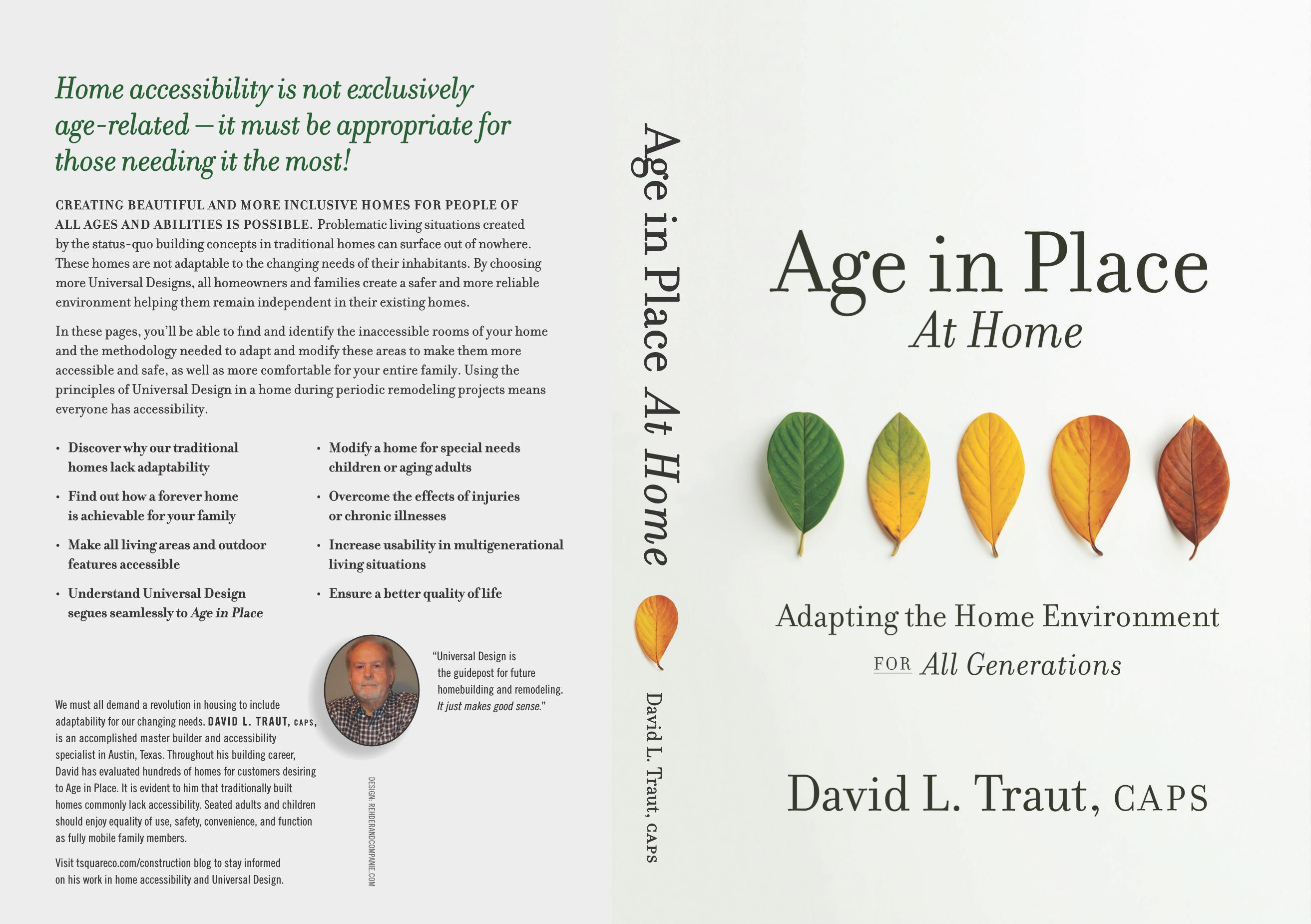
T-Square Company, in Austin, Texas, practices Universal Design accessibility to segue into Aging in Place seamlessly. We offer all types of Austin Universal Design home modifications better to prepare you for your unforeseeable home accessibility future. The principles of Universal Design offer greater home accessibility for every one of your home members, from your father to your son. This is why the process is known as inclusive design.
David L. Traut, CAPS, has been involved with accessibility for nearly thirty years for the VA and private residences. Contact me at 512-444-0097 for a professional home assessment to guide your future accessibility needs or at www.tsquareco.com. Simply fill out your information on the contact us page.
.
Tags:
aging in place home modifications,
aging in place home improvements in Austin,
wheelchair accessible remodeling,
CAPS certified remodeling in Austin,
aging in place construction,
CAPS professional in Austin,
aging in place services,
accessibility designs Austin Texas,
austin custom walk in shower,
universal design ideas,
Austin Accessibility Design,
aging in place design in Austin,
why is aging in place important,
what does it mean to age in place,
universal designbuilding for the future,
wheelchair accessible home remodeling in Austin,
universal design remodeling contractor,
why is universal design important,
7 principles of universal design,
universal principles of design,
universal design/build contractor,
universal design vs. aging in place,
universal design contractor,
wheelchair accessible housing,
accessible homes in austin,
Austin home remodeling for disabled,
universal home design in Austin,
aging in place versus universal design,
universal design home builder,
universal design home additions,
barrier free design,
Austin home accessibility solutions,
Austin home modification services,
Age in Place at Home,
universal design forever homes
What does CAPS stand for?
First of all, CAPS stands for Certified Aging in Place Specialist. The aging societal changes and inventory of inaccessible existing houses created the need for a CAPS certification program. This designation program, offered through the National Association of Home Builders, NAHB, in collaboration with The American Association of Retired Persons AARP, incorporates components of assessment, technical knowledge, and management skills related to disability home modifications used to help people stay at home safely and independently for a longer time. The program was developed in 2001.
How do I receive a senior home assessment?
Simply contact T-Square Company at www.tsquareco.com or call 512-444-0097 to schedule an appointment and find out what is involved. David L. Traut, CAPS (#1636580), the owner of T-Square Company in Austin, Texas, is one of the select group of professionals nationwide to earn the Certified Aging-In-Place Specialist (CAPS) designation, identifying him as a home remodeler and builder with the skills and knowledge necessary to remodel or modify a home to meet the unique needs of the older population, disabled owners, or their visitors. T-Square Company offers turn-key design/build projects to help with senior living solutions in Dripping Springs.
What can I gain from a certified home assessment?
During a home assessment for increasing accessibility, the structural needs of the client will be noted and documented through sketches, photos, and conversation. All the surroundings will be considered, from the flooring to the layout of a specific room or location as it pertains to the inhabitant's ease of usability. The physical and emotional needs of the occupant will also come into play because of mobility, sensory, or cognitive concerns. The goal is to modify the home in a custom manner to provide for the occupant's maximum health, independence, and safety. Often the input from any caretakers, like a physical or occupational therapist, during the assessment phase can prove invaluable. The three main rooms involved in Aging in Place home modifications are the bathroom, the kitchen, and the family room. These three areas comprise the most occupied spaces of any home and will be connected by a designated accessible route.
What are the five best home modifications for seniors Aging in Place?
Seniors' five basic needs involve installing ramps, access through wider doorways, bathroom renovations, kitchen alterations, and non-slip floor surfaces. Freedom to move about the home without encountering architectural barriers and increased usability is the goal of the process.
What Are The Benefits of Aging in Place?
Reasons for choosing to Age in Place include staying in your existing home surrounded by your neighbors and family and avoiding the prohibitive cost of senior living communities or assisted living. While it may be overwhelming to consider aging in your own home and the costs of the modifications required, many temporary and permanent options can help you stay in your home well past retirement. We all must observe safety for everyone as the baby boomers choose to Age in Place within their homes.
Tags:
barrier free access,
aging in place home modifications,
CAPS certified remodeling in Austin,
aging in place construction,
accessibility home remodeling in Austin,
CAPS professional in Austin,
CAPS certification holder in Austin,
CAPS remodeling techniques,
Universal Design,,
aging in place services,
accessibility designs Austin Texas,
Austin senior living solutions,
age in place home design,
Austin disability contractors for special needs,
accessible homes,
Austin home accessibility solutions,
Austin home modification services,
Age in Place at Home,
Professional Disability Remodeling Contractor