Lighting plays a major role in home safety, yet it’s often overlooked. As vision changes with age, brighter and better-placed lighting becomes essential for preventing falls and injuries. The layered lighting technique works for everyone while avoiding dark areas within the home.
How aging affects vision
Good lighting alone can reduce fall risk by up to 30%. Older adults need more light to see clearly and have reduced contrast sensitivity. Shadows, glare, and dim hallways make navigating the home more dangerous. Perhaps you can provide brighter LED bulbs in key rooms.
Key areas to improve lighting
Kitchens, hallways, staircases, bathrooms, and bedrooms should be well-lit at all times. Nighttime trips to the bathroom are a common cause of falls and deserve special attention.
Best lighting solutions
Motion-sensor lights provide hands-free illumination in hallways and bathrooms. Night lights and pathway lighting create safe routes after dark. Under-cabinet lighting improves visibility in kitchens without harsh overhead glare, putting the light where you're working. Additionally, provide lighting within drawers and inside cabinets.
Avoid common mistakes
Overly bright bulbs without diffusers can cause glare, causing trip hazards, while poorly placed motion sensors may fail to activate night lights when needed. Balanced, even, and layered light distribution reduces shadows and glare. Adequate lighting is key to a functional aging in place design.
Lighting upgrades are a simple, cost-effective way to make a home safer. T-Square Company can help assess lighting needs and install solutions that blend seamlessly into the home.
Let’s make your forever home work beautifully for you—now and for years to come.
David L. Traut, owner of T-Square Company, has written an Aging in Place Guide
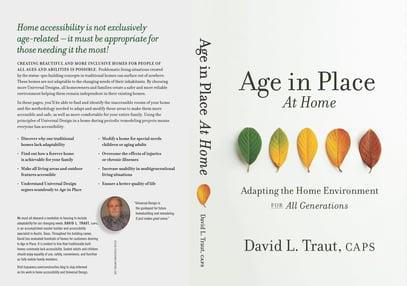
David is also certified in Universal Design in both the United States and Australia. Drawing on decades of expertise, he recently published Age in Place at Home: Adapting the Home Environment for All Generations, an award-winning and comprehensive guide that explores the role of Universal Design in creating safe, accessible homes.
📘 Age in Place at Home takes readers room by room, explaining practical modifications that enhance safety, accessibility, and independence. The book is available on Amazon.
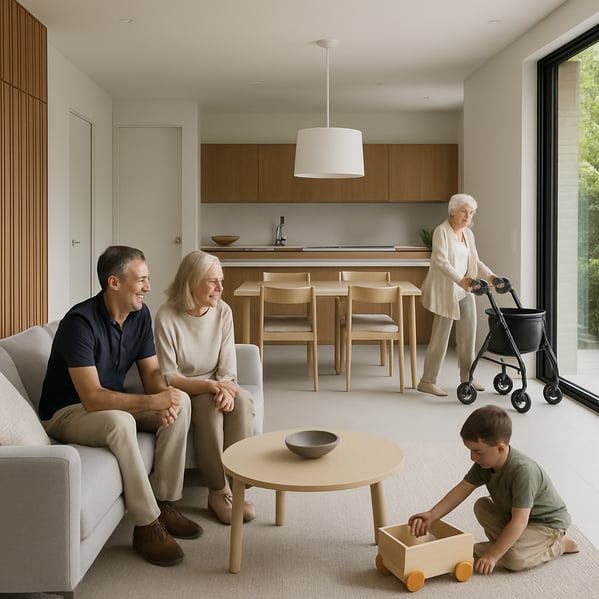
When a family’s living situation suddenly changes, it may become necessary to modify the home to meet new needs. These adjustments often result in the creation of multi-generational homes, where comfort, safety, and independence are balanced for all ages.
The specific modifications depend on the situation — whether a parent is moving in, a child returns home, or a family member faces new mobility challenges. Below are common areas to consider when adapting your home for multiple generations.
Common Home Modifications for Changing Family Needs
Additional Bedrooms When the family expands or someone new moves in, you may need extra bedrooms or sleeping areas. Consider converting a home office, den, or unused space to accommodate the change.
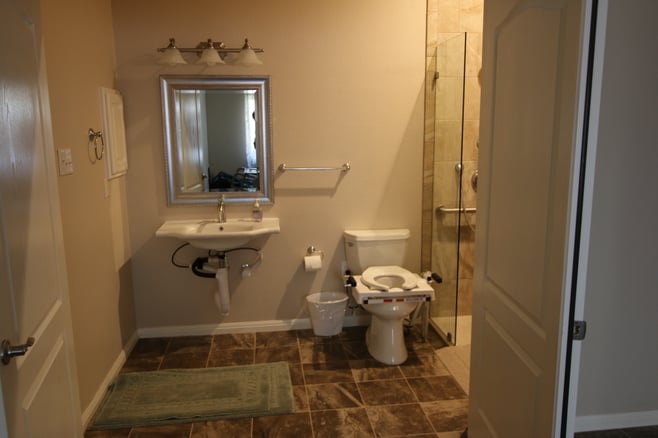
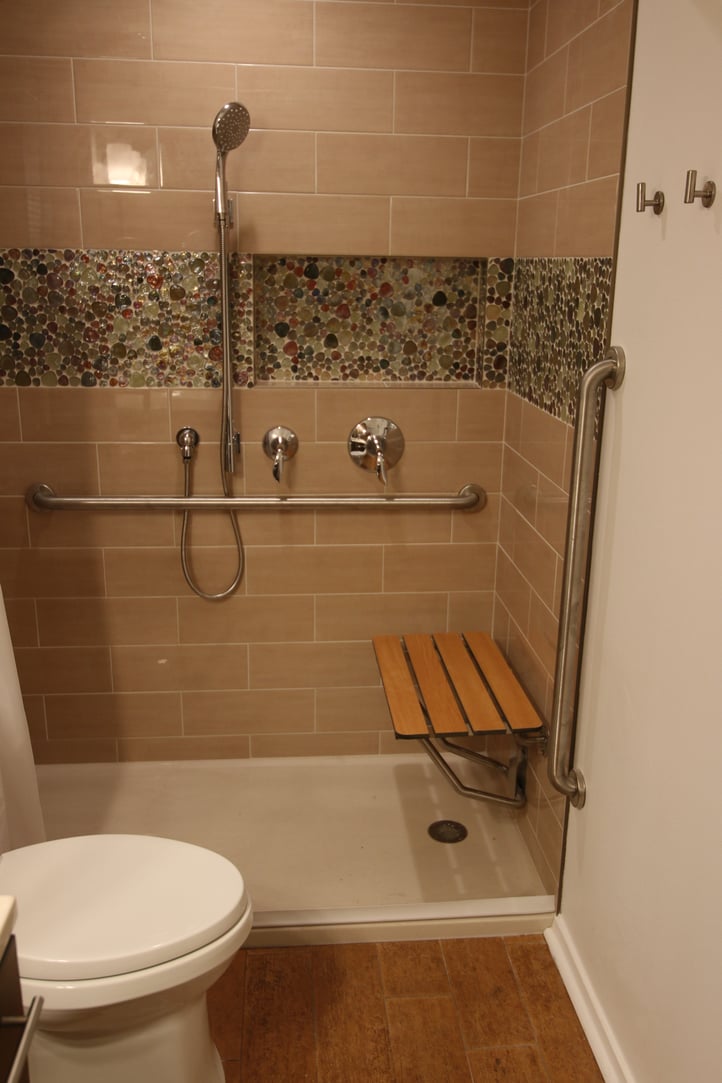
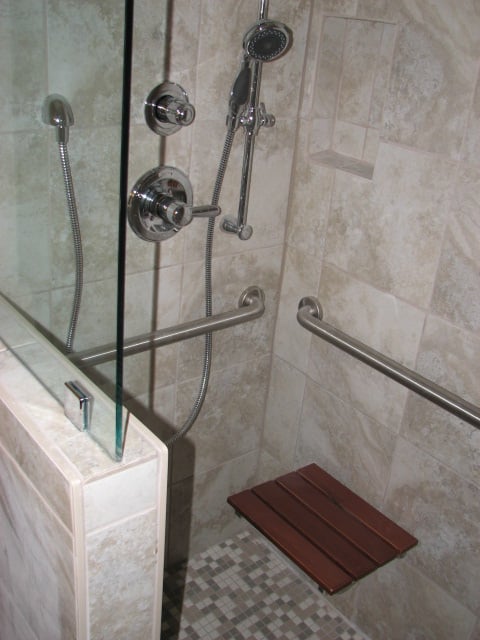
Bathroom Accessibility For elderly or disabled family members, safety and convenience are priorities. Modifications may include:
Installing grab bars
Adding a roll-in or walk-in shower
Lowering sinks and countertops
Replacing toilets with accessible-height models
Kitchen Modifications A larger or more diverse household benefits from flexible, inclusive kitchen design. Options include:
Adjustable-height work surfaces
Roll-under access at the sink or cook top
Additional seating and storage
Expanding the kitchen footprint for easier movement
Safety Features Depending on your situation, you may need to add:
Childproof or adult-proof features
Non-slip flooring
Improved lighting
Smart home security or monitoring systems
Storage Solutions More people often means more belongings. Add closets, built-ins, or cabinetry to maintain organization and reduce clutter.
Accessibility Ramps and Entries For anyone with limited mobility, ramps and zero-threshold entries provide essential independence and safety.
Private Living Suites In multi-generational households, separate living areas with their own entrance, kitchenette, and bathroom help maintain privacy and autonomy while keeping family close.
Heating and Cooling Considerations If you’re adding square footage or an in-law suite, ensure your HVAC system can handle the increased demand efficiently.
The Aging in Place Mindset
Designing a multi-generational home is deeply connected to the philosophy of Aging in Place — a practice centered on usability, comfort, and independence for everyone, regardless of age or ability.
Aging in Place design is not about age — it’s about universal usability. It focuses on long-term livability, ensuring that the home adapts as life changes.
The first step toward creating an adaptable home is a self-assessment. Walk through your house and identify potential problem areas:
Tripping or slipping hazards
Poor lighting or hard-to-reach switches
Narrow doorways or tight spaces
Difficult-to-maintain areas
Who better to identify problem spots than the person who uses the space daily? Many organizations, including AARP, provide Aging in Place checklists that highlight potential issues and suggest practical solutions. Once your initial assessment is complete, the next step is to seek the guidance of a Certified Aging in Place Specialist (CAPS).
Working with a CAPS Professional
Certified Aging in Place Specialists (CAPS) are trained builders, remodelers, and designers who understand the construction and emotional aspects of creating accessible homes. The CAPS designation, offered by the National Association of Home Builders (NAHB) in partnership with AARP, connects responsible professionals with homeowners seeking these services.
A CAPS professional can:
Evaluate your home’s current accessibility
Recommend modifications tailored to your needs and budget
Coordinate with occupational or physical therapists when necessary
Manage projects with compassion, professionalism, and precision
You can find certified specialists for your specific location at nahb.org/CAPSdirectory.
Three Types of Aging in Place Clients
Understanding which group you fall into can help determine your home’s design priorities:
Proactive Planners – Individuals preparing wisely for the future to remain safely in their homes.
Chronic Condition Adapters – People managing ongoing medical issues who need to plan for future accessibility challenges.
Crisis Responders – Individuals facing sudden or severe mobility changes after illness, injury, or life-altering events.
All three groups represent the growing need for accessible remodeling and will continue to shape the future of residential design.
What Happens During a Professional Home Assessment
During a professional assessment, your CAPS professional will document the home’s current conditions and make detailed notes through sketches, measurements, and conversation. They’ll evaluate everything from flooring to lighting to ensure the layout fits the occupants’ physical and emotional needs.
They’ll also take into account:
Mobility and reach range
Sensory or cognitive challenges
Caregiver involvement
Collaboration with occupational or physical therapists often adds valuable insight. The goal is a customized design that enhances independence, safety, and comfort — not a “one-size-fits-all” solution.
The three primary spaces typically involved in aging in place remodels are:
Bathrooms — safety and ease of use
Kitchens — independence and flexibility
Living Areas — connection and comfort
These spaces are united by a clearly defined accessible route with wider doorways, non-slip flooring, and sufficient maneuvering space for mobility devices.
The Importance of Inclusive Design for All Ages
If children are part of the household, their height, reach, and mobility also influence the home’s design. Likewise, adults moving in may face challenges from common conditions such as arthritis, which can cause stiffness, joint pain, and reduced grip strength.
Designing for these realities doesn’t mean sacrificing beauty — it means integrating innovative universal design concepts that allow everyone to thrive. Features like lever handles, adjustable lighting, touch-control faucets, and curbless showers can make life easier for every family member.
Bringing It All Together
Creating a multi-generational home that supports aging in place is both a practical and compassionate decision. It’s an investment in your family’s future and quality of life.
As a Certified Aging in Place Specialist (#1636580), T-Square Company in Austin, Texas, helps families design and remodel homes that grow with them — ensuring safety, comfort, and independence for years to come.
For more information or to schedule an assessment or consultation, visit www.tsquareco.com or call 512-444-0097.
About CAPS Certification
Knowledgeable design and construction professionals nationwide are applying their Certified Aging in Place Specialist (CAPS) training — developed through the National Association of Home Builders (NAHB) and AARP — to help families live better, longer, and safer in their homes.
CAPS connects qualified professionals with homeowners seeking trustworthy, thoughtful remodeling solutions for accessible and universal design.
Closing Thought
Innovative aging-in-place design goes beyond accessibility — it’s about dignity, comfort, and belonging. Whether you’re modifying for a loved one, planning for the future, or creating a flexible family home, the right design can turn change into opportunity. To find out more:
After over a year of writing to fulfill my customers' requests, my book, "Age in Place At Home: Adapting the Home Environment for All Generations", is available for purchase on Amazon. Go to the link to order my paperback or e-book, which was released in late November, 2022. Additionally, an audiobook will also be available soon. The book provides a great guideline for using the principles of Universal Design in new home construction and/or remodeling for every room in your home when Aging in Place. Get your copy today.
Let's face it, accessible homes are needed by all of us at some time during our lives. This is true whether it's for ourselves, a family member, or a guest. The need for handicap remodeling is certainly not driven by age but is a result of life's experience. Any family living with disability among any of it's generations within the group can always benefit from additional accessibility. This will in turn increase safety and independence for all people involved as they go about life. Except under extreme situations, complete ADA-compliance normally isn't required for a remodel used to increase residential accessibility. The ADA rules are a great place to begin a design when dealing with a lack of home accessibility. However, any and all compliant items are a great help for everyone. The ADA specifications deal with explicit measurements, but these stringent rules do not apply to many people. Diverse body sizes and abilities are overlooked, and everyone is dealt with on average. More so, only if modifications involve government backed housing and funding are the ADA guidelines followed to the letter. In other words, the guidelines aren't a consideration when dealing with a single private family residence. So how did the ADA guidelines come about?
During the 1960's, the Americans with Disabilities Act (ADA) was signed into law, protecting the civil rights of those with disabilities. This law was merely a beginning, acknowledging a part of our population was dealing with disabilities. Although this law did not directly address disabilities per se, it served as a foundational piece of civil rights legislation. Disability advocates applied the language used in the Civil Rights Act for later legislation concerning civil rights for those with disabilities. Later on, the Americans with Disabilities Act, also known as ADA, as we know it today began. First implemented in 1990, it was our government’s first step toward addressing the needs of citizens living with disabilities. Yet as technology and our culture evolved, so did the challenges faced by disabled Americans. Accessibility became a hurdle not only in the physical world but also the vast digital realm of today. The law is constantly evolving while changing with the times; thereby making everyday life easier for individuals with unique needs.
Disability is a complex phenomenon representing an interaction between one's physical impairments, the activities they need to perform, and the architectural barriers within the space in which this situation occurs. The terminology and jargon used for disabilities evolves regularly whereas, "handicapped" is no longer acceptable. It is no longer merely a description of intellectual or physical impairments. Each individual with similar impairments describes his or her limitations differently. The blind don't experience their world the same as a person with deafness and so on. Physically challenged has become the more socially accepted description of a person with an impairment, regardless of age. No matter how old you are, you should periodically evaluate your residence to determine whether it suits you not just for the present but the future. Your personal home assessments will be revised every time your living situation changes. Whether childproofing for a newborn, making a home more accessible following a sickness or unfortunate accident to someone in the family, or making a toilet area safer for an aging residing parent, there will be an immediate evolution to your primary domicile. These same life-span design features become more important if you believe you're past the age of wanting to move and are relishing the thought of aging in your own home, no matter what physical limitations you might later develop. This way of thinking has created a niche residential market known as Aging in Place. Solving Aging in Place issues will soon become the number one challenge concerning the present obsolete housing inventory in our country. Incorporating smart aging design concepts like a roll-in-shower into a home will attract a larger group of buyers when you decide to finally sell your home. Preparing for one of those highly likely events involving someone in your home needing room modifications for even a short time while recovering from surgery is surely a wise move.
In our daily lives, we all know what to do if the front door is no longer secure, if the kitchen sink backs up, or if the air conditioning suddenly goes out on a hot day. However, for those suddenly facing a catastrophic illness, life can suddenly be a scary and confusing place in which our existing homes are no longer a sanctuary but become a prison within the nightmare of limited accessibility. With the onset of a life-altering illness or catastrophic injury, knowing who to call to solve problems faced performing our usual daily tasks suddenly becomes very challenging.
Knowledgeable construction and design professionals are utilizing the CAPS training across the nation. CAPS stands for Certified Aging In Place Specialist. This designation is taught through the National Association of Home Builders in collaboration with AARP. CAPS connects responsible professionals with home owners who need these services on an ever-increasing basis. CAPS is a nationwide initiative and all active CAPS members can be found at nahb.org/CAPS. Look for the CAPS designation as a reliable way to identify professionals to modify your home or build a new forever home that is designed for a lifespan. CAPS graduates receive training about the technical/construction aspects and learn about the unique aspects of working with older Americans. They must take formal business training to maintain their credential through continuing education and subscribe to a Code of Ethics.
David L. Traut, CAPS the owner of T-Square Company in Austin, Texas is one of the select group of professionals to earn the Certified Aging In Place Specialist (CAPS) designation, identifying him as a home remodeler and builder with the skills and knowledge necessary to remodel or modify a home to meet the unique needs of the older population, disabled owners, or their visitors. T-Square Company offers a full compliment of Aging in Place services including bathroom modifications for elderly clients with special needs. Each design/build project will be customized to fit your personal needs increasing your accessibility. Call 512-444-0097 today to begin the accessible second chapter of your life while remaining safe and secure in your existing home. CAPS #1636580
As an answer to his clients requests over the years, David has recently published a book entitled "Age in Place at Home: Adapting the Home Environment for All Generations". The book reflects on thirty years of accessibility improvements and identifies why our traditional homes specifically lack this very basic need. It is available on Amazon and stands as a reference book for increasing home accessibility using the principles of Universal Design in every room of the home.
Suppose the current pandemic taught us anything concerning safety and institutional living situations. In that case, we now know it is much safer to remain in a barrier-free home surrounded by familiar surroundings and friends. During the stay-at-home mandates, everyone knew what Aging in Place meant because all family members lived within this inspirational and needed solution. We all became better acquainted with our homes and family members. The best way to approach a desire to Age in Place is by being proactive before an illness takes control of your life. At that point, you must deal with it reactively. There are many differences between home modifications and a home remodel. The main difference is home modifications involve investing in your familiar home versus spending during remodeling. Home modifications enhance your ADL (Activities of Daily Living), whereas remodeling deals more with aesthetics. An example of a home modification increasing accessibility includes a walk-in tub with easy access versus an aesthetically pleasing deep soaking tub. Investing in your home using the principles of Universal Design will benefit your future retirement years by making your home gradually conform to your needs. The point of involving this universal technique in periodic remodels within your home is that the alterations appear invisible until their advantages are needed when your housing needs change. A professional CAPS program graduate performs accepted home modifications to increase accessibility for any resident.
What are CAPS services, and what does CAPS stand for? Let's be clear, it has nothing to do with hats or the associated industry. First of all, CAPS stands for Certified Aging in Place Specialist. The aging societal changes and inventory of inaccessible existing houses created the need for a CAPS certification program. This designation program, offered through the National Association of Home Builders, NAHB, in collaboration with The American Association of Retired Persons AARP, incorporates components of assessment, technical knowledge, and management skills related to proven home modifications used to help people stay at home safely and independently for a more extended time. The program was developed in 2001. The CAPS program connects responsible professionals with homeowners needing specialized accessibility services ever-increasingly. Professional CAPS services include home assessments, consultations, accessible designs, complete build-outs, accessible additions, and determining a positive path forward for any individual or their visitors requiring better accessibility and usage of their existing home, better fitting their personal needs.
The CAPS services offered by a CAPS professional vary from a complete accessible remodel beginning at the curb and ending inside the backyard. Additionally, you can improve the comfort of the most used rooms in the home, like bathrooms, kitchens, and family rooms. The detailed process begins with a home assessment. The precise modifications identified increase usability according to the homeowner's and family's personal needs. The housing modifications are designed for all generations within a home, from children to older adults. Ordinary homeowners with extraordinary challenges partner up with experienced CAPS professionals and their own families. Working as a team, the trained CAPS specialist and any family caretakers or therapists identify the day-to-day problems weighing on those with health limitations. Aging in Place services provided by a specialized remodeling contractor ensures all accessibility issues of the home are accomplished correctly. T-Square Company, located in SW Austin, Texas, is one of the specialized CAPS certified contractors.
The CAPS credential is a nationwide initiative, and many building and design professionals are taking advantage of the helpful training nationwide. David L. Traut, president, and owner of T-Square Company, is an active CAPS member (#1636580) and has participated in the program for over a decade. Furthermore, he has actively completed accessibility design/build remodels for over three decades for the private sector, HUD, and the VA. Always check a person's credentials to verify the remodeler holds an active CAPS certification and is familiar with Universal Design. All registered CAPS program graduates and remodeling companies are listed in a national registry in Washington, DC. The information is found by calling 1-800-368-5242 or simply visiting their website at: http:www.nahb.org/en/learn/designations/certified-aging-in-place-specialist.aspx.
T-Square Company in SW Austin, Texas, located at 14141 Highway 290 West, Suite 800, is a CAPS-certified remodeler and offers design/build Aging in Place projects using principles of Universal Design. Call 512-444-0097 to discuss your project today and learn how to achieve better accessibility within your existing home. Our knowledge and experience can help solve your personal needs within your existing home. Whether you need a safer shower, wider doorways, a zero-step entrance, or a more accessible kitchen to entertain your family and friends, T-Square Company is here to help.
Disability is a complex phenomenon representing an interaction between one's physical impairments, the activities one needs to perform, and the architectural barriers within the space in which this situation occurs. Disability is not an age-related condition. The terminology and jargon used for disabilities evolve regularly, whereas "handicapped" is not widely accepted. Disability is no longer merely a description of intellectual or physical impairments. Each individual with similar impairments describes his or her limitations differently. The blind don't experience their world the same as a person with deafness. Some of our societal statistics that weigh into Aging in Place situations include reports stating that 19% of the population between the ages of 16 and 64 and 42% of those of us 65 and over have a physical disability affecting the activities of their daily lives. Aging in Place home remodeling in Dripping Springs for a progressive condition comes into play. This is the only way to ensure safety and mobility for the homeowner or family member requiring the home modifications. The two main groups driving elder construction and the Aging in Place market are those people who are 65 and over and the baby boomers. The first group reached 55 million in 2020. The baby boomer generation born between 1946 and 1965 today makes up 28% of the U.S. population and some 77 million people. The published guidelines for ADA accessibility for buildings and facilities are an excellent resource for ideas on making a home safer and easier to live in. Many of these published guidelines, particularly requirements for corridor and door widths, safety bars, and proper access to different facilities, can go a long way in extending the amount of time an elderly or physically impaired individual can live independently.
The situation holds for a disabled child, only on a smaller but changing scale. It is estimated that 5.4 percent of children five to seven years old are disabled representing a considerably large portion of the population. Sometimes, the living environment must be changed to impact the child's life significantly. Making your home accessible for a special-needs child will give your entire family a feeling of security and freedom. Your child with the disability will become more comfortable and be able to maneuver through and use the home more safely. They will be able to develop the life skills they need in their daily environment rather than just focusing on treatment. Fortunately, whatever is needed in the way of home modifications to create a safe and comfortable environment for your child is available through the registered and certified CAPS program. Accessibility should be a concern no matter what your age. If your concerns are not for you, barring any life-changing accident, they could concern the accessibility of another generation's independence in using the bathroom. Furthermore, today's multigenerational households exhibit accessibility issues affecting three to six generations, all of which must be addressed. CAPS professionals in the remodeling industry can help solve these issues while performing design/build home modifications.
Modifications of existing homes are necessary because people aged 50 and older want to remain in their current homes for as long as possible. This desire is known as Aging in Place. Aging in Place home modifications in Dripping Springs should only be undertaken by a CAPS-certified remodeling company. This is the only way you can be assured that the home modifications are the right choices to satisfy your needs. There is no need to waste money only to discover that an inexperienced and unqualified remodeling company did the wrong alterations. Indeed, a trained CAPS professional and remodeling contractor with years of experience will cost you more than a handyman illegally playing among the trades at your peril. Still, then again, there are those professional guarantees to consider. The professional versus the handyman is more likely to seek your overall satisfaction that will follow him into his next job. An actual building professional can also orchestrate the job's smooth flow limiting the downtime of a most functional room. Always check their credentials to verify that the remodeler holds a CAPS certification. All registered CAPS program graduates and their remodeling companies will be listed in a national registry in Washington. The information can be found by simply visiting nahb.org/CAPS.
Being proactive and preparing for one of those highly likely events involving someone in your home needing room modifications for even a short time while recovering from surgery is undoubtedly an intelligent move. The new evolving concept known as Universal Design for home remodeling is catching on nationwide and has been a sign of the times for several years. These new home remodeling advances keep the living environments safer and will not compromise the home's aesthetics or resale value. Exhibiting Universal Design principles in a building makes a home more accessible to all regardless of their mobility or adaptive abilities and at any age. The evolution of new universal products used in room modifications making homes more accessible has come about in the remodeling industry. Homes can become more accessible to people as they age. Universal Design interior modifications include adding grab bars or handrails throughout the home, lowering upper cabinets and countertops, adding non-slip flooring, widening hallways, or installing stair lifts and wider doors. You might also consider lowering light switches and thermostats and installing easier-to-use door levers. Universally, you should try to provide a clear barrier-free path or accessible route to the most visited areas of your home.
David L. Traut, CAPS (#1636580), the owner and president of T-Square Company in SE Austin, is one of the select group of professionals nationwide to earn the Certified Aging-In-Place Specialist (CAPS) designation, identifying him as a home remodeler and builder with the skills and knowledge necessary to remodel or modify a home to meet the unique needs of the older population, disabled owners, or their visitors. We are a registered contractor with the VA to help our veterans. For more information about T-Square Company, visit www.tsquareco.com or call 512-444-0097.
Perhaps, you have outgrown the usefulness your existing home once had, because, quite often, it is the home that presents the most significant difficulties in life through the homeowners limited mobility or other physical impairments. As seniors age in their existing living surroundings, their bodies and personal needs are constantly changing. Designing for specific physical conditions will lessen the impact of arthritis, restricted mobility, or loss of vision using combinations of products, concepts, and techniques available today. These Aging in Place changes make your home more adaptable and user-friendly. Home modifications do not need to look institutional; this is why many seniors resist the changes that can help them the most. Moreso, once you decide to sell, the correct modifications increase the value of your home as it appeals to multiple generations of home buyers . The exact scope of work is determined by the CAPS specialist according to your needs.
In some cases, CAPS-certified health workers and therapists, act only as consultants, and are not the ones implementing those suggestions or doing the home modifications. In this case, the actual construction work is assigned to a qualified accessibility contractor. David L. Traut, CAPS, the owner and president of T-Square Company in Austin, Texas, is one of the select group of professionals nationwide to earn the Certified Aging-In-Place Specialist (CAPS) designation, identifying him as a home remodeler and builder with the skills and knowledge necessary to remodel or modify a home to meet the unique needs of the older population, disabled owners, or their visitors. A CAPS-certified remodeler like T-Square Company located in SW Austin is in a great location for helping the people in Dripping Springs and the surrounding area Age in Place. Our company provides a one-stop shop that is even more valuable to anyone wanting to Age in Place. Our construction knowledge and over 27 years of accessibility experience enables any Aging in Place design/build project to come to fruition via practicality and best practices. On the other hand, any additional knowledge gained from a CAPS-certified practitioner or family member is still invaluable for determining the final design.
Complete Aging in Place services and the knowledge of how to carry them out are available to the homeowner through CAPS-certified remodeling. A CAPS specialist considers your current and future circumstances in their design, and the principles focus on elegant, aesthetically enriching barrier-free environments. The first step to increasing your homes accessibility involves scheduling a comprehensive Home Safety Assessment with a CAPS specialist. This requires paying a modest fee for the professional service. The assessment can pay for itself by avoiding the high cost of injury or assisted living, and it provides the homeowner a definite path for the future. Moving forward, the CAPS professional will be additionally compensated for their design and detailed drawings prior to the modification or hard costs. CAPS professionals are generally paid by the hour or receive a flat fee per visit or project. Typically an assessment takes approximately 60-90 minutes. It’s best if you or a family member can accompany the CAPS professional during the home safety assessment. You or they can ask questions about specific safety items as they arise.
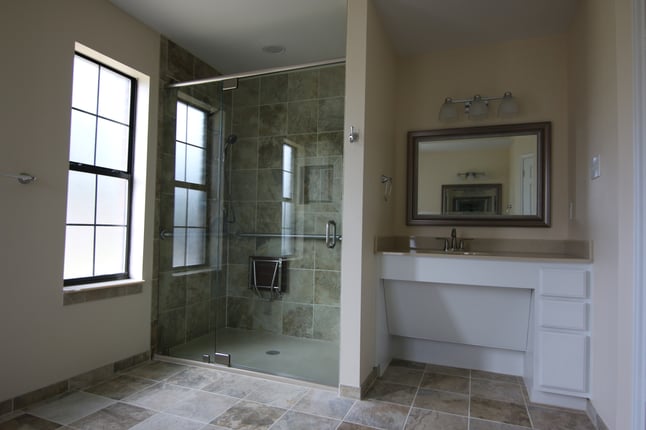
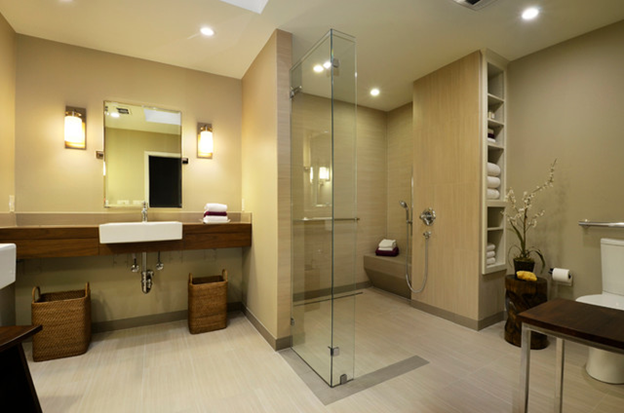
Handicap Accessible Bathroom Remodel
During a home assessment for increasing accessibility, the structural needs of the client will be noted and documented through sketches, photos, and conversation. All the surroundings will be considered for the final design, from the flooring to the layout of a specific room or location as it pertains to the inhabitant's ease of usability. The physical and emotional needs of the occupant come into play because of mobility, sensory, or cognitive concerns. The goal is to modify the home in a custom manner to provide for the occupant's maximum health, independence, and safety. Input from any caretakers, like a physical or occupational therapist, during the assessment phase can prove invaluable. The three main rooms involved in Aging in Place home modifications are the bathroom, the kitchen, and the family room, in that order. These areas make up the most occupied spaces of any home and will be connected by a designated accessible route. The basic needs considered involve access through wider doorways, non-slip floor surfaces, widening hallways, installing stairlifts, and good cabinet and plumbing fixture accessibility. You might also consider lowering light switches and thermostats and installing easier-to-use door levers. Safety is of paramount importance to the final accessible design.
Be advised, the vast majority of builders and remodelers do not have the knowledge and training from obtaining the CAPS designation to perform home modifications for Aging in Place. When considering installing a grab bar which seems like a simple endeavor, a run-of-the-mill contractor or handyman has no idea of the safety regulations involved or the knowledge of where to install the grab bar leaving the unaware and trusting consumer in a dangerous situation. The CAPS designation is taught through the National Association of Home Builders in collaboration with AARP. CAPS connects responsible professionals with homeowners who need these services on an ever-increasing basis. CAPS is a nationwide initiative,and all active CAPS professionals can be found at nahb.org/CAPSdirectory.
For more information about T-Square Company, visit www.tsquareco.com or call 512-444-0097.
Everyone ages differently and has different needs and wants. The factors that constitute the aging in place market,senior home modifications, and disabled home modifications for all individuals are their genetic makeup, lifestyle, choices they have made while living, and environment. These factors have brought about the need for Universal Design. This is the forward-thinking design of products, services, and environments usable by as many people as possible regardless of age, ability, or situation without needing adaptation or specialized alterations. It provides the most significant safety and access for home guests or occupants and is undetectable when done well. When a home contains the principles of Universal Design, there is little need for future home modifications for Aging in Place. Since so few homes share the accessibility offered by Universal Design, to satisfy the needs of a particular household member brought about by an accident, an illness, or simply the aging process, there will always be a need for customized accessibility features offered by CAPS-certified remodelers. A CAPS-accredited remodeling professional will accomplish this need by producing a truly functional design. This same competent home remodeling company that understands and practices Aging in Place home modifications in Dripping Springs should work to fit the design and ensure your safety and accessibility.
Physical limitations affect many more people than the daily users of walkers and wheelchairs. Many members of our life experienced or elder society has significant problems dealing with their inaccessible home environment. Today's conventional building standards conflict with most people's accessibility when considering our created architectural barriers concerning cabinetry and door opening widths, individual strength, range of motion, movement, manual dexterity, balance, and coordination. Once the demands of our built environment exceed our capacities, we become excluded from a room or even the entire home. The building world must work in unison to be sure the entire living environment meets basic needs in addition to affordability and structural integrity for the consumer and homeowner. This includes the home and the components within the home being accessible to all inhabitants. Privacy, a sense of belonging, a sense of control, and the sense of safety and security make up the quality of life for any home and should be considered for any design.
Disability is a complex phenomenon representing an interaction between one's physical impairments, the activities one needs to perform, and the architectural barriers within the space in which this situation occurs. Modifications of existing homes are necessary because people aged 50 and older want to remain in their current homes for as long as possible. This endeavor is known as Aging in Place. Aging in Place home modifications in Dripping Springs should only be done by a CAPS-certified remodeling company. T-Square Company, located at 14141 Highway 290 West, is one of the accredited companies. They have over 27 years of experience working with accessibility. By choosing them, you can be assured that the design and home modifications are the right choices to satisfy your needs. There is no need to waste money only to discover that an inexperienced and unqualified remodeling company did the wrong alterations.
Suppose you have been considering an Aging in Place design for a bathroom makeover or kitchen remodeling project in Dripping Springs. In that case, there are a few things you should take into consideration. Accessible home remodels and bathroom upgrades can take on many looks and facets. The scope of work you choose to accomplish your desires should effectively solve your problems and, most importantly, your needs as the homeowner. The identification of these specific needs belongs to you, the homeowner. The job of the knowledgeable, professional remodeling contractor is how your home is structurally altered to accomplish these needs. Accessibility should be a concern no matter what your age. If your concerns are not for you, barring any life-changing accident, they could concern the accessibility of another generation's independence in using the bathroom. Aging in Place services performed by T-Square Company, a registered CAPS professional in the remodeling industry, can help with solutions to solving any home accessibility issues.
Whether you desire a roll-in shower, accessible sink, or merely clear and unobstructed access to your existing bath, a CAPS professional can help you increase your accessibility. T- Square Company can not only help you with the design of what you desire but is competent and professionally qualified to carry out all construction needed. Certainly, there are many upgrades available when planning an accessible bathroom transformation. On average, the tub replacement with a new walk-in shower can create a bold look but will run you around $18,000, while a roll-in shower will run around $14,000. There are no spending limits for bathroom remodels. For a hall bath remodel, you can spend around $15,000 to $22,000. The price tag can approach or exceed $35,000 for a complete master bath remodel. The type of fixtures and building components chosen, along with the labor, will compose the overall cost of the remodeling project. These prices are based on long-lasting home sustainable modifications requiring time to install using proper construction techniques. They are not to be confused with pop-in kits offered by others, claiming their jobs will be accomplished in one day.
Who do you choose to help you with your dream? A professional remodeling contractor with years of experience will cost you more than a handyman illegally playing among the trades at your peril. Still, then again, there are those professional guarantees to consider. The professional versus the handyman is more likely to seek your overall satisfaction that will follow him into his next job. A true building professional can also orchestrate the job's smooth flow limiting the downtime of a most-useful room. Subcontractors will not be covered up; each skilled trade is brought onto the site as needed. Professionals normally have insurance to cover on-the-job accidents to protect homeowners from legal action against them. Be sure you ask for a certificate of insurance from your chosen professional contractor so that you aren't held personally liable for medical expenses covering a worker's accident while on your property. Don't forget that only certified Aging in Place (CAPS) professionals like T-Square Company can help you solve your accessibility issues where the owner is planning to retire.
The National Association of Home Builders, in partnership with the AARP and Home Innovation Research Labs, created the CAPS program, which includes training and education on the technical, business management, and customer service skills essential to compete in the fastest-growing segment of the residential remodeling industry--home modifications for aging in place. David L. Traut CAPS, owner of T-Square Company in SW Austin, Texas, is one of the select group of professionals nationwide to earn the Certified Aging-In-Place Specialist (CAPS) designation, identifying him as a home remodeler and builder with the skills and knowledge necessary to remodel or modify a home to meet the unique needs of the older population, disabled owners or their visitors. T-Square Company offers complete Aging in Place services through their design/build process.
For additional information about the CAPS program, visit nahb.org/CAPS. For more information about T-Square Company, visit www.tsquareco.com or call 512-444-0097 to schedule a home assessment.
A Custom Roll-In Shower Conversion in Dripping Springs, Texas
Let's face it, we all need accessible homes at some time in our lives. It can be a temporary or a permanent need. This situation is consistent whether it's for ourselves, a family member, or a guest. The need is certainly not driven by age but is a result of life's experience. Any family living with a disability among its generations within its group can always benefit from additional accessibility, increasing safety and independence for all involved as they go through life needing elder living solutions. Acknowledging this vital societal need for challenged homeowners is why T-Square Company has offered Dripping Springs home modification services for over 25 years as one of Dripping Springs Aging in Place contractors. We access your living environment for greater accessibility and formulate a custom design/build solution around your specific needs.
There are three categories of Aging in Place customers. Those who are simply and wisely planning for their futures to remain in their present homes. The second category concerns those who know they have a chronic medical disorder and need to prepare in advance for accessibility issues resulting from their diseases, like M.S. or ALS. People with conditions constantly causing increased physical or mental changes to their being are a good representative of this second group. The final category comprises people with progressive chronic health problems or those surviving a life-altering tragedy. The extreme conditions severely alter their mobility.
Disability is a complex phenomenon representing an interaction between one's physical impairments, the activities one needs to perform, and the architectural barriers within the space in which this situation occurs. The terminology and jargon used for disabilities evolve regularly, whereas "handicapped" is no longer acceptable. It is no longer merely a description of intellectual or physical impairments. Each individual with similar impairments describes their limitations differently. The blind don't experience their world the same as a person with deafness. Some statistics weighing into Aging in Place situations include reports stating that 19% of the population between the ages of 16 and 64 and 42% of those of us 65 and over have a physical disability affecting the activities of their daily lives. Professional Aging in Place home remodeling in Dripping Springs for a progressive condition comes into play. This procedure is the only way to ensure safety and mobility for the homeowner or family member requiring the home modifications. The two main groups driving this Aging in Place market are those people who are 65 and over and the baby boomers. The first group reached 55 million in 2020. The baby boomer generation born between 1946 and 1965 today makes up 28% of the U.S. population and some 77 million people.
Modifications of existing homes using aging-in-place services are essential because people aged 50 and older want to remain in their current homes for as long as possible. Aging in place design in Dripping Springs should only be done by a CAPS-certified remodeling company providing Aging in Place services. This procedure is the only way to ensure that the home modifications are the right choices to satisfy your needs. There is no need to waste money only to discover that an inexperienced and non-qualified remodeling company did the wrong alterations. Always check their credentials to verify that the remodeler holds a CAPS certification. All registered CAPS program graduates and their remodeling companies appear listed in a national registry in Washington. You can find the information by simply visiting nahb.org/CAPS.
T-Square Company, located at 14141 Highway 290 West, provides a means for our customers to remain in their homes for as long as possible through certified Aging in Place design. Gaining accessibility is the key component. Let us help you design and build a new accessible awareness for your existing home. Aging in Place home modifications in Dripping Springs can show you how an accessible route will give you access to any part of your home, no matter what your mobility situation is or will become. For obvious reasons, the bathroom and kitchen are the rooms most affected by a lack of accessibility when aging in place is a concern.
We can handle any remodeling project and focus on collaborative, client-centered solutions. We are not afraid to think outside the box for solutions that meet our client's needs. We are a company with extensive experience in physical and occupational therapy as well as construction, remodeling, and design. Our Dripping Springs Aging in Place services includes individualized assessments, architectural design, interior design, accessible remodeling & construction, wheelchair lifts & ramps, stairlifts, residential/commercial elevators, ceiling transfer lifts, and other simple solutions such as grab bar & railing installations.
Please call T-Square Company for all your CAPS (#1636580) building and remodeling needs!


.png?width=300&height=175&name=accessible_well-lit%20kitchen_300x175%20(1).png)