Check out my building blog to learn more about construction for your home or office in Austin! David L. Traut, President, CAPS Certified (512)444-0097

To Modify or Move: Consult with a Certified Aging in Place Specialist

Posted byDavid L. Traut, CAPS on Tue, Jan 13, 2026 @ 13:01 PM


MODIFYING YOUR CURRENT HOME FOR AGING IN PLACE: Should You Stay or Should You Move?


When In Doubt, Always Consult with a Certified Aging in Place Specialist in Your Area.
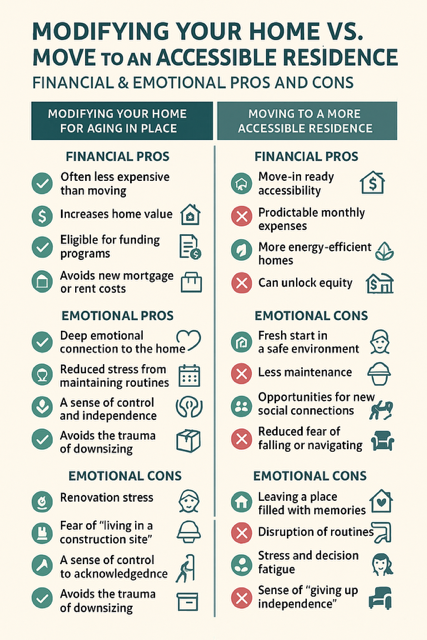
 

modify your home to age in place or move graphic


WHEN DECIDING TO MODIFY YOUR HOME


Financial Pros

  • Often less expensive than moving
    Many accessibility upgrades—grab bars, curbless showers, widened doors, ramps, and lighting upgrades—cost far less than the combined cost of selling a home, purchasing another, and moving.

  • Increases home value
    Aging-in-place features and Universal Design elements make the home appealing to a growing demographic of older buyers.

  • Eligible for funding programs
    Local grants, tax credits, VA programs, and long-term care insurance may cover certain home modifications.

  • Avoids new mortgage or rent costs
    Particularly powerful for homeowners with a paid-off home, modifications protect financial stability.

Financial Cons

  • High upfront costs for major renovations
    Structural changes—bathroom expansions, foundation adjustments, lifts, or extensive electrical work—can cost tens of thousands.

  • Unexpected issues in older homes
    Hidden plumbing, mold, electrical, or foundation problems can add surprise expenses.

  • Limited return on investment if poorly designed
    Non-professional or temporary fixes may not add value and can require re-work later.


Emotional Pros

  • Deep emotional connection to the home
    People feel grounded in familiar surroundings filled with memories, traditions, and comfort.

  • Reduced stress from maintaining routines
    Same neighbors, same grocery store, same church… minimal disruption.

  • A sense of control and independence
    Modifying your environment supports dignity and self-reliance.

  • Avoids the trauma of downsizing
    Keeping belongings and sentimental items reduces emotional strain.

Emotional Cons

  • Renovation stress
    Noise, dust, delays, and disruptions can be overwhelming—especially for older adults.

  • Fear of “living in a construction site.”
    Some people experience anxiety about change or giving up control of their home.

  • Emotional resistance to acknowledging decline
    Accepting modifications like grab bars can feel like admitting vulnerability.


🏡 MOVING TO A MORE ACCESSIBLE RESIDENCE

Financial Pros

  • Move-in ready accessibility
    Certified accessible homes, senior-friendly apartments, or modern new builds can minimize renovation costs.

  • Predictable monthly expenses
    Especially in 55+ communities or accessible rentals where maintenance is included.

  • More energy-efficient homes
    Lower utility bills, smart-home systems, and modern construction reduce long-term costs.

  • Can unlock equity
    Selling a high-value home may free up cash for retirement, caregiving, or medical expenses.

Financial Cons

  • High costs of moving
    Realtor fees, packing, movers, new furnishings, deposits, and closing costs add up quickly.

  • Accessible homes can be scarce and expensive
    Fully barrier-free homes are not widely available—especially in desirable neighborhoods.

  • Recurring HOA, rent, or community fees
    Some 55+ or accessible communities have costly monthly dues.

  • Loss of property tax advantage
    Moving may eliminate caps or senior exemptions tied to the original property.


Emotional Pros

  • Fresh start in a safe environment
    A new home designed for accessibility can offer peace of mind and renewed confidence.

  • Less maintenance
    Especially appealing for older adults tired of repairs, yard work, or upkeep.

  • Opportunities for new social connections
    Many communities offer activities, wellness programs, and built-in support.

  • Reduced fear of falling or navigating unsafe spaces
    Purpose-built accessibility improves daily comfort.

Emotional Cons

  • Leaving a place filled with memories
    For many, it feels like losing a part of their identity.

  • Disruption of routines and community
    Friends, neighbors, doctors, and landmarks change all at once.

  • Stress and decision fatigue
    Packing, downsizing, and touring homes can be emotionally draining.

  • Sense of “giving up independence.”
    Some older adults perceive the move as a loss of autonomy.


🎯 The Bottom Line


Modifying is best when the home has a good layout, strong structural integrity, and emotional attachment is high.
Moving is best when the current home cannot be safely or affordably adapted—or when a fresh start brings more peace than renovation.


“Should You Stay and Modify, or Should You Move? A Quick Decision Checklist.”


 Quick Decision Checklist

Use this checklist to help determine whether staying in your current home—or moving to a more accessible one—is the safest, most practical, and most emotionally supportive choice.


1. Safety & Accessibility

Is your current home safe to navigate today?

  • ☐ I can enter and exit the home without difficulty

  • ☐ Hallways, bathrooms, and doorways are wide enough

  • ☐ I can shower/bathe safely

  • ☐ Lighting is adequate and glare-free

  • ☐ Stairs, steps, or thresholds are becoming difficult

  • ☐ I have had a recent fall or near-fall

If several boxes are unchecked → Consider moving or modifying.


🏗️ 2. Feasibility of Modifications

Can your current home be realistically and affordably adapted?

  • ☐ Bathrooms can be expanded or remodeled

  • ☐ A curbless shower can be installed

  • ☐ Ramps or lifts are possible in the current layout

  • ☐ The home has space for a main-level bedroom

  • ☐ Structural limitations are minimal

  • ☐ Estimated costs are within budget

If modifications are extensive or require major structural changes → Moving may be more practical.


💰 3. Financial Considerations

Which option best supports long-term financial stability?

  • ☐ My home is paid off or affordable to maintain

  • ☐ Renovation costs are manageable

  • ☐ Moving costs (closing, commissions, deposits) are acceptable

  • ☐ A new accessible home is within my price range

  • ☐ Monthly HOA or rental fees are reasonable

  • ☐ My current home has strong resale value

If renovation costs exceed 30–40% of the home’s value → Moving may be the financially smarter choice.


❤️ 4. Emotional Well-Being

How do you feel about staying vs. moving?

  • ☐ I feel deeply attached to the home and neighborhood

  • ☐ I enjoy my routines, neighbors, and surroundings

  • ☐ The idea of moving feels stressful or overwhelming

  • ☐ I feel excited at the thought of a fresh, safe, low-maintenance home

  • ☐ Downsizing feels manageable

  • ☐ Staying brings me comfort and stability

If staying contributes to emotional stability → Modifying may be better.
If staying causes daily stress or fear of falling → Moving may feel freeing.


🧩 5. Support, Care, and Daily Needs

Does your current home support the help you need—now and later?

  • ☐ Family or caregivers can access my home easily

  • ☐ Medical equipment can be accommodated

  • ☐ Kitchen and laundry are easy to reach

  • ☐ Transportation, grocery stores, and medical offices are nearby

  • ☐ Community support (church, neighbors, friends) is close

  • ☐ A new accessible home would improve access to services

If support networks are stronger elsewhere → Moving may be the better long-term solution.


Summary 

  • Stay & Modify your home if safety concerns are easily fixable, costs are reasonable, and emotional attachment is strong.

  • Move if the home cannot be made safe, modifications are too expensive, or another home offers greater independence and peace of mind.

 

Certified Aging In Place Specialist


T-Square Company — Austin, TX

David L. Traut, CAPS #1636580, owner/president

512-444-0097

Accessible Remodeling • Universal Design • Aging-in-Place

Let’s make your forever home work beautifully for you—now and for years to come.
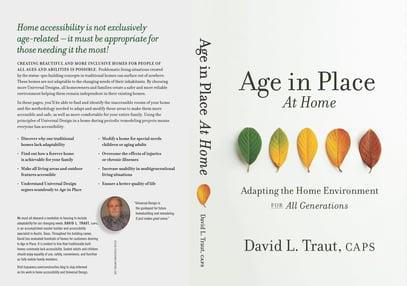
Age in Place at Home Book


David is part of a select group of professionals nationwide who have earned the Certified Aging in Place Specialist (CAPS) designation.

This certification, offered through the National Association of Home Builders (NAHB) in collaboration with AARP, recognizes remodelers and builders trained to meet the unique needs of older adults and individuals with disabilities. David is an Aging in Place specialist and is an active member of The National Aging in Place Council (NAIPC).

David is also certified in Universal Design in both the United States and Australia.  Drawing on decades of expertise, he recently published Age in Place at Home: Adapting the Home Environment for All Generations, a comprehensive guide that explores the role of Universal Design in creating safe, accessible homes.

📘 Age in Place at Home takes readers room by room, explaining practical modifications that enhance safety, accessibility, and independence. The book is available now on Amazon.




Tags: aging in place remodeling, aging in place, aging in place designs, Universal Design,, aging in place services, certified aging in place specialist, age in place home design, Age in Place at Home, disability and special needs contractors in Austin, senior living at home, senior home safety, caregiver resources, forever home planning, aging in place decisions, modify or move, home modifications for seniors

Why Undergo A Home Edit?/Contact T-Square Company In Austin, Texas

Posted byDavid L. Traut, CAPS on Tue, Sep 05, 2023 @ 08:09 AM


Human problems must be solved using correct design changes. The principles of Universal Design solve accessibility issues for the most significant number of people. Special needs children, people who have become seriously injured, people living with a debilitating disease, people with sensory limitations or intellectual limitations, and last but not least, the people who are planning to stay in their homes for as long as possible while Aging in Place all benefit from accessible homes. The need to provide for disabilities during elder construction or home modifications for special needs children empowers us to create environments wherein people can function effectively. As our society evolves away from institutionalized care, editing and making a home more comfortable and aesthetically pleasing for children, older adults, and their visitors benefits the comfort and lifestyle of the entire family. By the way, how are you planning for your future when it concerns editing your existing home which may no longer fit your family's evolving needs?

Increase Your Accessibility

Let's start by defining what is meant by a home edit intended to accentuate an accessible home. First of all, it's main purpose is to increase organizational skills and to reduce clutter which promotes home safety and lifestyle trends. It produces a home that is more visually appealing, efficient, and functional. Going further, the identification and removal of a home's architectural barriers using Universal Design home modifications completes the need for safety and independence promoting a healthy living environment. Forward-thinking homeowners, in turn, experience a better quality of life from the benefits of a home edit. Finally the accessible home stands as the defined course for a Universal Designed home. In these edited accessible homes, performing as a Universal Design contractor, T-Square Company in Austin, Texas identifies a home's architectural barriers and removes them during a design/build remodel to increase safety and independence.  Accessible homes of Austin, or anywhere else for that matter, provide homeowners with a means to stay healthy, independent, and safe. People exhibiting any form of disability can live comfortably as well as fully functional individuals.

Certified Aging In Place Specialist 

Tweet and understand this fact of life!  Accessible homes will be needed by everyone at some uncertain time within their life. This edit or change can be prompted for ourselves, a family member, or a visitor. This action defines the Aging in Place concept and its associated CAPS accreditation, a nationally registered credential offered through the NAHB.  Its function is to keep people in their homes longer and provide safety and independence to all homeowners. What is more, Universal Design segues seamlessly into Aging in Place.

Discover the Principles Of Universal Design


ADA_kitchen_5
 
 
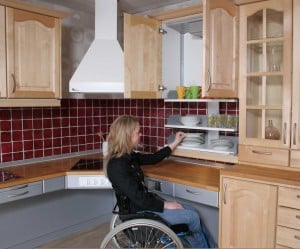
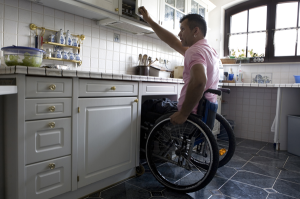
For instance, as in the above photograph, the wheelchair accessible kitchen is comfortably sized for a clear five-foot turning radius to avoid backing up for any approach. Clear 30x48-inch approach areas for all work areas and appliances are a significant part of the more-open design. The final kitchen design is tailored to the homeowner's abilities, needs, and interests. Universally, pull-out shelves expand workspaces at activity centers, while roll-under access is present underneath the stove, prep, and sink work areas. A higher and deeper base cabinet kick space area of 6x9 inches provides better forward wheel clearance for the wheelchair, enabling the user to get closer to the cabinet workspace. A raised dishwasher offers greater access for sight and reach distances to dishes, and lowered microwaves along with other appliances like ovens solve additional reach distance problems making it easier to live with a disability. Open storage areas without doors to interfere with access is a better solution. Having multiple countertop heights allows everyone universal access to a chosen work surface. A successfully designed kitchen isn't about cabinet style or the composition of the countertop. It is more about the ways the design can support the user's personal needs and functionality.
 
ADA Kitchen Cabinetry

Because everyone ages differently and has different needs and wants over time, a universal solution providing a design for all is needed. The factors that constitute the Aging in Place market for individuals is based on their genetic makeup and lifestyle, including their choices chosen while living and their living environment. These factors have brought about the need for Universal Design. This process is the design of products, services, and environments usable by as many people as possible regardless of age, ability, or situation avoiding future adaptation or specialized alterations. It provides the most significant safety and access for home guests or occupants and is undetectable when done well. Since so few homes share the accessibility offered by Universal Design, to satisfy the needs of a particular household member brought about by an accident, an illness, or simply the aging process, there will always be a need for customized and prudent accessibility features.  A seasoned CAPS-accredited remodeling professional has the ability to accomplish this desire by producing a truly safe and functional design. This same competent design/build home remodeling company that understands and practices Aging in Place home modifications should accomplish the work according to the principles of Universal Design ensuring your family's safety and accessibility. Certified Aging in Place specialists are listed in Washington on the NAHB CAPS website.

Home Accessibility Help

The concept of the accessible home has evolved beyond the basic grab bars and ramps to one in which accessibility is built into the basic design.  Universal Design makes living in a home easier for people of all ages and abilities.  Accessible design is beautiful and functional and never needs to have any institutional appearance.  As our aging baby boomer population ages, the need for accessibility in the home is becoming ever more critical. Our new way of viewing the basic home in our society coupled with our antiquated architecture is giving way to a revolution in home design. Ordinary homeowners with extraordinary challenges can partner up with CAPS design professionals, architects, and their own families to create homes to restore capabilities, independence, and grace to daily living.

 
Aging in Place home modifications incorporating Universal Design principles are available through T-Square Company in the Austin area. We have an A-plus rating with the local BBB and have over 30 years of accessible remodeling experience. We are additionally an accredited Aging in Place specialist offering complete aging in place services. Each design/build project is customized around your personal needs. We increase your accessibility using Universal Design principles. Call 512-444-0097 today to begin the accessible second chapter of your life while remaining safe and secure in your existing home. 
 
David L. Traut, CAPS (#1636580)
 
As an answer to his clients requests over the years, David has recently published a book entitled "Age in Place at Home: Adapting the Home Environment for All Generations". The book reflects on thirty years of accessibility improvements and identifies why our traditional homes specifically lack this very basic need. It is available on Amazon and stands as a reference book for increasing home accessibility using the principles of Universal Design in every room of the home. Order your copy today.
 
Accessible Homes Of Austin


Tags: how-to, ADA compliant kitchen cabinets, ADA bathroom cabinets accessible routes, CAPS, aging in place home modifications, aging in place home improvements in Austin, wheelchair accessible remodeling, wheelchair accessible baths and kitchens, handicap home modifications, ADA bathroom cabinets, disability bathroom remodels, handicap accessible bathrooms, aging in place construction, accessibility home remodeling in Austin, Austin bathroom remodel, Austin kitchen remodeling, Austin kitchen remodel, disability bathroom remodeling in Austin, universal design/build, universal design/build ideas, universal designbuilding for the future, what is universal design, wheelchair accessible home remodeling in Austin, universal design remodeling techniques, universal design remodeling contractor, universal design building contractor, universal design principles, 7 principles of universal design, universal principles of design, disability contractor in Austin, special needs contractor in Austin, senior home modifications in Austin, universal design/build contractor, what is universal design in Austin, special needs contractor, universal home design in Austin, universal kitchen design, universal design home additions, universal design building consultant, disability and special needs in dripping springs, disability and special needs contractors in Austin, universal design forever homes, Universal design construction, Universal Design for Disabilities, universal design and accessibility in Austin

Aging In Place Specialist David L. Traut, CAPS in Austin

Posted byDavid L. Traut, CAPS on Mon, Apr 24, 2023 @ 07:04 AM

If you have made a decision, along with the support of your family, to remain in your existing home while you Age in Place, you must determine a definite pathway forward to ensure your desires are successfully met. This is a sign of the times as today over 80% of homeowners share your desire to remain in their familiar home, surrounded by familiar surroundings and neighbors. Amongst any caregivers involved in your life, you will also need to obtain help from a trained and seasoned Certified Aging in Place Specialist.

Fortunately, construction and design professionals are taking advantage of the CAPS training across the nation. This designation is taught through the National Association of Home Builders in collaboration with AARP. CAPS connects responsible professionals with home owners who need these services on an ever-increasing basis. CAPS stands for Certified Aging in Place Specialist. It is a construction credential that has builders, architects, remodelers, designers and even occupational therapists buzzing. Aging in Place principles are changes designed to custom fit your existing home to you and your family's needs as time goes by. CAPS design takes your current and future circumstances into consideration and the principles focus on elegant, aesthetically enriching, barrier-free environments. Home modifications do not need to look institutional and this is why many seniors are resisting the very changes that can help them the most. Be aware, the vast majority of uncertified builders and remodelers do not have the knowledge and training to perform home modifications for Aging in Place. Take for instance when you are considering installing a grab bar, which seems like a simple endeavor, understand that a run of the mill contractor or handyman has no idea of the safety regulations involved or the knowledge concerning where and how to install the grab bar. This leaves the consumer in an unsafe predicament. However, if performed correctly, any modifications will actually increase the value of your home because they appeal to multiple generations of home buyers. 

David L. Traut, CAPS the owner of T-Square Company in Austin, Texas is one of the select group of professionals to earn the Certified Aging In Place Specialist (CAPS) designation, identifying him as a home remodeler and builder with the skills and knowledge necessary to remodel or modify a home to meet the unique needs of the older population, disabled owners, or their visitors. T-Square Company offers a full compliment of Aging in Place services for their clientele. These services include the initial home assessment, a design followed by a detailed drawing, all city permits and fees, and the construction or remodeling work involved. David has been successfully operating as a CAPS professional for nearly thirty years while performing his design/build projects. His clients include many members of the private sector, the VA, and HUD. David is a CAPS certified remodeler and master builder providing a one-stop-shop which is even more valuable to anyone wanting to Age in Place. As a master craftsman, his construction knowledge enables any Aging in Place design to come to fruition via practicality and best practices. 

Certified Aging In Place Specialist

David always practices what he preaches to his clients. He takes an inductive qualitative research approach with every client, because everyone has diverse physical needs. As an answer to his clients requests over the years, he has recently published a book entitled "Age in Place at Home: Adapting the Home Environment for All Generations". The book reflects on thirty years of accessibility improvements and identifies why our traditional homes specifically lack this very basic need. It is available on Amazon and stands as a reference book for increasing home accessibility using the principles of Universal Design in every room of the home. David is certified in the United States and Australia in the Universal Design process. Universal Design elements can be installed into a home at any time avoiding the need for reactive remodeling following a health crisis. This thoughtful proactive design process segues seamlessly into what is required for Aging in Place. Furthermore, Universal Design prevents the need to perform future modifications except under extreme circumstances. The presence of Universal Design provides access for both wheelchairs and walkers and perhaps avoids future injuries because you have accessibility. 

Discover the Principles Of Universal Design

For additional information about the CAPS program, visit nahb.org/CAPS.  For more information about T-Square Company, visit www.tsquareco.com or call 512-444-0097 to schedule a home assessment by a local Austin CAPS professional.

So, just exactly what takes place once you schedule a home assessment? During the home assessment for increasing accessibility, the structural changes needed for the client will be noted and documented through sketches, photos, and conversation. CAPS professionals are generally paid by the hour or receive a flat fee per initial visit or project because they are offering a service backed by education and experience. Typically an assessment takes approximately 60-90 minutes. It’s best if you or a family member can accompany the CAPS professional during the home safety assessment, as you or they can ask questions about specific safety items as they come up. The comprehensive Home Safety Assessment determines a direct and safe path forward for you, the client. You will have a better chance of avoiding the high cost and physical disruptions of future injuries leading to assisted living. All the surroundings within your home will be taken into account from the flooring to the layout of a specific room or location as it pertains to the your ease of use. Your physical and emotional needs also come into play because of mobility, sensory, or cognitive concerns. The goal is to modify the home in a custom manner to provide for your maximum health, independence, and safety. Often the input from any caretakers like a physical or occupational therapist during the assessment phase can prove to be invaluable. The three main rooms involved in Aging in Place home modifications are the bathroom, the kitchen, and the family room in that order. The basic needs involve access through wider doorways, level non-slip floor surfaces, and lower cabinets with plumbing fixture accessibility like roll-under sinks with easily operated lever controls. 

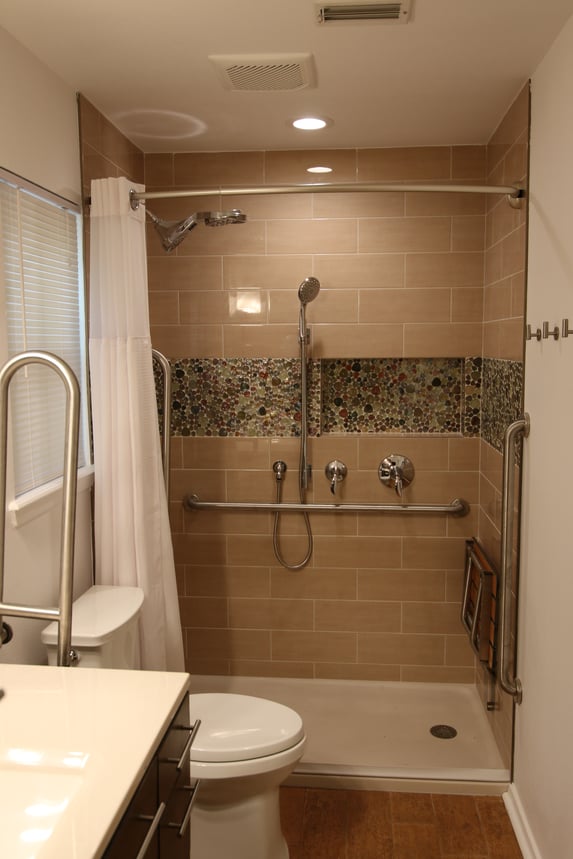
Aging in Place Bathroom Modifications in Austin

Aging in Place Bathroom Modifications in Austin

Quite often it is the home that presents the greatest difficulties for homeowners accompanied by limited mobility or other physical impairments as they age in their existing surroundings. Designing for specific physical conditions will lessen the impact of arthritis, restricted mobility, or loss of vision by using combinations of products, concepts, and techniques available today. Keeping safety in mind, interior modifications commonly include adding grab bars or handrails throughout the home, installing ramps or vertical platform lifts, lowering upper cabinets and countertops to Universal Design heights, adding non-slip flooring, widening hallways or installing stairlifts, and widening doors. You might also consider lowering light switches and thermostats and installing easier-to-use door levers or electric door openers. Try to provide a clear barrier-free path or accessible route to the most visited areas of your home like a disability access bath containing a roll-in ADA compatible shower, the kitchen, and the family room.


Download Our Free Aging In Place Remodeling Considerations Checklist


Tags: barrier free access, CAPS certification, CAPS certified remodeling in Austin, aging in place construction, CAPS remodeling techniques, disability home remodeling in Austin, aging in place services, aging in place design,, elder construction, certified aging in place specialist, Austin elder construction, handicap home modifications for disabled, handicap remodeling contractors, roll in showers, handicap bathrooms, universal design/build, Austin Accessibility Design, Austin senior living solutions, Austin accessible home remodeling, certified aging in place consultant in Austin, bathroom modifications for disabled in Austin, TX, aging in place specialist in Austin, senior aging in place services, home modifications for children with disabilities, what does it mean to age in place, aging in place home remodeling, home remodeling for disabled in Austin Texas, wheelchair accessible home remodeling in Austin, austin texas wheelchair accessible showers, home remodeling for seniors Austin, Austin Senior Home Remodeling, remodeling for elders in Austin, disability and special needs contractor Austin, bathrooms with disability access in Austin, Texas, Austin disability contractors for special needs, Austin handicap bathroom contractor, handicap accessible remodeling, barrier free remodeling, handicap accessible bathroom remodeling, handicap accessible home renovations, handicap accessible home modifications, disability remodeling, handicap accessible bathroom remodel, Austin aging in place specialist, what is aging in place, Age in Place at Home, Disability Remodeling Services in Austin, Texas, disability and special needs contractors in Austin, universal design and accessibility in Austin, Barrier-free designs, forever home, home accessibility help

Universal Design and Accessibility/T-Square Company in Austin

Posted byDavid L. Traut, CAPS on Fri, Oct 07, 2022 @ 10:10 AM


Human problems must be solved using correct designs. The principles of Universal Design solve accessibility issues for the most significant number of people. Special needs children, people who have become seriously injured, people living with a debilitating disease, people with sensory limitations or intellectual limitations, and last but not least, the people who are planning to stay in their homes for as long as possible while Aging in Place all need accessible homes. The need to deal with disabilities during elder construction or modifications for special needs children empowers us to create environments wherein people can function effectively.  As our society evolves away from institutionalized care, making a home more comfortable for children, older adults, and their visitors can immediately benefit the comfort and lifestyle of the entire family. How are you planning for your future when it concerns your home?

Let's start by defining what is meant by an accessible home.  Accessible homes of Austin or anywhere else provide homeowners with a means to stay healthy, independent, and safe. They, in turn, experience a better quality of life. In these accessible homes, as a Universal Design contractor, any architectural barriers have either been removed during remodeling or were never a part of the design for increasing accessibility. The accessible home stands as the defined course for the Universal Designed home. People with disabilities can live comfortably and safely as well as fully functional individuals.

Certified Aging In Place Specialist 

  Tweet and understand this fact of life!  Accessible homes will be needed by everyone at some uncertain time, whether for ourselves, our family members, or our guests.  This defines the Aging in Place concept and its associated CAPS accreditation, a nationally registered credential offered through the NAHB.  Its function is to keep people in their homes longer and provide safety and independence to all homeowners. What is more, Universal Design segues seamlessly into Aging in Place.

Discover the Principles Of Universal Design


ADA_kitchen_5
 
 
As in the kitchen in the above photograph, the accessible kitchen is comfortably sized for a clear five-foot turning radius to avoid backing up for an approach. Clear 30x48-inch approach areas for all work areas and appliances are a significant part of the more-open design. The final kitchen design must be tailored to the homeowner's abilities, needs, and interests.  Pull-out shelves expand workspaces at activity centers, while roll-under access is given underneath the stove, prep, and sink work areas. A higher and deeper base cabinet kick space area of 6x9 inches provides better forward wheel clearance for the wheelchair, enabling the user to get closer to the cabinet workspace.  A raised dishwasher offers more accessible access to dishes, and lowered microwaves and other appliances like ovens solve other reach distance problems making it easier to live with a disability. Open storage areas without doors to interfere with access is a better solution. Having multiple countertop heights allows everyone access to a work surface. A successfully designed kitchen isn't about cabinet style or the composition of the countertop. It is more about the ways the design can support the user's personal needs and functionality.
ADA Kitchen Cabinetry

Because everyone ages differently and has different needs and wants, a universal solution acting as a design for all is needed. The factors that constitute the Aging in Place market for all individuals are based on their genetic makeup and lifestyle, including their choices while living and their environment.  These factors have brought about the need for Universal Design. This is the design of products, services, and environments usable by as many people as possible regardless of age, ability, or situation without needing adaptation or specialized alterations. It provides the most significant safety and access for home guests or occupants and is undetectable when done well.  Since so few homes share the accessibility offered by Universal Design, to satisfy the needs of a particular household member brought about by an accident, an illness, or simply the aging process, there will always be a need for customized accessibility features.  A CAPS-accredited remodeling professional will accomplish this by producing a truly functional design. This same competent design/build home remodeling company that understands and practices Aging in Place home modifications in Austin should accomplish the work to fit the Universal Design and ensure your safety and accessibility.  Certified Aging in Place specialists is listed in Washington on the NAHB CAPS listing.

Home Accessibility Help

The concept of the accessible home has evolved beyond the basic grab bars and ramps to one in which accessibility is built into the basic design.  Universal Design makes living in a home easier for people of all ages and abilities.  Accessible design can be beautiful and functional and never needs to have any institutional appearance.  As our aging baby boomer population ages, the need for accessibility in the home is becoming ever more critical.  Our new way of viewing the basic home in our society and our antiquated architecture is giving way to a revolution in home design.  Ordinary homeowners with extraordinary challenges can partner up with CAPS design professionals, architects, and their own families to create homes to restore capabilities, independence, and grace to daily living.

 
Aging in Place home modifications incorporating Universal Design principles is available through T-Square Company in the Austin area. We have an A plus rating with the local BBB and have over 30 years of remodeling experience. We are additionally an accredited Aging in Place specialist offering complete aging in place services.  Each design/build situation will be customized to fit your personal needs increasing your accessibility through Universal Design. Call 512-444-0097 today to begin the accessible second chapter of your life while remaining safe and secure in your existing home. 
 
David L. Traut, CAPS (#1636580)
 
Accessible Homes Of Austin


Tags: Austin, Texas, how-to, ADA compliant kitchen cabinets, ADA bathroom cabinets accessible routes, CAPS, aging in place home modifications, aging in place home improvements in Austin, wheelchair accessible remodeling, wheelchair accessible baths and kitchens, handicap home modifications, ADA bathroom cabinets, disability bathroom remodels, handicap accessible bathrooms, aging in place construction, accessibility home remodeling in Austin, Austin bathroom remodel, Austin kitchen remodeling, Austin kitchen remodel, disability bathroom remodeling in Austin, universal design/build, universal design/build ideas, universal designbuilding for the future, what is universal design, wheelchair accessible home remodeling in Austin, universal design remodeling techniques, universal design remodeling contractor, universal design building contractor, universal design principles, universal principles of design, disability contractor in Austin, special needs contractor in Austin, senior home modifications in Austin, universal design/build contractor, what is universal design in Austin, special needs contractor, universal home design in Austin, universal kitchen design, universal design home additions, universal design building consultant, disability and special needs in dripping springs, disability and special needs contractors in Austin, universal design forever homes, Universal design construction, Universal Design for Disabilities, universal design and accessibility in Austin

Disability Contractors For Special Needs in Austin

Posted byDavid L. Traut, CAPS on Thu, Sep 22, 2022 @ 10:09 AM

Perhaps you have or have taken in a special-needs child as a grandparent. Or an aging parent who endured a life-changing accident or illness has come to live with your family. Or perhaps you have a family member who suffers from a progressive condition like MS or ALS needing home alterations to ease the effects of the disability. In all these situations, the help offered by a CAPS-certified Aging in Place home remodeling contractor comes into play.  This is the only way to ensure safety and mobility for the homeowner or family member requiring the home modifications.  Furthermore, modifications of existing homes are important because people aged 50 and older want to remain in their current homes for as long as possible.  Aging in Place home modifications in Austin should only be done by a nationally listed CAPS-certified remodeling company.  This is the only way you can be assured that the home modifications are the right choices to satisfy your needs.  There is no need to waste money only to discover that an inexperienced and unqualified remodeling company did the wrong alterations.

T-Square Company in SW Austin, Texas, is an accomplished accessibility construction company and disability contractor for any whole house special needs revisions or a handicap accessible bathroom remodel.  Accessible wheelchair designs in Austin are available through T-Square Company. T-Square Company has over three decades of home accessibility experience. David L. Traut, the owner and president of T-Square Company, is an experienced accessibility specialist and has successfully worked with people of all ages with a disability. Each design/build project is customized specifically to the customer's needs. Call 512-444-0097 today to begin the accessible second chapter in your or your family's life while remaining safe and secure in your existing home (CAPS 1636580).  All registered CAPS program graduates and their remodeling companies will be listed in a national registry in Washington.  The information can be found by simply visiting nahb.org/CAPS.

Certified Aging In Place Specialist

Disability is a complex phenomenon representing an interaction between one's physical impairments, the activities one needs to perform, and the architectural barriers within the space in which this situation occurs. Each individual demonstrates the complexity with similar impairments describing his or her limitations differently. The blind don't experience their world the same as a person with deafness. Some of our societal statistics that weigh into Aging in Place situations include reports stating that 19% of the population between the ages of 16 and 64 and 42% of those of us 65 and over have a physical disability affecting the activities of their daily lives. 

Making your home accessible for a special-needs child will give your entire family a feeling of security and freedom. Your child with the disability will become more comfortable and be able to maneuver through and use the home more safely. They will be able to develop the life skills they need in their daily environment rather than just focusing on treatment. Sometimes, the living environment must be changed to impact the child's life significantly.

Home Accessibility Help

Physical limitations affect many more people than the daily users of walkers and wheelchairs.  Many members of our life experienced or elder society has significant problems dealing with their home environment. Exceptional circumstances have brought about special needs in the home for many young and old people. Today's conventional building standards conflict with most people's accessibility when considering our created architectural barriers concerning cabinetry and door opening widths, individual strength, range of motion, movement, manual dexterity, balance, and coordination. Once the demands of our built environment exceed their capacities, we become excluded from a room or even the entire home, bringing forth the need for elder construction and remodeling.  The situation holds true for children with special needs. The building world must work in unison to be sure the entire living environment meets basic needs in addition to affordability and structural integrity for the consumer and homeowner.  This includes the home and the components within the home being accessible to all inhabitants.  Privacy, a sense of belonging, a sense of control, and the sense of safety and security make up the quality of life for any home and should be considered for any design.  

The concept of the accessible home has evolved beyond the basic grab bars and ramps to one in which accessibility is built into the basic design.  Everyone ages differently and has different needs and wants. These factors have brought about the need for Universal Design. This is the design of products, services, and environments usable by as many people as possible regardless of age, ability, or situation without needing adaptation or specialized alterations.  It provides the most significant safety and access for home guests or occupants and is undetectable when done well. The principles of Universal Design enable living in a home with more comfort and adaptability for people of all ages and abilities.  Accessible home remodeling for the disabled can be beautiful and functional and never needs to have any institutional appearance.  As our aging baby boomer population ages, the need for accessibility remodeling in the home is becoming ever more important.  Our new way of viewing the basic home in our society and our antiquated architecture is giving way to a revolution in home design.  Ordinary homeowners with extraordinary challenges can partner up with CAPS design professionals, architects, and their own families to create homes to restore capabilities, independence, and grace to daily living. Fortunately, there is home accessibility help in Austin, Texas, offered by T-Square Company. T-Square Company specializes in home disability access for any age resident with special needs. They offer a complete assortment of disability services to help cushion and adapt to any disability. Wider entries and hallways, accessible bathrooms and showers, accessible kitchens, ramped entrances, vertical platform lifts, stair lifts, elevators, and accessible rooms of any type are just a few of the services we offer. Every design is based on your specific needs and abilities.

Discover the Principles Of Universal Design


ADA Kitchen With Wheelchair Access

Increase Your Accessibility

Tags: aging in place home modifications, aging in place home improvements in Austin, wheelchair accessible baths and kitchens, handicap home modifications, ADA remodeling, disability bathroom remodels, handicap accessible bathrooms, aging in place designs, wheelchair accessible baths, accessibility home remodeling in Austin, CAPS certification holder in Austin, disability home remodeling in Austin, disability bathroom remodeling in Austin, certified aging in place specialist, disability home modifications in Austin, remodel bathroom for handicap Austin Texas, handicap home modifications for disabled, handicap remodeling contractors, disability home modifications, accessibility remodelers in Austin, wheelchair accessible showers in Austin,, roll in showers, handicap bathrooms, disability remodeling in Austin, universal design/build ideas, Austin Accessibility Design, Austin senior living solutions, Austin accessible home remodeling, certified aging in place consultant in Austin, aging in place design in Austin, senior aging in place services, home remodeling for disabled, home remodeling for disabled in Austin Texas, austin texas wheelchair accessible showers, Austin Senior Home Remodeling, disability contractor in Austin, special needs contractor in Austin, disability and special needs contractor Austin, senior home modifications in Austin, Austin disability contractors for special needs, disability and special needs contractors in Austin, universal design forever homes