The bathroom is the most dangerous room in the home for older adults. Wet surfaces, tight spaces, and the need to transfer between standing and sitting create a perfect storm for falls. Fortunately, a few targeted upgrades can dramatically improve safety and confidence.
Why bathrooms are high risk Slips often occur while stepping into a tub, standing from a toilet, or reaching for balance on towel racks that aren’t designed to support weight. Aging joints and slower reaction times increase the danger.
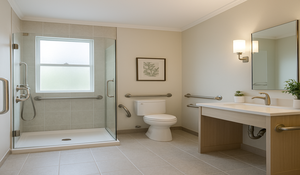
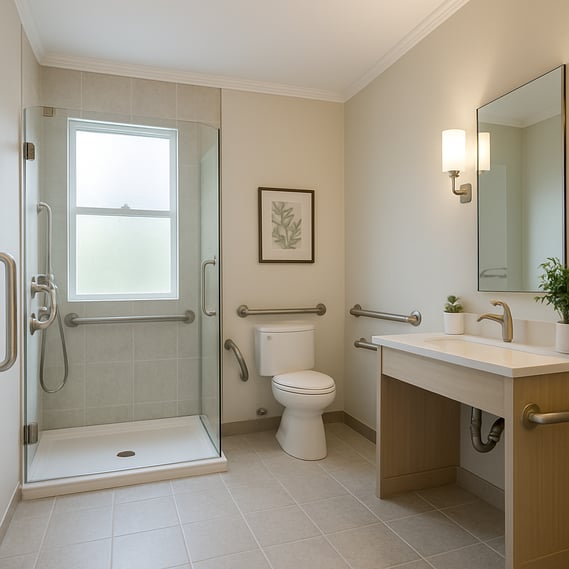
Essential bathroom safety upgrades Grab bars are one of the most effective improvements when installed correctly near toilets and in showers. Walk-in showers reduce the need to step over high tub walls, while non-slip flooring provides traction even when wet. Comfort-height toilets and shower seats further reduce strain.
Walk-in showers vs walk-in tubs Walk-in showers offer easy access and quick use, making them ideal for daily routines. Walk-in tubs provide soaking benefits but can be costly and take time to fill and drain, creating problems with hydrothermia for some bathers. The best choice depends on mobility and lifestyle.
Cost vs value Bathroom safety upgrades are relatively affordable compared to hospital stays or long-term care. Even small improvements can significantly reduce fall risk.
Professional installation matters Improperly installed grab bars or flooring can be dangerous. Professional installation ensures upgrades are secure, durable, and built to last.
T-Square Company helps homeowners create safer bathrooms that support independence without sacrificing comfort or style.
At T-Square Company, a CAPS Certified Builder, we help homeowners evaluate risks and implement smart, practical safety solutions tailored to their home and lifestyle.
Let’s make your forever home work beautifully for you—now and for years to come.
David L. Traut, owner of T-Square Company, has written an Aging in Place Guide
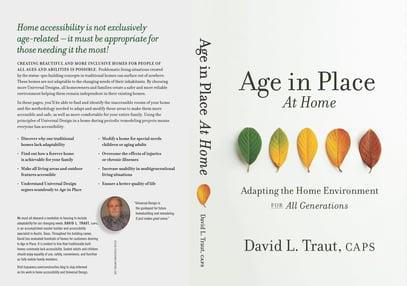
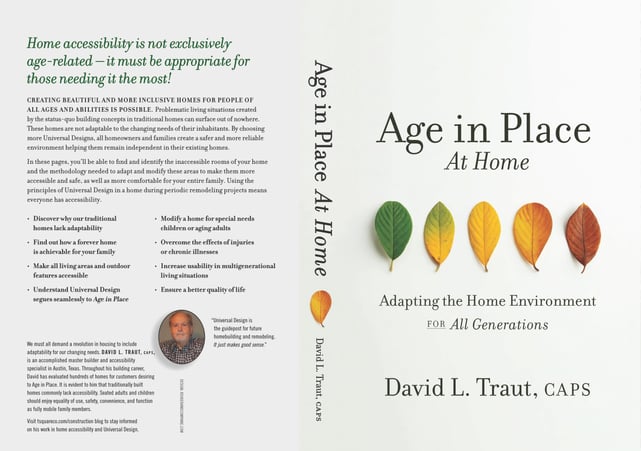
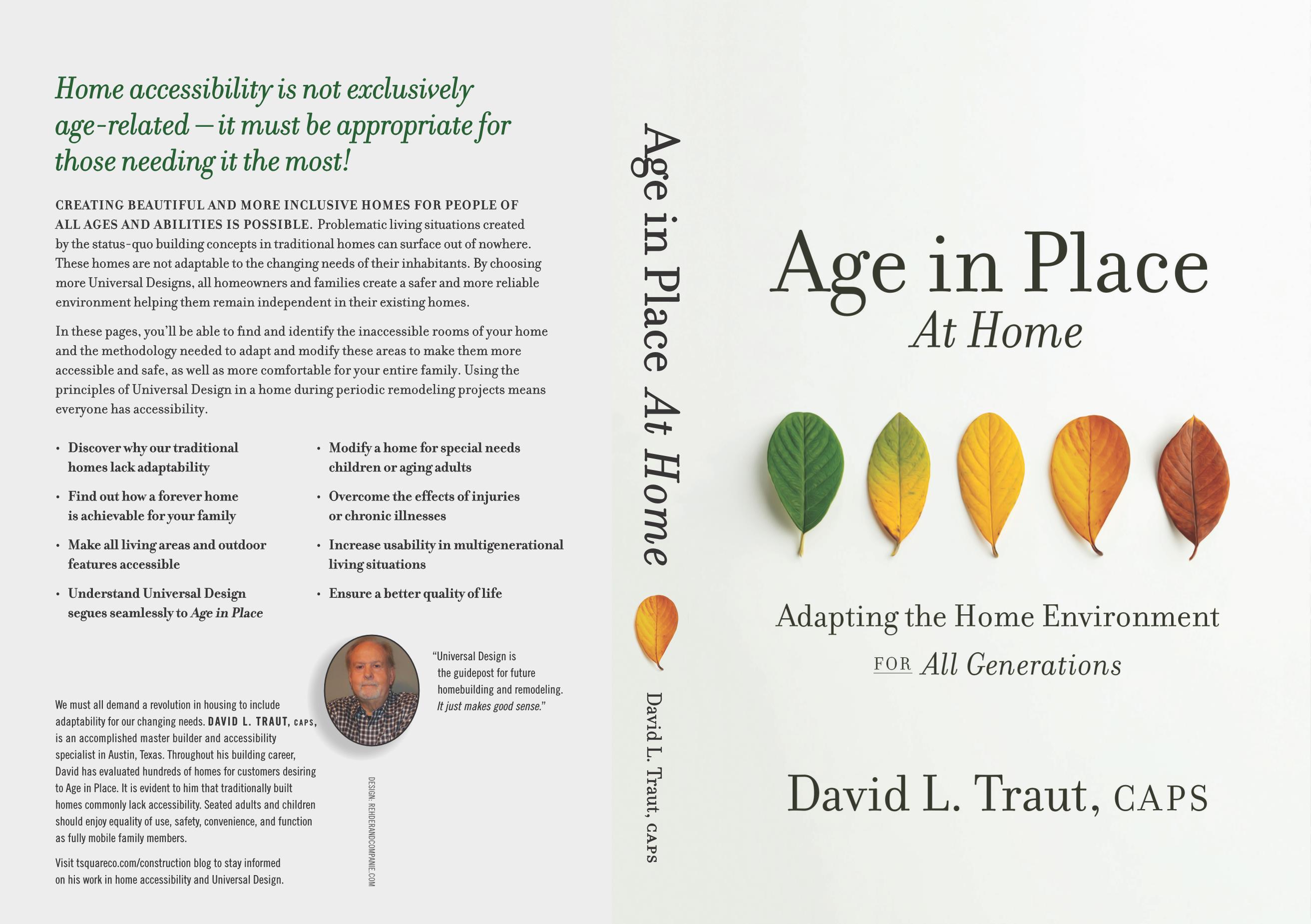
David is also certified in Universal Design in both the United States and Australia. Drawing on decades of expertise, he recently published Age in Place at Home: Adapting the Home Environment for All Generations, a comprehensive guide that explores the role of Universal Design in creating safe, accessible homes.
📘 Age in Place at Home takes readers room by room, explaining practical modifications that enhance safety, accessibility, and independence. The book is available on Amazon.
As we age, unexpected life changes—like health diagnoses or sudden falls—can make staying in our homes feel uncertain. This guide empowers challenged homeowners, families of aging or disabled loved ones, and the professionals who support them with targeted, time-saving modifications and innovations that keep people comfortable and independent at home. With practical solutions for every scenario, you'll turn your living space into a safe, accessible home-quickly and confidently.
A home that fits you—today and tomorrow—your forever home, doesn’t happen by accident. As Austin’s pace of life hums along and families plan for multigenerational living, small design choices can make a big difference in safety, comfort, and independence. At T-Square Company in Austin, we specialize in Universal Design and Aging-in-Place remodeling that blends beautiful finishes with smart, barrier-free functionality. We understand the meaning of aging in place.
Based on David Traut's background, the owner/president of T-Square Company, and as a certified aging in place specialist and designer who recognizes how the home can be reimagined as a place we grow out of, but as one that grows with us, he is providing this roadmap for clients desiring to Age in Place.
Below is a clear roadmap to help you understand the “what,” “why,” and “how” of making your Central Texas home more accessible—without making it look like a clinic.
What "Home Accessibility Modifications in Austin” Means in a Forever-home
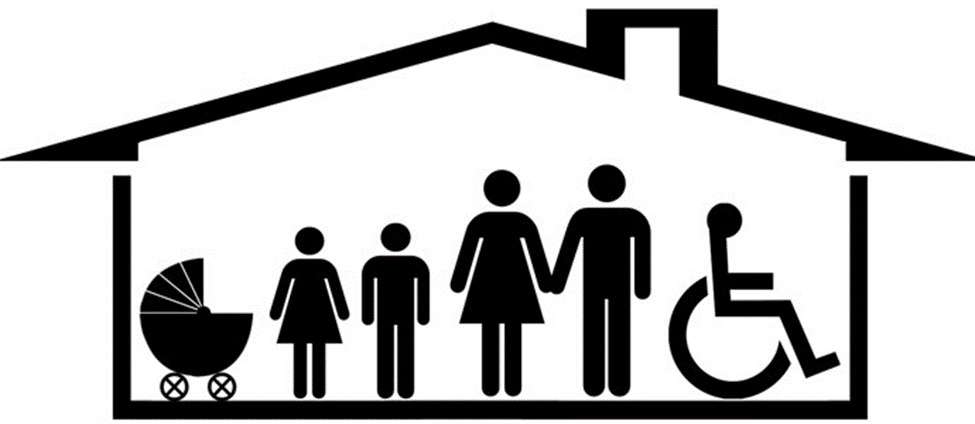
Universal Design home upgrades create spaces that work for everyone—kids, guests, aging parents, and you on your most tired day.
Aging-in-Place focuses on keeping you safely in the home you love as needs change.
ADA ≠ residential code. ADA is for public/commercial spaces. In homes, we use the principles—clearances, reach ranges, slip resistance—adapting them to residential scale and style.
Objections:
Customers fear home accessibility modifications in Austin might look “institutional” or decrease home value
Customers are worried about being scammed or sold unnecessary renovations
Clients doubt they’ll have time to manage a big project with their busy schedule
Consumers are unsure if changes can be made within their limited budget
Transformation Promise:
Empower homeowners and families to age safely and comfortably at home, using proven, practical modifications that fit any home, any budget—and give them lasting confidence and peace of mind.
Concept & Budget – align scope with investment; value-engineer options
Detailed Design – drawings, selections, fixtures, smart-home plan
Build & Protect – dust control, daily site tidiness, clear communication
Training & Handover – we show you how to use every new feature confidently
Note: Structural changes (widening openings, removing walls) may require engineering review. We handle the coordination.
Austin-Specific Considerations
Pier-and-beam vs. slab: Many older Central Austin homes sit on pier-and-beam—great for adding drains and adapting plumbing for curbless showers. Slab homes require careful planning and often a linear drain with surface slope.
Heat & glare: Add shading, low-gloss finishes, and daylight-balanced bulbs for visibility without harsh reflections.
Storm swings: Choose exterior thresholds and drainage that handle sudden downpours without creating door-dam hazards.
Start Here: The Austin Home Accessibility Audit
When we visit your home, we walk through every space you use daily and assess:
Approach & Entry
One no-step entry, stable surfaces, good drainage (key in our Hill Country rains).
Door lighting and house numbers are visible from the street.
Circulation & Doorways
Wider clear openings (target 34–36”), low or no thresholds.
Lever handles instead of knobs.
Bathroom Safety
Zero-threshold shower, non-slip tile, and blocking in walls for future grab bars.
Shower controls at the entry, bench, or fold-down seat, handheld wand.
Kitchen Function
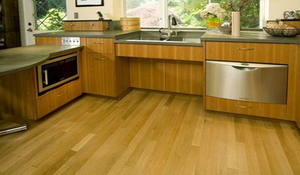
Work zones with knee space, pull-outs, drawers over doors, and reachable storage.
Induction cooking, front-edge lighting, contrasting edges for visibility.
Bedroom & Closet
Bed transfer space, rocker switches at entries, and adjustable rods/shelves.
Lighting & Controls
Bright, even lighting; motion sensors in halls; smart switches within easy reach.
Continuous, low-gloss flooring; minimal height changes between rooms.
Floors & Transitions
You’ll get a prioritized plan: fast fixes, mid-range upgrades, and structural changes if needed.
Budgeting Wisely
Bundle accessibility goals with an upcoming remodel to save on labor and finishes.
Phase the work: start with bathrooms and entries, then kitchen and bedrooms.
Think resale: Universal Design often broadens your future buyer pool in Austin’s competitive market
Ready for an Accessibility Walk-Through?
Whether you’re planning or solving an immediate safety concern, T-Square Company can help you create a home that supports independence gracefully.
Book a Home Accessibility Audit (Austin and surrounding area):
Prioritized punch list with “Good • Better • Best” options
Let’s make your forever home work beautifully for you—now and for years to come.
David is part of a select group of professionals nationwide who have earned the Certified Aging in Place Specialist (CAPS) designation to professionally increase senior home safety improvements, including wheelchair accessible home features.
This certification, offered through the National Association of Home Builders (NAHB) in collaboration with AARP, recognizes remodelers and builders trained to meet the unique needs of older adults and individuals with disabilities. David is also an active member of the National Aging in Place Council (NAIPC).
David is also certified in Universal Design in both the United States and Australia. Drawing on decades of expertise, he recently published Age in Place at Home: Adapting the Home Environment for All Generations, a comprehensive guide that explores the role of Universal Design in creating safe, accessible homes.
📘 Age in Place at Home takes readers room by room, explaining practical modifications that enhance safety, accessibility, and independence. The book is available now on Amazon.
Disability is a complex phenomenon — it represents the interaction between a person’s physical abilities, the activities they need to perform, and the architectural barriers within their surroundings. Each individual experiences this differently. Two people with the same impairment may describe their limitations in completely different ways. The blind navigate a world that is profoundly different from that of someone who is deaf — and both deserve spaces designed with equal accessibility in mind.
According to national reports, 19% of adults between ages 16 and 64 and 42% of those 65 and older live with a physical disability that affects their daily activities. These realities make it clear: accessibility isn’t just a senior issue — it’s a human one.
Building for All Ages and Abilities
This situation applies to everyone — adults, children, and individuals with special needs. The building industry must work together to ensure that every living environment meets essential human needs: safety, affordability, and structural integrity.
A truly accessible home supports privacy, belonging, control, safety, and security — the cornerstones of quality of life. These values should always guide the planning of any barrier-free design.
Common Barriers in Traditional Homes
Most traditional homes are full of hidden obstacles that restrict maneuverability for people with disabilities. These challenges become even more pronounced when mobility aids like walkers or wheelchairs are required.
Common architectural barriers include:
Steps at entryways with no alternative access
Narrow doorways and hallways with tight turns
Cramped bathrooms with poor fixture placement
Inaccessible outdoor spaces and patios
Kitchens that lack clear floor space or proper reach ranges
Hard-to-operate door hardware that requires grip strength and coordination
These design flaws can turn an ordinary house into a daily struggle for anyone with mobility limitations.
The Evolution of the Accessible Home
Accessibility has evolved far beyond grab bars and ramps. Modern accessible design is now built into the foundation of the home — seamlessly integrated rather than added as an afterthought.
This shift reflects the growing adoption of Universal Design, a concept that focuses on creating spaces, products, and environments usable by as many people as possible, regardless of age, ability, or circumstance.
Universal Design isn’t about making a home look institutional or medical. It’s about creating beauty, comfort, and functionality that everyone can enjoy — a design approach that feels natural, not clinical.
When done well, Universal Design improves safety and accessibility for every occupant and guest, often in ways that are practically invisible.
Accessible Home Design in Austin, Texas
For those in the Austin area seeking accessibility improvements, T-Square Company offers over 30 years of experience in barrier-free remodeling and accessible home design.
T-Square specializes in customized disability home modifications for residents of all ages, including:
Expert and professional home assessments
Wider doors and hallways
Accessible bathrooms and roll-in showers
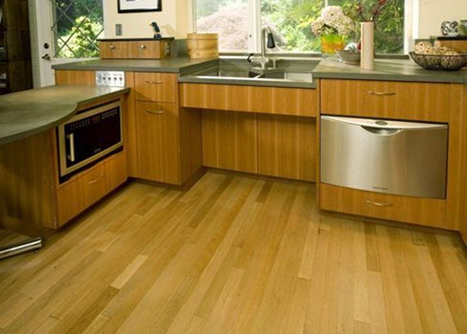
Barrier-free kitchens
Ramped entrances and zero-threshold transitions
Stair lifts, elevators, and vertical platform lifts
Fully accessible rooms designed to each client’s needs
Every design/build project begins with a clear understanding of the client’s abilities and goals, ensuring that the design solutions enhance both independence and comfort.
Meet David L. Traut, CAPS
David L. Traut, CAPS, owner and president of T-Square Company in Austin, Texas, is part of a select group of professionals nationwide who have earned the Certified Aging in Place Specialist (CAPS) designation.
This certification, offered through the National Association of Home Builders (NAHB) in collaboration with AARP, recognizes remodelers and builders trained to meet the unique needs of older adults and individuals with disabilities.
David is also certified in Universal Design in both the United States and Australia. Drawing on decades of expertise, he recently published Age in Place at Home: Adapting the Home Environment for All Generations, a comprehensive guide that explores the role of Universal Design in creating safe, accessible homes. David wrote this book as a means to help families through difficult times once their homes lacked optimal livability.
📘 Age in Place at Home takes readers room by room, explaining practical modifications that enhance safety, accessibility, and independence. The book is available now on Amazon.
Living Comfortably, Safely, and Independently
Never fear — almost any existing home can be modified to overcome accessibility challenges. With proper planning, professional guidance, and a bit of creativity, you can ensure that every family member enjoys comfort, safety, and freedom of movement.
Following the guidance in Age in Place at Home will not only improve your quality of life — it will also promote equality of access for everyone under your roof.
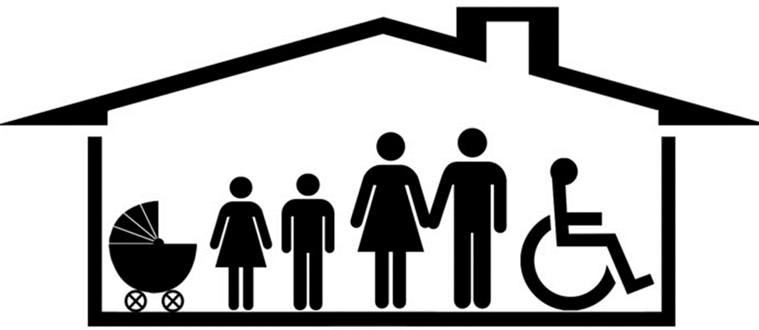
When a family’s living situation suddenly changes, it may become necessary to modify the home to meet new needs. These adjustments often result in the creation of multi-generational homes, where comfort, safety, and independence are balanced for all ages.
The specific modifications depend on the situation — whether a parent is moving in, a child returns home, or a family member faces new mobility challenges. Below are common areas to consider when adapting your home for multiple generations.
Common Home Modifications for Changing Family Needs
Additional Bedrooms When the family expands or someone new moves in, you may need extra bedrooms or sleeping areas. Consider converting a home office, den, or unused space to accommodate the change.
Bathroom Accessibility For elderly or disabled family members, safety and convenience are priorities. Modifications may include:
Installing grab bars
Adding a roll-in or walk-in shower
Lowering sinks and countertops
Replacing toilets with accessible-height models
Kitchen Modifications A larger or more diverse household benefits from flexible, inclusive kitchen design. Options include:
Adjustable-height work surfaces
Roll-under access at the sink or cook top
Additional seating and storage
Expanding the kitchen footprint for easier movement
Safety Features Depending on your situation, you may need to add:
Childproof or adult-proof features
Non-slip flooring
Improved lighting
Smart home security or monitoring systems
Storage Solutions More people often means more belongings. Add closets, built-ins, or cabinetry to maintain organization and reduce clutter.
Accessibility Ramps and Entries For anyone with limited mobility, ramps and zero-threshold entries provide essential independence and safety.
Private Living Suites In multi-generational households, separate living areas with their own entrance, kitchenette, and bathroom help maintain privacy and autonomy while keeping family close.
Heating and Cooling Considerations If you’re adding square footage or an in-law suite, ensure your HVAC system can handle the increased demand efficiently.
The Aging in Place Mindset
Designing a multi-generational home is deeply connected to the philosophy of Aging in Place — a practice centered on usability, comfort, and independence for everyone, regardless of age or ability.
Aging in Place design is not about age — it’s about universal usability. It focuses on long-term livability, ensuring that the home adapts as life changes.
The first step toward creating an adaptable home is a self-assessment. Walk through your house and identify potential problem areas:
Tripping or slipping hazards
Poor lighting or hard-to-reach switches
Narrow doorways or tight spaces
Difficult-to-maintain areas
Who better to identify problem spots than the person who uses the space daily? Many organizations, including AARP, provide Aging in Place checklists that highlight potential issues and suggest practical solutions. Once your initial assessment is complete, the next step is to seek the guidance of a Certified Aging in Place Specialist (CAPS).
Working with a CAPS Professional
Certified Aging in Place Specialists (CAPS) are trained builders, remodelers, and designers who understand the construction and emotional aspects of creating accessible homes. The CAPS designation, offered by the National Association of Home Builders (NAHB) in partnership with AARP, connects responsible professionals with homeowners seeking these services.
A CAPS professional can:
Evaluate your home’s current accessibility
Recommend modifications tailored to your needs and budget
Coordinate with occupational or physical therapists when necessary
Manage projects with compassion, professionalism, and precision
You can find certified specialists for your specific location at nahb.org/CAPSdirectory.
Three Types of Aging in Place Clients
Understanding which group you fall into can help determine your home’s design priorities:
Proactive Planners – Individuals preparing wisely for the future to remain safely in their homes.
Chronic Condition Adapters – People managing ongoing medical issues who need to plan for future accessibility challenges.
Crisis Responders – Individuals facing sudden or severe mobility changes after illness, injury, or life-altering events.
All three groups represent the growing need for accessible remodeling and will continue to shape the future of residential design.
What Happens During a Professional Home Assessment
During a professional assessment, your CAPS professional will document the home’s current conditions and make detailed notes through sketches, measurements, and conversation. They’ll evaluate everything from flooring to lighting to ensure the layout fits the occupants’ physical and emotional needs.
They’ll also take into account:
Mobility and reach range
Sensory or cognitive challenges
Caregiver involvement
Collaboration with occupational or physical therapists often adds valuable insight. The goal is a customized design that enhances independence, safety, and comfort — not a “one-size-fits-all” solution.
The three primary spaces typically involved in aging in place remodels are:
Bathrooms — safety and ease of use
Kitchens — independence and flexibility
Living Areas — connection and comfort
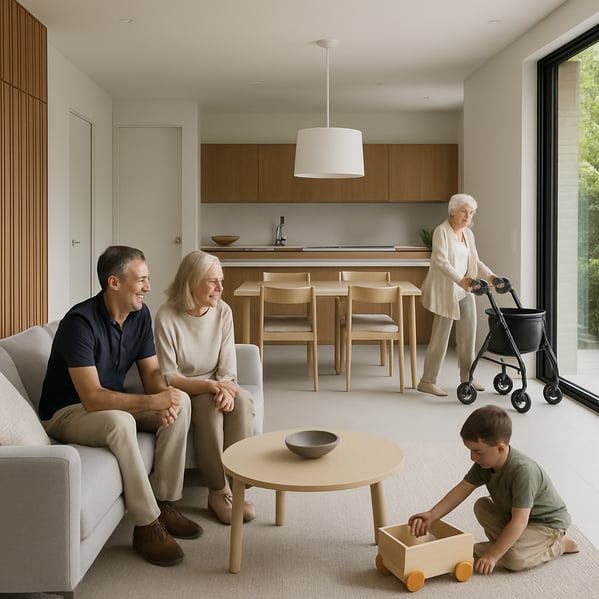
These spaces are united by a clearly defined accessible route with wider doorways, non-slip flooring, and sufficient maneuvering space for mobility devices.
The Importance of Inclusive Design for All Ages
If children are part of the household, their height, reach, and mobility also influence the home’s design. Likewise, adults moving in may face challenges from common conditions such as arthritis, which can cause stiffness, joint pain, and reduced grip strength.
Designing for these realities doesn’t mean sacrificing beauty — it means integrating innovative universal design concepts that allow everyone to thrive. Features like lever handles, adjustable lighting, touch-control faucets, and curbless showers can make life easier for every family member.
Bringing It All Together
Creating a multi-generational home that supports aging in place is both a practical and compassionate decision. It’s an investment in your family’s future and quality of life.
As a Certified Aging in Place Specialist (#1636580), T-Square Company in Austin, Texas, helps families design and remodel homes that grow with them — ensuring safety, comfort, and independence for years to come.
For more information or to schedule an assessment or consultation, visit www.tsquareco.com or call 512-444-0097.
About CAPS Certification
Knowledgeable design and construction professionals nationwide are applying their Certified Aging in Place Specialist (CAPS) training — developed through the National Association of Home Builders (NAHB) and AARP — to help families live better, longer, and safer in their homes.
CAPS connects qualified professionals with homeowners seeking trustworthy, thoughtful remodeling solutions for accessible and universal design.
Closing Thought
Innovative aging-in-place design goes beyond accessibility — it’s about dignity, comfort, and belonging. Whether you’re modifying for a loved one, planning for the future, or creating a flexible family home, the right design can turn change into opportunity. To find out more:
After over a year of writing to fulfill my customers' requests, my book, "Age in Place At Home: Adapting the Home Environment for All Generations", is available for purchase on Amazon. Go to the link to order my paperback or e-book, which was released in late November, 2022. Additionally, an audiobook will also be available soon. The book provides a great guideline for using the principles of Universal Design in new home construction and/or remodeling for every room in your home when Aging in Place. Get your copy today.
Let’s face it — accessible homes are something everyone will need at some point in life. Whether for ourselves, a family member, or a guest, accessibility enhances safety, comfort, and independence for all.
The need for home modifications isn’t driven by age—it’s shaped by life’s experiences. Any household living with a disability among its members can benefit from additional accessibility features that make everyday living smoother and safer.
Starting with ADA Guidelines
Except in extreme situations, complete ADA compliance isn’t required for private home remodeling. Still, the Americans with Disabilities Act (ADA) provides a great foundation for accessible design.
The ADA’s measurements for clearances, ramp slopes, and grab bar placement create safe benchmarks to follow, even if you don’t need to meet every technical requirement. Remember, ADA standards are designed for public spaces and may not perfectly fit individual needs or body sizes.
When working on a private residence, you have the flexibility to adapt the best of ADA guidance while customizing it to your household’s specific mobility and lifestyle needs.
A Short History of the ADA
In the 1960s, disability advocates began to push for equal rights, paving the way for the Americans with Disabilities Act, officially signed into law in 1990.
This groundbreaking legislation ensured equal access for people with disabilities across workplaces, transportation, and public accommodations. Over time, accessibility concerns expanded from physical barriers to include digital access — a vital step in today’s connected world.
The ADA continues to evolve, ensuring inclusion for people of all abilities in both physical and digital environments.
Disability and Design: The Human Connection
Disability isn’t defined only by physical impairments — it’s the interaction between a person’s abilities, their daily activities, and the design of their surroundings.
Language and understanding have evolved, too. Outdated terms like “handicapped” have been replaced with “physically challenged” or “person with a disability.” Each individual experiences limitations differently, which is why universal design—creating homes that work for everyone—is essential.
No matter your age, it’s important to regularly evaluate your home to ensure it meets your current and future needs. Life events such as childbirth, illness, injury, or caring for an aging parent can all prompt accessibility updates that keep your home safe and functional.
These same design principles form the foundation of Aging in Place, the practice of staying in your own home comfortably and independently for as long as possible.
Why Work with a CAPS Professional?
When accessibility challenges arise, homeowners often don’t know where to begin. That’s where Certified Aging in Place Specialists (CAPS) come in.
Developed by the National Association of Home Builders (NAHB) and AARP, the CAPS program trains professionals to design and remodel homes that meet the needs of people of all ages and abilities. CAPS-certified experts understand both the technical construction requirements and the personal considerations of adapting a home for safety and independence.
You can find qualified CAPS professionals across the country at nahb.org/CAPS.
Meet Austin’s Local CAPS Expert
David L. Traut, CAPS, owner of T-Square Company in Austin, Texas, is one of this elite group of specialists. With more than 30 years of experience, David helps homeowners remodel and design homes that support independent living for every stage of life.
T-Square Company provides complete home assessments with designs and full-service Aging in Place remodeling, including:
Custom bathroom and kitchen modifications
Barrier-free showers and grab bar installations
Accessible entryways and widened doorways
Whole-home alterations for increasing comfort, accessibility, independence, and safety
Call T-Square Company at 512-444-0097 to begin your next chapter of safe, accessible living — without leaving the comfort of your home. CAPS #1636580
Learn More: “Age in Place at Home”
As an extension of his work, David has authored Age in Place at Home: Adapting the Home Environment for All Generations, now available on Amazon.
This comprehensive guide draws on over 30 years of experience and explains how to use Universal Design principles to make every room more livable. Whether you’re planning ahead or adapting for current needs, this book offers insights, ideas, and practical steps for keeping your home accessible for life--your forever home.
Disability is not simply a medical condition—it’s a complex interaction between a person’s physical abilities, the activities they need to perform, and the built environment surrounding them. The same impairment affects individuals differently: someone who is blind experiences daily life in an entirely different way than someone with deafness or limited mobility.
According to national reports, 19% of Americans between ages 16 and 64, and an even higher 42% of adults 65 and older, live with a physical disability that affects their daily routines. These statistics underscore why aging in place—the ability to remain safely and comfortably in one’s own home—has become such an important priority for individuals and families.
The Home Environment Matters
Disability and accessibility are not issues that affect only older adults. Children and younger adults with special needs face similar challenges when home environments don’t support their independence. To be truly inclusive, the entire building industry—from architects to remodelers—must work together to ensure that every home meets essential needs for comfort, safety, and dignity.
An accessible home should nurture a sense of privacy, belonging, control, and security for all who live there. These are not luxuries—they are vital ingredients of a fulfilling quality of life.
The Problem with Traditional Homes
Most homes are full of hidden barriers that make life harder for people with mobility or sensory limitations. Common challenges include:
Steep steps or raised thresholds at entries
Narrow doorways and tight hallways with abrupt turns
Cramped bathrooms that limit fixture access
Inaccessible kitchens and outdoor spaces
Door hardware and cabinetry that demand grip strength and coordination
Once a mobility device like a wheelchair or walker enters the picture, these limitations become magnified. What once felt “normal” suddenly becomes restrictive, unsafe, or impossible.
The Rise of Universal Design
Fortunately, accessible home design has evolved far beyond grab bars and ramps. The modern standard—Universal Design—focuses on creating spaces, products, and environments that are usable by as many people as possible, regardless of age or ability, without the need for later adaptations.
Universal Design is built right into the foundation of a space. When applied well, it feels natural and attractive—offering safety, flexibility, and ease without looking “institutional.” It’s the design philosophy that lets people live comfortably, age gracefully, and welcome everyone.
Accessibility Solutions in Austin, Texas
For those seeking increased accessibility in Central Texas, T-Square Company provides professional guidance and expert craftsmanship. With over 30 years of experience, we specialize in handicap-accessible homes and barrier-free remodeling, tailoring every project to the client’s specific needs.
Our accessibility services include:
Wider entries and hallways
Accessible bathrooms and roll-in showers
Kitchen redesigns for reach and comfort
Ramped or level entries
Vertical platform lifts, stair lifts, and elevators
Fully accessible bedroom or living spaces
Every home modification is uniquely designed to match the resident’s physical abilities, routines, and goals—because true accessibility is personal.
About David L. Traut, CAPS
David L. Traut, owner and president of T-Square Company in Austin, is a Certified Aging in Place Specialist (CAPS) and a Universal Design professional certified in both the United States and Australia. He is part of a select group of remodelers nationwide with the expertise to create homes that adapt to their occupants’ changing needs.
David’s lifelong commitment to inclusive, barrier-free living inspired his book, Age in Place at Home: Adapting the Home Environment for All Generations, which explores Universal Design principles and guides readers room by room toward creating a safe, functional, and beautiful home for every stage of life.
Moving Forward: A Home for Every Ability
The good news is that almost any home can be adapted with proper planning and know-how. When you design with accessibility in mind, you’re investing not only in convenience but in peace of mind, safety, and family togetherness.
Your quality of life—and that of your loved ones—will improve when every family member enjoys equal access and independence throughout the home.
At T-Square Company, we’ve spent more than 30 years helping families create homes that are safe, comfortable, and built for every stage of life. Now, our President and Owner, David L. Traut, has brought that same experience and passion to the page in his book: Age in Place at Home: Adapting the Home Environment for All Generations.
Why This Book Matters
The concept of “aging in place” is simple but powerful: with the right planning and design, people can continue living independently in the homes they love, even as their needs change. For many, staying home means holding on to dignity, comfort, and treasured memories.
Drawing on his decades of work as a builder and CAPS-certified professional, David wrote Age in Place at Home to be more than just a construction guide. It’s a roadmap for homeowners, families, caregivers, and professionals who want practical solutions and peace of mind.
What You’ll Learn Inside
Home Modifications That Matter Most — from safe bathrooms to wider doorways, grab bars, and better lighting.
Universal Design Principles — creating beautiful spaces that work for everyone, not just those with special needs.
Fall Prevention & Safety Tips — simple adjustments that make a big difference in daily life.
Planning for the Future — how to think ahead so your home adapts gracefully as life changes.
Resources & Guidance — including checklists, questions to ask contractors, and financial assistance options.
Who Should Read It
Homeowners who want to prepare their house for the future.
Families caring for aging loved ones.
Builders, designers, and architects interested in Universal Design.
Anyone who believes that home should always be a place of safety, dignity, and belonging.
Where to Find the Book
Age in Place at Home is now available on Amazon in both paperback and Kindle editions.
This book is more than a professional resource — it’s a personal mission. As David often says, “Home isn’t just where you live. It’s where you belong.”
At T-Square Company, we’re proud to bring that philosophy to life every day — and now, through Age in Place at Home, we’re excited to share it with readers everywhere.
I feel the information contained within my book, "Age In Place At Home" is so important for families searching to find answers concerning their traditional home once any family member has experienced health changes interrupting the family's daily cadence. These changes might include a broken limb, the affects of a constantly degenerative disease like MS, or a stroke, just to name a few. Once the afflicted person can no longer enter their bedroom or have adequate use of at least one bathroom's facilities, the family is aware their home has an architectural problem. The interrupted family becomes aware they need some sort of home modifications to help cope with the personal changes of the affected family member, but do not know where to turn for help. This is where the book comes into play. The news of my book's availability warranted reposting because it is an invaluable reference tool for any family unit going forward in reference to their home's possible modifications to increase accessibility. After over a year of writing to fulfill my customers' requests, my new book, "Age in Place At Home," is available for purchase from Amazon. Go to the link below to order my paperback book, which was released in late November, 2022. It provides a great guideline for using the principles of Universal Design in new home construction and/or remodeling for every room in your home to accentuate universal accessibility for those needing it the most. Get your copy today.
A home's adaptability is one of the most desired qualities within a person's home during some point in their life as their or their family's physical needs change. The need for specific modifications to enhance accessibility can be short term while recovering from an accident or illness at any age, or these home alterations may become permanent. The special individual needs within a family may concern an adult or a child. Universal design principles don't discriminate between any family members regardless of age, size, or ability because they are inclusive. Hence, every family member is accounted for. Learn how to adapt your home environment to satisfy your family's needs in David Traut's new book, "Age in Place at Home".
T-Square Company, in Austin, Texas, practices Universal Design/Build ideas for accessibility to seamlessly segue into what is generally needed for Aging in Place. The essence of my book is to advise people so they understand why our traditional homes are obsolete to us, the homeowners, the minute they are completed and we take possession. The book offers advice to overcome these overwhelmingly problematic areas of the home. This understated and overlooked fact is represented by the methodology used to create the traditional home. These homes are built to satisfy our immediate lifestyle and physical needs on the day we close on the house, with no regard for the future. The new home lacks adaptability to satisfy our needs once our bodies physically change beyond the purchase date. If we had incorporated the Universal Design principles into these new homes, those same homes would adapt to our changing family needs including every inhabitant regardless of age, size, or ability. The lack of home adaptability is not the consumers fault, they have always been unaware of how to reference the problem and accepted what the housing market produced. They were unaware of what to ask for. Hence, the status-quo of homebuilding has been perpetuated for over a hundred years.
T-Square Company offers all types of Universal Design home modifications to better prepare you and your family for your unforeseeable future home accessibility needs on a design/build basis. It is a fact, existing, traditional homes must be modified to increase their accessibility using correct designs. Become aware and embrace the knowledge that the principles of Universal Design offer greater home accessibility for every one of your home members, from your father to your son. This is why the process is known as inclusive design.
David L. Traut, CAPS, has been involved with accessibility for nearly thirty years for the VA, HUD, and private residences. He is nationally certified in Universal Design in the United States and Australia. Contact him at 512-444-0097 for a professional home assessment to guide your future accessibility needs or at www.tsquareco.com. Simply fill out your information on the contact us page.
When a family's living situation suddenly changes, it may be necessary to make various home modifications to accommodate the new circumstances. This process will in turn create multigenerational homes. The specific modifications required can vary widely based on the nature of the change, but here are some common considerations:
Additional Bedrooms: If the family is growing or if someone new is moving in, you may need to create additional bedrooms or sleeping areas. This might involve converting a home office, den, or other space.
Bathroom Accessibility: If there are elderly or disabled family members moving in, you may need to modify bathrooms to make them more accessible. This could include installing grab bars, a walk-in shower, or a wheelchair-accessible sink and toilet.
Kitchen Modifications: A larger family might require changes in the kitchen to accommodate more people. This could involve adding extra seating, variable-height working surfaces, roll-under ability at the sink or stovetop, increasing storage space, or even expanding the kitchen.
Safety Features: Depending on the situation, you may need to add safety features like childproofing, adult proofing, slip-proof flooring, or installing security systems.
Storage: If you have more people living in the home, you might need additional storage space for their belongings. This could mean adding closets, shelves, or cabinets.
Accessibility Ramps: For individuals with mobility issues, installing ramps at entrances can be essential.
Separate Living Spaces: If you're accommodating multiple generations under one roof, consider creating separate living spaces with their own entrance, kitchenette, and bathroom to provide privacy and independence.
Heating/Cooling: Ensure your HVAC system can handle the increased load if you are adding square footage to your home.
The design will involve the practice of Aging in Place which has little to do with age and much to do with usability for everyone on a universal basis. Once you have decided to Age in Place in your existing home with an expanding family, the first thing you can do to make your home more age-friendly and adaptable is to do a self-assessment. Go through your house, identifying known problem areas like potential tripping or slipping hazards and areas that are hard to access and maintain. Who would be better at pointing out problem areas than the person needing the home modifications according to their physical wellbeing? To help with this, several organizations have Aging in Place checklists pointing out potential problems in some regions of the home and suggesting modifications and solutions. Once you have completed your initial Aging in Place checklist, it is time to seek the advice of trained Aging in Place specialist.
Next, contact a builder or remodeler listed as a Certified Aging in Place Specialist (CAPS). CAPS are home remodelers and design-build professionals certified and knowledgeable about Aging in Place home modifications. The CAPS professional can suggest ways to modify or remodel your home to fit your needs and budget. CAPS professionals are generally paid by the hour or receive a flat fee per visit or project.
There are three categories of Aging in Place customers. Those who are simply and wisely planning for their futures to remain in their present homes. The second category concerns those who know they have a chronic medical disorder and need to prepare for accessibility issues resulting from their disease. People with diseases constantly causing increased physical or mental changes to their being are a good representative of this second group. The third group involves those who either have had a chronic problem that has progressed severely altering their mobility or those who have sustained a life-altering tragedy such as being involved in an accident. All of these groups will drive the future metamorphosis of existing inaccessible dwellings.
During a professional home assessment for increasing accessibility, the structural needs of the clients will be noted and documented through sketches, photos, and conversation by a registered CAPS professional. All the surroundings will be considered, from the flooring to the layout of a specific room or location as it pertains to each inhabitant's size or ease of usability. The physical and emotional needs of the occupants will also come into play because of mobility, sensory, or cognitive concerns. Each individual with similar impairments describes his or her limitations differently when undergoing elder construction. The blind don't experience their world the same as a person with deafness. The ultimate goal is to modify the home in a custom manner to provide for the occupant's maximum health, independence, and safety. Often the input from any caretakers, like a physical or occupational therapist, during the assessment phase can prove invaluable. The three main rooms involved in aging in place home modifications are the bathrooms, the kitchen, and the family room. These areas make up the most occupied spaces of any home and will be connected by a designated accessible route. The basic needs involve access through wider doorways, nonslip floor surfaces, and adequate cabinet and plumbing fixture accessibility. More importantly, we must observe safety for everyone as the baby boomers choose to age in place within their homes. For more information about T-Square Company or Aging in Place services, visit www.tsquareco.com or call 512-444-0097. We are a certified Aging in Place contractor (#1636580).
Knowledgeable construction and design professionals are utilizing their CAPS training across the nation. CAPS stands for Certified Aging In Place Specialist. This designation is taught through the National Association of Home Builders in collaboration with AARP. CAPS connects responsible professionals with homeowners who need these services ever-increasingly. The CAPS designation program is a nationwide initiative, and all active CAPS members can be found at nahb.org/CAPSdirectory.
If children are moving into your home, their size and ability are major considerations for the Universal Design. In designing for specific physical conditions for an adult moving into your home, we realize that aging doesn't always bring on disease while the body declines to make certain physical limitations inevitable. Arthritis is the most common chronic condition as it restricts ordinary daily activities. The lack of hand strength and stiff knees are indicative of this illness. This most reported arthritic condition affecting people over 65 is followed by heart disease and vision loss in that order. Innovative aging design and concepts can compensate for frailty, lack of mobility, and blindness in Aging in Place extended families. We are constantly coming up with new methods for home modifications and household products to increase the comfort of our residential environments.
David L. Traut, CAPS, the owner of T-Square Company in Austin, Texas, is one of the select group of professionals nationwide to earn the Certified Aging-In-Place Specialist (CAPS) designation, identifying him as a home remodeler and builder with the skills and knowledge necessary to remodel or modify a home to meet the unique needs of the older population, disabled owners, or their visitors. We offer a complete line of aging in place services using our design/build techniques and the principles of Universal Design. Everything we do is done on a customized turnkey basis.
After over a year of writing to fulfill my customers' requests, my new book, "Age in Place At Home," is finally available for purchase from Amazon. Go to the link below to order my paperback book, which was released in late November, 2022. It provides a great guideline for using the principles of Universal Design in new home construction and/or remodeling for every room in your home. Get your copy today.
A home's adaptability is one of the most desired qualities within a person's home during some point in their life as their or their family's personal needs change. Specific needs to enhance a home's accessibility can be short term while recovering from an accident or illness at any age, or these home alterations may become permanent. The special needs may concern an adult or a child. Universal design principles don't discriminate between any family members regardless of age, size, or ability. Every family member is included. Learn how to adapt your home environment to satisfy your family's needs in David Traut's new book, "Age in Place at Home".
After over a year of writing to fulfill my customers' requests, my new book, "Age in Place At Home," is finally available for purchase from Amazon. Go to the link below to order my paperback book, which was released in late November, 2022. It provides a great guideline for using the principles of Universal Design in new home construction and/or remodeling for every room in your home. Get your copy today.
A home's adaptability is one of the most desired qualities within a person's home during some point in their life as their or their family's personal needs change. Specific needs to enhance a home's accessibility can be short term while recovering from an accident or illness at any age, or these home alterations may become permanent. The special needs may concern an adult or a child. Universal design principles don't discriminate between any family members regardless of age, size, or ability. Every family member is included. Learn how to adapt your home environment to satisfy your family's needs in David Traut's new book, Age in Place at Home.
T-Square Company, in Austin, Texas, practices Universal Design accessibility to segue into Aging in Place seamlessly. The essence of my book is to advise people so they understand why our homes are obsolete to us, the homeowners, the minute they are completed. This fact is represented by the methodology used to create the traditional home. They are built to satisfy our immediate lifestyle and physical needs on the day we close on the house, with no regard for the future. The new home lacks adaptability to satisfy our needs once our bodies change beyond the purchase date. If we had incorporated the Universal Design principles into these new homes, those same homes would adapt to our changing family needs including every inhabitant regardless of age, size, or ability. The lack of home adaptability is not the consumers fault, they have always been unaware of how to reference the problem and accepted what the housing market gave them. They were unaware of what to ask for. Hence, the status-quo of building has been perpetuated for over a hundred years.
T-Square Company offers all types of Austin Universal Design home modifications to better prepare you and your family for your unforeseeable home accessibility future on a design/build basis. Existing, traditional homes must be modified to increase their accessibility using correct designs. Become aware and embrace the knowledge that the principles of Universal Design offer greater home accessibility for every one of your home members, from your father to your son. This is why the process is known as inclusive design which is a part of our universal design/build ideas. Furthermore, T-Square Company specializes in Austin elder living solutions and Austin senior home modifications.
David L. Traut, CAPS, has been involved with accessibility for nearly thirty years for the VA, HUD, and private residences. T-Square Company offers a complete assortment of Aging in Place services in Austin. Contact him at 512-444-0097 for a professional home assessment to guide your future accessibility needs or at www.tsquareco.com. Simply fill out your contact information on the "contact us" page.