David L. Traut, CAPS
In 1974 while obtaining a graduate degree from the University of Texas at Austin an innate talent was acknowledged and T-Square Company was formed as a means to remodel both friends and Professors homes. This began a quest for constructive footprints leading to a lifetime of challenge. My researching practices evolved into the art of building the most efficient structures possible utilizing the ever changing technologies benefiting construction.
With over three decades of experience in both residential and commercial construction techniques a hybrid type of building became available to our clients insuring a successful completion of their projects. We incorporate our in house craftsmen with a qualified group of licensed subcontractors to get your project done professionally, in budget, and on time.
I feel the information contained within my book, "Age In Place At Home" is so important for families searching to find answers concerning their traditional home once any family member has experienced health changes interrupting the family's daily cadence. These changes might include a broken limb, the affects of a constantly degenerative disease like MS, or a stroke, just to name a few. Once the afflicted person can no longer enter their bedroom or have adequate use of at least one bathroom's facilities, the family is aware their home has an architectural problem. The interrupted family becomes aware they need some sort of home modifications to help cope with the personal changes of the affected family member, but do not know where to turn for help. This is where the book comes into play. The news of my book's availability warranted reposting because it is an invaluable reference tool for any family unit going forward in reference to their home's possible modifications to increase accessibility. After over a year of writing to fulfill my customers' requests, my new book, "Age in Place At Home," is available for purchase from Amazon. Go to the link below to order my paperback book, which was released in late November, 2022. It provides a great guideline for using the principles of Universal Design in new home construction and/or remodeling for every room in your home to accentuate universal accessibility for those needing it the most. Get your copy today.
https://www.amazon.com/gp/r.html?C=2Z24ENUUAEWUK&K=13Y7YU7PKKYAC&M=urn:rtn:msg:20221010201802eb9acb7b24004a4785cd2ec1d4f0p0na&R=3R6MK9WDXJPH7&T=C&U=http%3A%2F%2Fwww.amazon.com%2Fdp%2FB0BHTV28RV%3Fref_%3Dpe_3052080_276849420&H=7FWEPMGCH0TT8LN6SKPMUOCVJNYA&ref_=pe_3052080_276849420
A home's adaptability is one of the most desired qualities within a person's home during some point in their life as their or their family's physical needs change. The need for specific modifications to enhance accessibility can be short term while recovering from an accident or illness at any age, or these home alterations may become permanent. The special individual needs within a family may concern an adult or a child. Universal design principles don't discriminate between any family members regardless of age, size, or ability because they are inclusive. Hence, every family member is accounted for. Learn how to adapt your home environment to satisfy your family's needs in David Traut's new book, "Age in Place at Home".
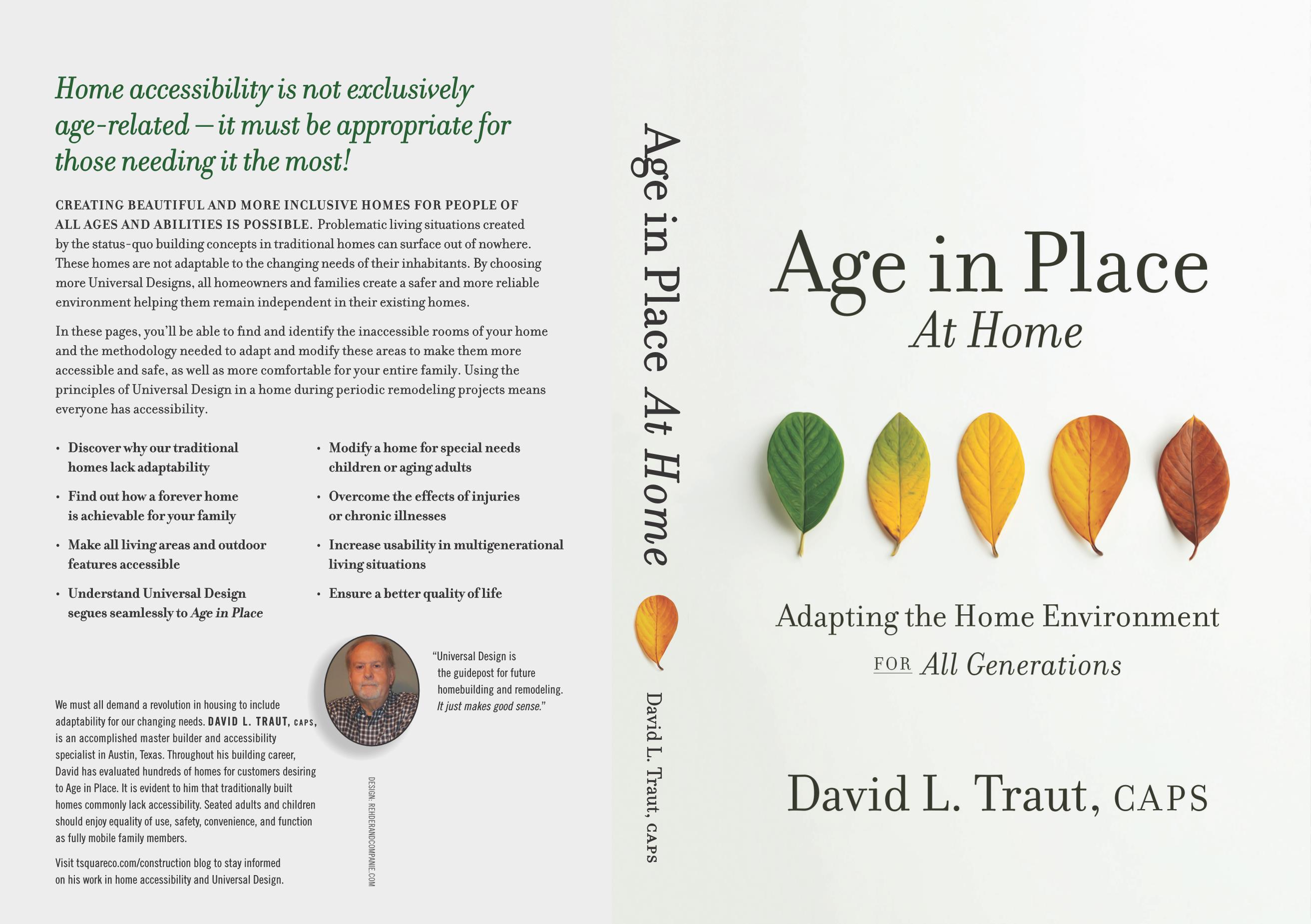
T-Square Company, in Austin, Texas, practices Universal Design/Build ideas for accessibility to seamlessly segue into what is generally needed for Aging in Place. The essence of my book is to advise people so they understand why our traditional homes are obsolete to us, the homeowners, the minute they are completed and we take possession. The book offers advice to overcome these overwhelmingly problematic areas of the home. This understated and overlooked fact is represented by the methodology used to create the traditional home. These homes are built to satisfy our immediate lifestyle and physical needs on the day we close on the house, with no regard for the future. The new home lacks adaptability to satisfy our needs once our bodies physically change beyond the purchase date. If we had incorporated the Universal Design principles into these new homes, those same homes would adapt to our changing family needs including every inhabitant regardless of age, size, or ability. The lack of home adaptability is not the consumers fault, they have always been unaware of how to reference the problem and accepted what the housing market produced. They were unaware of what to ask for. Hence, the status-quo of homebuilding has been perpetuated for over a hundred years.
T-Square Company offers all types of Universal Design home modifications to better prepare you and your family for your unforeseeable future home accessibility needs on a design/build basis. It is a fact, existing, traditional homes must be modified to increase their accessibility using correct designs. Become aware and embrace the knowledge that the principles of Universal Design offer greater home accessibility for every one of your home members, from your father to your son. This is why the process is known as inclusive design.
David L. Traut, CAPS, has been involved with accessibility for nearly thirty years for the VA, HUD, and private residences. He is nationally certified in Universal Design in the United States and Australia. Contact him at 512-444-0097 for a professional home assessment to guide your future accessibility needs or at www.tsquareco.com. Simply fill out your information on the contact us page.
.
Tags:
aging in place home modifications,
aging in place home improvements in Austin,
wheelchair accessible remodeling,
CAPS certified remodeling in Austin,
aging in place construction,
CAPS professional in Austin,
aging in place services,
accessibility designs Austin Texas,
austin custom walk in shower,
universal design ideas,
Austin Accessibility Design,
aging in place design in Austin,
why is aging in place important,
what does it mean to age in place,
universal designbuilding for the future,
wheelchair accessible home remodeling in Austin,
universal design remodeling contractor,
why is universal design important,
7 principles of universal design,
universal principles of design,
universal design/build contractor,
universal design vs. aging in place,
universal design contractor,
wheelchair accessible housing,
accessible homes in austin,
Austin home remodeling for disabled,
universal home design in Austin,
aging in place versus universal design,
universal design home builder,
universal design home additions,
barrier free design,
Austin home accessibility solutions,
Austin home modification services,
Age in Place at Home,
universal design forever homes
A universal design-build project is appealing to all users. When correctly applied, any home area will be accented universally with stylish function and appears virtually invisible. Bathrooms, kitchens, family rooms, and bedrooms will all benefit the homeowner once the principles of Universal Design are applied. Examples of increased usability provided by Universal Design include wider doorways and hallways, enhanced lighting, non-slip flooring, contrasting colors within rooms, more accessible electrical controls and devices, curb-less showers, lever door hardware, more pull-out shelves, and drawers over cabinet doors, varying cabinet top heights, and water faucets and controls operable by a single hand or closed fist. Be advised, Universal design ideas do not strictly deal with accessibility or Aging in Place design. They do not implement precise ADA standards, but offers flexibility to add accessories now and later to those planning or the end user.
David L. Traut, CAPS (1636580), the president and owner of T-Square Company, is accredited in Universal Design in the United States and Australia and has written many papers on the subject. David not only practices integrating Universal Design in his local design/build projects, but he acts as a consultant directing customers who live out of his service area. He has now published a book covering how Universal Design overcomes today's problematic living situations within traditional homes due to their association with status-quo building concepts. Additionally, Universal Design offers a common-sense gateway for increasing accessibility and adaptability in future homes. T-Square Company in Austin, Texas has been offering design/build accessibility projects to their clients incorporating the principles of Universal Design for over twenty-five years. They specialize in Universal Design Ideas.
Universal Design construction or inclusive construction is used when a homeowner is smartly preparing for future life changes and want to remain in their existing home. The most significant advantage of using this innovative concept is that it smoothly prepares a home for Aging in Place. By gradually applying elements of Universal Design during periodic home remodeling projects, those specific home areas affected are Age in Place ready without being noticed until needed. The concept provides various human performance characteristics for people using spaces within their homes, including well-integrated usability features. These adaptations have a broad market appeal to everyone for achieving ease of use, safety, and convenience, accommodating an inevitable reality. The effects of a disability, aging and disease are tempered because adaptability is built into the design. The reality is that all people exist along a continuum of human performance as per their traits and characteristics, regardless of their age. A universal approach to design considers that everyone has varying degrees of ability and disability rather than someone who is either fully functional or disabled.
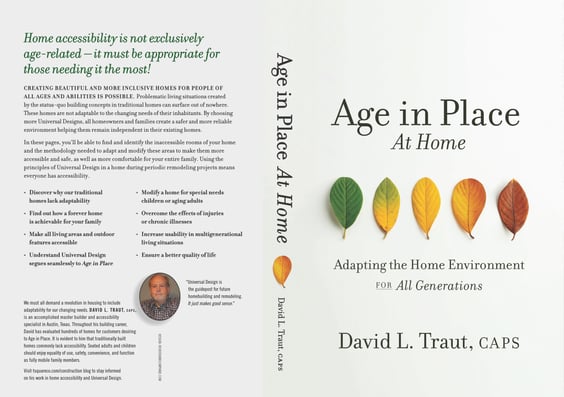
David L. Traut, CAPS, the owner-president of T-Square Company has published a book entitled "Age in Place at Home :Adapting the Home Environment for All Generations". The book is available through Amazon. This book covers identifying and overcoming common accessibility shortcomings found within a traditional home. Within it's pages, David takes you through a home's interior showing you how and where to apply Universal Design aspects in every room. Since Universal Design seamlessly segues into Aging in Place needs, it is a how-to book worth reading. Incorporating Universal Design principles into your home facilitate future Aging in Place goals, while comfortably addressing the diverse needs of all ages and mobility levels living within your home at any time. This book is a great reference for aging homeowners, parents of special needs children, homeowners moving in their elderly parents, and multi-generational living situations. Always remember, home accessibility is not exclusively age-related, but it must be appropriate for those needing it the most.
Universal Design construction and Aging in Place home modifications are available through T-Square Company in SW Austin, Texas. Each universal design/build project is customized to the homeowner's needs. Call 512-444-0097 today to prepare for the accessible second chapter of your life while remaining safe and secure in your existing home. T-Square Company will design and build an adapted living environment customized around your abilities. Whether your project concerns home modifications, an accessible addition or wing, or new construction, they can help you increase your accessibility. T-Square Company has over three decades of building and remodeling experience practicing as a disability contractor for people with special needs. They want to help their clients be as self-sufficient and independent as possible by offering handicap accessible floor plans. Let them show you how to increase safety and accessibility within your living environment.
After so long a time of blogging, soap box deliveries, and conversations with customers and other builders concerning the importance of Universal Design in the future of our home building industry, others have listened and agreed. David was humbled to find this article published in the Austin American Statesman. He takes pride in the fact that people are beginning to see the importance of this very forward-thinking design concept because it just makes good sense. May this article help to propel the needed universal building movement forward.

The trend toward 'universal design' in homes
Tuesday, Jan 15, 2019 @ 3:57pm
By David Wilfong
Simple adjustments like a sideways opening oven can make life a lot easier for a person in a wheelchair. | Jofre Essley / Flickr
For many years disabled people faced challenges at every corner of public life. Stairs, rough ground, or even just reaching objects on a shelf created obstacles at inopportune times. Then the Americans with Disabilities Act (ADA) came into play. Wheelchair ramps and handicapped restrooms became commonplace in common spaces, and the result has been an improved quality of life for millions.
Then there’s the subject of home design. Homes have been modified for many years to meet the needs of the disabled, but now there is a new concept of “universal design,” which means homes being built for all needs from the beginning, even if there is not currently a disabled person living there.
“Along with aging in place, universal design is becoming more of a household term,” says T-Square Company (14141 Highway 290 West, Suite 800 in Austin) in is online blog. “Essentially, it’s about building or modifying places and spaces—both public and private—to accommodate people of all ages and abilities. More than just an architectural concept, universal design is a win-win for sandwich generation boomers caring for aging parents and their children at home, for grandparents raising grandchildren and great-grandchildren, and for all who are facing the challenges of caring for a loved one with Alzheimer’s or other chronic diseases. Whether your family needs the support now or down the road, universal design features are a good long-term investment for the home itself.”
The trend toward 'universal design' in homes
Tuesday, Jan 15, 2019 @ 3:57pm
By David Wilfong
Tags:
universal design/build,
universal design/build ideas,
universal design building for a lifetime,
universal design remodeling techniques,
universal design remodeling contractor,
universal design building contractor,
universal design principles,
7 principles of universal design,
universal principles of design,
disability access contractor,
accessible home remodeling for disabilities,
accessible bathroom design specifications,
professional remodeling contractor,
accessible bathroom remodel,
specialty construction in Austin,
accessible homes,
home access in Austin,
universal design/build contractor,
universal design vs. aging in place,
universal design contractor,
home accessibility,
accessible design,
accessible housing,
handicap accessible housing,
handicap accessible house plans,
accessible homes in austin,
universal design techniques,
Austin home remodeling for disabled,
accessible home modifications,
handicap accessible floor plans,
accessible home builder in Austin,
wheelchair accessible homes,
special needs contractor,
universal home design in Austin,
universal design home builder,
universal design home additions,
universal design building consultant,
universal design forever homes,
Universal design construction,
Universal design construction in Austin,
Universal Design Professional in Austin,
Universal Design Building Professional in Austin
Are You And Your Family Prepared For The Future?
The sudden onset of a disability can significantly impact a family's daily lifestyle in various ways:
- Changes in caregiving responsibilities: Family members may need to take on caregiving roles to support the disabled individual, which can require time and adjustments to daily routines.
- Financial considerations: The cost of medical expenses, assistive devices, and home modifications can strain a family's finances.
- Mobility and transportation: Depending on the disability, transportation options may need to be adapted, which can affect school, work, and social activities.
- Home modifications: The need for wheelchair ramps, accessible bathrooms, and other modifications may be necessary, impacting the home environment.
- Emotional and psychological impact: Family members may experience stress, emotional strain, or guilt as they adapt to the new circumstances.
- Social life: The family's ability to participate in social events and outings may change due to the disabled family member's needs.
- Education and employment: Family members may need to adjust their work or school schedules to accommodate caregiving responsibilities.
- Healthcare management: Coordinating medical appointments, therapies, and medications becomes a part of the daily routine.
- Community support: Families may seek support from local disability organizations or support groups to help navigate these changes.
- Recreation and leisure: Finding accessible recreational activities can be a challenge, impacting the family's leisure time.
It is essential for families, prior to facing such life challenges, to take proactive measures toward universally preparing their inaccessible home for future evolving personal needs. Therefore, all periodic home remodels should include elements of Universal Design in every area of your home. This positive action will alleviate or lessen the affects of many of the sudden impactful changes brought about in the aforementioned list. The family should also communicate openly, seek external support, and work together to adapt to the new lifestyle and ensure the well-being of all members.
The constantly evolving concept known as Universal Design for home building and remodeling is catching on nationwide and has been for several years as a sign of the times. Universal design in housing refers to the concept of designing living spaces and homes to be accessible and usable by people of all ages, abilities, and backgrounds. The goal is to create environments that accommodate a wide range of individual needs and preferences without the need for costly or specialized modifications. Universal Design techniques used in building or remodeling makes a home more accessible to all regardless of their mobility or adaptive abilities and at any age.
An evolution of new products used for disability home modifications is making Universal Design homes more accessible and has finally come about in the remodeling industry. These new advances in accessible home remodeling not only keep the living environments safer but will not compromise the home's aesthetics or resale value. Furthermore, this new way of thinking offers flexibility to add accessories now and later to those planning ahead or to the end user. It also provides for a wide range of human performance characteristics for the way people use spaces within their homes including well integrated usability features.
There are seven criteria which must be met to be considered a Universal Design no matter which area of the home you are referring to. Any design must be equally useful to everyone, have flexibility in usefulness, be simple and intuitive, be perceived by everyone, have a tolerance for error, require little physical effort, and it must maintain an adequate area for approach and use. Any complexity or discriminating attribute to a design will doom it in terms of being considered universal in nature.
Universal Design Is Inclusive Design For All!
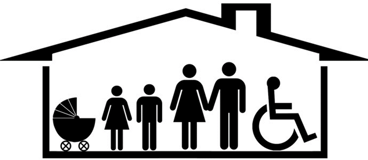
Universal design aims to create inclusive living environments that promote independence and quality of life for everyone, including individuals with disabilities, older adults, and families with young children. It's an important concept for promoting accessibility and social inclusion in housing design.
While Universal Design is a human centered concept making up an overlapping design philosophy, this concept of design came about by the recent disability movement of our aging population and the quality of life created by an increased user concept. An evolution in building ideas which deals with a larger all-inclusive society rather than a select group will make our homes more livable and sustainable in the future. Small changes can make a great difference with practice and understanding of the antiquated architecture which has evolved as the norm. It has been demonstrated that a need for functionality and usability has been lacking within our existing home inventory and the standards and codes from our municipalities must catch up with the needs of our society as a whole. When everyone can benefit it just makes common sense. Observing other aging groups in our society and the personal perils they face has finally brought about a new way of thinking about the living environment. Universal Design is beneficial to all abilities and ages offering practical solutions for specific differences in people. We have long needed a new vision representing a home that works for everyone and this attitude is becoming the new reality stemming from a revolution. This new building revolution, using Universal Design, is helping to create new accessible homes along with ways to make the older homes more accessible.

Universal Design does not equate to accessibility design even though they both are concerned with ergonomics and human function issues. The ADA guidelines for accessibility were created as a means to help those people with extreme disabilities within our society who are a narrow and specific cross section of the masses. A Universal Design approach proactively takes into account moderate impairments or disabilities, temporary health conditions, and the varying abilities of anyone within a home regardless of their age or size. In other words, an ADA accessible home is designed for the one person exhibiting a disability, whereas a Universal Design home is designed for everyone and avoids kneejerk reactions to later seen health issues. Features like one story design, bedrooms and bathrooms on the ground floor, natural day lighting through larger windows and skylights, and wider doors and hallways appeal to users of all ages. With baby boomers eyeing a future where they'll Age in Place and younger people renovating older homes, the Harvard Joint Center for Housing Studies is anticipating healthy growth for the U.S. home improvement market through 2025.
T-Square Company in Austin, Texas has been offering design/build accessibility projects to their clients incorporating the principles of Universal Design for over twenty-five years. We specialize in Universal Design Ideas. David L. Traut, CAPS, the owner-president of T-Square Company is certified in Universal Design. He has published a book entitled "Age in Place at Home :Adapting the Home Environment for All Generations" which is available through Amazon. The book covers identifying and overcoming common accessibility shortcomings within a traditional home. Within it's pages, David takes you through a home interior showing you how and where to apply Universal Design aspects in every room. Since Universal Design seamlessly segues into Aging in Place needs, it is a how-to book worth reading. Incorporating Universal Design principles into your home facilitate future Aging in Place goals, while comfortably addressing the diverse needs of all ages and mobility levels living within your home at any time. This book is a great reference for aging homeowners, parents of special needs children, homeowners moving in their elderly parents, and multi-generational living situations. Always remember, home accessibility is not exclusively age-related, but it must be appropriate for those needing it the most.

Tags:
aging in place remodeling,
wheelchair accessible remodeling,
CAPS certification holder in Austin,
aging in place design,,
accessibility designs Austin Texas,
universal design/build ideas,
Austin Accessibility Design,
Austin accessible home remodeling,
aging in place specialist in Austin,
age in place home design,
why is aging in place important,
universal designbuilding for the future,
why is universal design important,
7 principles of universal design,
Austin disability contractors for special needs,
Austin aging in place specialist,
accessible homes,
universal design/build contractor,
wheelchair accessible housing,
accessible home builder in Austin,
universal home design in Austin,
Austin home accessibility solutions,
Austin home modification services,
Dripping Springs aging in place specialist,
Universal design construction,
Universal Design for Disabilities
When a family's living situation suddenly changes, it may be necessary to make various home modifications to accommodate the new circumstances. This process will in turn create multigenerational homes. The specific modifications required can vary widely based on the nature of the change, but here are some common considerations:
- Additional Bedrooms: If the family is growing or if someone new is moving in, you may need to create additional bedrooms or sleeping areas. This might involve converting a home office, den, or other space.
- Bathroom Accessibility: If there are elderly or disabled family members moving in, you may need to modify bathrooms to make them more accessible. This could include installing grab bars, a walk-in shower, or a wheelchair-accessible sink and toilet.
- Kitchen Modifications: A larger family might require changes in the kitchen to accommodate more people. This could involve adding extra seating, variable-height working surfaces, roll-under ability at the sink or stovetop, increasing storage space, or even expanding the kitchen.
- Safety Features: Depending on the situation, you may need to add safety features like childproofing, adult proofing, slip-proof flooring, or installing security systems.
- Storage: If you have more people living in the home, you might need additional storage space for their belongings. This could mean adding closets, shelves, or cabinets.
- Accessibility Ramps: For individuals with mobility issues, installing ramps at entrances can be essential.
- Separate Living Spaces: If you're accommodating multiple generations under one roof, consider creating separate living spaces with their own entrance, kitchenette, and bathroom to provide privacy and independence.
- Heating/Cooling: Ensure your HVAC system can handle the increased load if you are adding square footage to your home.
The design will involve the practice of Aging in Place which has little to do with age and much to do with usability for everyone on a universal basis. Once you have decided to Age in Place in your existing home with an expanding family, the first thing you can do to make your home more age-friendly and adaptable is to do a self-assessment. Go through your house, identifying known problem areas like potential tripping or slipping hazards and areas that are hard to access and maintain. Who would be better at pointing out problem areas than the person needing the home modifications according to their physical wellbeing? To help with this, several organizations have Aging in Place checklists pointing out potential problems in some regions of the home and suggesting modifications and solutions. Once you have completed your initial Aging in Place checklist, it is time to seek the advice of trained Aging in Place specialist.
Next, contact a builder or remodeler listed as a Certified Aging in Place Specialist (CAPS). CAPS are home remodelers and design-build professionals certified and knowledgeable about Aging in Place home modifications. The CAPS professional can suggest ways to modify or remodel your home to fit your needs and budget. CAPS professionals are generally paid by the hour or receive a flat fee per visit or project.
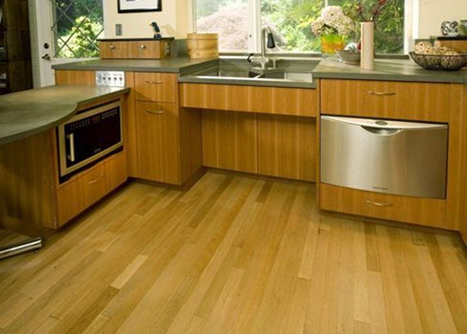
There are three categories of Aging in Place customers. Those who are simply and wisely planning for their futures to remain in their present homes. The second category concerns those who know they have a chronic medical disorder and need to prepare for accessibility issues resulting from their disease. People with diseases constantly causing increased physical or mental changes to their being are a good representative of this second group. The third group involves those who either have had a chronic problem that has progressed severely altering their mobility or those who have sustained a life-altering tragedy such as being involved in an accident. All of these groups will drive the future metamorphosis of existing inaccessible dwellings.
During a professional home assessment for increasing accessibility, the structural needs of the clients will be noted and documented through sketches, photos, and conversation by a registered CAPS professional. All the surroundings will be considered, from the flooring to the layout of a specific room or location as it pertains to each inhabitant's size or ease of usability. The physical and emotional needs of the occupants will also come into play because of mobility, sensory, or cognitive concerns. Each individual with similar impairments describes his or her limitations differently when undergoing elder construction. The blind don't experience their world the same as a person with deafness. The ultimate goal is to modify the home in a custom manner to provide for the occupant's maximum health, independence, and safety. Often the input from any caretakers, like a physical or occupational therapist, during the assessment phase can prove invaluable. The three main rooms involved in aging in place home modifications are the bathrooms, the kitchen, and the family room. These areas make up the most occupied spaces of any home and will be connected by a designated accessible route. The basic needs involve access through wider doorways, nonslip floor surfaces, and adequate cabinet and plumbing fixture accessibility. More importantly, we must observe safety for everyone as the baby boomers choose to age in place within their homes. For more information about T-Square Company or Aging in Place services, visit www.tsquareco.com or call 512-444-0097. We are a certified Aging in Place contractor (#1636580).
Knowledgeable construction and design professionals are utilizing their CAPS training across the nation. CAPS stands for Certified Aging In Place Specialist. This designation is taught through the National Association of Home Builders in collaboration with AARP. CAPS connects responsible professionals with homeowners who need these services ever-increasingly. The CAPS designation program is a nationwide initiative, and all active CAPS members can be found at nahb.org/CAPSdirectory.
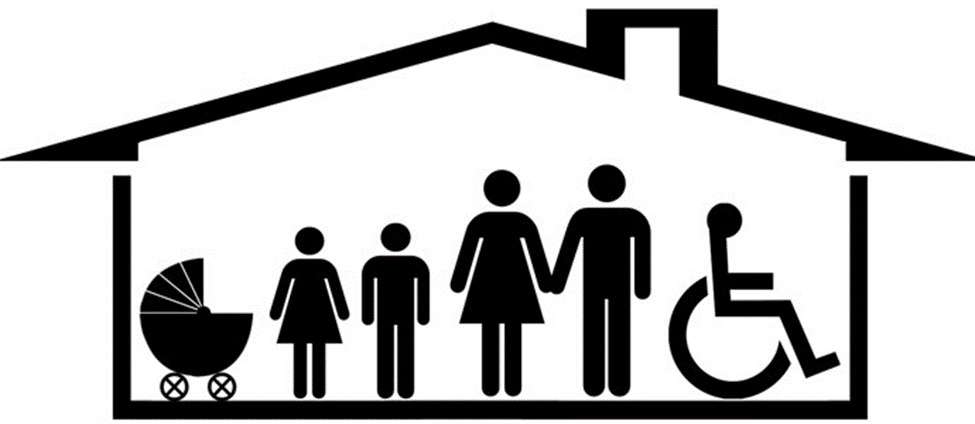

If children are moving into your home, their size and ability are major considerations for the Universal Design. In designing for specific physical conditions for an adult moving into your home, we realize that aging doesn't always bring on disease while the body declines to make certain physical limitations inevitable. Arthritis is the most common chronic condition as it restricts ordinary daily activities. The lack of hand strength and stiff knees are indicative of this illness. This most reported arthritic condition affecting people over 65 is followed by heart disease and vision loss in that order. Innovative aging design and concepts can compensate for frailty, lack of mobility, and blindness in Aging in Place extended families. We are constantly coming up with new methods for home modifications and household products to increase the comfort of our residential environments.
David L. Traut, CAPS, the owner of T-Square Company in Austin, Texas, is one of the select group of professionals nationwide to earn the Certified Aging-In-Place Specialist (CAPS) designation, identifying him as a home remodeler and builder with the skills and knowledge necessary to remodel or modify a home to meet the unique needs of the older population, disabled owners, or their visitors. We offer a complete line of aging in place services using our design/build techniques and the principles of Universal Design. Everything we do is done on a customized turnkey basis.
After over a year of writing to fulfill my customers' requests, my new book, "Age in Place At Home," is finally available for purchase from Amazon. Go to the link below to order my paperback book, which was released in late November, 2022. It provides a great guideline for using the principles of Universal Design in new home construction and/or remodeling for every room in your home. Get your copy today.
https://www.amazon.com/gp/r.html?C=2Z24ENUUAEWUK&K=13Y7YU7PKKYAC&M=urn:rtn:msg:20221010201802eb9acb7b24004a4785cd2ec1d4f0p0na&R=3R6MK9WDXJPH7&T=C&U=http%3A%2F%2Fwww.amazon.com%2Fdp%2FB0BHTV28RV%3Fref_%3Dpe_3052080_276849420&H=7FWEPMGCH0TT8LN6SKPMUOCVJNYA&ref_=pe_3052080_276849420
A home's adaptability is one of the most desired qualities within a person's home during some point in their life as their or their family's personal needs change. Specific needs to enhance a home's accessibility can be short term while recovering from an accident or illness at any age, or these home alterations may become permanent. The special needs may concern an adult or a child. Universal design principles don't discriminate between any family members regardless of age, size, or ability. Every family member is included. Learn how to adapt your home environment to satisfy your family's needs in David Traut's new book, "Age in Place at Home".

Tags:
barrier free access,
aging in place remodeling,
CAPS,
aging in place home improvements in Austin,
CAPS certification,
ADA remodeling,
CAPS certified remodeling in Austin,
aging in place remodels,
aging in place construction,
aging in place designs,
CAPS professional in Austin,
CAPS certification holder in Austin,
CAPS remodeling techniques,
Universal Design,,
aging in place services,
aging in place design,,
certified aging in place specialist,
disability home modifications in Austin,
home modifications Austin, Texas,
wheelchair accessible showers in Austin,,
handicap bathrooms,
roll in showers in Austin,
custom walk in shower Austin,
home remodels Austin,
home modifications for independent living Austin,
certified aging in place consultant in Austin,
aging in place design in Austin,
multigenerational homes
After over a year of writing to fulfill my customers' requests, my new book, "Age in Place At Home," is finally available for purchase from Amazon. Go to the link below to order my paperback book, which was released in late November, 2022. It provides a great guideline for using the principles of Universal Design in new home construction and/or remodeling for every room in your home. Get your copy today.
https://www.amazon.com/gp/r.html?C=2Z24ENUUAEWUK&K=13Y7YU7PKKYAC&M=urn:rtn:msg:20221010201802eb9acb7b24004a4785cd2ec1d4f0p0na&R=3R6MK9WDXJPH7&T=C&U=http%3A%2F%2Fwww.amazon.com%2Fdp%2FB0BHTV28RV%3Fref_%3Dpe_3052080_276849420&H=7FWEPMGCH0TT8LN6SKPMUOCVJNYA&ref_=pe_3052080_276849420
A home's adaptability is one of the most desired qualities within a person's home during some point in their life as their or their family's personal needs change. Specific needs to enhance a home's accessibility can be short term while recovering from an accident or illness at any age, or these home alterations may become permanent. The special needs may concern an adult or a child. Universal design principles don't discriminate between any family members regardless of age, size, or ability. Every family member is included. Learn how to adapt your home environment to satisfy your family's needs in David Traut's new book, Age in Place at Home.
T-Square Company, in Austin, Texas, practices Universal Design accessibility to segue into Aging in Place seamlessly. The essence of my book is to advise people so they understand why our homes are obsolete to us, the homeowners, the minute they are completed. This fact is represented by the methodology used to create the traditional home. They are built to satisfy our immediate lifestyle and physical needs on the day we close on the house, with no regard for the future. The new home lacks adaptability to satisfy our needs once our bodies change beyond the purchase date. If we had incorporated the Universal Design principles into these new homes, those same homes would adapt to our changing family needs including every inhabitant regardless of age, size, or ability. The lack of home adaptability is not the consumers fault, they have always been unaware of how to reference the problem and accepted what the housing market gave them. They were unaware of what to ask for. Hence, the status-quo of building has been perpetuated for over a hundred years.
T-Square Company offers all types of Austin Universal Design home modifications to better prepare you and your family for your unforeseeable home accessibility future on a design/build basis. Existing, traditional homes must be modified to increase their accessibility using correct designs. Become aware and embrace the knowledge that the principles of Universal Design offer greater home accessibility for every one of your home members, from your father to your son. This is why the process is known as inclusive design which is a part of our universal design/build ideas. Furthermore, T-Square Company specializes in Austin elder living solutions and Austin senior home modifications.

David L. Traut, CAPS, has been involved with accessibility for nearly thirty years for the VA, HUD, and private residences. T-Square Company offers a complete assortment of Aging in Place services in Austin. Contact him at 512-444-0097 for a professional home assessment to guide your future accessibility needs or at www.tsquareco.com. Simply fill out your contact information on the "contact us" page.
.
Tags:
aging in place home modifications,
aging in place home improvements in Austin,
wheelchair accessible remodeling,
CAPS certified remodeling in Austin,
aging in place construction,
CAPS professional in Austin,
aging in place services,
accessibility designs Austin Texas,
austin custom walk in shower,
universal design ideas,
Austin Accessibility Design,
aging in place design in Austin,
why is aging in place important,
what does it mean to age in place,
universal designbuilding for the future,
wheelchair accessible home remodeling in Austin,
universal design remodeling contractor,
why is universal design important,
7 principles of universal design,
universal principles of design,
universal design/build contractor,
universal design vs. aging in place,
universal design contractor,
wheelchair accessible housing,
accessible homes in austin,
Austin home remodeling for disabled,
universal home design in Austin,
aging in place versus universal design,
universal design home builder,
universal design home additions,
barrier free design,
Austin home accessibility solutions,
Austin home modification services,
Age in Place at Home,
universal design forever homes
Human problems must be solved using correct design changes. The principles of Universal Design solve accessibility issues for the most significant number of people. Special needs children, people who have become seriously injured, people living with a debilitating disease, people with sensory limitations or intellectual limitations, and last but not least, the people who are planning to stay in their homes for as long as possible while Aging in Place all benefit from accessible homes. The need to provide for disabilities during elder construction or home modifications for special needs children empowers us to create environments wherein people can function effectively. As our society evolves away from institutionalized care, editing and making a home more comfortable and aesthetically pleasing for children, older adults, and their visitors benefits the comfort and lifestyle of the entire family. By the way, how are you planning for your future when it concerns editing your existing home which may no longer fit your family's evolving needs?

Let's start by defining what is meant by a home edit intended to accentuate an accessible home. First of all, it's main purpose is to increase organizational skills and to reduce clutter which promotes home safety and lifestyle trends. It produces a home that is more visually appealing, efficient, and functional. Going further, the identification and removal of a home's architectural barriers using Universal Design home modifications completes the need for safety and independence promoting a healthy living environment. Forward-thinking homeowners, in turn, experience a better quality of life from the benefits of a home edit. Finally the accessible home stands as the defined course for a Universal Designed home. In these edited accessible homes, performing as a Universal Design contractor, T-Square Company in Austin, Texas identifies a home's architectural barriers and removes them during a design/build remodel to increase safety and independence. Accessible homes of Austin, or anywhere else for that matter, provide homeowners with a means to stay healthy, independent, and safe. People exhibiting any form of disability can live comfortably as well as fully functional individuals.
Tweet and understand this fact of life! Accessible homes will be needed by everyone at some uncertain time within their life. This edit or change can be prompted for ourselves, a family member, or a visitor. This action defines the Aging in Place concept and its associated CAPS accreditation, a nationally registered credential offered through the NAHB. Its function is to keep people in their homes longer and provide safety and independence to all homeowners. What is more, Universal Design segues seamlessly into Aging in Place.
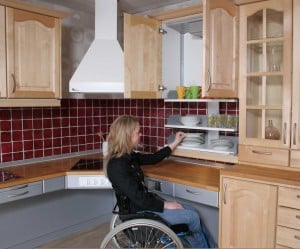
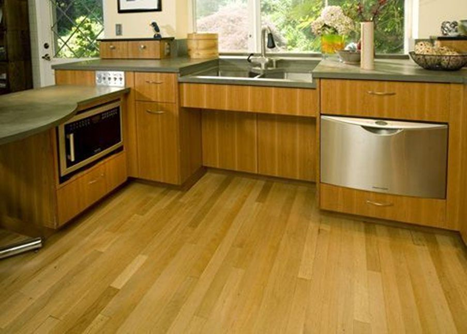
For instance, as in the above photograph, the wheelchair
accessible kitchen is comfortably sized for a clear five-foot turning radius to avoid backing up for any approach. Clear 30x48-inch approach areas for all work areas and appliances are a significant part of the more-open design. The final kitchen design is tailored to the homeowner's abilities, needs, and interests. Universally, pull-out shelves expand workspaces at activity centers, while roll-under access is present underneath the stove, prep, and sink work areas. A higher and deeper base cabinet kick space area of 6x9 inches provides better forward wheel clearance for the wheelchair, enabling the user to get closer to the cabinet workspace. A raised dishwasher offers greater access for sight and reach distances to dishes, and lowered microwaves along with other appliances like ovens solve additional reach distance problems making it easier to live with a disability. Open storage areas without doors to interfere with access is a better solution. Having multiple countertop heights allows everyone universal access to a chosen work surface. A successfully designed kitchen isn't about cabinet style or the composition of the countertop. It is more about the ways the design can support the user's personal needs and functionality.

Because everyone ages differently and has different needs and wants over time, a universal solution providing a design for all is needed. The factors that constitute the Aging in Place market for individuals is based on their genetic makeup and lifestyle, including their choices chosen while living and their living environment. These factors have brought about the need for Universal Design. This process is the design of products, services, and environments usable by as many people as possible regardless of age, ability, or situation avoiding future adaptation or specialized alterations. It provides the most significant safety and access for home guests or occupants and is undetectable when done well. Since so few homes share the accessibility offered by Universal Design, to satisfy the needs of a particular household member brought about by an accident, an illness, or simply the aging process, there will always be a need for customized and prudent accessibility features. A seasoned CAPS-accredited remodeling professional has the ability to accomplish this desire by producing a truly safe and functional design. This same competent design/build home remodeling company that understands and practices Aging in Place home modifications should accomplish the work according to the principles of Universal Design ensuring your family's safety and accessibility. Certified Aging in Place specialists are listed in Washington on the NAHB CAPS website.
The concept of the accessible home has evolved beyond the basic grab bars and ramps to one in which accessibility is built into the basic design. Universal Design makes living in a home easier for people of all ages and abilities. Accessible design is beautiful and functional and never needs to have any institutional appearance. As our aging baby boomer population ages, the need for accessibility in the home is becoming ever more critical. Our new way of viewing the basic home in our society coupled with our antiquated architecture is giving way to a revolution in home design. Ordinary homeowners with extraordinary challenges can partner up with CAPS design professionals, architects, and their own families to create homes to restore capabilities, independence, and grace to daily living.
Aging in Place home modifications incorporating Universal Design principles are available through T-Square Company in the Austin area. We have an A-plus rating with the local BBB and have over 30 years of accessible remodeling experience. We are additionally an accredited Aging in Place specialist offering complete
aging in place services. Each design/build project is customized around your personal needs. We increase your accessibility using Universal Design principles. Call 512-444-0097 today to begin the accessible second chapter of your life while remaining safe and secure in your existing home.
David L. Traut, CAPS (#1636580)
As an answer to his clients requests over the years, David has recently published a book entitled "Age in Place at Home: Adapting the Home Environment for All Generations". The book reflects on thirty years of accessibility improvements and identifies why our traditional homes specifically lack this very basic need. It is available on Amazon and stands as a reference book for increasing home accessibility using the principles of Universal Design in every room of the home. Order your copy today.
Tags:
how-to,
ADA compliant kitchen cabinets,
ADA bathroom cabinets accessible routes,
CAPS,
aging in place home modifications,
aging in place home improvements in Austin,
wheelchair accessible remodeling,
wheelchair accessible baths and kitchens,
handicap home modifications,
ADA bathroom cabinets,
disability bathroom remodels,
handicap accessible bathrooms,
aging in place construction,
accessibility home remodeling in Austin,
Austin bathroom remodel,
Austin kitchen remodeling,
Austin kitchen remodel,
disability bathroom remodeling in Austin,
universal design/build,
universal design/build ideas,
universal designbuilding for the future,
what is universal design,
wheelchair accessible home remodeling in Austin,
universal design remodeling techniques,
universal design remodeling contractor,
universal design building contractor,
universal design principles,
7 principles of universal design,
universal principles of design,
disability contractor in Austin,
special needs contractor in Austin,
senior home modifications in Austin,
universal design/build contractor,
what is universal design in Austin,
special needs contractor,
universal home design in Austin,
universal kitchen design,
universal design home additions,
universal design building consultant,
disability and special needs in dripping springs,
disability and special needs contractors in Austin,
universal design forever homes,
Universal design construction,
Universal Design for Disabilities,
universal design and accessibility in Austin
Honestly, accessible homes are needed by all of us at some time in our lives. This is true whether it's for ourselves, an elderly family member, or a physically-challenged guest. The need is certainly not driven by age, but is a result of life's experience. For example, a child or young adult who has sustained a cervical spine injury will benefit from precise home modifications to increase their independence much like an elderly person. Any family living with disability among any of it's generations within it's group can always benefit from additional accessibility. This will in turn increase safety and independence for all family members involved as they go through life.
Each physically-challenged child or aging individual having similar impairments describes his or her limitations differently. The blind don't experience their world the same as a person with deafness. Some of our societal statistics that weigh into aging in place situations include reports stating that 19% of the population between the ages of 16 and 64 and 42% of those of us 65 and over have a physical disability affecting the activities of their daily lives. For an adult's progressive condition, elderly home design in Austin and aging in place home remodeling definitely comes into play. Elder construction and remodeling is the only way to insure the safety, mobility and independence of the homeowner or family member requiring the home modifications.
The two main groups driving this aging in place market are those people who are 65 and over and the baby boomers. The first group is projected to reach 55 million in 2020. The baby boomer generation born between 1946 and 1965 today make up 28% of the U.S. population and are made up of some 77 million people. Bathroom modifications for the disabled in existing homes is important because people of age 50 and older want to remain in their current home for as long as possible requiring elder living solutions.
The National Association of Home Builders, in partnership with the AARP and Home Innovation Research Labs, created the CAPS program, which includes training and education on the technical, business management and customer service skills essential to compete in the fastest growing segment of the residential remodeling industry--home modifications for Aging in Place. Elderly home design in Austin should only be done by an experienced CAPS certified remodeling company like T-Square Company, providing a full compliment of Aging in Place services. These services include assessment of the home, specifications and designs to modify the home for increased accessibility per the client, city permitting when required, and carrying out the renovations turn-key. T-Square Company, CAPS #1636580, has over twenty-seven years of home accessibility experience. All registered CAPS program graduates and their remodeling company will be listed in a national registry in Washington. The information can be found by simply visiting nahb.org/CAPS.
Handicap Accessible Showers
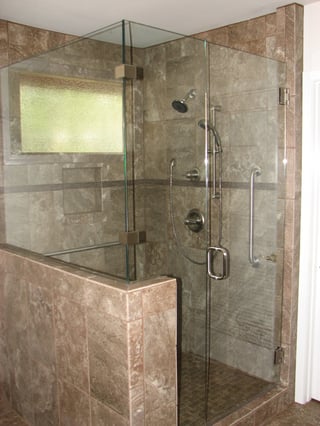

Physical limitations affect many more people than the daily users of walkers and wheelchairs. Many members of our life experienced or elder society have significant problems in dealing with their home environment. Today's conventional building standards conflict with most people's accessibility when you consider our created architectural barriers concerning cabinetry and door opening widths, individual strength, range of motion, movement, manual dexterity, balance, and coordination. Once the demands of our built environment exceed their capacities we become excluded from a room or even the entire home. The building world must work in unison to be sure the entire living environment meets basic needs in addition to affordability and structural integrity for the consumer and home owner. This includes both the home and the components within the home being accessible to all inhabitants. Privacy, sense of belonging, sense of control, and the sense of safety and security make up the quality of life for any home and should be considered for any design.

The Aging in Place market in the US today is constantly being influenced by the increasing size of the aging population, the market desire to remain in one's home, a constantly increasing cultural diversity, and our aging housing stock associated with it's reduced affordability. Our elderly population is really made up of two prominent age groups formed by the age 65 and over population and the baby boomers who were born between 1946 and 1965. Together these two groups own over 48% of all the US home inventory today. The desire to remain in one's home is driven by social attachments via a network of neighbors, friends, and family. Our cultural diversity assures that the same Aging in Place solutions cannot work across the board for all individuals just as an individual's ability to live independently varies from person to person. With constantly aging housing, costs can be a major barrier in home modification for many residents. A catch 22 situation can arise when you consider the reduced affordability of another home versus the one that is presently occupied. In this case the homeowner must use the equity that has accrued in their home's value in order to make the modifications required. You will find out in the long run that it's cheaper to remodel your existing home using your accrued assets than it is to buy a new home in today's market and move.

There are really three categories of Aging in Place customers. Those who are simply and wisely planning ahead for their futures to remain in their present homes. The second category concerns those people who know they have a chronic medical disorder and need to prepare in advance for accessibility issues which will come as a result of their disease. People with diseases that are constantly causing increased physical or mental changes to their being are a good representative of this second group. The third group involves those people who either have had a chronic problem that has progressed severely altering their mobility or those who have sustained a life altering tragedy such as being involved in an accident. All of these groups will drive the future metamorphosis of existing inaccessible dwellings.
Some people confuse the terms Aging in Place with Universal Design. Both are a method to increase accessibility within the home but Aging in Place strictly deals with an existing home. Aging in Place also implies modifying any home for it's older occupants to insure that the inhabitants can safely remain in the home for as long as they possibly can. This time will expire once they need assisting medically trained help for safeguarding their personal safety in a nursing home or an assisted living environment. Universal Design is just that; offering choices to all of a home's residents no matter their age or physical capabilities. It begins with a design and then the construction begins. Items like wide-open rooms containing a sixty-inch by sixty-inch area for turning, unobstructed corridors at least 40-inches wide, adequate lighting throughout the home, having adaptable kitchen work areas, the use of contrasting colors in all rooms, a shower seat to increase safety, raised electrical outlets positioned at 18-inches above the floor, reinforced bathroom walls to allow for installing grab bars when required, easy-to-reach storage with greater organization, and non-slip flooring are major concerns within any elderly house design. However, the number one safety hazard to consider during an elderly home design is negotiating level changes within the home--steps at the entry, stairs between floors, and curbs to step over when entering the bath or shower. Eliminating level changes is very difficult in existing homes and almost impossible to do aesthetically and without major compromises, unless there is a major renovation. The result is that most homeowners decide to sell the house rather than make the modifications. When Universal Design is periodically incorporated into their design, homes can accommodate the needs of their owners longer as those needs evolve over time.
David L. Traut, CAPS owner of T-Square Company in Austin, Texas is one of the select group of professionals nationwide to earn the Certified Aging-In-Place Specialist (CAPS) designation, identifying him as a home remodeler and builder with the skills and knowledge necessary to remodel or modify a home to meet the unique needs of the older population, disabled owners or their visitors.
After over a year of writing to fulfill his customers' requests, David's new book, "Age in Place At Home: Adapting the Home Environment for All Generations" , is available for purchase from Amazon. Please go to the link below to order his paperback book, which was released in late December, 2022. It provides a great guideline for using the principles of Universal Design in new home construction and/or remodeling for every room in your home. Get your copy today.
https://www.amazon.com/gp/r.html?C=2Z24ENUUAEWUK&K=13Y7YU7PKKYAC&M=urn:rtn:msg:20221010201802eb9acb7b24004a4785cd2ec1d4f0p0na&R=3R6MK9WDXJPH7&T=C&U=http%3A%2F%2Fwww.amazon.com%2Fdp%2FB0BHTV28RV%3Fref_%3Dpe_3052080_276849420&H=7FWEPMGCH0TT8LN6SKPMUOCVJNYA&ref_=pe_3052080_276849420
David's book acts as a guidepost for perplexed homeowners and caretakers trying to determine their family's next immediate direction and imminent future. The first half of the book explains why homes have always been inaccessible, except on the day they were purchased. The second half takes you room by room through the home as I explain how applying the principles of Universal Design for Aging in Place makes the home comfortable and accessible for the largest number of people.
For additional information about the CAPS program, visit nahb.org/CAPS. For more information about T-Square Company, visit www.tsquareco.com or call 512-444-0097.

Tags:
barrier free access,
aging in place home modifications,
handicap home modifications,
aging in place construction,
aging in place designs,
CAPS certification holder in Austin,
CAPS remodeling techniques,
Universal Design,,
aging in place specialist,
aging in place services,
elder construction,
independent living in Austin Texas,
Austin elder construction,
handicap accessibility,
bathroom modifications for disabled,
accessibility remodelers in Austin,
roll in showers,
handicap bathrooms,
home modifications for independent living Austin,
universal design ideas,
Austin Accessibility Design,
Austin senior living solutions,
age in place home design,
Austin disability contractors for special needs,
accessible design,
accessible homes in austin,
barrier free home design,
Disability Remodeling Services in Austin, Texas,
CAPS-certified remodeling in Dripping Springs,
Dripping Springs senior home remodeling,
Universal Design for Disabilities,
aging in place services for seniors in Austin,
Barrier-free designs,
forever home,
elderly home designs
The biggest and most important challenge for any homeowner wanting to increase home accessibility using Universal Design to Age in Place is qualifying a chosen builder or remodeler. Consumers must verify the tradesman or professional has both the experience and knowledge for understanding any requirements used to increase the client’s safety and accessibility within the home. This is the only variable a homeowner controls in the building process. You are about to give a complete stranger your trust in a very serious matter of which you most likely know little about beyond articles read on the internet or hearsay. All professionals selected must be knowledgeable and experienced concerning Universal Design projects. The relevant personnel having job input concerning the client consist of architects, designers, builders, remodelers, and any therapists or extended healthcare workers who are involved with any household occupant requiring home modifications. I have witnessed clients who are completely overwhelmed and frustrated when interviewing several groups of building professionals including subcontractors with overlapping scopes of work. They become confused by the large amount of information gathered. Be advised that too many cooks in the kitchen can spoil a successful job outcome. CAPS certified accessibility specialists are trained to be better capable of helping with both the design and construction phases of the project. Most CAPS members have had coursework in Universal Design. However, you would not choose a recent law graduate over an experienced defense attorney to represent you in a serious matter. Even though both people have law degrees, there is only one path to choose. The remodeling business is no exception. All CAPS certified professionals are not equal. Some come from different professional backgrounds other than construction while others have not used their acquired knowledge long enough to make a difference. Ask about their experience and how long they have practiced Aging in Place remodeling. A well-seasoned contractor has seen what issues frequently come up in making improvements for Aging in Place and knows which methods he or she has used to overcome certain problematic areas of the home.
The aging societal changes and inventory of inaccessible existing houses created the need for a CAPS certification program. This designation program, offered through the National Association of Home Builders, NAHB, in collaboration with The American Association of Retired Persons or AARP, incorporates components of assessment, technical knowledge and management skills related to home modifications used to help people stay at home safely and independently for a longer period of time. The program was developed in 2001. The CAPS program connects responsible professionals with home owners needing specialized accessibility services on an ever increasing basis. Ordinary homeowners with extraordinary challenges partner up with experienced CAPS professionals and their own families. Working as a team, the trained CAPS specialist along with any family caretakers or therapists is able to identify the day to day problems weighing on those with health limitations. Aging in Place services provided by a specialized remodeling contractor ensures all accessibility issues of the home are accomplished correctly. The CAPS credential is a nationwide initiative and many construction and design professionals are taking advantage of the helpful training across the nation. Always check his or her credentials to verify the remodeler holds an active CAPS certification and is familiar with Universal Design. All registered CAPS program graduates and remodeling companies are listed in a national registry in Washington DC. The information is found by calling 1-800-368-5242 or by simply visiting their website at: http:www.nahb.org/en/learn/designations/certified-aging-in-place-specialist.aspx.
Experienced CAPS certified remodelers have the knowledge, expertise and sensitivity to provide modifications for making a home safer, more accessible, and better suited to the client’s required needs. A professional CAPS certified builder or remodeler is able to correctly assess the costs associated with an accessible design and lead the homeowner in the right direction adhering to the available budget costs to accomplish the modifications needed. Home modifications, accessibility products, and barrier free design greatly promote the independence and functional ability of physically challenged and aging individuals. Designing around specific physical conditions for accessibility lessens the impact of arthritis, restricted mobility, or loss of vision by using combinations of products, concepts, and techniques available today. Keep in mind when hiring a Certified Aging in Place Specialist they offer a service rather than a product. Each CAPS member draws from a different knowledge base, and approaches each project in a distinct way.
T-Square Company in Austin, Texas, has been producing successful Aging in Place projects for over a decade. They are a CAPS certified remodeler and offering design/build Aging in Place projects using Universal Design features. Call 512-444-0097 to discuss your project today and learn how you can achieve better accessibility within your existing home.
Incidentally, David L. Traut, the President/owner of T-Square Company has recently published a book entitled "Age in Place at Home: Adapting the Home Environment for All Generations". It is available on Amazon and stands as a reference book for increasing home accessibility incorporating essential Universal Design features.
Tags:
aging in place remodeling,
aging in place home modifications,
handicap home modifications,
CAPS certified remodeling in Austin,
ADA compliance,
custom tub to shower conversions,
CAPS remodeling techniques,
Universal Design,,
aging in place services,
certified aging in place specialist,
accessibility designs Austin Texas,
home modifications for independent living Austin,
universal design ideas,
certified aging in place consultant in Austin,
age in place home design,
aging in place home remodeling,
7 principles of universal design,
Austin disability contractors for special needs,
Austin handicap bathroom contractor,
barrier free remodeling,
handicap accessible home modifications,
disability remodeling,
ADA compliant wheelchair accessible showers,
accessible bathroom remodel,
why universal design,
accessible homes in austin,
the basics of aging in place,
Austin home modification services,
Age in Place at Home,
Professional Disability Remodeling Contractor,
CAPS-certified remodeling in Dripping Springs,
Universal Design for Disabilities,
Barrier-free designs,
home accessibility help
After over a year of writing to fulfill my customers' requests, my new book, "Age in Place At Home," is finally available for purchase from Amazon. Go to the link below to order my paperback book, which was released in late November, 2022. It provides a great guideline for using the principles of Universal Design in new home construction and/or remodeling for every room in your home. Get your copy today.
https://www.amazon.com/gp/r.html?C=2Z24ENUUAEWUK&K=13Y7YU7PKKYAC&M=urn:rtn:msg:20221010201802eb9acb7b24004a4785cd2ec1d4f0p0na&R=3R6MK9WDXJPH7&T=C&U=http%3A%2F%2Fwww.amazon.com%2Fdp%2FB0BHTV28RV%3Fref_%3Dpe_3052080_276849420&H=7FWEPMGCH0TT8LN6SKPMUOCVJNYA&ref_=pe_3052080_276849420
A home's adaptability is one of the most desired qualities within a person's home during some point in their life as their or their family's needs change. These specific needs to enhance accessibility can be short term while recovering from an accident or illness at any age, or these home alterations may become permanent. The special needs may concern an adult or a child. Universal design principles don't discriminate between any family members regardless of age, size, or ability. Every family member is included. Learn how to adapt your home environment to satisfy your family's needs in David Traut's new book, Age in Place at Home.
T-Square Company, in Austin, Texas, practices Universal Design accessibility to segue into Aging in Place seamlessly. The essence of my book is to advise people so they understand why our homes are obsolete to us, the homeowners, the minute they are completed. This fact is represented by the methodology used to create the traditional home. They are built to satisfy our immediate lifestyle and physical needs on the day we close on the house, with no regard for the future. The new home lacks adaptability to satisfy our needs once our bodies change beyond the purchase date. If we had incorporated the Universal Design principles into these new homes, those same homes would adapt to our changing family needs including every inhabitant regardless of age, size, or ability. The lack of home adaptability is not the consumers fault, they have always been unaware of how to reference the problem and accepted what the housing market gave them. They were unaware of what to ask for. Hence, the status-quo of building has been perpetuated for over a hundred years.
T-Square Company offers all types of Austin Universal Design home modifications to better prepare you and your family for your unforeseeable home accessibility future on a design/build basis. Existing, traditional homes must be modified to increase their accessibility using correct designs. Become aware and embrace the knowledge that the principles of Universal Design offer greater home accessibility for every one of your home members, from your father to your son. This is why the process is known as inclusive design.
David L. Traut, CAPS, has been involved with accessibility for nearly thirty years for the VA, HUD, and private residences. Contact me at 512-444-0097 for a professional home assessment to guide your future accessibility needs or at www.tsquareco.com. Simply fill out your information on the contact us page.
.
Tags:
aging in place home modifications,
aging in place home improvements in Austin,
wheelchair accessible remodeling,
CAPS certified remodeling in Austin,
aging in place construction,
CAPS professional in Austin,
aging in place services,
accessibility designs Austin Texas,
austin custom walk in shower,
universal design ideas,
Austin Accessibility Design,
aging in place design in Austin,
why is aging in place important,
what does it mean to age in place,
universal designbuilding for the future,
wheelchair accessible home remodeling in Austin,
universal design remodeling contractor,
why is universal design important,
7 principles of universal design,
universal principles of design,
universal design/build contractor,
universal design vs. aging in place,
universal design contractor,
wheelchair accessible housing,
accessible homes in austin,
Austin home remodeling for disabled,
universal home design in Austin,
aging in place versus universal design,
universal design home builder,
universal design home additions,
barrier free design,
Austin home accessibility solutions,
Austin home modification services,
Age in Place at Home,
universal design forever homes
Have you grown tired and frustrated over time when periodic health challenges emerge affecting you or a family member identifying your home as inaccessible, if even for a short time during recovery? Have you observed other families facing this common dilemma? Are you coming to the realization yours and almost all other existing homes lack flexibility or adaptability having reached their potential? An accident or illness brings the undeniable need for home access out into the open. If you have suddenly become caregiver for your spouse or another family member, you know you are not alone in recognizing this dysfunctional housing phenomenon. Many home caregivers face challenges inside their private residences because traditional homes lack accessibility due to their antiquated architecture. There simply isn't enough room to properly care for another person within a given living space. But where did this commonly seen lack of home accessibility in nearly all homes come from? Perpetual, status quo building techniques, and affordability provide the answers. Over time, along with the exponential birth rate of the baby boomers in the late 40s and 50s, the need for more housing created sprawling American suburbs to accommodate the growing families. Developments sprang up with few architectural options while affordability was the main concern. Today, these same homes slowly and increasingly signify outdated and obsolete architectural barriers exposing a true lack of accessibility for the very people inhabiting them. The situation is ever more expanding in time since the greatest majority of individuals want to age where they currently reside. Our homes are built for shelter, but their construction is guided by designs and dimensions demonstrating a denial or ignorance of true human abilities. It is acknowledged any family living with a disability among any of its family members always psychologically benefits from familiar surroundings. Therefore, moving is not always the best option. Fortunately it doesn't have to be this way with correct planning.
Because everyone is living longer, they will experience many life-challenging events during their extended lifespan. The desire to remain in one's current home is not driven by age. This need is a reaction to and the result of life's experience. The universal design principles are used to increase safety and independence within most current homes. Certain common sense home modifications are typically required to increase accessibility and use. These modifications include, but are not limited to, no-step entrances, wider doorways, the installation of ramps, inclusive kitchen modifications, accessible bathroom adaptations, and the application of smooth, non-skid flooring. When planning on what modifications are needed, always make a list of the existing home's most problematic areas for any or all of its residents. This basic desire is creating unprecedented nationwide challenges and a niche market in the remodeling industry known as Aging in Place. The majority of Americans over the age of 45 want to continue living in an environment they are well acquainted with throughout their maturing years. These people are looking for safety, security, ease of use, and comfort for their forever home before they must vacate due to specialized needs. Clearly, the act of Aging in Place occurs during a period of time when mature homeowners or seniors have the ability to make decisions to better support an increased quality of life. There are three segments served within the Aging in Place marketplace. The first segment includes those homeowners without urgent needs. The second segment focuses on a group of homeowners with progressive health needs. The third sector involves those people who have undergone traumatic health changes or accidental injuries necessitating immediate modifications to the home. The choice to Age in Place does not mean the homeowner has to do everything in the future by themselves. Aging in Place principles supports responsible people living life with dignity and independence even when outside assistance is essential.
But why should we eventually all face the disruptions of modifying our domains to ensure we can remain in them following a health change in life? It is long past due for us to redefine the built environment with what we know to be true. The answer lies within a forever home. This unique home opens up all rooms to all visitors. A forever home is a home you can imagine living in for a lifetime and one that will meet the needs of all residents throughout their lives. This thoughtful living environment is designed and constructed universally to conform to all residents diverse needs and abilities at any age. A forever home is unlike a starter home, and each occurs at different times during a homeowner's life. A starter home is a smaller home needed when you are starting out. This home represents a stepping stone and is a popular option concerning younger homeowners because it's more affordable. The forever home has the ability, through proactive planning and existing home modifications, for a family or all family members to live in the house for a very long time prior to anyone needing full time professional assistance. This home contains accessibility for everyone, regardless of their age, size, or abilities. During life's voyage, the forever home should become a reality as early as possible. This reality means the family can enjoy the comfortable and livable home longer. It has adequate access through wider entries and doorways, a larger kitchen, larger bathrooms, larger bedrooms, and an accessible front and back yard. The more expensive larger forever home has room to comfortably maneuver about when mobility devices or strollers are needed because architectural barriers are nonexistent.
If you have had enough of the status-quo building techniques which created our inaccessible home inventory, you and your family can put your collective thoughts together in order to design and build a house that will last a lifetime. You don't have to discard your favorite design pictures or ideas. The same elevations can be incorporated into the forever home; but rearranged into a Universal Design floorplan. Key questions should be addressed for this uber-customized home. Your family is aware of any lifestyle challenges you face due to progressive diseases or hereditary complications within the group. You know everyone gets older, and in doing so some member might lose cognitive or mobility functions. Your new uncluttered universal floorplan will accommodate a young family with children or an unexpected in-law coming to live with you. It is easy to maneuver inside this universal home going from a completely accessible bathroom to a family gathering in the adaptable kitchen accompanied by a well designed living area. Within the house, you should plan flexible rooms which will accommodate double and triple duty as needed by your family over time. Designing a forever home has many benefits including emotional, economic, and environmental aspects. What's more, you are building a multi-generational setting that can be passed on to the following generations.
According to the AARP, 80 percent of older homeowners overwhelmingly prefer to Age in Place, which means living in a home safely, independently, and comfortably, regardless of age or ability level. People with disabilities are aging but some healthy individuals are aging into a disability. Aging in Place strictly deals with the remodeling of existing homes. Therefore, to Age in Place, owners need to gradually modify their homes as they mature by increasing access and safety using the principles of Universal Design before a life-changing event forces making sudden architectural changes. The Aging in Place market in the U.S. today is influenced by the increasing size of the aging population, the market desire to remain in one's home, a constantly increasing cultural diversity, and the aging housing stock associated with reduced affordability. The desire to remain in existing homes is driven by social attachments via a network of neighbors, friends, and family. Comfortable positive aging is a way of living rather than a state of being. What's more, seniors who took a proactive approach in modifying their homes over time offer peace of mind to their loved ones or caretakers who know their family members are living safely and independently in their homes.
T-Square Company is one of Austin's premier Aging in Place contractors offering complete Aging in Place services from home assessments to design/builds. We have over 30 years of accessibility knowledge to share with our clients making their home life less complicated. We hold a nationally recognized CAPS certification (Certified Aging in Place Specialist) offered by the National Association of Home Builders, NAHB. Contact T-Square Company today to find out how to proceed toward an accessible second chapter of life while your aging parents remain in their home. We offer complete Aging in Place design services.
By the way, David Traut, the President/owner of T-Square Company has recently published a book entitled "Age in Place at Home: Adapting the Home Environment for All Generations". It is available on Amazon and stands as a reference book for increasing home accessibility through Universal Design.
Tags:
aging in place remodeling,
aging in place home modifications,
aging in place home improvements in Austin,
frameless European,
aging in place designs,
accessible home remodeling,
Universal Design,,
aging in place services,
home modifications for independent living Austin,
universal design ideas,
Austin senior living solutions,
certified aging in place consultant in Austin,
aging in place specialist in Austin,
universal design remodeling contractor,
7 principles of universal design,
applying principles of universal design in Austin,
Austin disability contractors for special needs,
barrier free remodeling,
accessible homes,
universal design/build contractor,
why universal design,
what is universal design in Austin,
what is aging in place,
universal design techniques,
accessible home builder in Austin,
the basics of aging in place,
barrier free home design,
Disability Remodeling Services in Austin, Texas,
Universal Design for Disabilities,
aging in place services for seniors in Austin,
Barrier-free designs,
forever home,
aging parents caregiver guide,
houses designed to last a lifetime