Check out my building blog to learn more about construction for your home or office in Austin! David L. Traut, President, CAPS Certified (512)444-0097

When To Modify A Home For Aging in Place? T-Square Company

Posted byDavid L. Traut, CAPS on Tue, Jun 30, 2026 @ 12:06 PM

The Optimal Time To Begin Home Modifications

Ideally, begin proactively thinking long before mobility becomes severely limited. This allows for less stressful, budget alternatives.  Therefore, aging in place works best when the home evolves gradually through a phased approach, rather than during a crisis. The ideal time to remodel is:

  • Before mobility changes
  • Before surgery or recovery needs
  • Before caregiving becomes urgent
  • While decisions can still be proactive

David L. Traut, CAPS, offers complete aging in place services

Early Beneficial Modifications and Major Accessibility Upgrades To Consider Later

The timeline for the early stages should be during the ages of 50s-60s, where you integrate minor modifications such as lever-style door handles and improved lighting accompanying routine home improvements and repairs.

Additional modifications are accomplished when you notice health changes during the ages of 60s to 70s. Take action immediately when you first feel increased caution when traveling through your home, avoiding certain areas, or experiencing minor mobility changes. 

A Phased Approach To Aging in Place Improvements

Phase 1: Start by removing tripping hazards like throw rugs, adding motion-sensor nightlights, and installing grab bars in the bathroom mounted on substantial wood blocking between the wall studs. These are considered low-cost/high-impact alterations.

Phase 2: Major adjustments include installing stairlifts before stairs become an architectural barrier or converting a first-floor space into a primary bedroom.

The Real Goal of Aging in Place

For many homeowners, the goal is not simply staying in the house longer, but it is preserving:

  • independence
  • dignity
  • safety
  • comfort
  • connection to community
  • and the emotional meaning of home

That is the real definition of a successful forever home.

David Traut, the CAPS Certified owner of T-Square Company, is an award-winning author of Age in Place at Home: Adapting the Home Environment for All Generations , available on Amazon, and a founding member of the National Aging in Place Council (NAIPC).

Ready to create a safer, more accessible forever home?

Schedule a consultation with T-Square Company in Austin, Texas, and learn how a Certified Aging in Place Specialist (CAPS) can help you develop a proactive plan that supports independence, safety, and comfort for years to come.

Certified Aging In Place Specialist


Tags: aging in place, CAPS professional in Austin, Universal Design,, home accessibility, forever home, senior safety, home modifications, independent living, aging in place planning, accessible remodeling

The Overall Trend in Aging in Place

Posted byDavid L. Traut, CAPS on Tue, Jun 23, 2026 @ 13:06 PM

Universal Preference

The aging in place movement is rapidly becoming one of the most important shifts in housing, healthcare, and residential design in America. More adults than ever before want to remain in their own homes as they age rather than relocate to assisted living facilities or institutional care environments. People tend to equate institutional settings with reduced privacy, loss of independence, and social isolation.  Today's surveys consistently show that roughly 75-90% of older adults prefer to remain in their current homes as they age.  Furthermore, there is a massive shift toward prolonged independent living, driven by a desire for autonomy, a declining use of nursing homes, and a rapidly expanding "AgeTech" market.

At its core, the current trend, created by longevity, reflects a major cultural shift: people no longer see aging as something that should automatically require leaving home. Instead, homeowners increasingly view their homes as long-term assets that can be adapted to support safety, independence, wellness, and dignity at every stage of life. Hence, as baby boomers reach retirement age, the healthcare and home design industries are heavily adapting to support seniors living safely at home. 

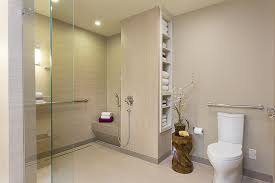
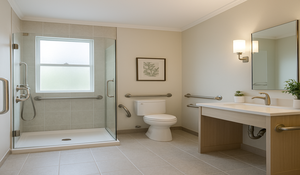
An accessible bathroom created for aging in place

"AgeTech" and Smart Homes

The so-called novelty phase of health tech has matured into structural infrastructure. Homes are being retrofitted with AI assistants, wearable health monitors, automated medication dispensers, and proactive fall-detection sensors.

Telehealth Expansion

Virtual doctor visits and remote diagnostic tools provide real-time patient data, allowing physicians to monitor chronic conditions without requiring frequent in-office visits.

The healthcare industry is increasingly supporting home-based care models and flexible, customized treatment rooms that incorporate universal design principles.

Hospitals, insurers, and healthcare providers now recognize that safe home environments can encourage independence, support mental health, lower long-term health costs, and improve recovery outcomes.

As a result, aging in place is becoming increasingly connected to occupational therapy, home health services, preventive care, and wellness-focused residential design. The best homes of the future will not simply be adapted for living;  the future home is progressing into a complete care ecosystem.

Home Modifications  

Renovations involving widening doorways, adding grab bars, installing walk-in showers, and building first-floor bedrooms have become a major focus for remodeling and construction design. All home modifications are still very important for long-term accessibility.

Solo Agers and Community

Due to shifting family dynamics and smaller support ratios, trends are leaning toward multigenerational living, caregiver additions,  accessible additions, flexible guest suites, co-housing, and village networks that provide safety, sustainability,  community support, and helpful caretaking among various generations. 

Many families are redesigning homes to support aging parents while preserving privacy and independence for everyone involved.

In places like Austin and throughout Texas, interest in accessible ADUs (accessory dwelling units) and flexible housing solutions continues to grow as families seek alternatives to institutional care.

The Challenges

Despite the overwhelming desire to stay home, the US housing stock is largely unprepared, with an estimated 90% of homes lacking the necessary modifications for safe, long-term independent living. Additionally, there is an alarming shortage of professional caregivers, forcing families to rely more heavily on smart monitoring and automated systems to fill the gaps.

Emotional Wellness as a Central Focus

Perhaps the most important trend is that aging in place is no longer viewed only as a construction issue—it is now recognized as a quality-of-life issue. 

The conversation has evolved beyond simply “staying home longer.” The focus is increasingly about creating a forever home that supports healthy, meaningful living across generations.

Professionals like David L. Traut, a CAPS-certified practitioner, is the owner of T-Square Company located in Austin, Texas, and often emphasizes that aging in place succeeds best when homeowners begin planning early, think long-term, and create adaptable environments that evolve with changing needs, rather than waiting for a crisis to force change. David is an active founding member of the National Aging in Place Council.

David is also certified in Universal Design in both the United States and Australia. Drawing on decades of expertise, he published Age in Place at Home: Adapting the Home Environment for All Generations, a comprehensive guide that explores the role of Universal Design in creating safe, accessible homes.

📘 Age in Place at Home acts as a guide, taking readers room by room, explaining practical modifications that enhance safety, accessibility, and independence. The book is available on Amazon.

Home Accessibility Help


Tags: aging in place home modifications, aging in place, Universal Design,, aging in place design,, home accessibility, forever home, independent living, senior home safety, CAPS specialist, smart home technology, multigenerational living, aging in place trends, accessible remodeling, senior-friendly design, accessibility solutions

National Aging in Place Council (NAIPC) ANOUNCEMENT-David L. Traut

Posted byDavid L. Traut, CAPS on Mon, May 25, 2026 @ 18:05 PM

What if your home could grow with you—supporting your independence, safety, and comfort at every stage of life?

For more than 30 years, David Traut has been helping families do exactly that. As a Certified Aging-in-Place Specialist (CAPS) and President of T-Square Company in Austin, he designs and remodels homes to remove barriers and create spaces that are both accessible and beautiful.

David’s work is rooted in a simple but powerful idea: everyone deserves to live safely and independently in the home they love. From thoughtful design to practical solutions, he helps make that possible.

He’s also the award-winning author of Age in Place at Home, where he shares guidance to help families plan with confidence.

Through his work with NAIPC, David is passionate about educating and supporting our community so more people can age in place with dignity.


For more information about David, check out his website at: https://www.tsquareco.com/home-remodeling-austin-austin-home-remodeling-bathroom-kitchen-remodels-in-austin-tx

Aging in Place Specialist David L. Traut

Let me assess your living situation to determine solutions for better home accessibility. We can accomplish this virtually or in person. Schedule an appointment today@ (512) 444-0097. We offer complete Aging in Place design/builds, consultations, and services.

Tags: aging in place, Universal Design,, certified aging in place specialist, home accessibility, home modifications, CAPS certified, T-Square Company, accessible remodeling, National Aging in Place Council, NAIPC