Check out my building blog to learn more about construction for your home or office in Austin! David L. Traut, President, CAPS Certified (512)444-0097

Aging in Place Specialist | How Much Does It Cost To Age In Place?

Posted byDavid L. Traut, CAPS on Tue, Jul 14, 2026 @ 12:07 PM

Helping Austin Homeowners Stay Safe, Independent, and Comfortable at Home 

As we grow older, most of us want to remain in the homes we love. However, many homes were not designed to accommodate changing mobility, vision, balance, or health needs. These homes were built according to the status quo, but were never accessible.

For more than 30 years, I have helped homeowners throughout Austin and Central Texas create safer, more accessible living environments through thoughtful remodeling and Universal Design solutions. My goal is simple: help people maintain their independence, dignity, and quality of life while remaining in the home they cherish. 

David L. Traut is a certified Aging in Place Specialist

I am David L. Traut, CAPS,  an Accessibility Specialist, Universal Design Expert, award-winning author, and President of T-Square Company in Austin, Texas.  As a Certified Aging-in-Place Specialist (CAPS), I specialize in home modifications that improve safety, accessibility, comfort, and long-term livability.

Why Aging in Place Planning Matters

Many homeowners wait until after a fall, injury, or health crisis before considering home modifications. By preplanning, you can create a safer and more functional home that adapts to your needs over time.

Common improvements include barrier-free showers, grab bars (especially in the bathroom), wheelchair-accessible entrances, wider doorways and hallways, improved lighting and visibility, smart-home technology, accessible kitchens, stairway safety solutions, and future-ready universal design features.

These modifications not only increase safety but can help reduce stress for family members and caregivers while allowing homeowners to maintain greater independence. 

Award-Winning Author and Aging in Place Advocate

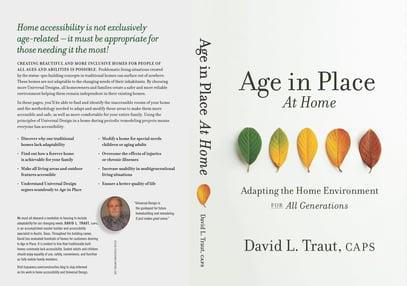
I am the author of the award-winning book Age in Place at Home: Adapting the Home Environment for All Generations,  which provides practical guidance for homeowners, caregivers, and families seeking solutions for aging in place.

My work combines real-world construction experience, accessibility expertise, and a commitment to helping people thrive safely and comfortably at home. I help homeowners answer questions like "How do I create a lifetime home accessibility plan?" and "How can I make my bathroom safer?"

Personalized Home Accessibility Assessments

Every home and every homeowner is different.

Whether you are planning for retirement, recovering from an injury, caring for a loved one, or seeking long-term accessibility solutions, I can evaluate your home's current layout and identify practical improvements that fit your needs and budget. Together, we can determine the answer to the questions "How can I age in place safely?" or "Should I remodel my home or move?"

Consultations are available virtually or in person throughout the Austin area.

Testimonial

 "David helped us transform our home so my husband could safely remain independent after surgery. The improvements blended beautifully with our home's design and gave our family tremendous peace of mind." — Austin Homeowner 

Schedule Your Aging in Place Consultation

If you want to remain safely and independently in your home for years to come, now is the best time to begin planning.

Call (512) 444-0097 to schedule an Aging in Place consultation and discover how thoughtful design can help you create a safer, more comfortable forever home.

My work is rooted in a simple but powerful idea: everyone deserves to live safely and independently in the home they love. From thoughtful design to practical solutions, David helps make that possible.

Certified Aging In Place Specialist


Tags: aging in place, certified aging in place specialist, Austin remodeling, universal design contractor, home accessibility, barrier free design, forever home, home accessibility remodeling, senior home safety, CAPS certified, fall prevention, aging in place austin

Typical Aging in Place Questions for Seniors | T-Square Company

Posted byDavid L. Traut, CAPS on Tue, Jul 07, 2026 @ 11:07 AM

Frequently Asked Questions

What is Aging in Place?

Aging in Place means living safely, comfortably, and independently in your own home regardless of age, income, or physical ability. Through thoughtful planning and home modifications, many people can remain in the homes they love for years longer.

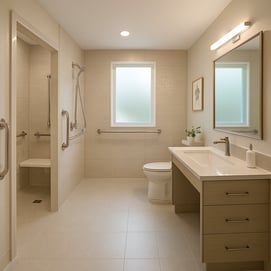
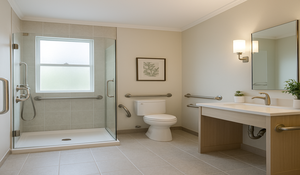
 A beautifully designed spacious bathroom that emphasizes accessibility and modern aesthetics The bathroom features wide doorways

When should I start planning?

Ideally, before a mobility-related health issue occurs, the most successful projects are proactive rather than reactive. Planning early gives homeowners more options, allows projects to be completed gradually, and often costs less than making emergency modifications after a fall or illness.

Can I make my home safer without making it look like a hospital?

Absolutely. Today's accessibility products are attractive, modern, and designed to blend into your home's decor. Universal design focuses on creating beautiful, functional spaces that everyone can enjoy, whether they are six or sixty years old.

What is a Certified Aging in Place Specialist (CAPS)?

A Certified Aging in Place Specialist (CAPS) has specialized training in designing and remodeling homes to improve accessibility, safety, and long-term independence. The designation combines technical construction knowledge with an understanding of the changing needs associated with aging.

What modifications provide the greatest benefit?

Every home is unique, but the bathroom is often the first place to address because it is where many serious falls occur. Improving safety doesn't always require a major remodel. Strategic upgrades such as brighter lighting, professionally installed grab bars, barrier-free shower entrances, slip-resistant flooring, wider doorways, lever-style door handles, accessible entrances, and the removal of common trip hazards can dramatically reduce the risk of injury while making daily activities easier and more comfortable.

Many of these improvements follow the principles of Universal Design, creating a home that is safer, more functional, and more appealing for people of all ages. By making thoughtful modifications before they're needed, homeowners can enjoy greater independence, peace of mind, and a higher quality of life while also enhancing the long-term value and livability of their home.

The best home modifications are the ones that blend seamlessly into your home—enhancing safety and independence without sacrificing comfort or beauty. 

Do I need to remodel my entire house?

Not necessarily. Many homeowners begin with one room, often the bathroom, or address specific safety concerns first. Improvements can be completed in phases as needs and budgets allow.

Can modifications increase home value?

Many Universal Design features appeal to homeowners of all ages, sizes, and abilities, and can improve marketability while increasing safety and convenience for a better resale appeal. Many features are so well integrated that visitors never notice they were designed for accessibility.

How much do Aging in Place modifications cost?

Costs vary depending on the scope of work. Some safety improvements cost only a few hundred dollars, while large remodeling projects are more expensive. A plan can be developed that fits your priorities and budget.

Can accessibility modifications be completed while I'm living at home?

In many cases, yes. Projects are carefully planned to minimize disruption whenever possible, allowing homeowners to remain comfortable during construction.

How long does an Aging in Place remodel take?

Smaller projects may be completed in just a fw days, while larger renovations can take several weeks depending on design, permitting, and material availability.

Do you only work with seniors?

No. Accessibility benefits everyone. Homeowners recovering from surgery, individuals with disabilities, children, veterans, people with temporary injuries, caregivers, and families planning for multigenerational living all benefit from Aging in Place designs and services.

What is the biggest mistake homeowners make?

Waiting too long. Many people begin planning after a fall or medical emergency. Making proactive improvements before a crisis occurs provides more choices, less stress, and better long-term outcomes.

Why choose T-Square Company?

With more than 30 years of design/build experience, T-Square Company specializes in practical, customized accessibility solutions and not one-size-fits-all remodeling. Every recommendation is based on your home, your lifestyle, and your long-term goals. David L. Traut, CAPS, the owner of T-Square Company, is a founding member of the National Aging in Place Council and certified in Universal Design.

How do I get started?

The first step is scheduling a professional assessment. During the consultation, we'll evaluate your home, discuss your goals, identify potential safety concerns, and develop a personalized plan to help you remain and independent for years to come. To keep you in budget, the modifications addressed can be done in phases.

Call T-Square Company today at (512)-444-0097 to schedule your consultation.

David L. Traut is an Award-Winning Author and Aging in Place Advocate.

David is the author of the award-winning book Age in Place at Home: Adapting the Home Environment for All Generations,  which provides practical guidance for homeowners, caregivers, and families seeking solutions for aging in place.

My work combines real-world construction experience, accessibility expertise, and a commitment to helping people thrive safely and comfortably at home.

Certified Aging In Place Specialist


Tags: aging in place, certified aging in place specialist, universal design/build, Austin remodeling, home accessibility, accessible design, forever home, home accessibility remodeling, home modifications, senior home safety, fall prevention, aging in place austin

The Overall Trend in Aging in Place

Posted byDavid L. Traut, CAPS on Tue, Jun 23, 2026 @ 13:06 PM

Universal Preference

The aging in place movement is rapidly becoming one of the most important shifts in housing, healthcare, and residential design in America. More adults than ever before want to remain in their own homes as they age rather than relocate to assisted living facilities or institutional care environments. People tend to equate institutional settings with reduced privacy, loss of independence, and social isolation.  Today's surveys consistently show that roughly 75-90% of older adults prefer to remain in their current homes as they age.  Furthermore, there is a massive shift toward prolonged independent living, driven by a desire for autonomy, a declining use of nursing homes, and a rapidly expanding "AgeTech" market.

At its core, the current trend, created by longevity, reflects a major cultural shift: people no longer see aging as something that should automatically require leaving home. Instead, homeowners increasingly view their homes as long-term assets that can be adapted to support safety, independence, wellness, and dignity at every stage of life. Hence, as baby boomers reach retirement age, the healthcare and home design industries are heavily adapting to support seniors living safely at home. 

An accessible bathroom created for aging in place

"AgeTech" and Smart Homes

The so-called novelty phase of health tech has matured into structural infrastructure. Homes are being retrofitted with AI assistants, wearable health monitors, automated medication dispensers, and proactive fall-detection sensors.

Telehealth Expansion

Virtual doctor visits and remote diagnostic tools provide real-time patient data, allowing physicians to monitor chronic conditions without requiring frequent in-office visits.

The healthcare industry is increasingly supporting home-based care models and flexible, customized treatment rooms that incorporate universal design principles.

Hospitals, insurers, and healthcare providers now recognize that safe home environments can encourage independence, support mental health, lower long-term health costs, and improve recovery outcomes.

As a result, aging in place is becoming increasingly connected to occupational therapy, home health services, preventive care, and wellness-focused residential design. The best homes of the future will not simply be adapted for living;  the future home is progressing into a complete care ecosystem.

Home Modifications  

Renovations involving widening doorways, adding grab bars, installing walk-in showers, and building first-floor bedrooms have become a major focus for remodeling and construction design. All home modifications are still very important for long-term accessibility.

Solo Agers and Community

Due to shifting family dynamics and smaller support ratios, trends are leaning toward multigenerational living, caregiver additions,  accessible additions, flexible guest suites, co-housing, and village networks that provide safety, sustainability,  community support, and helpful caretaking among various generations. 

Many families are redesigning homes to support aging parents while preserving privacy and independence for everyone involved.

In places like Austin and throughout Texas, interest in accessible ADUs (accessory dwelling units) and flexible housing solutions continues to grow as families seek alternatives to institutional care.

The Challenges

Despite the overwhelming desire to stay home, the US housing stock is largely unprepared, with an estimated 90% of homes lacking the necessary modifications for safe, long-term independent living. Additionally, there is an alarming shortage of professional caregivers, forcing families to rely more heavily on smart monitoring and automated systems to fill the gaps.

Emotional Wellness as a Central Focus

Perhaps the most important trend is that aging in place is no longer viewed only as a construction issue—it is now recognized as a quality-of-life issue. 

The conversation has evolved beyond simply “staying home longer.” The focus is increasingly about creating a forever home that supports healthy, meaningful living across generations.

Professionals like David L. Traut, a CAPS-certified practitioner, is the owner of T-Square Company located in Austin, Texas, and often emphasizes that aging in place succeeds best when homeowners begin planning early, think long-term, and create adaptable environments that evolve with changing needs, rather than waiting for a crisis to force change. David is an active founding member of the National Aging in Place Council.

David is also certified in Universal Design in both the United States and Australia. Drawing on decades of expertise, he published Age in Place at Home: Adapting the Home Environment for All Generations, a comprehensive guide that explores the role of Universal Design in creating safe, accessible homes.

📘 Age in Place at Home acts as a guide, taking readers room by room, explaining practical modifications that enhance safety, accessibility, and independence. The book is available on Amazon.

Home Accessibility Help


Tags: aging in place home modifications, aging in place, Universal Design,, aging in place design,, home accessibility, forever home, independent living, senior home safety, CAPS specialist, smart home technology, multigenerational living, aging in place trends, accessible remodeling, senior-friendly design, accessibility solutions

Proactive Aging in Place Planning: Why Flexible Home Designs Matter

Posted byDavid L. Traut, CAPS on Wed, Jun 17, 2026 @ 18:06 PM

Why Waiting Too Long Creates Bigger Problems

A thoughtfully adapted home helps preserve dignity, confidence, and independence rather than making a person feel like they are “aging into decline”, but it's how you accomplish the task that makes a huge difference. 

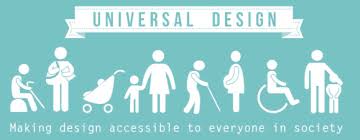
Universal Design makes a home accessible to everyone regardless of age, size, or ability.

The most successful aging in place plans are both flexible and proactive because aging is gradual, unpredictable, and constantly changing. Waiting until after a fall, hospitalization, or health crisis usually forces families into rushed decisions that are more expensive, stressful, and limiting.

Flexible Design for Changing Needs

Flexibility is equally important because physical and cognitive needs evolve. A person may be fully independent today, but later need a mobility device, reduced stair use, in-home caregiver assistance, improved visibility and lighting, easier-to-reach storage, and smart home or monitoring technology.

Universal Design and Long-Term Independence

Homes designed with Universal Design principles can adapt more easily to these changes without requiring major reconstruction later. Features such as zero-step entrances, wider doorways, lever door handles, curbless showers, more open floor plans, and reinforced bathroom walls for future grab bar installation allow the home to evolve with the homeowner.

The Benefits of Proactive Home Modifications

A proactive approach allows homeowners to prepare their environment before serious problems occur. Instead of reacting to an emergency, they can thoughtfully create a home that supports long-term independence, safety, and comfort. For example, installing better lighting, improving stair safety, widening pathways, or remodeling a bathroom early can prevent injuries before they happen. These changes are often simpler and less costly when planned rather than completed during a medical crisis.

Proactive planning also protects homeowners' emotional well-being. Many people want to remain connected to:

  • Their neighborhood
  • Friends and family
  • Familiar surroundings
  • Personal memories
  • Daily routines

Creating a Forever Home That Adapts Over Time

On the contrary, a reactive plan usually begins after experiencing a fall, hospitalization, loss of mobility, caregiver burnout, or following a sudden or extreme diagnosis.  At that point, families are often under emotional and financial pressure. Decisions become rushed, and options may be limited. In many cases, homeowners are forced into temporary solutions or premature relocation because their home was never prepared for changing needs.

In practice, the best aging-in-place plans usually happen in phases:

  1. Early prevention improvements
    Lighting, decluttering, railings, flooring, and bathroom safety.
  2. Accessibility upgrades
    Entry access, wider circulation paths, accessible kitchens,  and bathrooms.
  3. Future-readiness planning
    Smart technology, caregiver accommodations, first-floor living, adaptable spaces.
  4. Long-term adaptability
    Modifications that can evolve as health or mobility changes.

This long-range mindset is why aging in place is most successful when treated as an ongoing lifestyle and home-design strategy—not simply a reaction to aging itself.

Getting Professional Guidance

At T-Square Company, a local CAPS-Certified Builder in Austin, Texas, we help homeowners evaluate risks and implement smart, practical safety solutions tailored to their home and lifestyle. Stop procrastinating and schedule an in-home or virtual home assessment today.

Accessible Remodeling • Universal Design • Aging-in-Place

Let’s make your forever home work beautifully for you—now and for years to come.

David L. Traut, owner of T-Square Company and an active member of The National Aging in Place Council, has written an award-winning Aging in Place Guide

Age in Place at Home Book

David is also certified in Universal Design in both the United States and Australia. Drawing on decades of expertise, he published Age in Place at Home: Adapting the Home Environment for All Generations, a comprehensive guide that explores the role of Universal Design in creating safe, accessible homes.

📘 Age in Place at Home takes readers room by room, explaining practical modifications that enhance safety, accessibility, and independence. The book is currently available on Amazon.

Discover the Principles Of Universal Design

Tags: aging in place remodeling, aging in place, CAPS professional in Austin, Universal Design,, accessible design, accessibility home modifications, forever home, senior safety, National Aging in Place Council NAIPC, independent living, senior home safety, home modifications for seniors, T-Square Company, multigenerational living, accessible living, bathroom safety

Future of Aging in Place: Smart Home Technology & Personalized Care

Posted byDavid L. Traut, CAPS on Tue, May 19, 2026 @ 14:05 PM

Aging in place is no longer just about grab bars and wider doorways.

Today, it’s about integrating smart technology, personalized care, and thoughtful design to create a home that actively supports independence, safety, and quality of life.

As we look toward 2026 and beyond, one thing is clear:

The home is becoming part of the care team.

future aging in place using smart home technology for personalized care


The New Model: Smart Homes + Telehealth + Human-Centered Design

Traditionally, aging in place focused on physical modifications:

  • Safer bathrooms
  • Better lighting
  • Accessible entries

Those elements are still essential—but they are now just the foundation.

The modern “Forever Home” includes:

1. Smart Home Integration

  • Voice-activated lighting and controls
  • Automated thermostats and security systems
  • Motion sensors for activity tracking

2. Remote Health Monitoring

  • Wearables tracking vitals and movement
  • Fall detection systems with instant alerts
  • Real-time health data shared with caregivers or providers

3. Telehealth Connectivity

  • Virtual doctor visits from home
  • Medication management systems
  • Ongoing care without leaving the house

This combination creates a proactive environment, not just a reactive one.


Why This Matters: Independence Without Isolation

The biggest fear many homeowners have isn’t aging—it’s losing independence.

Technology is changing that.

Instead of moving to assisted living prematurely, homeowners can now:

  • Stay in familiar surroundings
  • Maintain dignity and autonomy
  • Receive support without sacrificing privacy

At T-Square Company, we see this shift every day:

Homes are no longer passive spaces—they are active partners in care.


Design Still Comes First

Here’s the critical point many people miss:

Technology cannot replace good design. It must enhance it.

A truly successful aging-in-place strategy starts with Universal Design principles:

  • Zero-step entries
  • Wider pathways and doorways
  • Accessible bathrooms with curbless showers
  • Layered lighting for visibility and safety
  • Easy-to-reach storage

Once the home is physically accessible, technology becomes exponentially more effective.


The Rise of “Holistic Aging in Place”

The future is not just about safety—it’s about whole-life support.

A holistic approach includes:

Physical Safety

  • Fall prevention
  • Mobility-friendly layouts

Health Monitoring

  • Early detection of issues
  • Continuous care without disruption

Emotional Well-Being

  • Staying connected with family
  • Reducing isolation through technology

Care Coordination

  • Families, caregivers, and providers working together
  • Shared access to real-time information

This is where technology + personalized care models truly shine.


What Homeowners Should Be Thinking About Now

If you or your clients are planning to age in place, the question is no longer:

“What modifications do I need?”

The better question is:

“How can my home support me—physically, digitally, and emotionally—for the long term?”

Start with these priorities:

  1. Assess your current home for safety and accessibility
  2. Plan structural upgrades first (bathroom, entry, lighting)
  3. Layer in smart technology that supports daily living
  4. Consider future care needs—not just current ones

The T-Square Company Approach

At T-Square Company, we specialize in bridging the gap between:

  • Construction expertise
  • Universal Design
  • Real-world aging-in-place solutions

As a Certified Aging-in-Place Specialist (CAPS) with over 30 years in design/build, I’ve seen firsthand:

The best outcomes happen when design, technology, and care planning work together from the beginning.


Final Thought: The Home as a Partner in Living Well

The future of aging in place isn’t about staying put.

It’s about living better, longer, in a home that evolves with you.

When done right, your home becomes:

  • Safer
  • Smarter
  • More supportive
  • And ultimately… more human


T-Square Company — Austin, TX

David L. Traut, CAPS #1636580, owner/president, Member National Aging in Place Council (NAIPC)

512-444-0097

Accessible Remodeling • Universal Design • Aging-in-Place

Let’s make your forever home work beautifully for you—now and for years to come.


David L. Traut, owner of T-Square Company, has written an award-winning Aging in Place Guide

Age in Place at Home Book

David is also certified in Universal Design in both the United States and Australia. Drawing on decades of expertise, he published Age in Place at Home: Adapting the Home Environment for All Generations, a comprehensive guide that explores the role of Universal Design in creating safe, accessible homes.

📘 Age in Place at Home takes readers room by room, explaining practical modifications that enhance safety, accessibility, and independence. The book is available on Amazon.


Aging In Place Home Modifications


Tags: David L. Traut, CAPS, senior home safety, T-Square Company, aging in place technology, aging in place solutions, smart home for seniors, home health monitoring systems, universal design home modifications, telehealth at home

Bathroom Safety Upgrades That Help Seniors Stay Independent

Posted byDavid L. Traut, CAPS on Tue, Apr 07, 2026 @ 16:04 PM

The bathroom is the most dangerous room in the home for older adults. Wet surfaces, tight spaces, and the need to transfer between standing and sitting create a perfect storm for falls. Fortunately, a few targeted upgrades can dramatically improve safety and confidence.

accessible bathroom with roll-in shower, roll-under vanity, and safe toilet


Why bathrooms are high risk
Slips often occur while stepping into a tub, standing from a toilet, or reaching for balance on towel racks that aren’t designed to support weight. Aging joints and slower reaction times increase the danger.

Essential bathroom safety upgrades
Grab bars are one of the most effective improvements when installed correctly near toilets and in showers. Walk-in showers reduce the need to step over high tub walls, while non-slip flooring provides traction even when wet. Comfort-height toilets and shower seats further reduce strain.

Walk-in showers vs walk-in tubs
Walk-in showers offer easy access and quick use, making them ideal for daily routines. Walk-in tubs provide soaking benefits but can be costly and take time to fill and drain, creating problems with hydrothermia for some bathers. The best choice depends on mobility and lifestyle.

Cost vs value
Bathroom safety upgrades are relatively affordable compared to hospital stays or long-term care. Even small improvements can significantly reduce fall risk.

Professional installation matters
Improperly installed grab bars or flooring can be dangerous. Professional installation ensures upgrades are secure, durable, and built to last.

T-Square Company helps homeowners create safer bathrooms that support independence without sacrificing comfort or style.

At T-Square Company, a CAPS Certified Builder,  we help homeowners evaluate risks and implement smart, practical safety solutions tailored to their home and lifestyle. 

Accessible Remodeling • Universal Design • Aging-in-Place

Let’s make your forever home work beautifully for you—now and for years to come.

David L. Traut, owner of T-Square Company, has written an Aging in Place Guide

Age in Place at Home Book

David is also certified in Universal Design in both the United States and Australia. Drawing on decades of expertise, he recently published Age in Place at Home: Adapting the Home Environment for All Generations, a comprehensive guide that explores the role of Universal Design in creating safe, accessible homes.

📘 Age in Place at Home takes readers room by room, explaining practical modifications that enhance safety, accessibility, and independence. The book is available on Amazon.

Improve Handicap Accessibility


Tags: CAPS certified remodeling in Austin, aging in place designs, disability bathroom remodeling in Austin, bathroom modifications for elderly, bathroom modifications for disabled, disability home modifications, Austin senior living solutions, age in place home design, home modifications for children with disabilities, Austin disability contractors for special needs, Austin handicap bathroom contractor, disability remodeling, ADA compliant roll in showers, accessible bathroom remodel, accessible homes in austin, Austin home remodeling for disabled, Universal Bathroom Design, Age in Place at Home, David L. Traut, CAPS, Independent living for seniors, home safety for older adults, senior home safety, T-Square Company, safe bathroom designs for seniors

Universal Design for Seniors/Safe and Accessible Homes

Posted byDavid L. Traut, CAPS on Wed, Feb 18, 2026 @ 17:02 PM


Thoughtful Home Design That Supports Independence, Safety, and Comfort

At T-Square Company, we believe a home should support you at every stage of life. For seniors who want to remain independent and comfortable in the place they know best, Universal Design offers a practical and dignified solution.

Universal Design is not about making a home look clinical or institutional. Instead, it is about designing spaces that are intuitive, accessible, and safe for people of all ages and abilities—without sacrificing style or comfort. When applied thoughtfully, these features blend seamlessly into the home while quietly supporting daily living.


What Is Universal Design?

Universal Design is a proactive approach to home design that anticipates changing needs over time. Rather than reacting to mobility challenges, injuries, or health changes after they occur, Universal Design removes barriers before they become obstacles.

For seniors, this means a home that adapts gracefully while supporting reduced mobility, balance changes, vision loss, or strength limitations, guaranteeing the home remains attractive and functional for everyone in the household.

Unlike short-term modifications, Universal Design creates long-lasting solutions that benefit homeowners, spouses, caregivers, and guests alike.


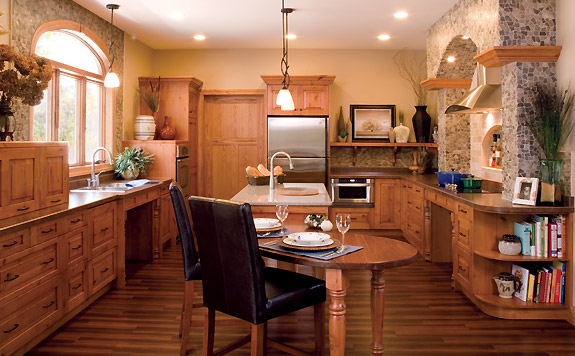
Accessible ADA Kitchen with roll-under access


Why Universal Design Matters for Seniors

The majority of senior injuries occur at home, often due to falls caused by poor lighting, narrow spaces, slippery surfaces, or inaccessible bathrooms. Universal Design addresses these risks while maintaining dignity and independence.

Homes designed with Universal Design principles help support:

  • Safety through better lighting, slip-resistant flooring, and thoughtful layouts

  • Independence by making daily tasks easier and more accessible

  • Comfort with spaces that reduce strain and fatigue

  • Confidence by allowing seniors to remain in control of their environment

At Equate Company, we see Universal Design as a foundation for successful aging in place—not a last-minute fix.


Key Universal Design Features for Senior-Friendly Homes

Entrances and Pathways

  • Step-free entries or low-profile thresholds

  • Wider doorways and hallways for ease of movement

  • Lever-style door handles instead of traditional knobs

Kitchens

  • Pull-out shelves and drawers for easy access

  • Variable-height countertops and work surfaces

  • Front-control or easy-reach appliances

  • Enhanced task lighting to reduce eye strain

Bathrooms

  • Curbless or low-threshold showers

  • Strategically placed grab bars that blend into the design

  • Comfort-height toilets

  • Non-slip flooring and improved lighting

Living and Sleeping Areas

  • Open floor plans with clear circulation paths

  • Simple, intuitive lighting and controls

  • Main-level bedrooms and full bathrooms whenever possible

These features improve daily life without calling attention to accessibility, thereby making the home safer and more enjoyable for everyone.

Universal Design vs. Aging in Place Modifications

While often used together, Universal Design and Aging in Place are not interchangeable. Aging in Place modifications are frequently reactive, added after a need arises. Universal Design is proactive, incorporating adaptable solutions during new construction or planned renovations.

By intuitive planning, homeowners can avoid costly emergency remodels later and enjoy a home that works naturally as needs change.

A Smart Investment in Your Home

Universal Design is not only practical—it’s forward-thinking. Homes that are accessible, adaptable, and comfortable appeal to a broader range of buyers and maintain long-term value. What supports a senior today may benefit a family member recovering from an injury or enhance comfort for years to come.

Final Thoughts

Universal Design empowers seniors to live safely, comfortably, and confidently in the homes they love. It supports independence, preserves dignity, and enhances quality of life—without sacrificing aesthetics.

At T-Square Company, a Universal Design Contractor registered in the United States and Australia, Inclusive Design is about creating homes that truly work for life.


Author Bio

David L. Traut, CAPS, is a Certified Aging in Place Specialist with over 30 years of experience in the design/build industry. As the owner of T-Square Company in Austin, Texas, David specializes in Universal Design and Aging in Place solutions that help homeowners remain safe, independent, and comfortable in their homes as they age. David is a member of the National Aging in Place Council

David is also the author of Age in Place at Home: Adapting the Home Environment for All Generations, an award-winning and practical guide for homeowners, caregivers, and professionals seeking thoughtful, accessible design strategies. His work focuses on blending function, safety, and aesthetics—proving that accessible homes can be both beautiful and empowering.

Discover the Principles Of Universal Design

Tags: Universal Design,, home accessibility, accessible design, Age in Place at Home, home remodeling for seniors, independent living, senior living, senior home safety, CAPS certified

To Modify or Move: Consult with a Certified Aging in Place Specialist

Posted byDavid L. Traut, CAPS on Tue, Jan 13, 2026 @ 13:01 PM


MODIFYING YOUR CURRENT HOME FOR AGING IN PLACE: Should You Stay or Should You Move?


When In Doubt, Always Consult with a Certified Aging in Place Specialist in Your Area.


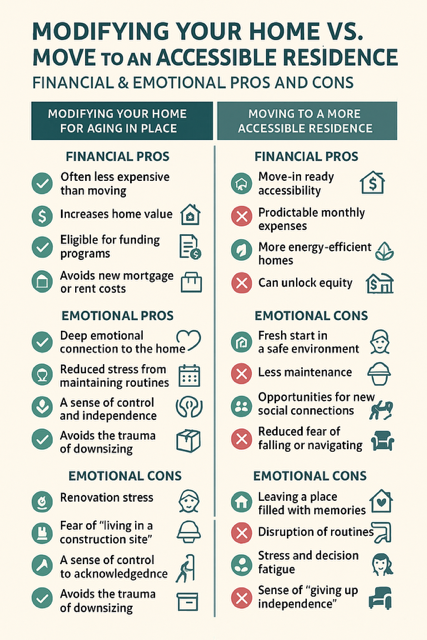
modify your home to age in place or move graphic


WHEN DECIDING TO MODIFY YOUR HOME


Financial Pros

  • Often less expensive than moving
    Many accessibility upgrades—grab bars, curbless showers, widened doors, ramps, and lighting upgrades—cost far less than the combined cost of selling a home, purchasing another, and moving.

  • Increases home value
    Aging-in-place features and Universal Design elements make the home appealing to a growing demographic of older buyers.

  • Eligible for funding programs
    Local grants, tax credits, VA programs, and long-term care insurance may cover certain home modifications.

  • Avoids new mortgage or rent costs
    Particularly powerful for homeowners with a paid-off home, modifications protect financial stability.

Financial Cons

  • High upfront costs for major renovations
    Structural changes—bathroom expansions, foundation adjustments, lifts, or extensive electrical work—can cost tens of thousands.

  • Unexpected issues in older homes
    Hidden plumbing, mold, electrical, or foundation problems can add surprise expenses.

  • Limited return on investment if poorly designed
    Non-professional or temporary fixes may not add value and can require re-work later.


Emotional Pros

  • Deep emotional connection to the home
    People feel grounded in familiar surroundings filled with memories, traditions, and comfort.

  • Reduced stress from maintaining routines
    Same neighbors, same grocery store, same church… minimal disruption.

  • A sense of control and independence
    Modifying your environment supports dignity and self-reliance.

  • Avoids the trauma of downsizing
    Keeping belongings and sentimental items reduces emotional strain.

Emotional Cons

  • Renovation stress
    Noise, dust, delays, and disruptions can be overwhelming—especially for older adults.

  • Fear of “living in a construction site.”
    Some people experience anxiety about change or giving up control of their home.

  • Emotional resistance to acknowledging decline
    Accepting modifications like grab bars can feel like admitting vulnerability.


🏡 MOVING TO A MORE ACCESSIBLE RESIDENCE

Financial Pros

  • Move-in ready accessibility
    Certified accessible homes, senior-friendly apartments, or modern new builds can minimize renovation costs.

  • Predictable monthly expenses
    Especially in 55+ communities or accessible rentals where maintenance is included.

  • More energy-efficient homes
    Lower utility bills, smart-home systems, and modern construction reduce long-term costs.

  • Can unlock equity
    Selling a high-value home may free up cash for retirement, caregiving, or medical expenses.

Financial Cons

  • High costs of moving
    Realtor fees, packing, movers, new furnishings, deposits, and closing costs add up quickly.

  • Accessible homes can be scarce and expensive
    Fully barrier-free homes are not widely available—especially in desirable neighborhoods.

  • Recurring HOA, rent, or community fees
    Some 55+ or accessible communities have costly monthly dues.

  • Loss of property tax advantage
    Moving may eliminate caps or senior exemptions tied to the original property.


Emotional Pros

  • Fresh start in a safe environment
    A new home designed for accessibility can offer peace of mind and renewed confidence.

  • Less maintenance
    Especially appealing for older adults tired of repairs, yard work, or upkeep.

  • Opportunities for new social connections
    Many communities offer activities, wellness programs, and built-in support.

  • Reduced fear of falling or navigating unsafe spaces
    Purpose-built accessibility improves daily comfort.

Emotional Cons

  • Leaving a place filled with memories
    For many, it feels like losing a part of their identity.

  • Disruption of routines and community
    Friends, neighbors, doctors, and landmarks change all at once.

  • Stress and decision fatigue
    Packing, downsizing, and touring homes can be emotionally draining.

  • Sense of “giving up independence.”
    Some older adults perceive the move as a loss of autonomy.


🎯 The Bottom Line


Modifying is best when the home has a good layout, strong structural integrity, and emotional attachment is high.
Moving is best when the current home cannot be safely or affordably adapted—or when a fresh start brings more peace than renovation.


“Should You Stay and Modify, or Should You Move? A Quick Decision Checklist.”


 Quick Decision Checklist

Use this checklist to help determine whether staying in your current home—or moving to a more accessible one—is the safest, most practical, and most emotionally supportive choice.


1. Safety & Accessibility

Is your current home safe to navigate today?

  • ☐ I can enter and exit the home without difficulty

  • ☐ Hallways, bathrooms, and doorways are wide enough

  • ☐ I can shower/bathe safely

  • ☐ Lighting is adequate and glare-free

  • ☐ Stairs, steps, or thresholds are becoming difficult

  • ☐ I have had a recent fall or near-fall

If several boxes are unchecked → Consider moving or modifying.


🏗️ 2. Feasibility of Modifications

Can your current home be realistically and affordably adapted?

  • ☐ Bathrooms can be expanded or remodeled

  • ☐ A curbless shower can be installed

  • ☐ Ramps or lifts are possible in the current layout

  • ☐ The home has space for a main-level bedroom

  • ☐ Structural limitations are minimal

  • ☐ Estimated costs are within budget

If modifications are extensive or require major structural changes → Moving may be more practical.


💰 3. Financial Considerations

Which option best supports long-term financial stability?

  • ☐ My home is paid off or affordable to maintain

  • ☐ Renovation costs are manageable

  • ☐ Moving costs (closing, commissions, deposits) are acceptable

  • ☐ A new accessible home is within my price range

  • ☐ Monthly HOA or rental fees are reasonable

  • ☐ My current home has strong resale value

If renovation costs exceed 30–40% of the home’s value → Moving may be the financially smarter choice.


❤️ 4. Emotional Well-Being

How do you feel about staying vs. moving?

  • ☐ I feel deeply attached to the home and neighborhood

  • ☐ I enjoy my routines, neighbors, and surroundings

  • ☐ The idea of moving feels stressful or overwhelming

  • ☐ I feel excited at the thought of a fresh, safe, low-maintenance home

  • ☐ Downsizing feels manageable

  • ☐ Staying brings me comfort and stability

If staying contributes to emotional stability → Modifying may be better.
If staying causes daily stress or fear of falling → Moving may feel freeing.


🧩 5. Support, Care, and Daily Needs

Does your current home support the help you need—now and later?

  • ☐ Family or caregivers can access my home easily

  • ☐ Medical equipment can be accommodated

  • ☐ Kitchen and laundry are easy to reach

  • ☐ Transportation, grocery stores, and medical offices are nearby

  • ☐ Community support (church, neighbors, friends) is close

  • ☐ A new accessible home would improve access to services

If support networks are stronger elsewhere → Moving may be the better long-term solution.


Summary 

  • Stay & Modify your home if safety concerns are easily fixable, costs are reasonable, and emotional attachment is strong.

  • Move if the home cannot be made safe, modifications are too expensive, or another home offers greater independence and peace of mind.


Certified Aging In Place Specialist


T-Square Company — Austin, TX

David L. Traut, CAPS #1636580, owner/president

512-444-0097

Accessible Remodeling • Universal Design • Aging-in-Place

Let’s make your forever home work beautifully for you—now and for years to come.

Age in Place at Home Book


David is part of a select group of professionals nationwide who have earned the Certified Aging in Place Specialist (CAPS) designation.

This certification, offered through the National Association of Home Builders (NAHB) in collaboration with AARP, recognizes remodelers and builders trained to meet the unique needs of older adults and individuals with disabilities. David is an Aging in Place specialist and is an active member of The National Aging in Place Council (NAIPC).

David is also certified in Universal Design in both the United States and Australia.  Drawing on decades of expertise, he recently published Age in Place at Home: Adapting the Home Environment for All Generations, a comprehensive guide that explores the role of Universal Design in creating safe, accessible homes.

📘 Age in Place at Home takes readers room by room, explaining practical modifications that enhance safety, accessibility, and independence. The book is available now on Amazon.


Tags: aging in place remodeling, aging in place, aging in place designs, Universal Design,, aging in place services, certified aging in place specialist, age in place home design, Age in Place at Home, disability and special needs contractors in Austin, senior living at home, senior home safety, caregiver resources, forever home planning, aging in place decisions, modify or move, home modifications for seniors