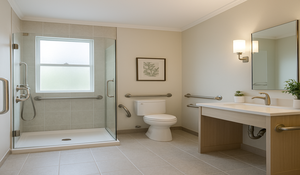
The bathroom is the most dangerous room in the home for older adults. Wet surfaces, tight spaces, and the need to transfer between standing and sitting create a perfect storm for falls. Fortunately, a few targeted upgrades can dramatically improve safety and confidence.
Why bathrooms are high risk
Slips often occur while stepping into a tub, standing from a toilet, or reaching for balance on towel racks that aren’t designed to support weight. Aging joints and slower reaction times increase the danger.
Essential bathroom safety upgrades
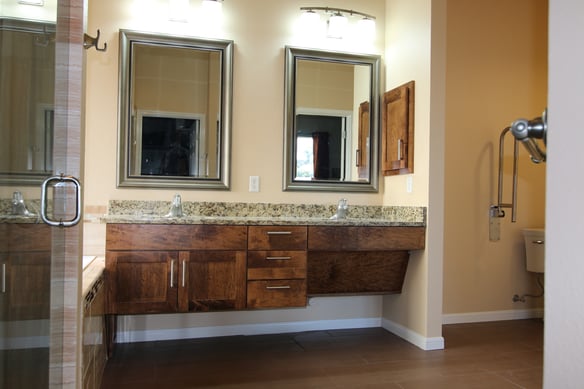
Grab bars are one of the most effective improvements when installed correctly near toilets and in showers. Walk-in showers reduce the need to step over high tub walls, while non-slip flooring provides traction even when wet. Comfort-height toilets and shower seats further reduce strain.
Walk-in showers vs walk-in tubs
Walk-in showers offer easy access and quick use, making them ideal for daily routines. Walk-in tubs provide soaking benefits but can be costly and take time to fill and drain, creating problems with hydrothermia for some bathers. The best choice depends on mobility and lifestyle.
Cost vs value
Bathroom safety upgrades are relatively affordable compared to hospital stays or long-term care. Even small improvements can significantly reduce fall risk.
Professional installation matters
Improperly installed grab bars or flooring can be dangerous. Professional installation ensures upgrades are secure, durable, and built to last.
T-Square Company helps homeowners create safer bathrooms that support independence without sacrificing comfort or style.
At T-Square Company, a CAPS Certified Builder, we help homeowners evaluate risks and implement smart, practical safety solutions tailored to their home and lifestyle.
Accessible Remodeling • Universal Design • Aging-in-Place
Let’s make your forever home work beautifully for you—now and for years to come.
David L. Traut, owner of T-Square Company, has written an Aging in Place Guide
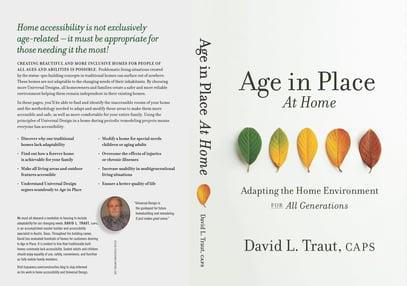
David is also certified in Universal Design in both the United States and Australia. Drawing on decades of expertise, he recently published Age in Place at Home: Adapting the Home Environment for All Generations, a comprehensive guide that explores the role of Universal Design in creating safe, accessible homes.
📘 Age in Place at Home takes readers room by room, explaining practical modifications that enhance safety, accessibility, and independence. The book is available on Amazon.