Check out my building blog to learn more about construction for your home or office in Austin! David L. Traut, President, CAPS Certified (512)444-0097

Typical Aging in Place Questions for Seniors | T-Square Company

Posted byDavid L. Traut, CAPS on Tue, Jul 07, 2026 @ 11:07 AM

Frequently Asked Questions

What is Aging in Place?

Aging in Place means living safely, comfortably, and independently in your own home regardless of age, income, or physical ability. Through thoughtful planning and home modifications, many people can remain in the homes they love for years longer.

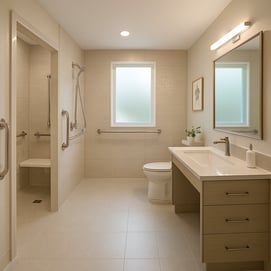
 A beautifully designed spacious bathroom that emphasizes accessibility and modern aesthetics The bathroom features wide doorways

When should I start planning?

Ideally, before a mobility-related health issue occurs, the most successful projects are proactive rather than reactive. Planning early gives homeowners more options, allows projects to be completed gradually, and often costs less than making emergency modifications after a fall or illness.

Can I make my home safer without making it look like a hospital?

Absolutely. Today's accessibility products are attractive, modern, and designed to blend into your home's decor. Universal design focuses on creating beautiful, functional spaces that everyone can enjoy, whether they are six or sixty years old.

What is a Certified Aging in Place Specialist (CAPS)?

A Certified Aging in Place Specialist (CAPS) has specialized training in designing and remodeling homes to improve accessibility, safety, and long-term independence. The designation combines technical construction knowledge with an understanding of the changing needs associated with aging.

What modifications provide the greatest benefit?

Every home is unique, but the bathroom is often the first place to address because it is where many serious falls occur. Improving safety doesn't always require a major remodel. Strategic upgrades such as brighter lighting, professionally installed grab bars, barrier-free shower entrances, slip-resistant flooring, wider doorways, lever-style door handles, accessible entrances, and the removal of common trip hazards can dramatically reduce the risk of injury while making daily activities easier and more comfortable.

Many of these improvements follow the principles of Universal Design, creating a home that is safer, more functional, and more appealing for people of all ages. By making thoughtful modifications before they're needed, homeowners can enjoy greater independence, peace of mind, and a higher quality of life while also enhancing the long-term value and livability of their home.

The best home modifications are the ones that blend seamlessly into your home—enhancing safety and independence without sacrificing comfort or beauty. 

Do I need to remodel my entire house?

Not necessarily. Many homeowners begin with one room, often the bathroom, or address specific safety concerns first. Improvements can be completed in phases as needs and budgets allow.

Can modifications increase home value?

Many Universal Design features appeal to homeowners of all ages, sizes, and abilities, and can improve marketability while increasing safety and convenience for a better resale appeal. Many features are so well integrated that visitors never notice they were designed for accessibility.

How much do Aging in Place modifications cost?

Costs vary depending on the scope of work. Some safety improvements cost only a few hundred dollars, while large remodeling projects are more expensive. A plan can be developed that fits your priorities and budget.

Can accessibility modifications be completed while I'm living at home?

In many cases, yes. Projects are carefully planned to minimize disruption whenever possible, allowing homeowners to remain comfortable during construction.

How long does an Aging in Place remodel take?

Smaller projects may be completed in just a fw days, while larger renovations can take several weeks depending on design, permitting, and material availability.

Do you only work with seniors?

No. Accessibility benefits everyone. Homeowners recovering from surgery, individuals with disabilities, children, veterans, people with temporary injuries, caregivers, and families planning for multigenerational living all benefit from Aging in Place designs and services.

What is the biggest mistake homeowners make?

Waiting too long. Many people begin planning after a fall or medical emergency. Making proactive improvements before a crisis occurs provides more choices, less stress, and better long-term outcomes.

Why choose T-Square Company?

With more than 30 years of design/build experience, T-Square Company specializes in practical, customized accessibility solutions and not one-size-fits-all remodeling. Every recommendation is based on your home, your lifestyle, and your long-term goals. David L. Traut, CAPS, the owner of T-Square Company, is a founding member of the National Aging in Place Council and certified in Universal Design.

How do I get started?

The first step is scheduling a professional assessment. During the consultation, we'll evaluate your home, discuss your goals, identify potential safety concerns, and develop a personalized plan to help you remain and independent for years to come. To keep you in budget, the modifications addressed can be done in phases.

Call T-Square Company today at (512)-444-0097 to schedule your consultation.

David L. Traut is an Award-Winning Author and Aging in Place Advocate.

David is the author of the award-winning book Age in Place at Home: Adapting the Home Environment for All Generations,  which provides practical guidance for homeowners, caregivers, and families seeking solutions for aging in place.

My work combines real-world construction experience, accessibility expertise, and a commitment to helping people thrive safely and comfortably at home.

Certified Aging In Place Specialist


Tags: aging in place, certified aging in place specialist, universal design/build, Austin remodeling, home accessibility, accessible design, forever home, home accessibility remodeling, home modifications, senior home safety, fall prevention, aging in place austin

When To Modify A Home For Aging in Place? T-Square Company

Posted byDavid L. Traut, CAPS on Tue, Jun 30, 2026 @ 12:06 PM

The Optimal Time To Begin Home Modifications

Ideally, begin proactively thinking long before mobility becomes severely limited. This allows for less stressful, budget alternatives.  Therefore, aging in place works best when the home evolves gradually through a phased approach, rather than during a crisis. The ideal time to remodel is:

  • Before mobility changes
  • Before surgery or recovery needs
  • Before caregiving becomes urgent
  • While decisions can still be proactive

David L. Traut, CAPS, offers complete aging in place services

Early Beneficial Modifications and Major Accessibility Upgrades To Consider Later

The timeline for the early stages should be during the ages of 50s-60s, where you integrate minor modifications such as lever-style door handles and improved lighting accompanying routine home improvements and repairs.

Additional modifications are accomplished when you notice health changes during the ages of 60s to 70s. Take action immediately when you first feel increased caution when traveling through your home, avoiding certain areas, or experiencing minor mobility changes. 

A Phased Approach To Aging in Place Improvements

Phase 1: Start by removing tripping hazards like throw rugs, adding motion-sensor nightlights, and installing grab bars in the bathroom mounted on substantial wood blocking between the wall studs. These are considered low-cost/high-impact alterations.

Phase 2: Major adjustments include installing stairlifts before stairs become an architectural barrier or converting a first-floor space into a primary bedroom.

The Real Goal of Aging in Place

For many homeowners, the goal is not simply staying in the house longer, but it is preserving:

  • independence
  • dignity
  • safety
  • comfort
  • connection to community
  • and the emotional meaning of home

That is the real definition of a successful forever home.

David Traut, the CAPS Certified owner of T-Square Company, is an award-winning author of Age in Place at Home: Adapting the Home Environment for All Generations , available on Amazon, and a founding member of the National Aging in Place Council (NAIPC).

Ready to create a safer, more accessible forever home?

Schedule a consultation with T-Square Company in Austin, Texas, and learn how a Certified Aging in Place Specialist (CAPS) can help you develop a proactive plan that supports independence, safety, and comfort for years to come.

Certified Aging In Place Specialist


Tags: aging in place, CAPS professional in Austin, Universal Design,, home accessibility, forever home, senior safety, home modifications, independent living, aging in place planning, accessible remodeling

Telehealth and Aging in Place: How Technology Is Redefining Homes

Posted byDavid L. Traut, CAPS on Fri, Jun 12, 2026 @ 12:06 PM

The Shift—Healthcare Is Moving Into the Home 

For decades, aging in place focused on accessibility and physical safety, like installing grab bars, wider doorways, and zero-step entries. While these elements remain essential today, a new force is reshaping the industry: telehealth. Due to the technological advancement in remote monitoring, wearables, smart-home systems, and artificial intelligence, the home is becoming part of the care ecosystem itself. The best homes of the future will not simply be adapted for aging. They will be designed to respond to it.

Healthcare is no longer confined to hospitals, doctors' offices,  and clinics. Today, it’s happening in living rooms, bedrooms, kitchens, and especially in customized, flexible treatment rooms inside the home, through virtual visits and remote monitoring.

This shift is redefining what it means to create a safe and functional home that provides independence.

At T-Square Company, in Austin, Texas, we now view the home as more than a residence—it’s a care environment.


 telehealth is rapidly changing the aging in place market


Why Telehealth Is a Game-Changer for Aging in Place

Telehealth is removing one of the biggest barriers older adults face: access to care.

1. There is Easier Access to Medical Care 

The obvious benefits include that no transportation is required, there is reduced physical strain on the patient, and there is faster communication with healthcare providers.

For many seniors, especially those with mobility challenges or recovering from surgery, this is the difference between staying home and being forced to relocate.

2. Continuous Health Monitoring

Remote patient monitoring devices now track blood pressure, heart rate, blood glucose, and activity levels.

Instead of waiting for a problem to arise, healthcare providers can intervene early.

This results in fewer hospital visits and greater peace of mind for families.

3. Stronger Support Systems

Telehealth allows caregivers and family members to join virtual appointments, stay informed in real time, and coordinate care more effectively.

This creates a team-based approach to aging in place.

Key Features of a Telehealth-Ready Home

1. Reliable Connectivity

Involving Strong Wi-Fi coverage in all living areas and simple, user-friendly devices

2. Proper Lighting

Including even glare-free lighting for video calls and adjustable fixtures for aging eyes

3. Clear Acoustics

Involving reduced background noise and sound-friendly materials for better communication

4. Accessible Technology

Enhanced by easy-to-reach charging stations, devices positioned at comfortable heights, and large screens and intuitive controls

5. Private Consultation Spaces

Customized rooms for quiet, distraction-free areas and comfortable seating with proper support

How Telehealth Changes Home Design Priorities

It provides a traditional aging in place design focused on preventing falls and improving mobility.

Today, we must expand that approach.

Then vs. Now

A traditional focus was on bathroom safety, entry accessibility, and mobility within the home

The new modern focus is on digital accessibility, integrated health technology, and multi-functional living spaces

This evolution is not replacing traditional design—it’s enhancing it.

Challenges to Address

Despite its benefits, telehealth adoption still faces obstacles:

  • Many older adults are unfamiliar with technology
  • Visual, hearing, or cognitive limitations can create barriers
  • Some homes lack adequate internet infrastructure

The Solution

The answer is not less technology—it’s better design and smarter integration.

At T-Square Company, we emphasize simplicity, ease of use, and the thoughtful placement of devices

The Future of Aging in Place

Telehealth is accelerating a larger transformation:

The home is becoming a complete care ecosystem.

This includes smart home systems, remote monitoring, virtual healthcare, and caregiver coordination.

Together, these elements allow individuals to remain independent longer—safely and confidently.

Practical Steps to Create a Customized Telehealth-Ready Treatment Room

Here’s a simple checklist to get started:

  • Ensure strong Wi-Fi coverage throughout the home
  • Improve lighting in key living areas
  • Designate a quiet space for virtual appointments
  • Install accessible charging stations
  • Choose easy-to-use devices with larger displays
  • Reduce trip hazards around tech areas

Final Thoughts—Home Is Still Home

Telehealth is not just changing healthcare—it’s transforming how we think about home.

The future of aging in place is not simply staying in a home longer; it is about creating homes that actively help people remain safe, healthy, connected, and independent.

With the right modifications, aging in place is no longer just possible—it’s sustainable.

Therefore, the well-designed homes of the future will not just accommodate accessibility and aging, they will help manage it.

About the Author

David L. Traut, CAPS, is the owner of T-Square Company in Austin, Texas, and a Certified Aging-in-Place Specialist with over 30 years of experience in design/build construction. He is the author of the gold Global Book Award-winning Age in Place at Home: Adapting the Home Environment for All Generations, where he shares practical solutions for creating universally designed, safe, accessible, and comfortable living spaces. David takes you room by room, offering intelligent room modifications for aging in place.


Certified Aging In Place Specialist


Tags: CAPS, aging in place, Universal Design,, home accessibility, senior safety, home modifications, T-Square Company, smart home technology, telehealth, caregiving

National Aging in Place Council (NAIPC) ANOUNCEMENT-David L. Traut

Posted byDavid L. Traut, CAPS on Mon, May 25, 2026 @ 18:05 PM

What if your home could grow with you—supporting your independence, safety, and comfort at every stage of life?

For more than 30 years, David Traut has been helping families do exactly that. As a Certified Aging-in-Place Specialist (CAPS) and President of T-Square Company in Austin, he designs and remodels homes to remove barriers and create spaces that are both accessible and beautiful.

David’s work is rooted in a simple but powerful idea: everyone deserves to live safely and independently in the home they love. From thoughtful design to practical solutions, he helps make that possible.

He’s also the award-winning author of Age in Place at Home, where he shares guidance to help families plan with confidence.

Through his work with NAIPC, David is passionate about educating and supporting our community so more people can age in place with dignity.


For more information about David, check out his website at: https://www.tsquareco.com/home-remodeling-austin-austin-home-remodeling-bathroom-kitchen-remodels-in-austin-tx

Aging in Place Specialist David L. Traut

Let me assess your living situation to determine solutions for better home accessibility. We can accomplish this virtually or in person. Schedule an appointment today@ (512) 444-0097. We offer complete Aging in Place design/builds, consultations, and services.

Tags: aging in place, Universal Design,, certified aging in place specialist, home accessibility, home modifications, CAPS certified, T-Square Company, accessible remodeling, National Aging in Place Council, NAIPC