Check out my building blog to learn more about construction for your home or office in Austin! David L. Traut, President, CAPS Certified (512)444-0097

Typical Aging in Place Questions for Seniors | T-Square Company

Posted byDavid L. Traut, CAPS on Tue, Jul 07, 2026 @ 11:07 AM

Frequently Asked Questions

What is Aging in Place?

Aging in Place means living safely, comfortably, and independently in your own home regardless of age, income, or physical ability. Through thoughtful planning and home modifications, many people can remain in the homes they love for years longer.

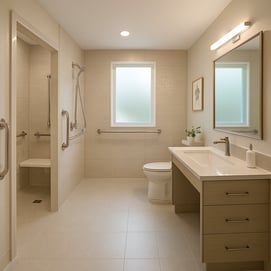
 A beautifully designed spacious bathroom that emphasizes accessibility and modern aesthetics The bathroom features wide doorways

When should I start planning?

Ideally, before a mobility-related health issue occurs, the most successful projects are proactive rather than reactive. Planning early gives homeowners more options, allows projects to be completed gradually, and often costs less than making emergency modifications after a fall or illness.

Can I make my home safer without making it look like a hospital?

Absolutely. Today's accessibility products are attractive, modern, and designed to blend into your home's decor. Universal design focuses on creating beautiful, functional spaces that everyone can enjoy, whether they are six or sixty years old.

What is a Certified Aging in Place Specialist (CAPS)?

A Certified Aging in Place Specialist (CAPS) has specialized training in designing and remodeling homes to improve accessibility, safety, and long-term independence. The designation combines technical construction knowledge with an understanding of the changing needs associated with aging.

What modifications provide the greatest benefit?

Every home is unique, but the bathroom is often the first place to address because it is where many serious falls occur. Improving safety doesn't always require a major remodel. Strategic upgrades such as brighter lighting, professionally installed grab bars, barrier-free shower entrances, slip-resistant flooring, wider doorways, lever-style door handles, accessible entrances, and the removal of common trip hazards can dramatically reduce the risk of injury while making daily activities easier and more comfortable.

Many of these improvements follow the principles of Universal Design, creating a home that is safer, more functional, and more appealing for people of all ages. By making thoughtful modifications before they're needed, homeowners can enjoy greater independence, peace of mind, and a higher quality of life while also enhancing the long-term value and livability of their home.

The best home modifications are the ones that blend seamlessly into your home—enhancing safety and independence without sacrificing comfort or beauty. 

Do I need to remodel my entire house?

Not necessarily. Many homeowners begin with one room, often the bathroom, or address specific safety concerns first. Improvements can be completed in phases as needs and budgets allow.

Can modifications increase home value?

Many Universal Design features appeal to homeowners of all ages, sizes, and abilities, and can improve marketability while increasing safety and convenience for a better resale appeal. Many features are so well integrated that visitors never notice they were designed for accessibility.

How much do Aging in Place modifications cost?

Costs vary depending on the scope of work. Some safety improvements cost only a few hundred dollars, while large remodeling projects are more expensive. A plan can be developed that fits your priorities and budget.

Can accessibility modifications be completed while I'm living at home?

In many cases, yes. Projects are carefully planned to minimize disruption whenever possible, allowing homeowners to remain comfortable during construction.

How long does an Aging in Place remodel take?

Smaller projects may be completed in just a fw days, while larger renovations can take several weeks depending on design, permitting, and material availability.

Do you only work with seniors?

No. Accessibility benefits everyone. Homeowners recovering from surgery, individuals with disabilities, children, veterans, people with temporary injuries, caregivers, and families planning for multigenerational living all benefit from Aging in Place designs and services.

What is the biggest mistake homeowners make?

Waiting too long. Many people begin planning after a fall or medical emergency. Making proactive improvements before a crisis occurs provides more choices, less stress, and better long-term outcomes.

Why choose T-Square Company?

With more than 30 years of design/build experience, T-Square Company specializes in practical, customized accessibility solutions and not one-size-fits-all remodeling. Every recommendation is based on your home, your lifestyle, and your long-term goals. David L. Traut, CAPS, the owner of T-Square Company, is a founding member of the National Aging in Place Council and certified in Universal Design.

How do I get started?

The first step is scheduling a professional assessment. During the consultation, we'll evaluate your home, discuss your goals, identify potential safety concerns, and develop a personalized plan to help you remain and independent for years to come. To keep you in budget, the modifications addressed can be done in phases.

Call T-Square Company today at (512)-444-0097 to schedule your consultation.

David L. Traut is an Award-Winning Author and Aging in Place Advocate.

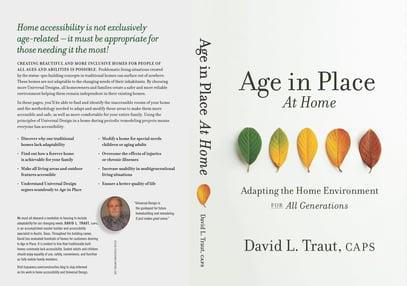
David is the author of the award-winning book Age in Place at Home: Adapting the Home Environment for All Generations,  which provides practical guidance for homeowners, caregivers, and families seeking solutions for aging in place.

My work combines real-world construction experience, accessibility expertise, and a commitment to helping people thrive safely and comfortably at home.

Certified Aging In Place Specialist


Tags: aging in place, certified aging in place specialist, universal design/build, Austin remodeling, home accessibility, accessible design, forever home, home accessibility remodeling, home modifications, senior home safety, fall prevention, aging in place austin

Stair Safety Solutions for Seniors: What Works and What Doesn’t

Posted byDavid L. Traut, CAPS on Thu, Apr 16, 2026 @ 15:04 PM

Stair Safety Tips for Aging Adults to Improve Independence and Visibility

Stairs often become one of the biggest obstacles to aging in place, but are also one of the easiest places to improve safety with smart design upgrades. Fatigue, poor visibility,  balance issues, and depth-perception changes increase the risk of falls.

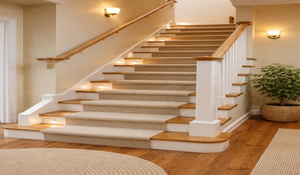
safe well-lit stairs


Simple stair safety upgrades
Installing sturdy handrails on both sides of the staircase provides essential support using round or easy-grip profiles. NOTE: A continuous handrail that extends beyond the top and bottom steps greatly improves balance and confidence.  Non-slip treads or stair runners improve traction and visibility on each step. Contrasting surfaces, textures, and colors are extremely beneficial in overcoming depth perception. Always avoid slippery treads.

Advanced stairway solutions
Stair lifts allow seniors to continue using multi-level homes for long-term safety and full home access. Additionally, ramps provide accessibility at entrances and for use with wheelchairs or walkers. When stairs are an issue in the garage, and a ramp would be too long following the 1:12 rule, and especially for the more comfortable 1:20 rule, incorporate a vertical platform lift (VPL) into the design. The VPL is a mini-elevator designed to overcome extreme elevation challenges, requiring only approximately 25 square feet of space.

Stair lifts vs moving
For many homeowners, modifying stairs is often a more affordable option than relocating. A stair lift can extend the usability of a home for years.

Increase area lighting by

Adding bright overhead lights, wall sconces, and/or LED step lights, along with motion-sensor night lighting, will further help increase safety while reducing fall risks. Increased lighting makes edges more visible, reducing nighttime accidents.


T-Square Company evaluates stair layouts and recommends solutions that prioritize safety and complement home design. As a Certified Aging-in-Place Specialist (CAPS) with over 30 years of experience in residential design and remodeling, I have helped countless families transform their houses into accessible, future-proof, forever homes. Let’s make your forever home function beautifully for you—now and in the years ahead. David L. Traut, owner of T-Square Company, has authored an Aging in Place Guide.


Age in Place at Home Book

David is also certified in Universal Design in both the United States and Australia. Drawing on decades of expertise, he recently published Age in Place at Home: Adapting the Home Environment for All Generations, a comprehensive guide that explores the role of Universal Design in creating safe, accessible homes.

📘 Age in Place at Home takes readers room by room, explaining practical modifications that enhance safety, accessibility, and independence. The book is available on Amazon.

Home Accessibility Help

Tags: home modifications for independent living, senior home modifications in Austin, home modifications for aging in place, how to age in place, home accessibility remodeling, home safety for seniors, David L. Traut, CAPS, fall prevention for seniors, home remodeling for seniors, making a home safe for aging adults, stair safety, aging in place tips

Accessible Homes: Why Everyone Needs One Eventually

Posted byDavid L. Traut, CAPS on Thu, Oct 23, 2025 @ 17:10 PM

Let’s face it — accessible homes are something everyone will need at some point in life. Whether for ourselves, a family member, or a guest, accessibility enhances safety, comfort, and independence for all.

The need for home modifications isn’t driven by age—it’s shaped by life’s experiences. Any household living with a disability among its members can benefit from additional accessibility features that make everyday living smoother and safer.

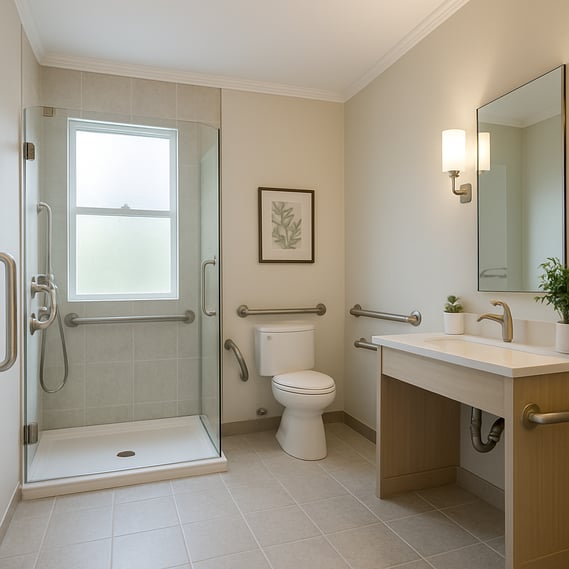
The image showcases a modern accessible bathroom designed for aging in place The room features a spacious layout with a barrierfree shower equipped wi-1


Starting with ADA Guidelines

Except in extreme situations, complete ADA compliance isn’t required for private home remodeling. Still, the Americans with Disabilities Act (ADA) provides a great foundation for accessible design.

The ADA’s measurements for clearances, ramp slopes, and grab bar placement create safe benchmarks to follow, even if you don’t need to meet every technical requirement. Remember, ADA standards are designed for public spaces and may not perfectly fit individual needs or body sizes.

When working on a private residence, you have the flexibility to adapt the best of ADA guidance while customizing it to your household’s specific mobility and lifestyle needs.


A Short History of the ADA

In the 1960s, disability advocates began to push for equal rights, paving the way for the Americans with Disabilities Act, officially signed into law in 1990.

This groundbreaking legislation ensured equal access for people with disabilities across workplaces, transportation, and public accommodations. Over time, accessibility concerns expanded from physical barriers to include digital access — a vital step in today’s connected world.

The ADA continues to evolve, ensuring inclusion for people of all abilities in both physical and digital environments.


Disability and Design: The Human Connection

Disability isn’t defined only by physical impairments — it’s the interaction between a person’s abilities, their daily activities, and the design of their surroundings.

Language and understanding have evolved, too. Outdated terms like “handicapped” have been replaced with “physically challenged” or “person with a disability.” Each individual experiences limitations differently, which is why universal design—creating homes that work for everyone—is essential.

No matter your age, it’s important to regularly evaluate your home to ensure it meets your current and future needs. Life events such as childbirth, illness, injury, or caring for an aging parent can all prompt accessibility updates that keep your home safe and functional.

These same design principles form the foundation of Aging in Place, the practice of staying in your own home comfortably and independently for as long as possible.


Why Work with a CAPS Professional?

When accessibility challenges arise, homeowners often don’t know where to begin. That’s where Certified Aging in Place Specialists (CAPS) come in.

Developed by the National Association of Home Builders (NAHB) and AARP, the CAPS program trains professionals to design and remodel homes that meet the needs of people of all ages and abilities. CAPS-certified experts understand both the technical construction requirements and the personal considerations of adapting a home for safety and independence.

You can find qualified CAPS professionals across the country at nahb.org/CAPS.


Meet Austin’s Local CAPS Expert

David L. Traut, CAPS, owner of T-Square Company in Austin, Texas, is one of this elite group of specialists. With more than 30 years of experience, David helps homeowners remodel and design homes that support independent living for every stage of life.

T-Square Company provides complete home assessments with designs and full-service Aging in Place remodeling, including:

  • Custom bathroom and kitchen modifications

  • Barrier-free showers and grab bar installations

  • Accessible entryways and widened doorways

  • Whole-home alterations for increasing comfort, accessibility, independence, and safety

Call T-Square Company at 512-444-0097 to begin your next chapter of safe, accessible living — without leaving the comfort of your home.
CAPS #1636580

Certified Aging In Place Specialist


Learn More: “Age in Place at Home”

As an extension of his work, David has authored Age in Place at Home: Adapting the Home Environment for All Generations, now available on Amazon.

This comprehensive guide draws on over 30 years of experience and explains how to use Universal Design principles to make every room more livable. Whether you’re planning ahead or adapting for current needs, this book offers insights, ideas, and practical steps for keeping your home accessible for life--your forever home.

👉 Find Age in Place at Home on Amazon

Tags: aging in place home improvements in Austin, CAPS certified remodeling in Austin, CAPS professional in Austin, accessible home remodeling, bathroom modifications for disabled, ADA remodeling Austin, Texas, ADA Contractor/Austin, Texas, universal design forever homes, Austin accessibility remodel, accessible home design, home accessibility remodeling