It's not for everyone, but as more and more older Americans choose to age in place and remain in their homes, issues related to maintaining mobility, promoting home safety and creating an environment to meet care needs are becoming increasingly important to both caregivers and care recipients. According to the AARP nearly 90% of older adults want to age in place and maintain independence however 85% have done nothing about it. Many retirees want to stay living in their own house for as long as possible. But being able to do so will depend on how easy it is to maneuver your home as you get older. Research by the Centers for Disease Control and Prevention show that aging in place home modifications may prevent up to 50% of home accidents among seniors in older homes including falls.

When families are suddenly thrust into the responsibility of caring for an ill or injured family member, knowing how to make their homes accessible, barrier free and safe can be challenging. Even families that are savvy and experienced may have trouble figuring out whom to call for a roll-in-shower or door widening.
The National Association of Home Builders, in partnership with the AARP and Home Innovation Research Labs, created the CAPS program, which includes training and education on the technical, business management and customer service skills essential to compete in the fastest growing segment of the residential remodeling industry--home modifications for aging in place. David L. Traut, CAPS owner of T-Square Company in Austin, Texas as a handicap remodeling contractor is one of the select group of professionals nationwide to earn the Certified Aging-In-Place Specialist (CAPS) designation, identifying him as a home remodeler and builder with the skills, training, and knowledge necessary to design and remodel or modify a home to meet the unique needs of the older population, disabled owners, or their visitors.

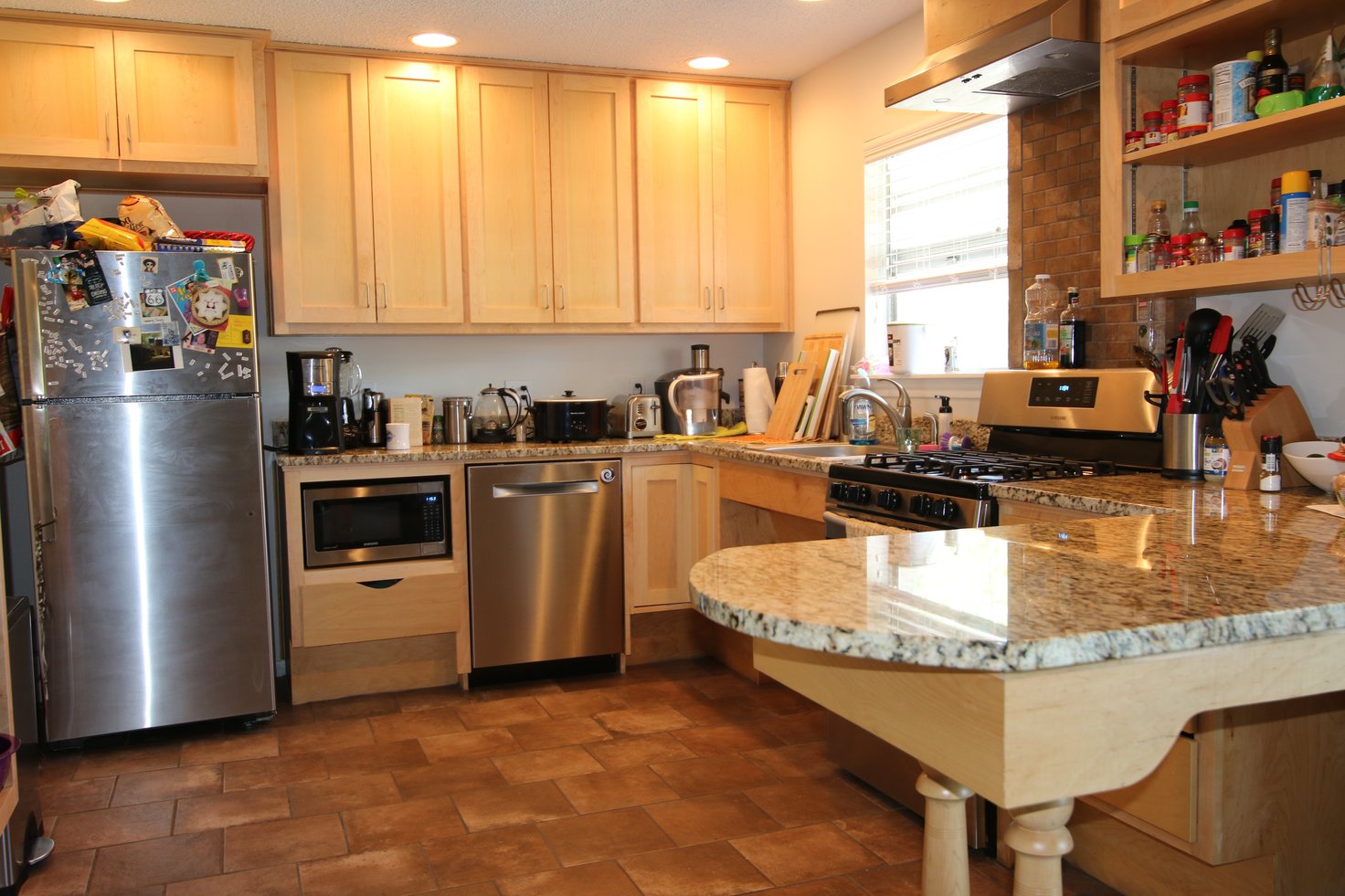
ADA Compliant Kitchens
Home modifications for aging in place should include adding non-slip flooring, widening hallways or installing stair lifts, and widening doors. You might also consider lowering light switches and thermostats and installing easier to use door knobs. Many considerations for an aging in place design should be taken into account to provide safety and independence. You should try to provide a clear barrier free path or accessible route to the most visited areas of your home as recommended by the ADA. The three areas needing improvement for a person wanting to age in place include the bathroom, the kitchen, and the family area in order of importance.
People who are interested in aging in place services and aging in place home improvements are now looking for a level entry into their home along with the maneuverability that a more open floor plan having greater clear unobstructed floor space presents. They desire flat floors without transitions requiring steps or stairs to move around. Ramps having a correct 1:12 slope can be used to get them up to the level floor space at the exterior entries or the garage access. ADA compliant kitchen cabinets and ADA bathroom cabinets will more than likely come into play to complete any accessible home remodeling project.

Let's compare the alternative costs associated with aging in place verses when you already own your home. The more institutional alternative of assisted living accompanied by more medical expertise and staff training plus the access to emergency medical facilities is available as opposed to renting an apartment. These are two of the main alternative choices for seniors who decide not to remain in their own homes. According to a national study done in 2014, the average cost for assisted living ranged from $3,000 to $3,500 per month. However, if you decide to age in place in a high quality one bedroom apartment, the rent will run around $1,300 per month. Living in your own home or with loved ones represents a preference by most seniors and property taxes must be taken in account.
An average Aging in Place master bathroom home modification providing total accessibility given there is a large enough space to remodel at onset will come in around $30,000. This can vary in many aspects if there is not enough room to change the existing floor plan. Smaller bathrooms can cost $15-20,000 but will not have the barrier free accessibility as the larger modified bathroom. Fully accessible kitchens will run on the average of $50,000 depending on the size of the existing kitchen. These are both one time costs for sustainability of a given lifestyle and location providing future independence and safety for the homeowner who participates in accessible home remodeling.
All disability home remodeling or disability bath remodels in Austin must be done considering all the data provided by the client, his or her family, and any caretakers involved. Aging in place design must be carried out by an aging in place specialist who is also a reputable residential remodeling professional. The goal of an accessible bathroom design in Austin is to make the bathroom a safe space for everyone who uses the facilities. Aging in place services use universal design to accommodate wheelchair use and can make the bathroom more comfortable for all generations with or without specific needs.
For additional information about the CAPS program, visit nahb.org/CAPS. For more information about T-Square Company, visit www.tsquareco.com or call 512-444-0097 to schedule a home assessment by a CAPS professional.
Tags:
barrier free access,
aging in place remodeling,
aging in place home modifications,
ADA remodeling,
ADA bathroom cabinets,
ADA kitchen cabinets,
aging in place designs,
accessibility home remodeling in Austin,
CAPS professional in Austin,
CAPS certification holder in Austin,
CAPS remodeling techniques,
disability bathroom remodeling in Austin,
bathroom modifications for elderly,
aging in place specialist,
aging in place services,
elder construction,
certified aging in place specialist,
handicap remodeling contractors in Austin,
independent living in Austin Texas,
senior aging in place services
Knowledgeable construction and design professionals are utilizing their CAPS training across the nation. CAPS stands for Certified Aging In Place Specialist. This designation is taught through the National Association of Home Builders in collaboration with AARP. CAPS connects responsible professionals with home owners who need these services on an ever-increasing basis. CAPS is a nationwide initiative and all active CAPS members can be found at nahb.org/CAPSdirectory.

The first thing you can do in making your home more age friendly is to do a self assessment. Go through your house identifying known problem areas like potential tripping or slipping hazards, as well as areas that are hard to access and difficult to maintain. Who would be better at pointing out problem areas than the person who is needing the home modifications according to their known physical condition. To help with this, there are several organizations that have aging in place checklists pointing out potential problems in certain areas of the home suggesting modification and solutions. Once you have completed your initial aging in place checklist it is time to bounce your findings off a trained aging in place specialist.
Next, contact a builder who is a listed Certified Aging in Place Specialist (CAPS). CAPS are home remodelers and design-build professionals that are certified and knowledgeable about aging in place home modifications. This CAPS professional can suggest ways to modify or remodel your home that will fit your needs and budget. CAPS are generally paid by the hour or receive a flat fee per visit or project.
During a home assessment for increasing accessibility the structural needs of the client will be noted and documented through sketches, photos, and conversation by a registered CAPS professional. All the surroundings will be taken into account from the flooring to the layout of a specific room or location as it pertains to the inhabitant's ease of usability. The physical and emotional needs of the occupant will also come into play because of mobility, sensory, or cognitive concerns. Each individual with similar impairments describes his or her limitations differently when undergoing elder construction. The blind don't experience their world the same as a person with deafness. The ultimate goal is to modify the home in a custom manner to provide for the maximum health, independence, and safety of the occupant. Often the input from any caretakers like a physical or occupational therapist during the assessment phase can prove to be invaluable. The three main rooms involved in aging in place home modifications are the bathroom, the kitchen, and the family room in that order. These areas make up the most occupied spaces of any home and will be connected by a designated accessible route. The basic needs involve access through wider doorways, non slip floor surfaces, and adequate cabinet and plumbing fixture accessibility. What is more important is that we must observe safety for everyone as the baby boomers choose to age in place within their homes. For more information about T-Square Company, visit www.tsquareco.com or call 512-444-0097.
There are really three categories of aging in place customers. Those who are simply and wisely planning ahead for their futures to remain in their present homes. The second category concerns those people who know they have a chronic medical disorder and need to prepare in advance for accessibility issues which will come as a result of their disease. People with diseases that are constantly causing increased physical or mental changes to their being are a good representative of this second group. The third group involves those people who either have had a chronic problem that has progressed severely altering their mobility or those who have sustained a life altering tragedy such as being involved in an accident. All of these groups will drive the future metamorphosis of existing inaccessible dwellings.
In designing for specific physical conditions, we realize that aging doesn't always bring on disease while the body declines making certain physical limitations inevitable. Arthritis is the most common chronic condition to appear as it restricts ordinary daily activities. The lack of hand strength and stiff knees are indicative of this illness. This most reported arthritic condition affecting people over the age of 65 is followed by heart disease and vision loss in that order. Smart aging design and concepts can compensate for the introduction of frailty, lack of mobility, and blindness in aging in place families. We are constantly coming up with new methods for home modifications and household products to increase the comfort of our residential environments.
David L. Traut, CAPS the owner of T-Square Company in Austin, Texas is one of the select group of professionals nationwide to earn the Certified Aging-In-Place Specialist (CAPS) designation, identifying him as a home remodeler and builder with the skills and knowledge necessary to remodel or modify a home to meet the unique needs of the older population, disabled owners, or their visitors. We offer a complete line of aging in place services.
Tags:
barrier free access,
aging in place remodeling,
CAPS,
aging in place home improvements in Austin,
CAPS certification,
ADA remodeling,
CAPS certified remodeling in Austin,
aging in place remodels,
aging in place construction,
aging in place designs,
CAPS professional in Austin,
CAPS certification holder in Austin,
CAPS remodeling techniques,
Universal Design,,
aging in place services,
aging in place design,,
certified aging in place specialist,
disability home modifications in Austin,
home modifications Austin, Texas,
wheelchair accessible showers in Austin,,
handicap bathrooms,
roll in showers in Austin,
custom walk in shower Austin,
home remodels Austin,
home modifications for independent living Austin,
certified aging in place consultant in Austin,
aging in place design in Austin
Accessible homes look much like other homes but they still help with handicap accessibility. These homes often have a sunny open feeling since there are fewer walls between common areas. Level floors create a comfortable flow between living areas and make rooms easier to keep clean. The kitchen is more efficient having compact storage and the bathrooms are a little more spacious than in a traditional home. The house is safe designed to reduce the potential for falls. Adequate glare-free lighting is well positioned to prevent dark spots. The accessible home is the home of the future representing the way we want to live right now. Well-planned accessible homes lift the spirits and enhance dignity. They have the ability to transform our relationships with our bodies and our homes.
Knowledgeable construction and design professionals are utilizing their CAPS training across the nation. CAPS stands for Certified Aging In Place Specialist. This designation is taught through the National Association of Home Builders in collaboration with AARP. CAPS connects responsible professionals with home owners who need these services on an ever-increasing basis. CAPS is a nationwide initiative and all active CAPS members can be found at nahb.org/CAPSdirectory.

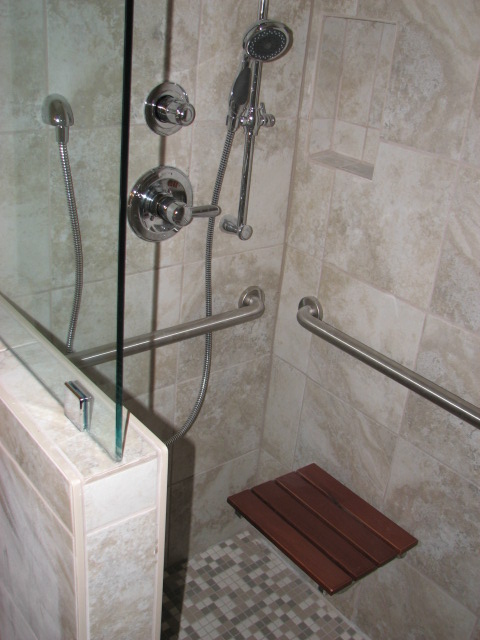
During a home assessment to increase accessibility within the home, the structural needs of the client will be noted and documented through sketches, photos, and conversation by a registered CAPS professional. All the surroundings will be taken into account from the flooring to the layout of a specific room or location as it pertains to the inhabitant's ease of usability. The physical and emotional needs of the occupant will also come into play because of mobility, sensory, or cognitive concerns. Each individual with similar impairments describes his or her limitations differently when undergoing elder construction. The blind don't experience their world the same as a person with deafness.
What really defines accessible home modifications and elder construction in Austin? Barrier free architectural design and accessibility for all who enter the structure while approaching the main living areas of the home in question is a fair definition. Universal design and aging in place trends have taken hold in the residential remodeling industry. The current housing inventory doesn't offer the features needed for safety and accessibility in the numbers needed to accommodate the ever growing demand. It is ultimately up to the individual homeowners and their families to plan for future housing needs. Once it is discovered that modifications to an existing home are not possible to accomplish total accessibility then it is time to consider a newer or custom built accessible home.
The National Association of Home Builders, in partnership with the AARP and Home Innovation Research Labs, created the CAPS program, which includes training and education on the technical, business management and customer service skills essential to compete in the fastest growing segment of the residential remodeling industry--home modifications for aging in place. David L. Traut, CAPS owner of T-Square Company in Austin, Texas as a handicap remodeling contractor is one of the select group of professionals nationwide to earn the Certified Aging-In-Place Specialist (CAPS) designation, identifying him as a home remodeler and builder with the skills, training, and knowledge necessary to design and remodel or modify a home to meet the unique needs of the older population, disabled owners, or their visitors.
Accessibility home modifications or wheelchair accessible kitchen and bathroom remodeling in Austin will allow anyone with limited mobility within your home to feel more empowered and independent. The extent of a customized accessibility design is dependent upon the activity level of the person requiring the modifications. Whether someone needs a cane, walker, or wheelchair to help with mobility it is definitely a game changer for accessibility within the home. Aging in place home modifications help people maintain their living environment for as long as it works for them before they might need assisted living care or a nursing home.
Home modifications for aging in place should include adding non-slip flooring, widening hallways or installing stair lifts, and widening doors. You might also consider lowering light switches and thermostats and installing easier to use door knobs. Many considerations for an aging in place design should be taken into account to provide safety and independence. You should try to provide a clear barrier free path or accessible route to the most visited areas of your home as recommended by the ADA. The three areas needing improvement for a person wanting to age in place include the bathroom, the kitchen, and the family area in order of importance.
Tags:
ADA accessible,
ADA bathroom cabinets accessible routes,
aging in place remodeling,
aging in place home modifications,
wheelchair accessible remodeling,
custom tub to shower conversions,
accessibility home remodeling in Austin,
CAPS remodeling techniques,
home modifications for independent living,
handicap home modifications for disabled,
Austin Handicap Remodeling,
universal design ideas,
certified aging in place consultant in Austin,
bathroom modifications for disabled in Austin, TX,
aging in place specialist in Austin,
aging in place design in Austin
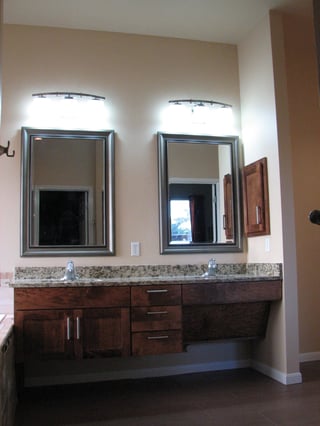
Aging in place design, construction, and remodeling has become synonymous with accessible home remodeling during our lifetime. Home modifications can be used to accommodate anyone from people with mobility impairments to those with vision loss, hearing loss, or even cognitive or developmental disabilities. A revolution in building design standards is long overdue in Austin. Our current building design standards do not address the needs of more than one third of our existing population. Many more people can greatly benefit from accessible design versus conventional design. Our rapidly aging population is experiencing the limitations of our personal living environments. Any evolution in building practically always begins in the common areas of the commercial building sector. The American Disabilities Act of 1990 increased the attention needed for those people having the right to equally access their work place and any recreational or leisure facilities. These rules at least offer minimal solutions for those needing the most help with any building access. We now must provide access to one bathroom on the first floor in new homes as deemed by our newly adopted building regulations. This basic right to an accessible bathroom is finally being enforced by the city building inspectors. What a tremendous needed and basic design improvement! This change in thought works great for new home owners but what about our existing inventory of older homes and their occupants?

The National Association of Home Builders, in partnership with the AARP and Home Innovation Research Labs, created the CAPS program, which includes training and education on the technical, business management and customer service skills essential to compete in the fastest growing segment of the residential remodeling industry--home modifications for aging in place. David L. Traut, CAPS owner of T-Square Company in Austin, Texas as a handicap remodeling contractor is one of the select group of professionals nationwide to earn the Certified Aging-In-Place Specialist (CAPS) designation, identifying him as a home remodeler and builder with the skills, training, and knowledge necessary to design and remodel or modify a home to meet the unique needs of the older population, disabled owners, or their visitors.
Elder construction most definitely falls under the category of aging in place. People are living significantly longer with the advent of specialized medicine, care, and a healthier lifestyle. The Center for Disease Control defines aging in place as the ability to live in one’s own home and community safely, independently, and comfortably regardless of age, income, or ability level. Aging in place construction and remodeling has become synonymous with handicap accessible home design and modification during our lifetime. Home modifications can be used to accommodate anyone from people with mobility impairments to those with vision loss, hearing loss, or even cognitive or developmental disabilities. Accessibility home modifications or wheelchair accessible kitchen and bathroom remodeling in Austin will allow anyone with limited mobility within your home to feel more empowered and independent. The extent of a customized accessibility design is dependent upon the activity level of the person requiring the modifications. Whether someone needs a cane, walker, or wheelchair to help with mobility it is definitely a game changer for accessibility within the home. Aging in place home modifications help people maintain their living environment for as long as it works for them before they might need assisted living care or a nursing home.
Many people find themselves needing accessible homes for themselves or family members. There are approximately 30 million Americans using wheelchairs and the number of people who need accessible homes will continue to increase as disabled and aging people are finding more ways to remain living in their homes. One important way to increase independent living is making a home accessible to any individual personal needs. Home modifications can increase safety, accessibility, and independence for people who want to live independently. Falls and slips are among the most common causes of injury to senior and elderly people. Smooth surfaces in combination with wet areas make the bathroom one of the most dangerous areas within the home. It is of paramount importance that the bathroom be updated providing safety for any person with limited mobility or the elderly. If you are on a tight budget and can only afford a few modifications, the bathroom is the first place to begin an accessibility remodel. The most basic improvements to enhance safety issues are fairly inexpensive.
Disability is a complex phenomenon representing an interaction between one's physical impairments, the activities they need to perform, and the architectural barriers within the space in which this situation occurs. The terminology and jargon used for disabilities evolves regularly whereas, "handicapped" is no longer acceptable. It is no longer merely a description of intellectual or physical impairments. Each individual with similar impairments describes his or her limitations differently. The blind don't experience their world the same as a person with deafness and so on. Physically challenged has become the more socially accepted description of a person with an impairment. No matter how old you are you should periodically evaluate your residence to determine whether it suits you not just for the present but the future. Your home assessments will be rethought every time your living situation changes. Whether childproofing for a newborn, making a home more accessible following a sickness or unfortunate accident to someone in the family, or making a toilet area safer for an aging residing parent, there will be an immediate evolution to your primary domicile. These same life span design features are even more important if you believe you're past the age of wanting to move and are relishing the thought of aging in your own home, no matter what physical limitations you might later develop. Incorporating smart aging design concepts like a roll in shower into a home will attract a larger group of buyers when you decide to finally sell your home. Preparing for one of those highly likely events involving someone in your home needing room modifications for even a short time while recovering from surgery is surely a smart move. Solving aging in place issues will soon become the number one challenge concerning the present obsolete housing inventory in our country.
Let's face it, accessible homes are needed by all of us at some time in our lives. This is true whether it's for ourselves, a family member, or a guest. The need is certainly not driven by age but is a result of life's experience. Any family living with disability among any of the generations within it's group can always benefit from additional accessibility. This will in turn increase safety and independence for all involved as they go through life.
Finding a contractor familiar with the guidelines of accessibility can be quite difficult. Be sure to check out the credentials of any potential bidders you contact. Be sure they understand that the alterations you are seeking are for wheel chair accessible home remodeling and modifications. Furthermore be sure this person knows and practices both the federal and most importantly your state's requirements before entering into any contract concerning Austin accessible home remodeling. The total assessment of any situation involving increased accessibility requires the input of the qualified building remodeler and any caretakers or family members who are involved with the person requiring the home modifications.
Aging in place home modifications are available through T-Square Company. We are a certified aging in place specialist. Each design/build situation will be customized to fit your personal needs increasing your accessibility. Call 512-444-0097 today to begin the accessible second chapter of your life while remaining safe and secure in your existing home. CAPS #1636580
Tags:
barrier free access,
aging in place remodeling,
aging in place home improvements in Austin,
aging in place designs,
aging in place specialist,
aging in place design,,
Austin elder construction,
handicap accessibility,
house remodeling Austin,
wheelchair accessible showers in Austin,,
roll in showers in Austin,
house remodeling Austin, Texas,
home modifications for independent living Austin,
disability remodeling in Austin,
Austin Handicap Remodeling,
universal design/build,
universal design/build ideas,
Austin Accessibility Design,
Austin senior living solutions,
Austin accessible home remodeling,
Austin ADA vanity
All new construction or any bathroom remodel should include an accessible shower with head combinations in multiple locations to fit anyone's needs. Incorporating universal design principles into your home's custom walk in shower design can facilitate aging-in-place goals, while comfortably addressing the diverse needs of all ages and mobility levels using your home. Rain heads coming out of the ceiling, body heads coming out of the walls in many locations, or hand held units attached to the shower walls can make things very interesting and relaxing. These combinations of heads and locations can be used to create rain effects, provide relief for muscle aches through body massages, or simply provide pin point convenience with hand held variable heads. The possibilities are endless as you dial in your bathing environment. Steam generators are also being considered as an investment in today's fine bathroom designs. The steam heads can make the difference after a tough day when you're looking for that more therapeutic spa experience. This has certainly led the way to the thermostatic shower valve with plumbed-in hand held shower that is being used specifically in homes today where owners are planning to retire or needing handicap bathrooms.
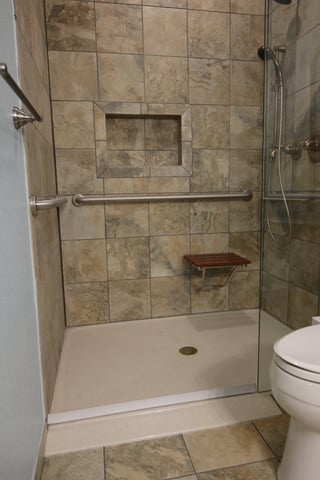
Many people find themselves needing accessible homes for themselves or family members. There are approximately 30 million Americans using wheelchairs and the number of people who need accessible homes will continue to increase as disabled and aging people are finding more ways to remain living in their homes. One important way to increase independent living is making a home accessible to an individuals personal needs which brought on the idea of wheelchair remodeling. Home modifications can increase safety, accessibility, and independence for people who want to live independently.

Universal design and aging in place services in Austin have finally taken hold in the residential remodeling industry. The current housing inventory doesn't offer the features needed for safety and accessibility in the numbers needed to accommodate the growing demand. It is ultimately up to the homeowners and their families to plan for future housing needs. Our existing architecture does not lend itself well to accomplishing any easy aging in place home remodels in Austin. In fact, there are more inaccessible homes in all of the US than there are accessible homes and 45% of these existing homes are owned by the baby boomers representing the oldest group of homeowners. Generally speaking in most residential US properties there are no easy ways to enter into bathrooms or utilize kitchens without coming into contact with one architectural barrier or another-especially if a wheelchair or walker is being used to help with mobility issues. Everything requires the proper clearance and distance for a new customized accessible route in your home to function properly. Please consider this aspect in your design if an elderly parent will be coming to visit or you yourself suffer an unfortunate accident or develop a debilitating disease.
Roll in showers without curbs are advised for everyone on a universal level for an accessible bath. The threshold is the most dangerous component in any shower. Not only is it impossible to overcome in a wheelchair but it isn't safe for those who are vision impaired or those with mobility issues. Low threshold shower bases with add on ramps can solve the shower entry problem when the floor cannot be lowered to form a true contoured roll in slope. ADA compatible curbless roll in showers are at a minimum 5 feet wide by 3 feet deep while a 5'x5' floor is optimum. Using a 32-36" clear entrance in a shower partition with an out-swinging door is advised for everyone. Remember wider is better. Upon exiting the shower a clear floor space having a five feet turning radius is desired. The shower should contain a shower wand on a sliding bar mounted at 48" above the floor to be available for varying heights of use accompanied by a regular height fixed shower head above both of which are regulated with a diverting controller valve. Always use a shower valve that is thermostatically controlled and pressure-balanced to prevent scalds. If you desire a full body wash, you can include a regular shower head as well. Installing fixtures with a scald guard or lowering the temperature at the water heater is a must to prevent burns. Fold down seats are useful if caretakers are involved. Secure grab bars on wood grounds around the entire shower perimeter at 34-36" above the finished shower floor increasing the safety factor and helping to prevent falls. A shower can light fixture needs to be installed above the shower area for proper lighting. All of the bathroom floor surface must be nonskid type to prevent slipping on a guaranteed wet floor.
Designing around specific physical conditions for handicap accessibility will lessen the impact of say arthritis, restricted mobility, or loss of vision by using combinations of products, concepts, and techniques available today. Working as a team, a trained CAPS specialist along with any family caretakers or therapists is able to identify the day to day problems weighing on those with health limitations. If you are considering an aging in place remodel for your home don't just contact any local remodeler in your area and expect a satisfactory accessible home modification. A professional design/build accessibility project can only be created for your specific needs by a qualified home remodeler having a nationally accepted CAPS (Certified Aging In Place Specialist) certification. This credential is backed by the NAHB. Only a CAPS home remodeler possesses the specific knowledge that will insure a successful outcome for your accessibility or aging in place project and what's more, keep you in your home longer.
The National Association of Home Builders, in partnership with the AARP and Home Innovation Research Labs, created the CAPS program, which includes training and education on the technical, business management and customer service skills essential to compete in the fastest growing segment of the residential remodeling industry--home modifications for aging in place. David L. Traut, CAPS the owner of T-Square Company in Austin, Texas is one of the select group of professionals nationwide to earn the Certified Aging-In-Place Specialist (CAPS) designation, identifying him as a home remodeler and builder with the skills and knowledge necessary to remodel or modify a home to meet the unique needs of the older population, disabled owners or their visitors. Call us at 512-444-0097 to see how we can help you design your bath for the future.

Tags:
ADA accessible,
aging in place remodeling,
wheelchair accessible remodeling,
wheelchair accessible baths and kitchens,
wheelchair accessible baths,
aging in place specialist,
certified aging in place specialist,
Austin elder construction,
handicap home modifications for disabled,
handicap accessibility,
handicap remodeling contractors,
roll in showers in Austin,
home modifications for independent living Austin,
disability access bathrooms Austin,
disability remodeling in Austin,
Austin Handicap Remodeling,
universal design ideas
With our population living longer, our society is experiencing an age related housing problem. Aging in place issues have become the norm given our aging baby boomer population. Aging in place specialists holding a CAPS certificate, their services, and aging in place design is taking over the remodeling industry day by day. A revolution in building design standards is long overdue. Our current building design standards do not address the needs of more than one third of our existing population. Many more people can greatly benefit from accessible design versus conventional design. Our rapidly aging population is experiencing the limitations of our personal living environments. Any evolution in building practically always begins in the common areas of the commercial building sector. The American Disabilities Act of 1990 increased the attention needed for those people having the right to equally access their work place and any recreational or leisure facilities. These rules at least offer minimal solutions for those needing the most help with any building access. In Austin, we now must provide access to one bathroom on the first floor in new homes as deemed by our newly adopted building regulations. This basic right to an accessible bathroom is finally being enforced by the city's building officials. What a tremendously needed and basic design improvement to our homes!
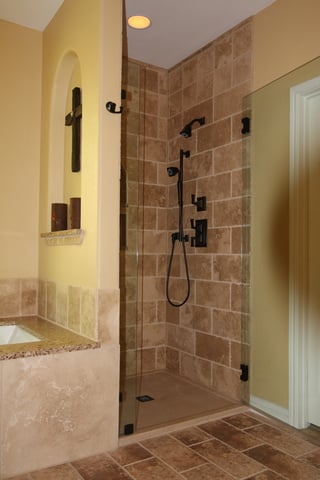
This adequately sized universal design shower above has wood blocking in the walls for a future folding seat and grab bars to be installed at the appropriate time. The low threshold shower entrance accommodates all users. The shower controls are within a 48 inch height off the finished floors and graspable by all. The dual shower heads are definitely user specific. The shower entrance door has a 32 inch clearance when fully open. There is adequate spacial lighting for showering. The floors both in the shower and connecting bath floor have an adequate nonskid surface rating.
The Universal Design (UD) concept is also age driven like the aging in place design issue but addresses the design of all homes both new and existing. Universal design/build addresses not only the problems all of today's homeowners face but the professional skills involved in design, building, remodeling, and all social and health services. This new evolving concept in home remodeling is catching on nation wide and has been for several years as a sign of the times. Universal design techniques used in building makes a home more accessible to all regardless of their mobility or adaptive abilities and plans for future elder living solutions. The multi-generational appeal of UD is appealing to any homeowner, their children, or their parents. An evolution of new products used for disability home modifications is making those homes more accessible and has finally come about in the remodeling industry. These new advances in accessible home remodeling in Austin not only keep the living environments safer but will not compromise the home's aesthetics.
Universal design ideas do not strictly deal with accessibility or aging in place design and does not implement precise ADA standards but it does offer flexibility to add accessories now and later to those planning ahead or to the end user. It also provides for a wide range of human performance characteristics for the way people use spaces within their homes including well integrated usability features. These adaptations have a broad market appeal to everyone for achieving ease of use, safety, and convenience accommodating a certain reality. That reality is that all people exist along a continuum of human performance as per their personal traits and characteristics regardless of their age. A universal approach to design takes into account that everyone has varying degrees of ability and disability rather than someone is either fully-functional or disabled. A universal design is appealing to all users.
There are seven criteria which must be met to be considered a universal design no matter which area of the home you are referring to. Any design must be equally useful to everyone, have flexibility in it's usefulness, be simple and intuitive, be perceived by everyone, have a tolerance for error, require little physical effort, and it must maintain an adequate area for approach and use. Any complexity or discriminating attribute to a design will doom it in terms of being considered universal in nature.
Universal Design does not equate to accessibility design even though they both are concerned with ergonomics and human function issues. The ADA guidelines for accessibility were created as a means to help those people with extreme disabilities within our society who are a narrow and specific cross section of the masses. A UD approach broadly takes into account moderate impairments or disabilities, temporary health conditions, and the varying abilities of anyone within a home regardless of their age or size. In other words, an ADA accessible home would be designed for the one person with the disability whereas a UD home is designed for everyone and should be used with any custom tub shower conversion.

Let's face it, an accessible home is needed by all of us at some time in our lives. This is true whether it's for ourselves, a family member, or a guest. The need is certainly not driven by age but is a result of life's experience. Any family living with a disability among any of the generations within it's group can always benefit from additional accessibility. This will in turn increase safety and independence for all involved as they go through life.
Aging in place home modifications are available through T-Square Company in Austin. Each universal design/build situation will be customized to fit your personal needs. Call 512-444-0097 today to begin to prepare for the accessible second chapter of your life while remaining safe and secure in your existing home.
CAPS 1636580
Tags:
aging in place remodeling,
bathroom remodeling,
bathroom remodels,
bathroom makeovers,
CAPS certified remodeling in Austin,
accessible home remodeling,
Universal Design,,
Austin bath remodeling,
Austin bath remodel,,
Austin bathroom remodeling,
Austin bathroom remodel,
aging in place specialist,
aging in place services,
aging in place design,,
bathroom remodeling contractor Austin Texas,
bathroom remodeling Austin Texas,
bathroom upgrades Austin,
accessibility remodelers in Austin,
universal design/build,
universal design ideas,
universal design/build ideas
With our population living longer, our society is experiencing an age related housing problem. Aging in place issues have become the norm given our aging baby boomer population. Aging in place specialists holding a CAPS certificate, their services, and aging in place design is taking over the remodeling industry day by day. A revolution in building design standards is long overdue. Our current building design standards do not address the needs of more than one third of our existing population. Many more people can greatly benefit from accessible design versus conventional design. Our rapidly aging population is experiencing the limitations of our personal living environments. Any evolution in building practically always begins in the common areas of the commercial building sector. The American Disabilities Act of 1990 increased the attention needed for those people having the right to equally access their work place and any recreational or leisure facilities. These rules at least offer minimal solutions for those needing the most help with any building access. In Austin, we now must provide access to one bathroom on the first floor in new homes as deemed by our newly adopted building regulations. This basic right to an accessible bathroom is finally being enforced by the city's building officials. What a tremendous needed and basic design improvement!
This adequately sized universal design shower in this bathroom transformation above has wood blocking in the walls for a future folding seat and grab bars to be installed at the appropriate time. The low threshold shower entrance accommodates all users. The shower controls are within a 48 inch height off the finished floors and graspable by all. The dual shower heads are definitely user specific. The shower entrance door has a 32 inch clearance when fully open. There is adequate spacial lighting for showering. The floors both in the shower and connecting bath floor have an adequate nonskid surface rating.
The Universal Design (UD) concept is also age driven like the aging in place issue but addresses the design of all homes both new and existing. Universal design/build addresses not only the problems all of today's homeowners face but the professional skills involved in design, building, remodeling, and all social and health services. This new evolving concept in home remodeling is catching on nation wide and has been for several years as a sign of the times. Universal design techniques used in building makes a home more accessible to all regardless of their mobility or adaptive abilities. The multi-generational appeal of UD is appealing to any homeowner, their children, or their parents. An evolution of new products used for disability home modifications is making those homes more accessible and has finally come about in the remodeling industry. These new advances in accessible home remodeling in Austin not only keep the living environments safer but will not compromise the home's aesthetics.
UD does not strictly deal with accessibility and does not implement precise ADA standards but it does offer flexibility to add accessories now and later to those planning ahead or to the end user. It also provides for a wide range of human performance characteristics for the way people use spaces within their homes including well integrated usability features. These adaptations have a broad market appeal to everyone for achieving ease of use, safety, and convenience accommodating a certain reality. That reality is that all people exist along a continuum of human performance as per their personal traits and characteristics regardless of their age. A universal approach to design takes into account that everyone has varying degrees of ability and disability rather than someone is either fully-functional or disabled. A universal design is appealing to all users.
There are seven criteria which must be met to be considered a universal design no matter which area of the home you are referring to. Any design must be equally useful to everyone, have flexibility in it's usefulness, be simple and intuitive, be perceived by everyone, have a tolerance for error, require little physical effort, and it must maintain an adequate area for approach and use. Any complexity or discriminating attribute to a design will doom it in terms of being considered universal in nature.
Universal Design does not equate to aging in place and accessibility design even though they both are concerned with ergonomics and human function issues. The ADA guidelines for accessibility were created as a means to help those people with extreme disabilities within our society who are a narrow and specific cross section of the masses. A UD approach broadly takes into account moderate impairments or disabilities, temporary health conditions, and the varying abilities of anyone within a home regardless of their age or size. In other words, an ADA accessible home would be designed for the one person with the disability whereas a UD home is designed for everyone.
Let's face it, an accessible home is needed by all of us at some time in our lives. This is true whether it's for ourselves, a family member, or a guest. The need is certainly not driven by age but is a result of life's experience. Any family living with a disability among any of the generations within it's group can always benefit from additional accessibility. This will in turn increase safety and independence for all involved as they go through life.
Aging in place home modifications are available through T-Square Company in Austin. Each universal design/build situation will be customized to fit your personal needs. Call 512-444-0097 today to begin to prepare for the accessible second chapter of your life while remaining safe and secure in your existing home.
CAPS 1636580
Tags:
aging in place remodeling,
bathroom remodeling,
bathroom remodels,
bathroom makeovers,
CAPS certified remodeling in Austin,
accessible home remodeling,
Universal Design,,
Austin bath remodeling,
Austin bath remodel,,
Austin bathroom remodeling,
Austin bathroom remodel,
aging in place specialist,
aging in place services,
aging in place design,,
bathroom remodeling contractor Austin Texas,
bathroom remodeling Austin Texas,
bathroom upgrades Austin,
accessibility remodelers in Austin,
universal design/build,
universal design ideas,
universal design/build ideas
If you have been considering a fine bathroom makeover or bathroom transformation project in Austin there are a few things you should take into consideration. Bathroom makeovers in Austin, Texas can take on many looks and facets. The scope of work you choose to accomplish should effectively solve your problems and most importantly, your needs as the home owner. The identification of these specific needs belongs to you the home owner. The way your home is structurally altered to accomplish these needs is the job of the professional remodeling contractor. Accessibility should be a concern no matter what your age. If your concerns are not for you, barring any life changing accident, they could concern the accessibility of another generation's independence is using the restroom. CAPS professionals in the remodeling industry can help with solutions in solving these issues. Bathroom remodeling contractors Austin, Texas can provide you with answers to your much thought about questions.
Just look at the different types of housing represented through out Austin and the surrounding areas. Smaller homes, cottages, sprawling historical townhomes surrounded by architecturally pleasing fences, rustic ranch homes, Macmansions, and sleek high rise condominiums are just a few examples of the structures that define Austin's diverse housing landscape. Economic situations along with personal preference formulates where we choose to live in a town with such diversity. Most people remember how the old style bathtub/shower combination was a standard part of any bathroom design. Some residential showering areas were enclosed using the multicolored vinyl shower curtain option while others had bipassing or sliding shower doors on tracks. The doors were framed with either chrome or gold colored aluminum matching the sliding tracks. Modern bathroom designs have become much more sophisticated because the many available bathroom products are easier to be discovered by the homeowner. There are millions of pictures representing fine bathroom upgrades or bathroom remodeling all across the internet.
Certainly there are many upgrades available when planning an Austin bathroom remodel. The replacement of the tub with a new walk in shower can create a bold look but will run you around $13,000. There are no spending limits for bathroom remodels. You can plan on spending around $12,000 to $15,000 for a hall bath remodel. The price tag can approach or exceed $35,000 for a complete master suite remodel. The type of fixtures and building components chosen along with the labor will compose the overall cost of the remodeling project.
Keep in mind that moving plumbing, especially drains, is one of the more expensive aspects of a fine bathroom makeover involving floor demolition. If you can limit and control the costs involved with this issue you will have more money to spend on the things that show off your endeavors. Changing water supply line locations is not as difficult as moving drains especially when they go into the main drainage system that resides underneath the finished floor.
Proper lighting is always an important aspect to be installed during a bathroom remodel. It can be broken down by task. Recessed cylindrical can lighting is used today to provide the overall luminescence for the room. Trims with lenses can be installed above baths and showers by code to brighten darker areas. Light strips or single wall fixtures can be designed around the new framed beveled mirror that you have chosen. The choice of bulbs utilized is yours for now at least. Try using dimmers to control your new lighting creating mood.
Ventilation is so important when planning a bathroom upgrade because of the humidity involved. Too many times a single exhaust fan is installed above the toilet, or what is much worse, in the center of the room. Heat and humidity naturally rise and will overtake the entire room if given a chance. Today's quiet bathroom exhaust fans should be sized according to the room's air volume. They should be located above any bathing or showering facility and above the toilet. Conditioned air along with adequately sized duct work supplied by your central unit will further accentuate a pleasant feeling within the bath.
Bathroom plumbing fixture choices are numerous to say the least. Select reputable companies offering the best warranties especially when considering finishes used on control valve trims and the fixtures installed in the project. Larger walk in shower designs should have seamless fiberglass liners to avoid leaks if the house ever shifts. Using natural stone or glass tiles while additionally designing in glass blocks will certainly be an upgrade. As for the new walk in shower design, you can design the space to not need a door for splash protection or you can take the route of a clean looking frameless glass shower enclosure. This will surely set you back at least $900. The end result will be a sophisticated clean look of beauty enclosing your new shower. Whether the door sits upon a curb or you have a specific need for a curbless situation you will be satisfied with your choice.
Who do you choose to help you with your dream? It is true that a professional remodeling contractor with years of experience will cost you more than a handyman illegally playing among the trades at your peril but then again there are those professional guarantees to consider. The professional verses the handyman is more likely to seek your overall satisfaction that will follow him into his next job. A true building professional can also orchestrate the job's smooth flow limiting the down time of a most useful room. Subcontractors will not be covered up and each skilled trade is brought onto the sight as needed in an orderly fashion. Professionals normally have insurance to cover on the job accidents to protect the homeowners from having legal action brought against them personally. Be sure you ask for a certificate of insurance from your chosen professional contractor so that you aren't held personally liable for medical experiences covering a worker's accident while on your property. Don't forget that only a certified aging in place (CAPS) professional can help you solve your accessibility issues.
Austin Bathroom Transformations


Tags:
Austin,
Texas,
aging in place remodeling,
CAPS,
aging in place home modifications,
bathroom remodeling,
wheelchair accessible baths and kitchens,
fine bathroom upgrades,
bathroom remodels,
bathroom makeovers,
CAPS certification,
ADA remodeling,
ADA bathroom cabinets,
disability bathroom remodels,
Universal Design,,
Austin bath remodeling,
Austin bath remodel,,
Austin bathroom remodeling,
Austin bathroom remodel,
bathroom modifications for elderly,
aging in place specialist,
aging in place services,
aging in place design,,
elder construction,
certified aging in place specialist,
independent living in Austin Texas
Disability is a complex phenomenon representing an interaction between one's physical impairments, the activities they need to perform, and the architectural barriers within the space in which this situation occurs. The terminology and jargon used for disabilities evolves regularly whereas, "handicapped" is no longer acceptable. It is no longer merely a description of intellectual or physical impairments. Each individual with similar impairments describes his or her limitations differently. The blind don't experience their world the same as a person with deafness and so on. Physically challenged has become the more socially accepted description of a person with an impairment providing a need for handicap remodeling contractors.
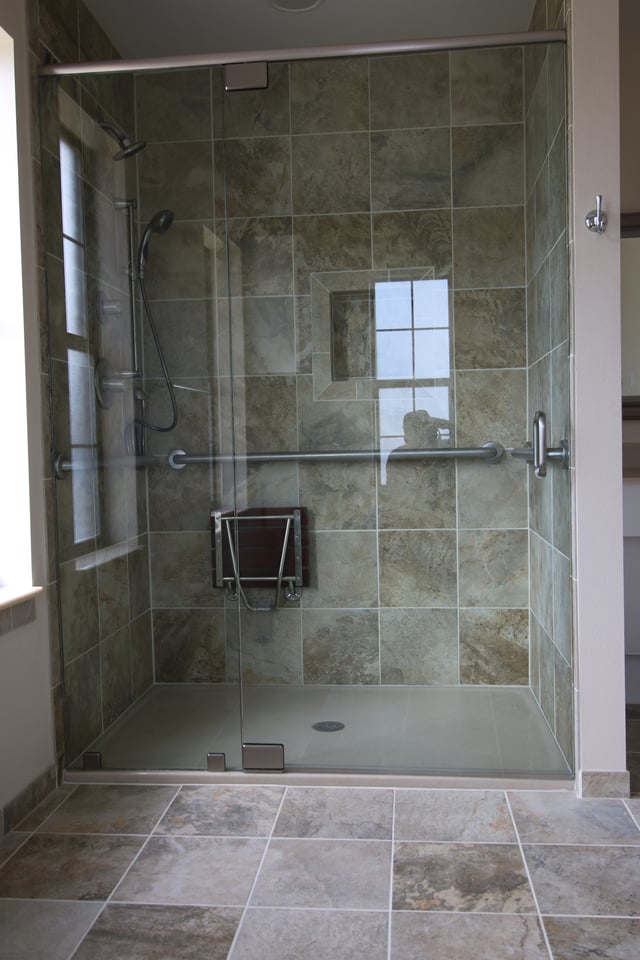
Physical limitations affect many more people than the daily users of walkers and wheelchairs. Many members of our society experience significant problems in dealing with their home environment due to various impairments. Today's conventional building standards conflict with most people's accessibility when you consider our created architectural barriers concerning cabinetry and door opening widths, individual strength, range of motion, movement, manual dexterity, balance, and coordination. Once the demands of our built environment exceed their capacities we become excluded from a certain room or even the entire home. The building world must work in unison to be sure the entire living environment meets basic needs in addition to affordability and structural integrity for the consumer and home owner. This includes both the home and the components within the home being accessible to all inhabitants. Privacy, sense of belonging, sense of control, and the sense of safety and security make up the quality of life for any home and should be considered for any design.

Designing for specific physical conditions for a handicap retrofit will lessen the impact of say arthritis, restricted mobility, or loss of vision by using combinations of products, concepts, and techniques available today. Working as a team, a trained CAPS specialist along with any family caretakers or therapists is able to identify the day to day problems weighing on those with health limitations. If you are considering an aging in place remodel for your home don't just contact any local remodeler in your area and expect a satisfactory accessible home modification. A professional design/build accessibility project can only be created for your specific needs by a qualified home remodeler having a nationally accepted CAPS (Certified Aging In Place Specialist) certification. This credential is backed by the NAHB. Only a CAPS home remodeler possesses the specific knowledge that will insure a successful outcome for your accessibility or aging in place project and what's more, keep you in your home longer.
A revolution in building design standards is long overdue. Our current building design standards do not address the needs of more than one third of our existing population. Many more people can greatly benefit from accessible design versus conventional design. Our rapidly aging population is experiencing the limitations of our personal living environments. Any evolution in building practically always begins in the common areas of the commercial building sector. The American Disabilities Act of 1990 increased the attention needed for those people having the right to equally access their work place and any recreational or leisure facilities. These rules at least offer minimal solutions for those needing the most help with any building access. In Austin, we now must provide access to one bathroom on the first floor in new homes as deemed by our newly adopted building regulations. This basic right to an accessible bathroom is finally being enforced by the city's building inspectors. What a tremendous needed and basic design improvement!
Aging in place design, construction, and remodeling has become synonymous with handicap accessible home design and modification during our lifetime. Home modifications can be used to accommodate anyone from people with mobility impairments requiring a custom walk in shower with a low threshold to those with vision loss, hearing loss, or even cognitive or developmental disabilities. Accessibility home modifications or wheelchair accessible kitchen and bathroom remodeling in Austin will allow anyone with limited mobility within your home to feel more empowered and independent. The extent of a customized accessibility design is dependent upon the activity level of the person requiring the modifications.
The National Association of Home Builders, in partnership with the AARP and Home Innovation Research Labs, created the CAPS program, which includes training and education on the technical, business management and customer service skills essential to compete in the fastest growing segment of the residential remodeling industry--home modifications for aging in place. David L. Traut, CAPS owner of T-Square Company in Austin, Texas is one of the select group of professionals nationwide to earn the Certified Aging-In-Place Specialist (CAPS) designation, identifying him as a home remodeler and builder with the skills, training, and knowledge necessary to design and remodel or modify a home to meet the unique needs of the older population, disabled owners, or their visitors.
Aging in place home remodeling in Austin will be completely driven by the homeowner's desire to remain in their home for as long as it is physically possible. When disability strikes, that same home you have endeared for at least part of your lifetime can become a prison that presents barriers, frustrations, and perils at every turn. The lack of any preparation or access upgrades possibly is driven by our youth oriented culture that wants to believe we are all young, bullet proof, and fit and will continue to be so. Perhaps we believe as a society that accessible upgrades will decrease our home's property values. The contrary is the reality. Just try looking for a barrier free accessible home. Actually, don't even bother. There are none. Oh yes, there are retirement communities for the older "active" seniors but the key word here is active having nothing to do with accessibility and a lot to do with the money required to live there.
The new evolving concept known as Universal Design for home remodeling is catching on nation wide and has been for several years as a sign of the times. Universal design techniques used in building makes a home more accessible to all regardless of their mobility or adaptive abilities. An evolution of new products used for disability home modifications is making those homes more accessible and has finally come about in the remodeling industry. These new advances in accessible home remodeling in Austin not only keep the living environments safer but will not compromise the home's aesthetics.
The three main rooms involved in aging in place home modifications are the bathroom, the kitchen, and the family room in that order. These areas make up the most occupied spaces of any home and will be connected by a designated accessible route. Here we will need access through wider doorways, non slip floor surfaces, and adequate cabinet and plumbing fixture accessibility. What is more important is that we must observe safety for everyone as the baby boomers choose to age in place within their homes. Just remember one thing and dispel any myth that aging in place construction and remodeling must appear institutional or out of the ordinary. When the work is done with style and taste it will only compliment the home.
For additional information about the CAPS program, visit nahb.org/CAPS. For more information about T-Square Company, visit www.tsquareco.com or call 512-444-0097 to find out how we can assist you in gaining accessibility.
Tags:
ADA accessible,
aging in place remodeling,
CAPS certified remodeling in Austin,
ADA compliance,
disability bathroom remodels,
CAPS professional in Austin,
accessible home remodeling,
Universal Design,,
Austin bath remodeling,
Austin kitchen remodeling,
aging in place specialist,
aging in place services,
aging in place design,,
disability home modifications in Austin,
Austin elder construction,
handicap accessibility,
handicap remodeling contractors,
ADA vanities,
accessibility remodelers in Austin,
ADA remodeling Austin, Texas,
accessibility designs Austin Texas,
Austin Handicap Remodeling
Elder construction and handicap retrofit most definitely falls under the category of aging in place. The Center for Disease Control defines aging in place as the ability to live in one’s own home and community safely, independently, and comfortably regardless of age, income, or ability level. Aging in place construction and remodeling has become synonymous with handicap accessible home design and modification during our lifetime. Home modifications can be used to accommodate anyone from people with mobility impairments to those with vision loss, hearing loss, or even cognitive or developmental disabilities. Accessibility home modifications or wheelchair accessible kitchen and bathroom remodeling in Austin will allow anyone with limited mobility within your home to feel more empowered and independent. The extent of a customized accessibility design is dependent upon the activity level of the person requiring the modifications. Whether someone needs a cane, walker, or wheelchair to help with mobility it is definitely a game changer for accessibility within the home. Aging in place home modifications help people maintain their living environment for as long as it works for them before they might need assisted living care or a nursing home.
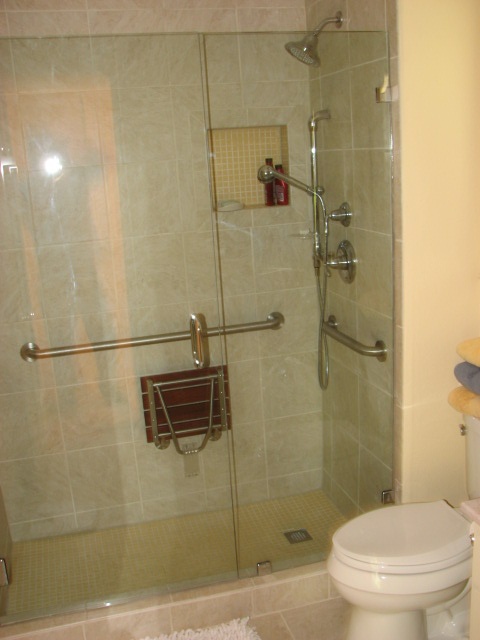
Everyone ages differently and has different needs and wants. The factors that constitute the aging in place market for all individuals are based on a persons genetic makeup, their lifestyle including the choices they have made while living their life, and their environment. These factors have brought about the need for universal design. This is the design of products, services, and environments that are usable by as many people as possible regardless of age, ability, or situation without the need for adaptation or specialized alterations. It provides for the greatest safety and access for any home guests or occupants and is undetectable when done well. Since so very few homes share the accessibility offered by universal design, to satisfy the needs of a particular household member brought about by an accident, an illness, or simply the aging process there will always be a need for customized accessibility features. This will be accomplished by a CAPS accredited remodeling professional producing a truly functional design. The same competent home remodeling company who understands and practices aging in place home modifications in Austin should carry out the work to fit the design to the existing home and insure both safety and accessibility to the owner.
Physical limitations affect many more people than the daily users of walkers and wheelchairs. Many members of our life experienced or elder society have significant problems in dealing with their home environment. Today's conventional building standards conflict with most people's accessibility when you consider our industry created architectural barriers concerning cabinetry and door opening widths. Mobility issues are affected by an individual's overall strength, range of motion, movement, manual dexterity, balance, and coordination . Once the demands of our built environment exceed their capacities we become excluded from a room or even the entire home. The building world must work in unison to be sure the entire living environment meets basic needs in addition to affordability and structural integrity for the consumer and home owner. This includes both the home and the components within the home being accessible to all inhabitants. Privacy, sense of belonging, sense of control, and the sense of safety and security make up the quality of life for any home and should be considered for any aging in place design.
Both visual and cognitive disabilities present a whole new set of problems concerning safety. Visual impairement can be aided by creating an environment with many contrasts. Something so simple as applying a contasting color on the baseboards or varying the type of floor covering throughout the home can aid in room recognition. Cognitive limitations really deal with safety and limiting a person from being exposed to hurting themselves.
The National Association of Home Builders, in partnership with the AARP and Home Innovation Research Labs, created the CAPS program, which includes training and education on the technical, business management and customer service skills essential to compete in the fastest growing segment of the residential remodeling industry--home modifications for aging in place. David L. Traut, CAPS owner of T-Square Company in Austin, Texas is one of the select group of professionals nationwide to earn the Certified Aging-In-Place Specialist (CAPS) designation, identifying him as a home remodeler and builder with the skills and knowledge necessary to remodel or modify a home to meet the unique needs of the older population, disabled owners or their visitors.
Aging in place home remodeling in Austin will be completely driven by the homeowner's desire to remain in their home for as long as it is physically possible. When disability strikes, that same home you have endeared for at least part of your lifetime can become a prison that presents barriers, frustrations, and perils at every turn. This very much brought about bathroom modifications for the elderly. The lack of any preparation or access upgrades possibly is driven by our youth oriented culture that wants to believe we are all young, bullet proof, and fit and will continue to be so. Perhaps we believe as a society that accessible upgrades will decrease our home's property values. The contrary is the reality. Just try looking for a barrier free accessible home. Actually, don't even bother. There are none. Oh yes, there are retirement communities for the older "active" seniors but the key word here is active having nothing to do with accessibility and a lot to do with the money required to live there.
Aging in place services in Austin are no different from those in any other city or state within the US. They are surely needed in virtually every home that I've visited in over 30 years of operating my remodeling business. Sadly, our archaic methods of architecture have no room for accessibility within the existing aging home inventory. Aging in place remodeling in Austin, Texas must be done by a certified aging in place specialist to benefit from and capture the most accessibility from the remodeler's education and experience. A successfully trained aging in place remodeler will have several capabilities like the vision and purpose to manage your project, he will have an expertise in construction, he will be skilled in effective communication, he uses time management along with his organized skills, and furthermore he will be capable of maintaining a balance and perspective for problem solving throughout your project.

For additional information about the CAPS program, visit nahb.org/CAPS. For more information about T-Square Company, visit www.tsquareco.com or call 512-444-0097 to find out how we can assist you.
Tags:
ADA accessible,
aging in place remodeling,
aging in place home modifications,
ADA remodeling,
CAPS certified remodeling in Austin,
ADA kitchen cabinets,
aging in place construction,
aging in place designs,
accessibility home remodeling in Austin,
accessible home remodeling,
Universal Design,,
Austin bathroom remodeling,
aging in place specialist,
aging in place services,
Austin elder construction,
ADA bathroom Austin, Texas,
accessibility designs Austin Texas,
Austin Handicap Remodeling