Check out my building blog to learn more about construction for your home or office in Austin! David L. Traut, President, CAPS Certified (512)444-0097

Universal Design and Accessibility/T-Square Company in Austin

Posted byDavid L. Traut, CAPS on Fri, Oct 07, 2022 @ 10:10 AM


Human problems must be solved using correct designs. The principles of Universal Design solve accessibility issues for the most significant number of people. Special needs children, people who have become seriously injured, people living with a debilitating disease, people with sensory limitations or intellectual limitations, and last but not least, the people who are planning to stay in their homes for as long as possible while Aging in Place all need accessible homes. The need to deal with disabilities during elder construction or modifications for special needs children empowers us to create environments wherein people can function effectively.  As our society evolves away from institutionalized care, making a home more comfortable for children, older adults, and their visitors can immediately benefit the comfort and lifestyle of the entire family. How are you planning for your future when it concerns your home?

Let's start by defining what is meant by an accessible home.  Accessible homes of Austin or anywhere else provide homeowners with a means to stay healthy, independent, and safe. They, in turn, experience a better quality of life. In these accessible homes, as a Universal Design contractor, any architectural barriers have either been removed during remodeling or were never a part of the design for increasing accessibility. The accessible home stands as the defined course for the Universal Designed home. People with disabilities can live comfortably and safely as well as fully functional individuals.

Certified Aging In Place Specialist 

  Tweet and understand this fact of life!  Accessible homes will be needed by everyone at some uncertain time, whether for ourselves, our family members, or our guests.  This defines the Aging in Place concept and its associated CAPS accreditation, a nationally registered credential offered through the NAHB.  Its function is to keep people in their homes longer and provide safety and independence to all homeowners. What is more, Universal Design segues seamlessly into Aging in Place.

Discover the Principles Of Universal Design


ADA_kitchen_5
 
 
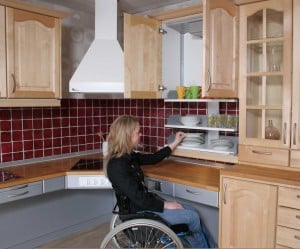
As in the kitchen in the above photograph, the accessible kitchen is comfortably sized for a clear five-foot turning radius to avoid backing up for an approach. Clear 30x48-inch approach areas for all work areas and appliances are a significant part of the more-open design. The final kitchen design must be tailored to the homeowner's abilities, needs, and interests.  Pull-out shelves expand workspaces at activity centers, while roll-under access is given underneath the stove, prep, and sink work areas. A higher and deeper base cabinet kick space area of 6x9 inches provides better forward wheel clearance for the wheelchair, enabling the user to get closer to the cabinet workspace.  A raised dishwasher offers more accessible access to dishes, and lowered microwaves and other appliances like ovens solve other reach distance problems making it easier to live with a disability. Open storage areas without doors to interfere with access is a better solution. Having multiple countertop heights allows everyone access to a work surface. A successfully designed kitchen isn't about cabinet style or the composition of the countertop. It is more about the ways the design can support the user's personal needs and functionality.
ADA Kitchen Cabinetry

Because everyone ages differently and has different needs and wants, a universal solution acting as a design for all is needed. The factors that constitute the Aging in Place market for all individuals are based on their genetic makeup and lifestyle, including their choices while living and their environment.  These factors have brought about the need for Universal Design. This is the design of products, services, and environments usable by as many people as possible regardless of age, ability, or situation without needing adaptation or specialized alterations. It provides the most significant safety and access for home guests or occupants and is undetectable when done well.  Since so few homes share the accessibility offered by Universal Design, to satisfy the needs of a particular household member brought about by an accident, an illness, or simply the aging process, there will always be a need for customized accessibility features.  A CAPS-accredited remodeling professional will accomplish this by producing a truly functional design. This same competent design/build home remodeling company that understands and practices Aging in Place home modifications in Austin should accomplish the work to fit the Universal Design and ensure your safety and accessibility.  Certified Aging in Place specialists is listed in Washington on the NAHB CAPS listing.

Home Accessibility Help

The concept of the accessible home has evolved beyond the basic grab bars and ramps to one in which accessibility is built into the basic design.  Universal Design makes living in a home easier for people of all ages and abilities.  Accessible design can be beautiful and functional and never needs to have any institutional appearance.  As our aging baby boomer population ages, the need for accessibility in the home is becoming ever more critical.  Our new way of viewing the basic home in our society and our antiquated architecture is giving way to a revolution in home design.  Ordinary homeowners with extraordinary challenges can partner up with CAPS design professionals, architects, and their own families to create homes to restore capabilities, independence, and grace to daily living.


 
Aging in Place home modifications incorporating Universal Design principles is available through T-Square Company in the Austin area. We have an A plus rating with the local BBB and have over 30 years of remodeling experience. We are additionally an accredited Aging in Place specialist offering complete aging in place services.  Each design/build situation will be customized to fit your personal needs increasing your accessibility through Universal Design. Call 512-444-0097 today to begin the accessible second chapter of your life while remaining safe and secure in your existing home. 
 
David L. Traut, CAPS (#1636580)
 
Accessible Homes Of Austin


Tags: Austin, Texas, how-to, ADA compliant kitchen cabinets, ADA bathroom cabinets accessible routes, CAPS, aging in place home modifications, aging in place home improvements in Austin, wheelchair accessible remodeling, wheelchair accessible baths and kitchens, handicap home modifications, ADA bathroom cabinets, disability bathroom remodels, handicap accessible bathrooms, aging in place construction, accessibility home remodeling in Austin, Austin bathroom remodel, Austin kitchen remodeling, Austin kitchen remodel, disability bathroom remodeling in Austin, universal design/build, universal design/build ideas, universal designbuilding for the future, what is universal design, wheelchair accessible home remodeling in Austin, universal design remodeling techniques, universal design remodeling contractor, universal design building contractor, universal design principles, universal principles of design, disability contractor in Austin, special needs contractor in Austin, senior home modifications in Austin, universal design/build contractor, what is universal design in Austin, special needs contractor, universal home design in Austin, universal kitchen design, universal design home additions, universal design building consultant, disability and special needs in dripping springs, disability and special needs contractors in Austin, universal design forever homes, Universal design construction, Universal Design for Disabilities, universal design and accessibility in Austin

Universal Design For Disabilities/T-Square Company

Posted byDavid L. Traut, CAPS on Fri, Sep 30, 2022 @ 10:09 AM

Our homes have always been exempt from any of the federal accessibility regulations put in place in 1990. Unfortunately, no restricted codes or regulations concerning residential bathrooms or disability access baths exist. An evolving concept called Universal Design satisfies most people's personal needs. Universal Design techniques in the building make a home more accessible to all regardless of size, mobility or adaptive abilities. Children and aging adults benefit in the home from its existence. The evolution of new products used for disability home modifications makes those homes more accessible and has finally come about in the remodeling industry. Specialized handicap remodeling contractors for home remodeling incorporating the principles of Universal Design are catching on nationwide and have been a sign of the times for several years. Our present-day obsolete homes, now inhabited by the baby boomer generation, will slowly and increasingly raise their obsolete ugly heads and expose their true lack of accessibility to those inhabiting them.  

Discover the Principles Of Universal Design

When mobility becomes an issue for any homeowner, regardless of age, the question arises concerning physically moving to a different home that is more accessible. Universal Design prepares your home for one of those highly likely events involving someone needing room modifications for even a short time while recovering from surgery or the chronically ill.  Solving Aging in Place issues will soon become the number one challenge concerning our country's obsolete housing inventory. The situation will only expand with an increasingly aging population due to medical advances. When these homes were previously purchased, they represented a complete castle in the world of their owners in which to prepare for a day, and they also acted as a retreat from life's challenging interactions. They housed our families, our memories, and our stuff.  They represented a place where we could be ourselves. 

There are many benefits to using Universal Design techniques, including potential use by aging family members or special-needs children, added resale value, and the fact that you'll be creating a space that can be used by anyone who visits your home, regardless of their range of abilities. Simple universal design updates for Aging in Place home modifications and handicap bathroom accessibility can include adding grab bars or handrails throughout the home, adding a seat within the roll in shower, lowering upper cabinets and countertops, adding non-slip flooring, widening hallways, or installing stair lifts, and widening doors. You might also consider lowering light switches and thermostats and installing easier-to-use door levers. Try to provide a clear barrier-free path or accessible route to the most visited areas of your home. These new advances in accessible home remodeling make living environments safer and will not compromise the home's aesthetics.   

Certified Aging In Place Specialist

Many people find themselves needing accessible homes for themselves or family members. There are approximately 30 million Americans using wheelchairs, and the number of people who need accessible homes will continue to increase as disabled and aging people find more ways to remain in their homes. Furthermore, children with special needs make up a significant part of the population. One crucial way to increase independent living is by making a home accessible to an individual's personal needs. Home modifications can increase safety, accessibility, and independence for people who want to live independently.

Conquer A Tub To Shower Conversion

Universal Design runs parallel with wheelchair access. Many of the published guidelines for wheelchair-accessible remodeling, particularly requirements for corridor and door widths, safety bars, and proper access to different rooms, can go a long way in extending the amount of time an elderly or physically impaired individual can live independently. The absolute truth about the design process is that if it allows access by a seated person, it gives everyone access.  More comfort is built into a room while avoiding a cramped and cluttered living environment because there is adequate room to move about freely.


Roll In Showers

Aging In Place Home Modifications

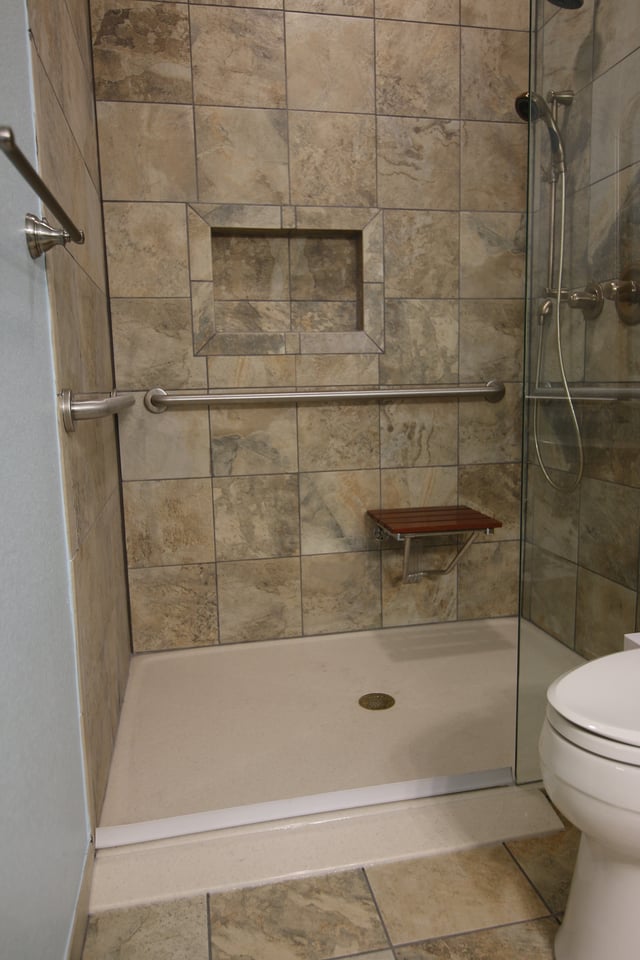
An Aging in Place (CAPS) specialist must design an Aging in Place project. Always consider the end user's preferences and capabilities. For instance, roll-in showers without curbs are advised for everyone on a universal basis for an accessible bath.  A 5'x5' clear shower floor turning space is an optimum size when a caretaker is involved. Using a 32-36"  wide barrier-free entrance in a shower partition with an out-swinging door is advised for everyone to increase safety. Remember, wider is better in all respects. Upon exiting the shower, a clear floor space of 30"x48" for an approach to the shower should be present. This area can overlap with the designated five feet turning radius area within the room. The shower should contain a hand-held shower wand on a sliding bar or mast mounted 48" above the floor and is available for varying heights of use. The hand shower is complimented by a fixed height shower head located at approximately seven feet above the shower floor. These diverse shower heads are both regulated using a diverting controller valve.You can opt for the fixed shower head if you desire a full body wash or the hand-held is used for rinsing and shower cleaning. This configuration allows adaptability within the design. Hence, the user has a choice. Always use a shower valve that is thermostatically controlled and pressure-balanced to prevent scalds. 

Installing fixtures with a scald guard or lowering the temperature at the water heater is a must to prevent burns. Fold-down seats attached to the shower wall are useful if caretakers are involved. Recessed shampoo niches help eliminate clutter on the shower floor.  Secure grab bars installed on wood grounds buried within the wall around the entire shower perimeter at 34-36" above the finished shower floor increases the safety factor and helps to prevent falls.  A recessed can light fixture should be installed above the shower area for proper lighting. To prevent slipping on a guaranteed wet floor, all bathroom floor surfaces must be the nonskid type. The ultimate goal in accessible design is to make the bathroom space safe for everyone who uses the bathroom. Universal Design better accommodates wheelchair users and makes the bathroom more comfortable for all users. This modification can be done without sacrificing style.

Home Accessibility Help

The National Association of Home Builders, in partnership with the AARP and Home Innovation Research Labs, created the CAPS program, which includes training and education on the technical, business management, and customer service skills essential to compete in the fastest-growing segment of the residential remodeling industry--home modifications for Aging in Place using Universal Design.   David L. Traut, CAPS, the owner of T-Square Company in SW Austin, Texas, is one of the select group of professionals nationwide to earn the Certified Aging-In-Place Specialist (CAPS) designation, identifying him as a home remodeler and builder with the skills and knowledge necessary to remodel or modify a home to meet the unique needs of the older population, disabled owners, or their visitors.

Tags: ADA accessible, accessible routes, barrier free access, aging in place remodeling, aging in place home modifications, aging in place, wheelchair accessible remodeling, wheelchair accessible baths and kitchens, handicap home modifications, ADA remodeling, ADA compliance, disability bathroom remodels, handicap accessible bathrooms, aging in place construction, aging in place designs, custom tub to shower conversions, wheelchair accessible baths, accessibility home remodeling in Austin, CAPS professional in Austin, CAPS certification holder in Austin, accessible home remodeling, CAPS remodeling techniques, Universal Design,, Austin bathroom remodel, disability home remodeling in Austin, home modifications for independent living, disability bathroom remodeling in Austin, bathroom modifications for elderly, aging in place specialist, aging in place services, aging in place design,, elder construction, certified aging in place specialist, handicap remodeling contractors in Austin, disability home modifications in Austin, Austin elder construction, remodel bathroom for handicap Austin Texas, handicap home modifications for disabled, handicap accessibility, handicap remodeling contractors, bathroom modifications for disabled, bathroom accessibility remodels in Austin, accessibility remodelers in Austin, ADA remodeling Austin, Texas, ADA bathroom Austin, Texas, wheelchair accessible showers in Austin,, roll in showers, accessibility designs Austin Texas, handicap bathrooms, ADA compliant wheelchair accessible showers, roll in shower design for wheelchair access, disability access contractor, accessible home remodeling for disabilities, accessibility home modifications, Universal Bathroom Design, Universal Design for Disabilities