Check out my building blog to learn more about construction for your home or office in Austin! David L. Traut, President, CAPS Certified (512)444-0097

Home Modifications For Seniors and the Disabled in Austin

Posted byDavid L. Traut, CAPS on Mon, Apr 03, 2023 @ 10:04 AM

Most recently, architects and designers, with the help of CAPS professionals, have been concentrating on revising home interior design basics. The obvious outcome is slowly we are creating design principles and strategies that accommodate the full range of human capability rather than only the fully-functional part of society. This field of flexible or inclusive design is called Universal Design and its goal is to create easily accessible living and working spaces without exclusion to anyone. Instead of appearing as a hospital extension, the thoughtful new designs are appealing, stylish and comfortable for everyone; not just the elder or severely disabled among us. Therefore, the world of boundaries and barricades is beginning to lessen while we overcome the nationwide problem one home at a time. This is a testament to the senior and disabled population demanding equal access to their homes.

The ADA rules came about in 1990, but unfortunately the ADA rules do not apply to the private residential market. However, these rules can be used as a guide for better accessibility in private homes. Seniors and disabled homeowners must depend on the knowledgeable CAPS certified private sector of builders and remodelers to remedy the housing shortcomings. They will supply the recommended aging in place home modifications. Universally, every home should be accessible to all inhabitants and their visitors regardless of their age, size, or physical abilities. Caring for someone with special needs is a unique and sometimes lifelong challenge. Whether it’s a child born with a disability, someone who has suffered an unfortunate accident or medical event causing them to lose abilities they once had, or an older family member in declining health needing assistance with daily life, the work of a special needs contractor can help make things easier for both the affected individual and their caregivers.


Accessible Bathroom Modifications In Austin
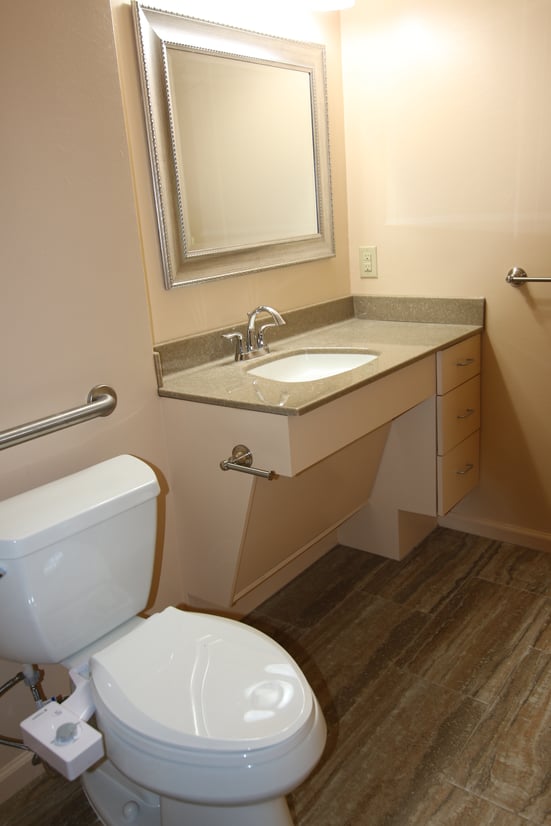
Handicap Bathroom Vanity In Austin

What are the most important home modifications for seniors and the disabled to increase their quality of life? Here is a list of considerations for Aging in Place.

  • Replacing door knobs with lever devices.
  • Widening doorways and hallways.
  • Increasing lighting, especially around stairs and work areas.
  • Installing curb-less showers.
  • Installing grab bars, especially in wet areas.
  • Installing taller comfort-height toilets.
  • Installing ramps to overcome level changes.
  • Installing lever-controlled faucets.
  • Installing hand-held shower devices.
  • Adding a shower bench.
  • Replacing flooring with any non-skid type.
  • Utilizing smart home devices like electric door openers and remote light switches.
  • Undergoing kitchen modifications to increase comfort and safety.
  • Making bathroom modifications to increase safety and usability.
  • Installing a stair lift or vertical platform lift.

T- Square Company located at 14141 Highway 290 West, Suite 800 in Austin, Texas is an industry leading accessible, universal, certified Aging in Place and VA approved Specially Adapted Housing home builder and remodeler. T-Square offers design/build projects for both totally accessible homes from the ground up or complete handicap modifications for existing homes to Age in Place. Be aware, traditional home builders and remodelers do not consider or understand the needs of the disabled or elderly. They deal mainly with the two thirds of our society without disabilities or special needs. They do not have the knowledge or experience required to think out of the box when creating a special needs home. It requires a trained and educated accessible home builder or contractor to visualize special needs modifications for special people.

Certified Aging In Place Specialist

T-Square Company will design and build you an adapted living environment which is completely customized around your abilities. Whether your project concerns home modifications, an accessible addition or wing, or new construction derived from a handicap accessible floor plan they can help you increase your accessibility. David Traut, the president/owner, is CAPS certified (1636580) and has over three decades of building and remodeling experience practicing as a disability contractor for special needs. He wants to help his clients be as self sufficient and independent as possible. Let David show you how to increase the safety and accessibility within your personal living environment.

By the way, David has recently published a book entitled "Age in Place at Home: Adapting the Home Environment for All Generations". It is available on Amazon and stands as a reference book for increasing home accessibility through Universal Design.

Home Accessibility Help

 Contact T-Square Company today at 512-444-0097 so we can show you how to begin a new accessible chapter in your lifetime.

 

Tags: aging in place home modifications, accessibility home remodeling in Austin, aging in place specialist, aging in place services, Austin Senior Home Remodeling, handicap accessible bathroom remodeling, Austin aging in place specialist, handicap bathroom remodel, accessible home remodeling for disabilities, barrier free showers in Austin, ADA compliant roll in showers, handicap ADA roll in shower, wheelchair accessible shower stalls, accessible bathroom design specifications, home remodeling contractors residential, disabled bathroom remodel, specialty construction in Austin, what is an ADA compliant bathroom, home access in Austin, home accessibility, wheelchair accessible housing, accessible homes in austin, accessible home modifications, wheelchair accessible bathroom, handicap bathroom design, handicap bathroom vanity, handicap bathroom contractor in Austin, handicap accessible floor plans, accessible home builder in Austin, special needs contractor, universal home design in Austin, home renovations for disability in Austin, ADA Accessibility, ADA Contractor/Austin, Texas, Barrier-free designs

Proactive Senior Living Solutions/Universal Design

Posted byDavid L. Traut, CAPS on Thu, Mar 30, 2023 @ 14:03 PM

If you are a senior or considering moving in an elderly parent into your home, you might find this information useful while pondering the subject to move forward.

The Aging in Place market in the US today is constantly influenced by the increasing size of the senior population, the desire to remain in one's home, a constantly increasing cultural diversity, and our aging and inaccessible housing stock with it's reduced affordability. Let's face it, accessible homes are needed by all of us at some time in our lives. This is true whether it's for ourselves, a family member, or a guest. Each individual with similar impairments describes his or her limitations differently. The blind don't experience their world the same as a person with deafness. The need is certainly not driven by age but is a result of life's experience. Any family living with disability among any of it's generations within it's group will always benefit from additional accessibility. This will in turn increase safety and independence for all involved as they go through life.

Actively searching for senior living solutions, the aging population is made up of two prominent age groups formed by the age 65 and over population and the baby boomers. The baby boomers were born between 1946 and 1965 as a result of WW II. Together these two groups own over 48% of all the US home inventory today. The desire to remain in one's home is driven by social attachments via a network of neighbors, friends, and family. Our cultural diversity assures that the same Aging in Place solutions cannot work across the board for all individuals, just as an individual's ability to live independently varies from person to person. With the constantly aging housing inventory, costs can be a major barrier in home modification for many residents. A catch 22 situation arises once you consider the reduced affordability of another home versus the one presently occupied by seniors. In this case the homeowner must use the equity that has accrued in their home's value in order to make the modifications required to safely move forward. Obviously, in the long run, it's cheaper to remodel an existing home using accrued assets than it is to buy a new home in today's inflated market only to endure closing costs, moving costs and the associated stress.

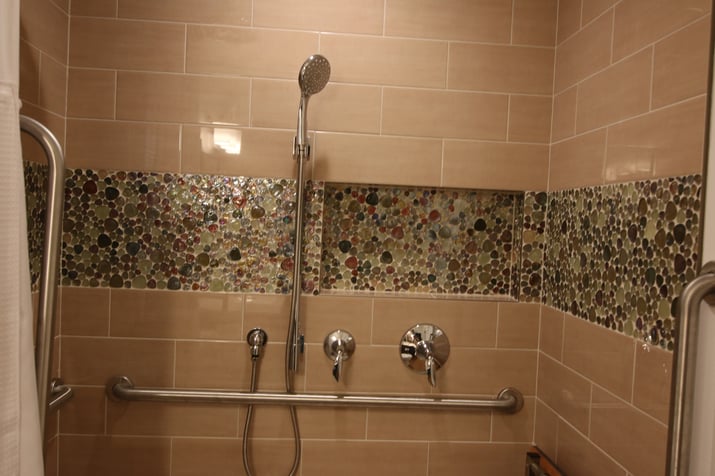
Handicap Accessible Shower In Austin, Texas

Some people confuse Aging in Place with Universal Design. Both are methods to increase home accessibility but Aging in Place strictly deals with an existing home, and is applied only when needed. Aging in Place implies modifying any home for it's occupants as a result of physical changes to ensure that the inhabitants can safely remain living in the home for as long as possible. Thus, it represents a reactive approach as a solution for providing home accessibility to the unprepared and procrastinating occupants. This time will expire once the senior homeowners require assisting medically trained help for ensuring their personal safety in a nursing home or an assisted living environment. In comparison, Universal Design offers choices to all home residents, no matter their age, size, or physical abilities. It can become part of any home at any time so all the occupants can enjoy the positive effects longer. Once undertaken by a proactive homeowner, the universal process begins with a design and then the construction begins. This process makes way for the home's comfort, safety, and usability to be enhanced. When Universal Design is incorporated into remodeling or new builds, these homes can accommodate the changing needs of their owners without further alterations. Over time, increased accessibility is there when it is required without disruption or calling attention to any family member.

Aging In Place Home Modifications

For unprepared seniors, the demands of their home environment might eventually exceed their capacities forcing the inhabitants to become excluded from a room or even the entire home. In truth, physical limitations affect many more people than the daily users of walkers and wheelchairs. Many members of our life-experienced or senior society have significant problems safely dealing with their home environment due to today's conventional building standards. These status-quo building methods conflict with most people's accessibility, while the industry has routinely created homes full of architectural barriers. Individual strength, range of motion, movement, manual dexterity, balance, and coordination evolve over time as we become more life-experienced. The number one safety hazard in a home for seniors is negotiating level changes--steps at the entry, stairs between floors, and curbs to step over when entering the shower. Eliminating level changes is very difficult in existing homes and almost impossible to do aesthetically without considerable compromises, unless there is a major renovation. Sadly, the end result is that most homeowners decide to sell the house facing this situation rather than make the modifications. Fortunately, most traditional homes are capable of being modified.

Any accessibility design for seniors should always be performed by a CAPS certified builder or remodeler to provide a professional and safe path forward for seniors. This is the only way that you can be assured that the home modifications are the right choices to satisfy your needs. There is no need to waste money only to find out that the wrong alterations were done by an inexperienced and unqualified remodeling company. Modifications to bathrooms and kitchens, the two most used rooms in a home, must take everything about a persons personal behavior into consideration. Bathroom modifications typically include  custom tub to shower conversions, a custom walk in shower, an ADA-compliant toilet, or an accessible roll-under vanity. These are all great ways to make the bathroom safer and more accessible. Other bathroom concerns involve storage cabinetry and door opening widths. When it comes to the kitchen, ADA-compliant kitchen cabinets including roll-under cooktops, sinks, and food prep areas are important. Accessible storage for food and cooking items is needed along with adaptable multi-level cabinet working surfaces. All kitchen ADA-compliant appliances should be installed so a person using a wheelchair has access. Therefore, each appliance has associated clear floor space for approach and maneuvering. Remember, if the layout works well for the wheelchair user, it works for everyone. In general, a senior's home should be free of clutter, and every adequate room should have ample clear floor space for approaching certain items. Every area of the home is accessible without involving architectural barriers. But who do you contact to be sure you are getting the accessibility you desire?

The National Association of Home Builders, in partnership with the AARP and Home Innovation Research Labs, created the CAPS program, which includes training and education on the technical, business management and customer service skills essential to compete in the fastest growing segment of the residential remodeling industry--home modifications for aging in place. David L. Traut, CAPS owner of T-Square Company in Austin, Texas is one of the select group of professionals nationwide to earn the Certified Aging-In-Place Specialist (CAPS) designation, identifying him as a home remodeler and builder with the skills and knowledge necessary to remodel or modify a home to meet the unique needs of the older population, disabled owners or their visitors. David has recently published a book called "Age in Place at Home: Adapting the Home Environment for All Generations". It is available on Amazon.

 For additional information about the CAPS program, visit nahb.org/CAPS.  For more information about T-Square Company, visit www.tsquareco.com or call 512-444-0097.

Certified Aging In Place Specialist


 The building world must work in unison to be sure the entire living environment meets basic needs in addition to affordability and structural integrity for the consumer and home owner.  This includes both the home and the components within the home being accessible to all inhabitants.  Privacy, sense of belonging, sense of control, and the sense of safety and security make up the quality of life for any home and should be considered for any design.


Download Our Free Aging In Place Remodeling Considerations Checklist


Tags: aging in place home modifications, handicap home modifications, aging in place construction, aging in place designs, CAPS remodeling techniques, Universal Design,, aging in place specialist, aging in place services, elder construction, independent living in Austin Texas, Austin elder construction, handicap accessibility, bathroom modifications for disabled, accessibility remodelers in Austin, roll in showers, handicap bathrooms, home modifications for independent living Austin, universal design ideas, Austin Accessibility Design, Austin senior living solutions, Austin handicap bathroom contractor, Austin home remodeling for disabled, ADA Accessibility, Barrier-free designs