Check out my building blog to learn more about construction for your home or office in Austin! David L. Traut, President, CAPS Certified (512)444-0097

Understanding Disability and the Importance of What is Universal Design

Posted byDavid L. Traut, CAPS on Thu, Jan 22, 2026 @ 14:01 PM

General Background Knowledge

Disability is a complex phenomenon — it represents the interaction between a person’s physical abilities, the activities they need to perform, and the architectural barriers within their surroundings. Each person experiences this differently.

Two individuals with the same impairment may describe their challenges in completely different ways. For example, a person who is blind experiences the world very differently than someone who is deaf.

According to national statistics, 19% of adults ages 16–64 and 42% of adults over 65 have a physical disability that affects daily living. These numbers remind us that accessibility isn’t just a senior issue — it’s a universal human need.


Designing Homes for All Ages and Abilities

The reality of disability applies not just to older adults but also to children and individuals with special needs. The building industry must work together to ensure that all homes meet essential needs of safety, affordability, and durability.

A truly accessible home should support:

  • Privacy

  • A sense of belonging

  • Personal control

  • Safety and security

These four pillars form the foundation of quality of life — and they are central to every barrier-free design.


The Hidden Barriers in Traditional Homes

Most traditional homes are filled with obstacles that make life difficult for anyone with mobility challenges. These problems become especially evident when a walker or wheelchair is introduced.

Common barriers include:

  • Steps at entrances without ramps

  • Narrow doorways and tight hallways

  • Cramped bathrooms and difficult fixture layouts

  • Kitchens that lack reach range or maneuvering space

  • Door hardware requiring grip strength or fine coordination

These architectural limitations can make a home feel more like a barrier than a refuge.


A Completely Accessible Bathroom Incorporating the Elements of Universal Design
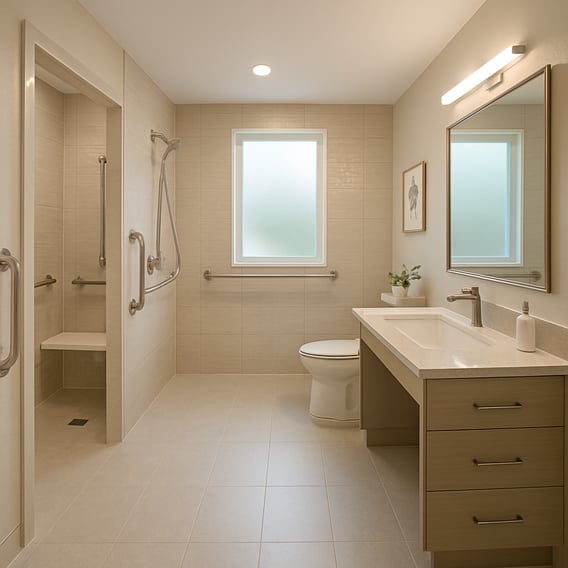
 

The image showcases a beautifully designed spacious bathroom that emphasizes accessibility and modern aesthetics The bathroom features wide doorways.


How Does Universal Design Work to Change Everything?

Home accessibility has evolved far beyond grab bars and ramps. But what is universal design? Today’s Universal Design integrates accessibility into the home’s structure and aesthetics — invisibly and beautifully.

The concept of Universal Design focuses on creating environments, products, and spaces that are usable by as many people as possible, regardless of age, ability, or situation — all without the need for later adaptation.

When done right, Universal Design/Build ideas include:

  • Greater safety for all ages

  • Enhanced independence

  • Timeless beauty and comfort

  • Inclusive usability that doesn’t “look” institutional or medical

Universal Design ensures that homes evolve with their residents — making it possible to age gracefully and confidently in place.


Accessible Home Solutions in Austin, Texas

For homeowners in the Austin area, T-Square Company provides over 30 years of experience in accessibility remodeling and barrier-free home design.

T-Square Company specializes in custom solutions such as:

  • Wider doorways and hallways

  • Roll-in showers and accessible bathrooms

  • Barrier-free kitchens

  • Ramped or zero-threshold entries

  • Stair lifts, elevators, and vertical platform lifts

  • Fully accessible living spaces tailored to your abilities

Every design begins with a deep understanding of each client’s specific needs — resulting in homes that are safer, more functional, and more enjoyable.


About David L. Traut, CAPS

David L. Traut, CAPS, owner and president of T-Square Company in Austin, Texas, is part of an elite group of professionals nationwide to earn the Certified Aging in Place Specialist (CAPS) designation.

Developed through the National Association of Home Builders (NAHB) and AARP, this certification recognizes remodelers and builders trained to address the unique needs of aging adults and individuals with disabilities.

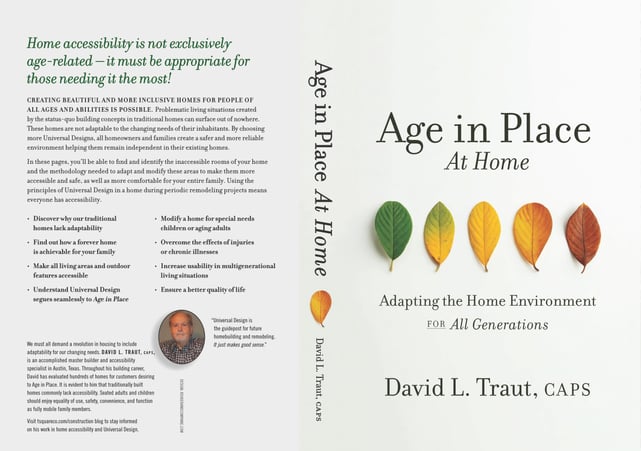
David is also certified in Universal Design in both the United States and Australia. Drawing on decades of experience, he authored Age in Place at Home: Adapting the Home Environment for All Generations, a comprehensive guide that takes readers through every room of the home, showing how to improve safety, accessibility, and comfort.

📘 Age in Place at Home is available now on Amazon and serves as a step-by-step reference and guide for homeowners and professionals alike.


Bringing Accessibility Home

Nearly every existing home can be adapted to meet evolving physical needs. With the right design and planning, families can continue to live comfortably and independently in the place they love most — their home.

By following the principles in Age in Place at Home, you can enhance both your safety and quality of life.

It just makes good sense.


Call to Action

🏡 Ready to make your home safer, more accessible, and future-ready?
Contact T-Square Company, Austin’s Certified Aging in Place experts, to begin your accessible remodeling journey today.
📞 Call 512-444-0097 | 🌐 www.tsquareco.com

Tags: ADA remodeling, CAPS certification holder in Austin, home modifications for independent living, Austin accessible home remodeling, home modifications for disabled children, home modifications for children with disabilities, what does it mean to age in place, what is universal design, Austin disability contractors for special needs, Austin handicap bathroom contractor, Austin aging in place specialist, veterans home accessibility help in Austin, Texas, Austin home remodeling for disabled, accessibility home modifications, universal home design in Austin, Austin home accessibility solutions, Austin home modification services, Age in Place at Home, ADA Remodeling in Austin, ADA Contractor/Austin, Texas, home modifications for aging in place, Dripping Springs home modification services, home accessibility services, what is a forever home?, home accessibility modifications

When Life Changes: Creating a Multi-generational, Accessible Home

Posted byDavid L. Traut, CAPS on Fri, Oct 24, 2025 @ 14:10 PM


When a family’s living situation suddenly changes, it may become necessary to modify the home to meet new needs. These adjustments often result in the creation of multi-generational homes, where comfort, safety, and independence are balanced for all ages.

The specific modifications depend on the situation — whether a parent is moving in, a child returns home, or a family member faces new mobility challenges. Below are common areas to consider when adapting your home for multiple generations.

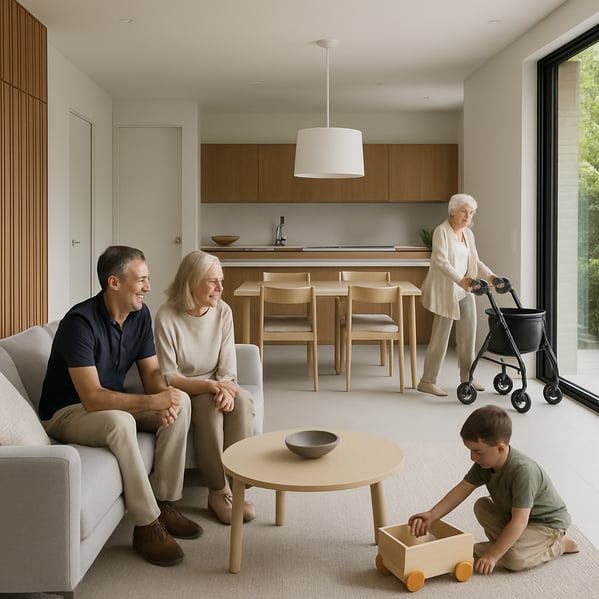
A sleek universal design multigenerational home interior


Common Home Modifications for Changing Family Needs

Additional Bedrooms
When the family expands or someone new moves in, you may need extra bedrooms or sleeping areas. Consider converting a home office, den, or unused space to accommodate the change.

Bathroom Accessibility
For elderly or disabled family members, safety and convenience are priorities. Modifications may include:

  • Installing grab bars

  • Adding a roll-in or walk-in shower

  • Lowering sinks and countertops

  • Replacing toilets with accessible-height models

Kitchen Modifications
A larger or more diverse household benefits from flexible, inclusive kitchen design. Options include:

  • Adjustable-height work surfaces

  • Roll-under access at the sink or cook top

  • Additional seating and storage

  • Expanding the kitchen footprint for easier movement

Safety Features
Depending on your situation, you may need to add:

  • Childproof or adult-proof features

  • Non-slip flooring

  • Improved lighting

  • Smart home security or monitoring systems

Storage Solutions
More people often means more belongings. Add closets, built-ins, or cabinetry to maintain organization and reduce clutter.

Accessibility Ramps and Entries
For anyone with limited mobility, ramps and zero-threshold entries provide essential independence and safety.

Private Living Suites
In multi-generational households, separate living areas with their own entrance, kitchenette, and bathroom help maintain privacy and autonomy while keeping family close.

Heating and Cooling Considerations
If you’re adding square footage or an in-law suite, ensure your HVAC system can handle the increased demand efficiently.


The Aging in Place Mindset

Designing a multi-generational home is deeply connected to the philosophy of Aging in Place — a practice centered on usability, comfort, and independence for everyone, regardless of age or ability.

Aging in Place design is not about age — it’s about universal usability. It focuses on long-term livability, ensuring that the home adapts as life changes.

The first step toward creating an adaptable home is a self-assessment. Walk through your house and identify potential problem areas:

  • Tripping or slipping hazards

  • Poor lighting or hard-to-reach switches

  • Narrow doorways or tight spaces

  • Difficult-to-maintain areas

Who better to identify problem spots than the person who uses the space daily? Many organizations, including AARP, provide Aging in Place checklists that highlight potential issues and suggest practical solutions. Once your initial assessment is complete, the next step is to seek the guidance of a Certified Aging in Place Specialist (CAPS).


Working with a CAPS Professional

Certified Aging in Place Specialists (CAPS) are trained builders, remodelers, and designers who understand the construction and emotional aspects of creating accessible homes. The CAPS designation, offered by the National Association of Home Builders (NAHB) in partnership with AARP, connects responsible professionals with homeowners seeking these services.

A CAPS professional can:

  • Evaluate your home’s current accessibility

  • Recommend modifications tailored to your needs and budget

  • Coordinate with occupational or physical therapists when necessary

  • Manage projects with compassion, professionalism, and precision

You can find certified specialists for your specific location at nahb.org/CAPSdirectory.

Certified Aging In Place Specialist


Three Types of Aging in Place Clients

Understanding which group you fall into can help determine your home’s design priorities:

  1. Proactive Planners – Individuals preparing wisely for the future to remain safely in their homes.

  2. Chronic Condition Adapters – People managing ongoing medical issues who need to plan for future accessibility challenges.

  3. Crisis Responders – Individuals facing sudden or severe mobility changes after illness, injury, or life-altering events.

All three groups represent the growing need for accessible remodeling and will continue to shape the future of residential design.


What Happens During a Professional Home Assessment

During a professional assessment, your CAPS professional will document the home’s current conditions and make detailed notes through sketches, measurements, and conversation. They’ll evaluate everything from flooring to lighting to ensure the layout fits the occupants’ physical and emotional needs.

They’ll also take into account:

  • Mobility and reach range

  • Sensory or cognitive challenges

  • Caregiver involvement

Collaboration with occupational or physical therapists often adds valuable insight. The goal is a customized design that enhances independence, safety, and comfort — not a “one-size-fits-all” solution.

The three primary spaces typically involved in aging in place remodels are:

  • Bathrooms — safety and ease of use

  • Kitchens — independence and flexibility

  • Living Areas — connection and comfort

These spaces are united by a clearly defined accessible route with wider doorways, non-slip flooring, and sufficient maneuvering space for mobility devices.


The Importance of Inclusive Design for All Ages

If children are part of the household, their height, reach, and mobility also influence the home’s design. Likewise, adults moving in may face challenges from common conditions such as arthritis, which can cause stiffness, joint pain, and reduced grip strength.

Designing for these realities doesn’t mean sacrificing beauty — it means integrating innovative universal design concepts that allow everyone to thrive. Features like lever handles, adjustable lighting, touch-control faucets, and curbless showers can make life easier for every family member.


Bringing It All Together

Creating a multi-generational home that supports aging in place is both a practical and compassionate decision. It’s an investment in your family’s future and quality of life.

As a Certified Aging in Place Specialist (#1636580), T-Square Company in Austin, Texas, helps families design and remodel homes that grow with them — ensuring safety, comfort, and independence for years to come.

For more information or to schedule an assessment or consultation, visit www.tsquareco.com or call 512-444-0097.


About CAPS Certification

Knowledgeable design and construction professionals nationwide are applying their Certified Aging in Place Specialist (CAPS) training — developed through the National Association of Home Builders (NAHB) and AARP — to help families live better, longer, and safer in their homes.

CAPS connects qualified professionals with homeowners seeking trustworthy, thoughtful remodeling solutions for accessible and universal design.

Download Our Free Aging In Place Remodeling Considerations Checklist


Closing Thought

Innovative aging-in-place design goes beyond accessibility — it’s about dignity, comfort, and belonging. Whether you’re modifying for a loved one, planning for the future, or creating a flexible family home, the right design can turn change into opportunity. To find out more:

After over a year of writing to fulfill my customers' requests, my book, "Age in Place At Home: Adapting the Home Environment for All Generations", is available for purchase on Amazon.  Go to the link to order my paperback or e-book, which was released in late November, 2022. Additionally, an audiobook will also be available soon. The book provides a great guideline for using the principles of Universal Design in new home construction and/or remodeling for every room in your home when Aging in Place. Get your copy today.

Tags: CAPS certified remodeling in Austin, disability bathroom remodels, universal design building for a lifetime, 7 principles of universal design, accessibility home modifications, Austin home accessibility solutions, Austin home modification services, Age in Place at Home, Professional Disability Remodeling Contractor, CAPS-certified remodeling in Dripping Springs, Dripping Springs home accessibility solutions, Universal design construction in Austin, Barrier-free designs, home accessibility help, what is a forever home?, multigenerational homes, how to age in place book, planners home edit, how to age in place, home remodeling for multigenerational families

"Age in Place at Home" Book by David L. Traut, CAPS, Austin, Texas

Posted byDavid L. Traut, CAPS on Fri, Sep 12, 2025 @ 13:09 PM

At T-Square Company, we’ve spent more than 30 years helping families create homes that are safe, comfortable, and built for every stage of life. Now, our President and Owner, David L. Traut, has brought that same experience and passion to the page in his book: Age in Place at Home: Adapting the Home Environment for All Generations.


Why This Book Matters

The concept of “aging in place” is simple but powerful: with the right planning and design, people can continue living independently in the homes they love, even as their needs change. For many, staying home means holding on to dignity, comfort, and treasured memories.

Drawing on his decades of work as a builder and CAPS-certified professional, David wrote Age in Place at Home to be more than just a construction guide. It’s a roadmap for homeowners, families, caregivers, and professionals who want practical solutions and peace of mind.


What You’ll Learn Inside

  • Home Modifications That Matter Most — from safe bathrooms to wider doorways, grab bars, and better lighting.

  • Universal Design Principles — creating beautiful spaces that work for everyone, not just those with special needs.

  • Fall Prevention & Safety Tips — simple adjustments that make a big difference in daily life.

  • Planning for the Future — how to think ahead so your home adapts gracefully as life changes.

  • Resources & Guidance — including checklists, questions to ask contractors, and financial assistance options.


Who Should Read It

  • Homeowners who want to prepare their house for the future.

  • Families caring for aging loved ones.

  • Builders, designers, and architects interested in Universal Design.

  • Anyone who believes that home should always be a place of safety, dignity, and belonging.


Where to Find the Book

Age in Place at Home is now available on Amazon in both paperback and Kindle editions.


👉 Click here to view the book on Amazon


Age in Place at Home_CV_FL_vX2_Page_1-jpeg


Final Thoughts

This book is more than a professional resource — it’s a personal mission. As David often says, “Home isn’t just where you live. It’s where you belong.”

At T-Square Company, we’re proud to bring that philosophy to life every day — and now, through Age in Place at Home, we’re excited to share it with readers everywhere.


Tags: barrier free access, aging in place home modifications, wheelchair accessible baths and kitchens, CAPS certified remodeling in Austin, aging in place designs, CAPS professional in Austin, home modifications for independent living, disability home modifications in Austin, home modifications for independent living Austin, universal design ideas, age in place home design, home modifications for disabled children, universal design building for a lifetime, special needs contractor in Austin, senior home modifications in Austin, handicap accessible home modifications, accessibility home modifications, accessible home modifications, special needs contractor, Austin home accessibility solutions, ADA Accessibility, CAPS-certified remodeling in Dripping Springs, dripping springs handicap bathroom contractor, home accessibility help, what is a forever home?, multigenerational homes, home accessibility modifications, how to age in place book, safe bathroom design for seniors, planners home edit, how to age in place