✅ MODIFYING YOUR CURRENT HOME FOR AGING IN PLACE: Should You Stay or Should You Move?
When In Doubt, Always Consult with a Certified Aging in Place Specialist in Your Area.
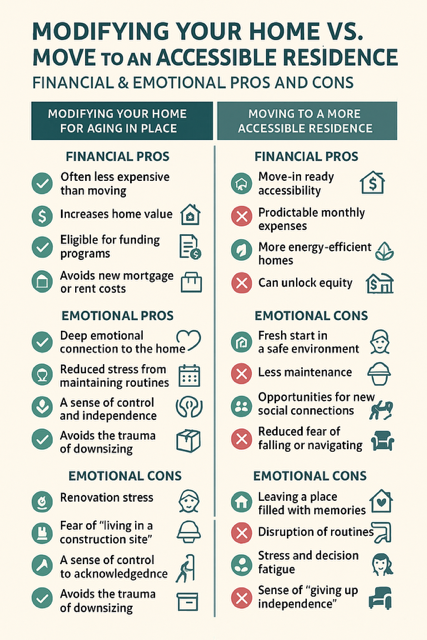
WHEN DECIDING TO MODIFY YOUR HOME
Financial Pros
-
Often less expensive than moving
Many accessibility upgrades—grab bars, curbless showers, widened doors, ramps, and lighting upgrades—cost far less than the combined cost of selling a home, purchasing another, and moving. -
Increases home value
Aging-in-place features and Universal Design elements make the home appealing to a growing demographic of older buyers. -
Eligible for funding programs
Local grants, tax credits, VA programs, and long-term care insurance may cover certain home modifications. -
Avoids new mortgage or rent costs
Particularly powerful for homeowners with a paid-off home, modifications protect financial stability.
Financial Cons
-
High upfront costs for major renovations
Structural changes—bathroom expansions, foundation adjustments, lifts, or extensive electrical work—can cost tens of thousands. -
Unexpected issues in older homes
Hidden plumbing, mold, electrical, or foundation problems can add surprise expenses. -
Limited return on investment if poorly designed
Non-professional or temporary fixes may not add value and can require re-work later.
Emotional Pros
-
Deep emotional connection to the home
People feel grounded in familiar surroundings filled with memories, traditions, and comfort. -
Reduced stress from maintaining routines
Same neighbors, same grocery store, same church… minimal disruption. -
A sense of control and independence
Modifying your environment supports dignity and self-reliance. -
Avoids the trauma of downsizing
Keeping belongings and sentimental items reduces emotional strain.
Emotional Cons
-
Renovation stress
Noise, dust, delays, and disruptions can be overwhelming—especially for older adults. -
Fear of “living in a construction site.”
Some people experience anxiety about change or giving up control of their home. -
Emotional resistance to acknowledging decline
Accepting modifications like grab bars can feel like admitting vulnerability.
🏡 MOVING TO A MORE ACCESSIBLE RESIDENCE
Financial Pros
-
Move-in ready accessibility
Certified accessible homes, senior-friendly apartments, or modern new builds can minimize renovation costs. -
Predictable monthly expenses
Especially in 55+ communities or accessible rentals where maintenance is included. -
More energy-efficient homes
Lower utility bills, smart-home systems, and modern construction reduce long-term costs. -
Can unlock equity
Selling a high-value home may free up cash for retirement, caregiving, or medical expenses.
Financial Cons
-
High costs of moving
Realtor fees, packing, movers, new furnishings, deposits, and closing costs add up quickly. -
Accessible homes can be scarce and expensive
Fully barrier-free homes are not widely available—especially in desirable neighborhoods. -
Recurring HOA, rent, or community fees
Some 55+ or accessible communities have costly monthly dues. -
Loss of property tax advantage
Moving may eliminate caps or senior exemptions tied to the original property.
Emotional Pros
-
Fresh start in a safe environment
A new home designed for accessibility can offer peace of mind and renewed confidence. -
Less maintenance
Especially appealing for older adults tired of repairs, yard work, or upkeep. -
Opportunities for new social connections
Many communities offer activities, wellness programs, and built-in support. -
Reduced fear of falling or navigating unsafe spaces
Purpose-built accessibility improves daily comfort.
Emotional Cons
-
Leaving a place filled with memories
For many, it feels like losing a part of their identity. -
Disruption of routines and community
Friends, neighbors, doctors, and landmarks change all at once. -
Stress and decision fatigue
Packing, downsizing, and touring homes can be emotionally draining. -
Sense of “giving up independence.”
Some older adults perceive the move as a loss of autonomy.
🎯 The Bottom Line
Modifying is best when the home has a good layout, strong structural integrity, and emotional attachment is high.
Moving is best when the current home cannot be safely or affordably adapted—or when a fresh start brings more peace than renovation.
“Should You Stay and Modify, or Should You Move? A Quick Decision Checklist.”
Quick Decision Checklist
Use this checklist to help determine whether staying in your current home—or moving to a more accessible one—is the safest, most practical, and most emotionally supportive choice.
✅ 1. Safety & Accessibility
Is your current home safe to navigate today?
-
☐ I can enter and exit the home without difficulty
-
☐ Hallways, bathrooms, and doorways are wide enough
-
☐ I can shower/bathe safely
-
☐ Lighting is adequate and glare-free
-
☐ Stairs, steps, or thresholds are becoming difficult
-
☐ I have had a recent fall or near-fall
If several boxes are unchecked → Consider moving or modifying.
🏗️ 2. Feasibility of Modifications
Can your current home be realistically and affordably adapted?
-
☐ Bathrooms can be expanded or remodeled
-
☐ A curbless shower can be installed
-
☐ Ramps or lifts are possible in the current layout
-
☐ The home has space for a main-level bedroom
-
☐ Structural limitations are minimal
-
☐ Estimated costs are within budget
If modifications are extensive or require major structural changes → Moving may be more practical.
💰 3. Financial Considerations
Which option best supports long-term financial stability?
-
☐ My home is paid off or affordable to maintain
-
☐ Renovation costs are manageable
-
☐ Moving costs (closing, commissions, deposits) are acceptable
-
☐ A new accessible home is within my price range
-
☐ Monthly HOA or rental fees are reasonable
-
☐ My current home has strong resale value
If renovation costs exceed 30–40% of the home’s value → Moving may be the financially smarter choice.
❤️ 4. Emotional Well-Being
How do you feel about staying vs. moving?
-
☐ I feel deeply attached to the home and neighborhood
-
☐ I enjoy my routines, neighbors, and surroundings
-
☐ The idea of moving feels stressful or overwhelming
-
☐ I feel excited at the thought of a fresh, safe, low-maintenance home
-
☐ Downsizing feels manageable
-
☐ Staying brings me comfort and stability
If staying contributes to emotional stability → Modifying may be better.
If staying causes daily stress or fear of falling → Moving may feel freeing.
🧩 5. Support, Care, and Daily Needs
Does your current home support the help you need—now and later?
-
☐ Family or caregivers can access my home easily
-
☐ Medical equipment can be accommodated
-
☐ Kitchen and laundry are easy to reach
-
☐ Transportation, grocery stores, and medical offices are nearby
-
☐ Community support (church, neighbors, friends) is close
-
☐ A new accessible home would improve access to services
If support networks are stronger elsewhere → Moving may be the better long-term solution.
⭐ Summary
-
Stay & Modify your home if safety concerns are easily fixable, costs are reasonable, and emotional attachment is strong.
-
Move if the home cannot be made safe, modifications are too expensive, or another home offers greater independence and peace of mind.

T-Square Company — Austin, TX
David L. Traut, CAPS #1636580, owner/president
512-444-0097
Accessible Remodeling • Universal Design • Aging-in-Place
Let’s make your forever home work beautifully for you—now and for years to come.
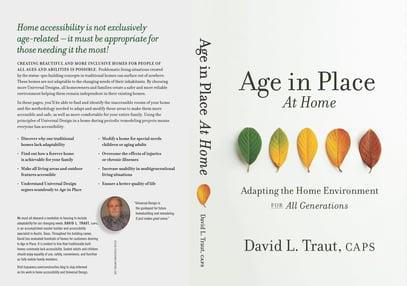
David is part of a select group of professionals nationwide who have earned the Certified Aging in Place Specialist (CAPS) designation.
This certification, offered through the National Association of Home Builders (NAHB) in collaboration with AARP, recognizes remodelers and builders trained to meet the unique needs of older adults and individuals with disabilities. David is an Aging in Place specialist and is an active member of The National Aging in Place Council (NAIPC).
David is also certified in Universal Design in both the United States and Australia. Drawing on decades of expertise, he recently published Age in Place at Home: Adapting the Home Environment for All Generations, a comprehensive guide that explores the role of Universal Design in creating safe, accessible homes.
📘 Age in Place at Home takes readers room by room, explaining practical modifications that enhance safety, accessibility, and independence. The book is available now on Amazon.