
Veteran Home Accessibility Modifications Austin
Veterans who return home with mobility challenges deserve a living space that supports their independence, not one that creates new obstacles. T-Square Company has spent over 50 years designing and building accessibility modifications for homeowners across Austin and Central Texas, including veterans who need more than a standard contractor can offer. Our approach is grounded in neurophysiology, meaning every modification is designed around your specific physical abilities, reach ranges, and movement patterns. Whether you are navigating a new diagnosis, planning ahead, or exploring VA home accessibility grants to fund your project, we are here to help you stay in the home you love.
Why T-Square
Built on Science, Not Guesswork
Most contractors approach accessibility modifications with basic ADA guidelines and common sense. T-Square Company, a registered VA Contractor, operates differently. Owner David Traut holds a graduate degree in neurophysiology and has spent decades applying that scientific background directly to residential design. For veterans, this matters enormously. A mobility limitation caused by a service-related injury, a degenerative condition, or limb loss involves specific neurological and physical parameters that a general remodeler simply is not trained to address. David designs every modification around the individual, accounting for wheelchair turning radii, transfer ability, and the reach ranges that are realistic for your body right now and in the years ahead. This is not a one-size-fits-all approach. It is ability-first design backed by 50 years of experience and a founding role in the National Aging in Place Council.
Our Services
Accessibility Modifications Built for the Way You Live
Disabled veteran home modifications cover a wide range of structural and technical work, and T-Square handles it all under one roof. In the bathroom, we install roll-in and barrier-free showers, zero-threshold entries, and grab bars placed precisely where your reach range requires them incorporating the principles of Universal Design. In the kitchen, we reconfigure counters, storage, and floor clearances so you can cook and move independently. Throughout the home, we widen doorways to a full three feet, install smart door openers, and integrate smartphone-controlled lighting and leak detection systems for veterans with limited hand function. For families who need a separate accessible living space, we also build Accessory Dwelling Units and attached additions designed for multigenerational or caregiver arrangements. Every project is managed directly by David, supported by a subcontractor team with 15 to 20 years of working relationships with our firm.
The Process
A Story-First Approach to Every Project
Before any plans are drawn, David Traut takes the time to hear your story. Understanding your diagnosis, your daily challenges, and your goals for the future is the foundation of every project we take on. For local veterans in Austin, Dripping Springs, Driftwood, and Wimberley, we conduct a thorough in-home evaluation. For veterans located farther away, we offer virtual camera-based assessments that allow David to evaluate your space and provide expert guidance without geographic limits. From there, we move into neuro-physical design, creating a modification plan that accounts for where your abilities are today and where they may be in the years ahead. Our turnkey construction model means you work with one team from initial consultation through final walkthrough. Projects typically range from $50,000 to $125,000, and we advise clients to explore home equity as a funding source, including any available VA home accessibility grants or programs you may qualify for.
Universal Design
Modifications That Look Like Home, Not a Hospital
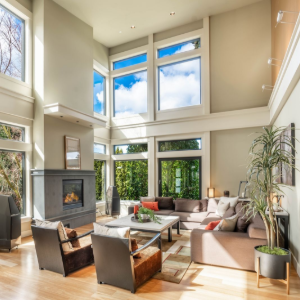
One of the most common concerns veterans and their families share is the fear that accessibility modifications will make a home look institutional or clinical. T-Square Company builds to a Universal Design standard, a philosophy rooted in the work of Ron Mace, which holds that a home should function for every person regardless of size, age, or physical ability, without looking like it was built for a medical facility. The result is a living space that is genuinely beautiful, fully functional, and completely adapted to your needs. Grab bars blend into the design. Thresholds disappear. Smart home technology handles what hands cannot. Aging veteran home design does not have to mean giving up the character of your home. It means giving your home the ability to work as hard for you as you have worked for your country.
Your Review Matters
Tell Us About Your Experience
If you've worked with our team, we'd appreciate hearing about your experience. Your review helps others feel confident choosing our company and lets us know how we're doing.
Common Questions
What Veterans Ask Us Most
How is T-Square different from a standard contractor for veteran home modifications?
T-Square owner David Traut holds a graduate degree in neurophysiology, so modifications are designed around your specific biological needs rather than generic ADA guidelines. For veterans with service-related injuries or degenerative conditions, this matters because the placement of every fixture, the width of every doorway, and the layout of every room is based on your actual reach range, transfer ability, and wheelchair turning radius. Standard contractors follow basic code. T-Square designs to your body using the principles of Universal Design.
Can T-Square help me figure out which VA home accessibility grants might apply to my project?
T-Square can walk you through the funding landscape and advise you on using home equity to cover project costs. While the firm does not offer financing, David works with clients to identify the most practical path to funding, including pointing veterans toward VA home accessibility grant programs for which they qualify for that may offset costs. Projects typically range from $50,000 to $125,000, and understanding your options early in the process helps set realistic expectations for scope and timeline.
What kinds of mobility challenges do you typically work with for disabled veterans?
T-Square works with veterans across a wide range of mobility needs, from partial limitations to full wheelchair use. This includes veterans dealing with limb loss, spinal injuries, and degenerative conditions like ALS or MS. The firm's neurophysiology background allows David to design for conditions that progress over time, meaning modifications account not just for where your abilities are today but where they are likely to be in the future, reducing the need for repeated renovations down the road.What does a typical accessible bathroom renovation include for a veteran?
A veteran-focused bathroom modification from T-Square typically includes a roll-in or barrier-free shower with a zero-threshold entry, roll-under vanities, grab bars positioned precisely for your reach range, widened doorways up to three feet, and transfer-friendly layouts. For veterans with limited hand function, smart home controls for lighting and water temperature can also be integrated. The goal is a bathroom that supports complete independence while looking like a high-end residential space, not a clinical facility.
Do you offer assessments for veterans who live outside Austin?
Yes. For veterans outside the immediate Austin service area, T-Square offers virtual camera-based assessments. You provide visual access to your home via camera, and David evaluates the space remotely to develop a modification plan. This approach has been used for clients as far away as New York. Local veterans in Austin, Dripping Springs, Driftwood, and Wimberley can also schedule an in-home evaluation for a more detailed on-site review.Will accessibility modifications make my home look clinical or institutional?
This is one of the most common concerns T-Square hears, and it is a central reason the firm builds to a Universal Design standard. Rooted in the philosophy of Ron Mace, Universal Design means a home functions for everyone without looking like it was built for a medical setting. Grab bars are integrated into the design, thresholds are eliminated rather than highlighted, and smart technology handles functional needs discreetly. The result is a home that looks well-designed, not modified.How long does a veteran home accessibility project typically take from assessment to completion?
Timelines vary based on scope, but T-Square's turnkey design-build model is structured to keep the process well-managed. David acts as superintendent throughout, working with a stable roster of subcontractors who have been with the firm for 15 to 20 years. The process begins with a story-first consultation, moves into neuro-physical design, and then proceeds to construction. More complex full-home modifications naturally take longer than a single-room renovation, and David will give you a realistic timeline during the assessment phase.