
Accessible Kitchen Remodeling Austin
Your kitchen should work for you, not against you. At T-Square Company, we bring over 50 years of design-build experience and a graduate-level background in neurophysiology to every accessible kitchen remodeling project in Austin and across Central Texas. Whether you use a wheelchair, manage a degenerative condition like ALS or MS, or simply want a universal design kitchen layout that supports long-term independence, we build kitchens around your specific reach range, turning radius, and daily routine. This is not standard remodeling. It is ability-first design backed by science.
Our Approach
Kitchens Designed Around How You Actually Move
Most contractors follow general guidelines and call it accessible. We go further. T-Square owner David Traut holds a graduate degree in neurophysiology and has spent decades applying that science to residential design. When we plan your universal kitchen, we account for your precise reach range, your current and future transfer ability, and the wheelchair turning radius you need to move freely from the refrigerator to the stove to the sink. Every counter height, cabinet position, and floor clearance is chosen for your body and your life. That is what separates a truly accessible kitchen from one that simply looks the part. We serve homeowners in Austin, Dripping Springs, Driftwood, Wimberley, and the surrounding Central Texas area.
What We Build
Key Features of a Wheelchair Accessible Kitchen
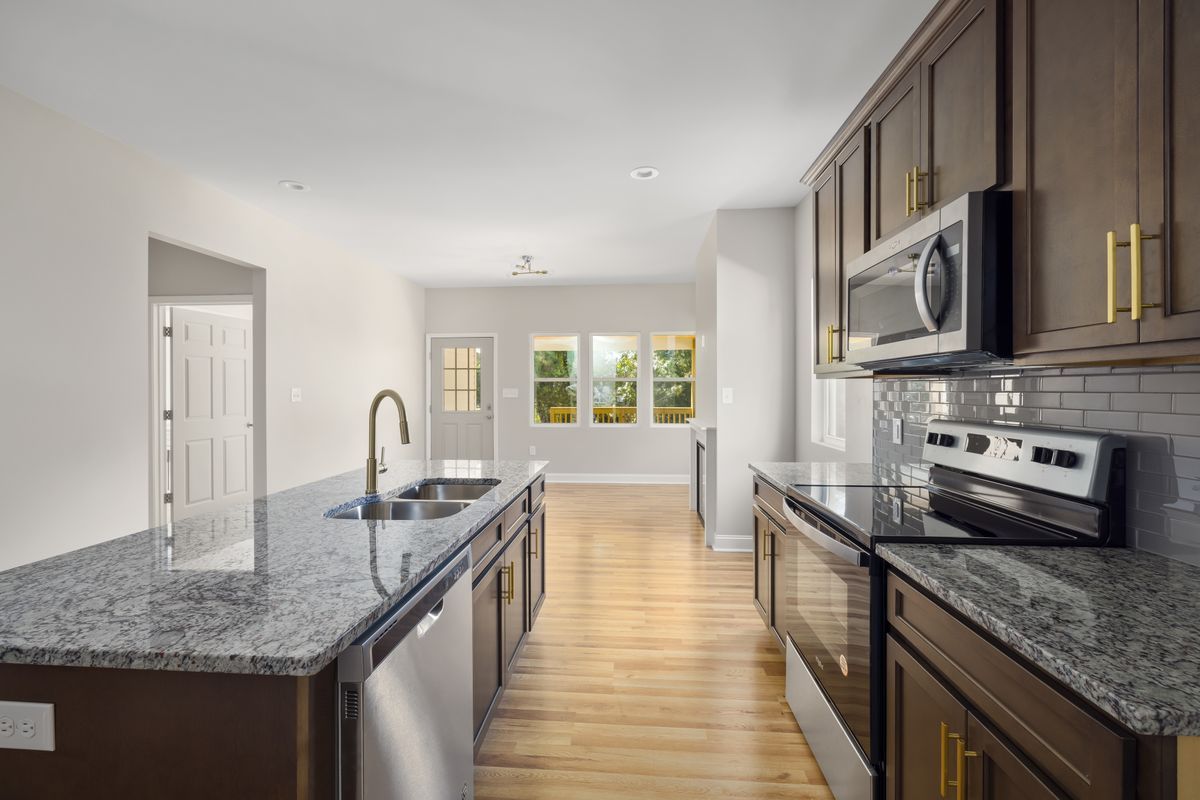
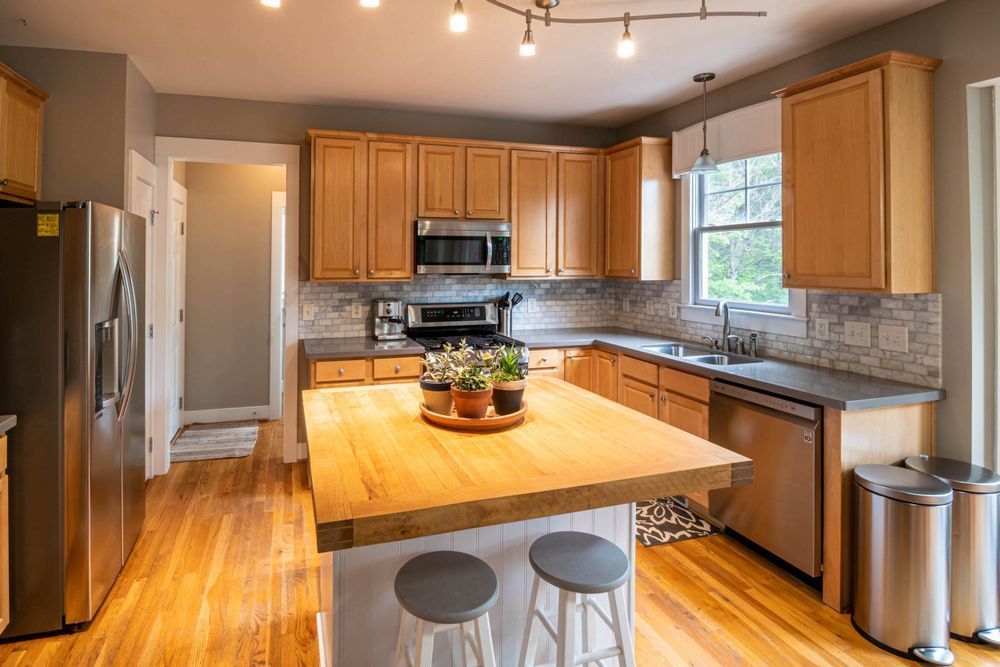
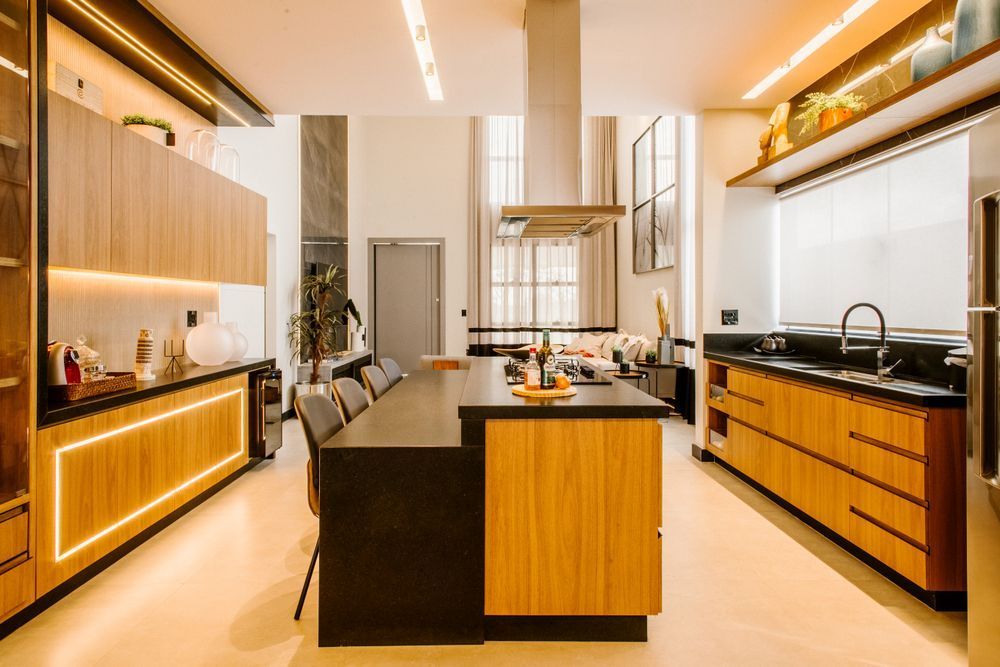
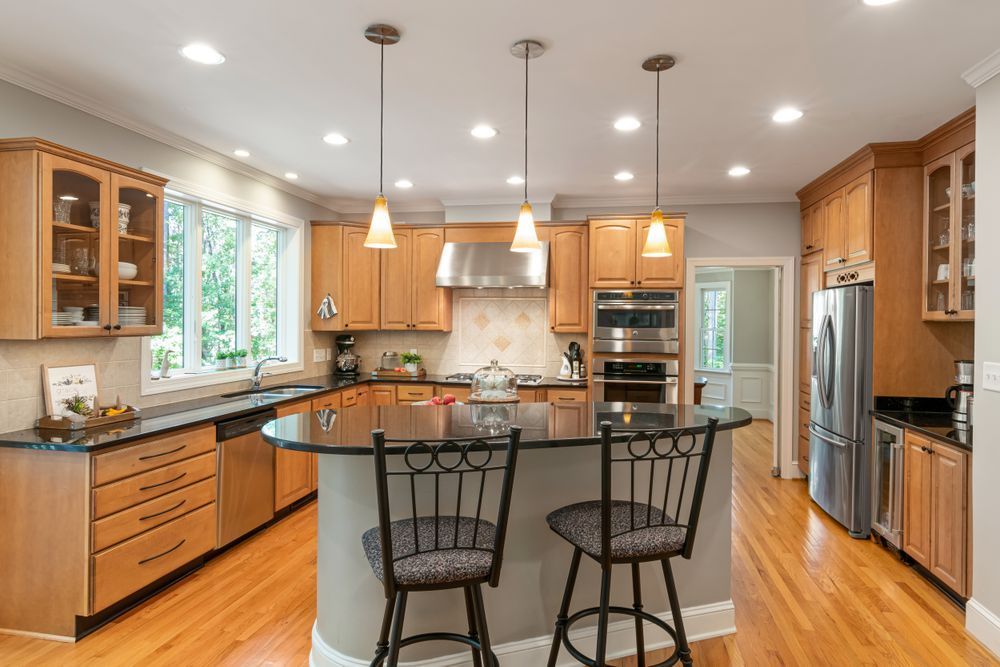
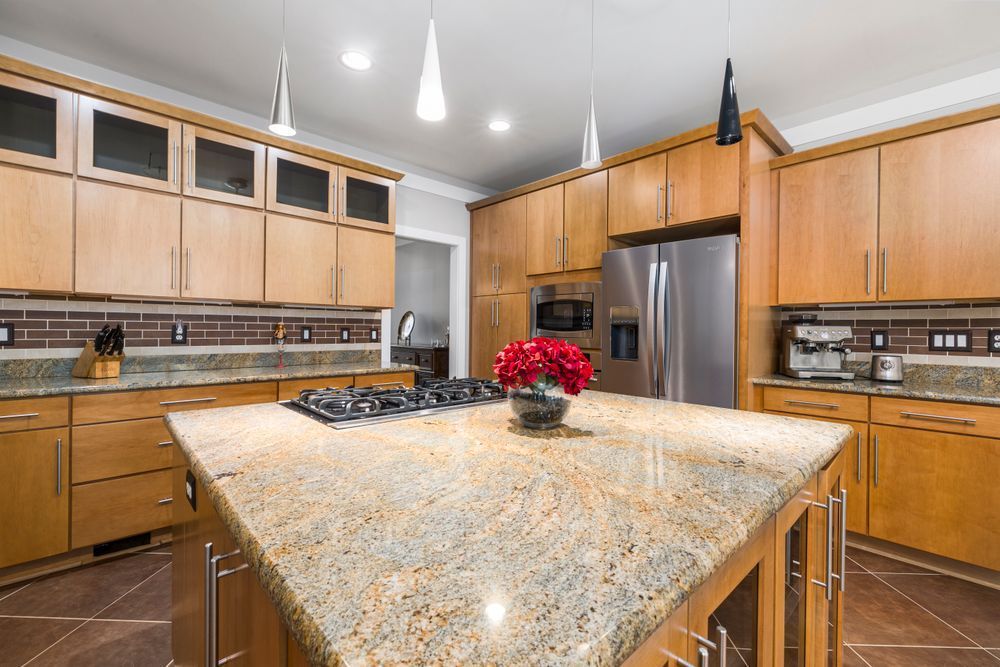
A well-designed accessible kitchen addresses every point of friction, from the moment you enter the room to the moment you finish cooking. Our aging in place kitchen modifications and universal design kitchen layouts typically include lowered and customized countertops sized for seated or standing use, open floor clearance beneath work surfaces for wheelchair users, reachable storage positioned within your specific reach range, widened doorways up to three feet for full mobility access, zero-threshold entries that eliminate trip hazards, and smart home controls for appliances and lighting that work for users with limited hand function. We also integrate leak detection systems and smartphone-controlled features that give family members peace of mind. Every element is chosen to support genuine independence, not just ADA compliant kitchen design on paper.
The T-Square Process
From Your Story to a Kitchen That Works
Before we draw a single plan, David Traut listens. Our story-first intake process begins with your mobility journey, your diagnosis if applicable, and the specific daily barriers you face in your current kitchen. From there, we conduct either an in-home assessment for clients in the Austin area or a virtual camera-based evaluation for those in Dripping Springs, Wimberley, or beyond. That assessment informs a neuro-physical design plan built around your current abilities and your likely future needs. We then manage the full build as your design-build superintendent, working alongside a trusted roster of subcontractors who have been with us for 15 to 20 years. You get one point of contact, one cohesive plan, and a kitchen that was built specifically for you. Projects of this scope typically range from $50,000 to $125,000, and we recommend using available home equity to fund the investment.
Why T-Square
50 Years of Science-Backed Kitchen Design in Central Texas
T-Square Company has been serving Austin homeowners since 1974. David Traut is a Certified Aging-in-Place Specialist (CAPS), a founding member of the National Aging in Place Council and its Greater Austin chapter, and the award-winning author of Age in Place at Home: Adapting the Home Environment for All Generations. He is currently contributing a chapter to a new professional book on high-tech advances in the field. That depth of knowledge means your kitchen is not designed by someone following a checklist. It is designed by someone who understands the biology behind every modification. When a client with MS could no longer cook independently because their kitchen was not built for their reality, we rebuilt it from the ground up. That is the kind of difference ability-first kitchen design makes.
Your Review Matters
Tell Us About Your Experience
If you've worked with our team, we'd appreciate hearing about your experience. Your review helps others feel confident choosing our company and lets us know how we're doing.
Common Questions
Accessible Kitchen Remodeling: Your Questions Answered
How is T-Square's kitchen design different from standard ADA compliant kitchen design?
ADA guidelines are written for commercial and public spaces and set minimum standards that do not account for the specific way an individual person moves, reaches, or transfers at home. T-Square owner David Traut holds a graduate degree in neurophysiology, so every kitchen modification is based on your personal reach range, turning radius, and mobility trajectory, not just a code minimum. The result is a kitchen that functions for your body today and can adapt to where your abilities may go in the future.What kinds of conditions or mobility needs do you typically design accessible kitchens for?
T-Square works with a wide range of clients, including adults planning proactively for aging in place, universally for individuals with degenerative conditions like ALS, MS, or Muscular Dystrophy, veterans with mobility limitations, children with multigenerational settings, and anyone who has experienced a significant injury. The firm's ability-first philosophy means the focus is always on what you can do and what your space needs to support, rather than on a diagnosis label or age group.
How does the virtual kitchen assessment work for clients outside of Austin?
For clients in areas like Wimberley, Dripping Springs, or even out of state, T-Square conducts a camera-based virtual assessment. You act as David's eyes on the ground, walking through your kitchen while he evaluates clearances, entry points, and existing layout constraints. This allows him to develop a neuro-physical design plan without an in-person visit. Local Austin area clients can also receive a traditional in-home evaluation.How much does an accessible kitchen remodel typically cost, and how do most clients pay for it?
Projects at T-Square generally range from $50,000 to $125,000 depending on the scope of modifications required. The firm does not offer in-house financing; instead, David advises clients to use available home equity to fund the project. The investment is best understood in context: a properly designed universal kitchen supports long-term independence at home, which is typically far less costly over time than transitioning to assisted living or a care facility.
Can an accessible kitchen still look like a normal, attractive home kitchen?
Yes, and this is a core principle at T-Square. The firm follows the Universal Design philosophy established by Ron Mace, which holds that a home should work for everyone regardless of age, size, or health, without looking institutional or clinical. Lowered countertops, open floor clearance, and smart controls raised dishwashers, roll-under sink, cooktop, and food prep areas, can all be designed to blend naturally into a high-quality kitchen aesthetic. The goal is a space that looks like a well-designed home, not a medical facility.
Does T-Square handle the full project from design through construction, or just one part of the process?
T-Square operates as a full design-build firm, meaning David Traut manages the project from the initial story-first consultation and neuro-physical assessment all the way through final construction. He acts as superintendent on-site, working with a stable group of subcontractors who have partnered with the firm for 15 to 20 years. This single-point-of-contact model keeps the project cohesive and ensures the original ability-first design intent is carried through every phase of the build.What credentials does David Traut hold that are relevant to accessible kitchen design?
David Traut is a Certified Aging-in-Place Specialist (CAPS), a founding member of the National Aging in Place Council and its Greater Austin chapter, and the award-winning author of Age in Place at Home. He also holds a graduate degree in neurophysiology, which directly informs how he evaluates and plans each kitchen modification. He is currently contributing a chapter to a new professional book on high-tech advances in the aging-in-place field.